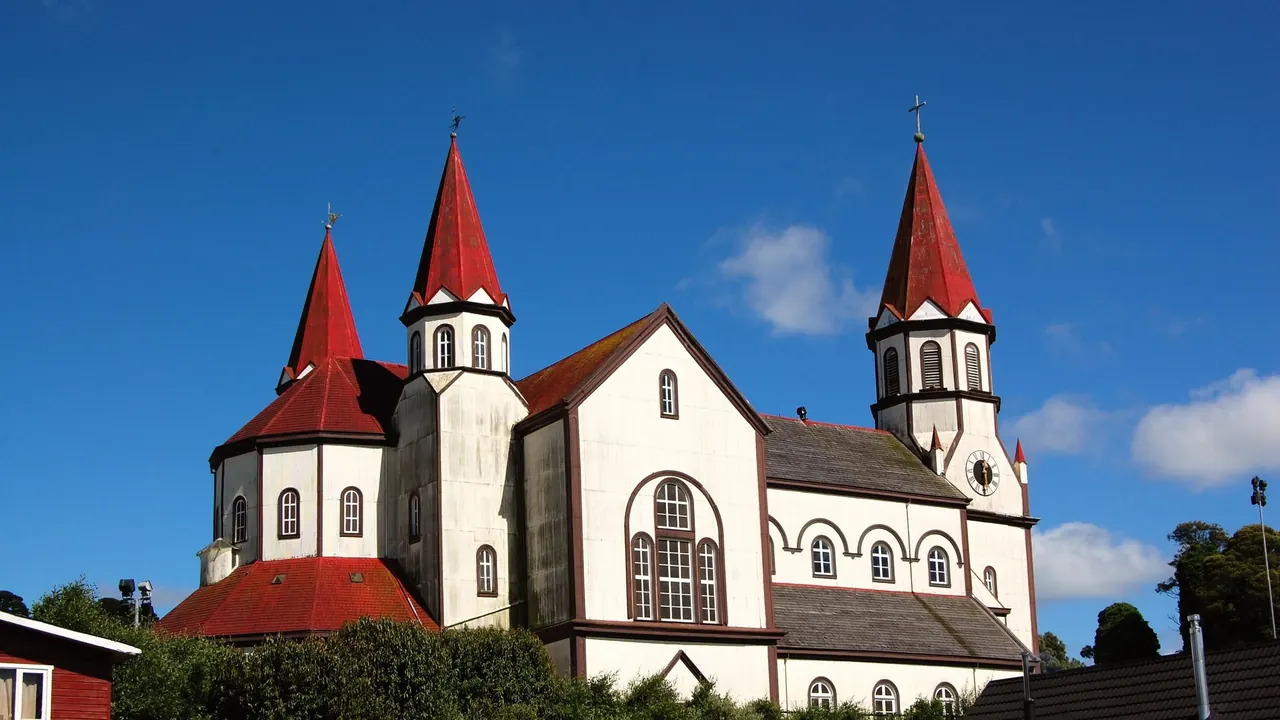
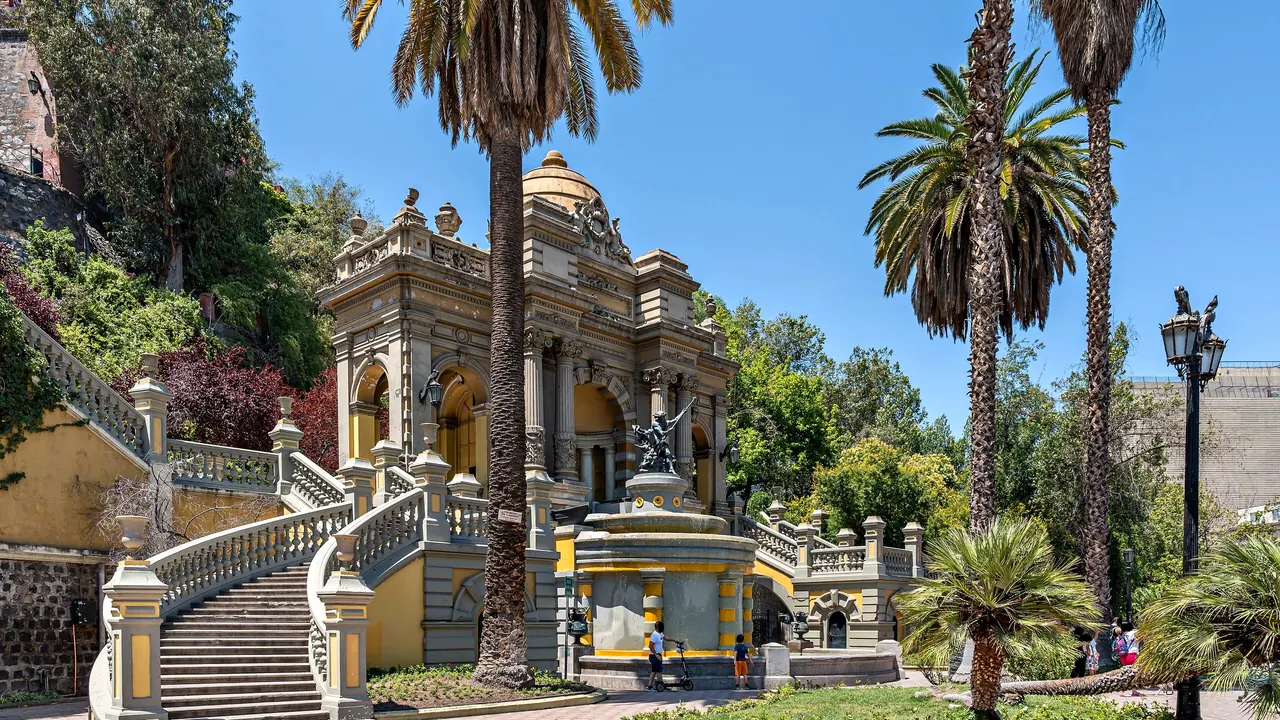
Photos: Puerto Varas by Guillermo Villegas B., CC BY-SA 3.0, cropped; Santiago by Rjcastillo, CC BY-SA 4.0, cropped.
Puerto Varas or Santiago?
Our verdict in twelve categories, each scored against the same fixed benchmark cities, and the climate month by month, so you can choose for your trip.
Choose Puerto Varas for
- beaches
- wellness
- nature and the outdoors
Puerto Varas is for travellers who come for the landscape and are happy to let evenings take care of themselves. The town is a quiet lakeside base facing Volcán Osorno, with rafting on the Petrohué, boat crossings of Todos los Santos and hot springs in the rainforest all within reach. It suits a slower trip by car, timed for the clearer summer weeks, and it asks you to accept rain, a short list of sights and higher costs.
Choose Santiago for
- nightlife
- culture and sights
- shopping
Santiago gives you a capital's range at a lower cost. It has the better food and wine, real nightlife in Bellavista and Lastarria, the Precolombino and Memory museums, opera at the Teatro Municipal and a metro that makes all of it easy. The Andes still rise at the end of the avenues, with skiing and the Cajón del Maipo close by, and Valparaíso and the wine valleys make easy day trips. Choose it if you want city life with mountains on the side.
Scoreboard
Twelve categories on one fixed scale from 0 to 100. The shaded stretch is the gap between the two.
Your match
Pick a travel style or drag the sliders, and both match scores follow your weighting.
Wins on beaches and wellness with your weighting.
Wins on nightlife and culture and sights with your weighting.
What matters to you?
Category by category
What the scores mean for a trip.
Beaches & swimming
Neither city is a beach destination, but Puerto Varas at least lets you swim close to where you stay. On warm summer afternoons you can swim from the town beach or the black-sand shores at Frutillar and Ensenada, in fresh, clean water that reaches the high teens.
Santiago is inland, and the cold Pacific resorts are a day out of one and a half to two hours each way. Most of the swimming there happens in hotel pools and in the big public pools on Cerro San Cristóbal.
Food & drink
Santiago eats better and with more variety. The Mercado Central and the counters around La Vega serve the country's seafood at its best, from machas to sea urchins, and every list carries Carmenère and coastal whites from the nearby valleys. Lastarria, Barrio Italia and Bellavista add modern cooking with Andean ingredients.
Puerto Varas has a character of its own, with German-style kuchen made with murta and raspberries, lamb roasted over fire, smoked salmon and curanto. But the choice is small and thins out once summer ends, and for lively seafood people drive to Angelmó in Puerto Montt.
Culture & sights
Santiago has the stronger case here, though even it can be covered in two or three days. Around the Plaza de Armas and La Moneda you find the cathedral, colonial Casa Colorada and the place where the 1973 coup is remembered. The Precolombino collection is outstanding, and the Museum of Memory treats the dictatorship seriously.
Puerto Varas offers a pleasant morning walk past shingled German settler houses up to the wooden Sagrado Corazón church. There are no major museums, and the settlers' fuller story is told in Frutillar.
Nightlife
This is where the two differ most. Santiago keeps late South American hours. Bellavista fills its pavements and clubs until the early morning at weekends, while Lastarria and Barrio Italia offer wine and cocktail bars for a calmer night.
Puerto Varas winds down after dinner. A craft beer near the lakefront or a turn at the casino is the usual evening, and only in January and February do a few bars stay busy late.
Nature & outdoors
Both are excellent bases for the outdoors, but the landscapes are very different. Puerto Varas is lakes, volcanoes and wet temperate forest: Osorno's snow cone across the water, turquoise rapids on the Petrohué, Todos los Santos by boat, and the granite walls and alerce forests of Cochamó and Alerce Andino. Rafting, kayaking, fly fishing and volcano ascents are all close, though cloud can hide the scenery for days.
Santiago has real hikes inside the city itself, on Cerro San Cristóbal and Cerro Manquehue. Behind them, on a clear day, the high, dry Andes rise as a wall of peaks above 5,000m. You reach that high country in the Cajón del Maipo, where trails climb to the El Morado glacier, and in winter the ski areas are close enough for a day on the slopes. The catch is that you have to cross the city's sprawl to get there, and winter smog can hide the mountains.
Day trips
Santiago has the better day trips. Valparaíso's hills, funiculars and street art are an easy bus ride away, Viña del Mar fits into the same day, and the Maipo and Casablanca wine estates are close enough for an afternoon.
From Puerto Varas the easy outings are the lake towns, with polished Frutillar and the quieter Puerto Octay, plus the working port of Puerto Montt. Chiloé is the trip people remember most, but its UNESCO churches are far enough away that you need to stay a night on the island.
Good for families
Santiago has far more made for children: the funicular, cable car and zoo on Cerro San Cristóbal, the hands-on Museo Interactivo Mirador, the amusement park in Parque O'Higgins and Buin Zoo. Families are also welcome at restaurants late into the evening. Heat, distances and winter smog are the drawbacks.
Puerto Varas is calmer and very safe, with lake beaches, boat trips and short walks to the Petrohué falls. It has no zoos or museums for children, though, so a run of rainy days can test a family.
Getting around
Santiago is much easier without a car. A clean, easy metro runs along the main axis from the Centro to Las Condes, ride-hailing is cheap, and the central districts are good to walk. You only need a car for the mountains and the wine valleys.
Puerto Varas is a few walkable, if steep, streets, with minibuses to Frutillar, Ensenada and Petrohué. Beyond those routes, the far shore, the volcano trailheads and Chiloé really need a hire car or a tour.
Shopping & style
Santiago gives you far more choice, from big eastern malls and the luxury streets of Vitacura to the independent design and vintage shops of Barrio Italia. Pueblito Los Dominicos is the place for copper, lapis lazuli and Mapuche silver.
Puerto Varas is limited to knitwear, wood carvings, jams, chocolate and outdoor gear. Its best craft market is Angelmó in Puerto Montt.
Affordability
Santiago is the cheaper of the two. Set lunches, empanadas, market seafood, local wine and the metro all cost little, and many museums are free. The expensive parts are the hotels in Providencia and Las Condes and tours into the mountains.
Puerto Varas counts as pricey even by Chilean standards. In January and February, lakefront hotels and guided rafting or volcano trips cost close to Western European prices. Spring and autumn, or staying in Puerto Montt, bring the cost down.
Live music & performing arts
Santiago has a full calendar. The Teatro Municipal has opera, ballet and a philharmonic orchestra, GAM and the university theatres stage contemporary work, and the Santiago a Mil festival takes over the city every January. Bands play in Bellavista and Centro venues all year.
Puerto Varas depends on its neighbour. The Teatro del Lago in Frutillar and the summer Semanas Musicales offer serious classical music for a lakeside region, but you have to drive there.
Wellness & relaxation
Puerto Varas is the easier place to slow down. The pace is unhurried, with lakeside walks and long afternoons over kuchen facing the volcano. The rustic thermal pools near Ralún and Cochamó let you soak surrounded by rainforest about an hour away.
Santiago is a busy, car-heavy capital, and its spas are mostly in hotels. You find calm in Parque Forestal, or by driving out to Termas de Colina or to the simple pools at Baños Morales in the Cajón del Maipo.
When should you go?
Pick your month. The climate figures are measured averages, not a forecast.
Puerto Varas in July
Santiago in July
Daytime high, °C
Rainfall in the month, mm
Temperature and rainfall are climate normals, averaged over the years shown. Puerto Varas: 1991-2020 normals, Puerto Montt (13.8 km from centre). Santiago: 1991-2020 normals, Santiago Q. Normal (3.1 km from centre).
Puerto Varas is cool and wet for most of the year, and summer is the only real window. January and February are the warmest and sunniest months, with highs around 19°C and the lake at about 16°C, so swimming is only for a hardy few on still afternoons. From April the rain builds steadily to a peak of about 215mm in June. Winter is grey and chilly, and the volcano can disappear for days, though it brings snow for skiing on Osorno. Late spring and early autumn are possible but less reliable.
Santiago runs almost the other way. Summer there is hot and almost completely dry, with highs near 28°C and long hours of sun, which makes midday walking tiring in January. Spring and autumn are the most comfortable for exploring the city on foot and for hiking. Winter is mild but brings what rain the city gets, plus smog, which makes it the season for the ski slopes rather than the streets. In practice the two pair well: Puerto Varas in high summer, Santiago on either side of it.
Which traveller are you?
For a culture and arts trip, Santiago is the clear choice. It has the Precolombino and Memory museums, the Bellas Artes in Parque Forestal, and opera and ballet at the Teatro Municipal. Puerto Varas has some German timber houses, a church, and concerts half an hour away in Frutillar.
On a food and nightlife trip, choose Santiago. Late dinners lead into pisco and wine bars in Lastarria and Barrio Italia and clubs in Bellavista, and the Mercado Central serves sea urchins and conger eel soup. Puerto Varas offers kuchen, roast lamb and a craft-beer pub, and then the town goes quiet.
On an outdoors trip, Puerto Varas puts you right inside the scenery. The volcano, the lake, the Petrohué rapids and the Cochamó rainforest all start near your door. Santiago has the higher Andes, but you reach them by driving across the sprawl first.
Before you go
| Measure | Puerto Varas | Santiago |
|---|---|---|
| Official language | Spanish | Spanish |
| Currency | Chilean Peso (CLP) | Chilean Peso (CLP) |
| Sockets | CL220 V, 50 Hz | CL220 V, 50 Hz |
| Driving side | Right | Right |
| Time zone | UTC-4, UTC-3 in summer | UTC-4, UTC-3 in summer |
| Emergency number | Police 133/134, ambulance 131, fire 132 | Police 133/134, ambulance 131, fire 132 |
| Elevation | 56 m | 575 m |
| Main airport | El Tepual International Airport (PMC)17 km from centre5 non-stop destinations | Comodoro Arturo Merino Benítez International Airport (SCL)14 km from centre67 non-stop destinations |
| Public holidays this year | 16 days | 16 days |
By the numbers
| Measure | Puerto Varas | Santiago |
|---|---|---|
| Population | 26,172 | 6,257,516 |
| People per km² | 4,026 | 7,468 |
| Museums within 10 km | 2 | 54 |
| UNESCO World Heritage sites within 50 km | 0 | 0 |
| Swim season, months above 21 °C | None | - |
Where else could you go?
Every comparison below shares a destination with this one, so you can follow Puerto Varas or Santiago somewhere new.
- Vina del Marvs Santiago
- Valparaisovs Santiago
- Barilochevs Puerto Varas
- Mendozavs Santiago
- Barilochevs Santiago
- Valparaisovs Puerto Varas