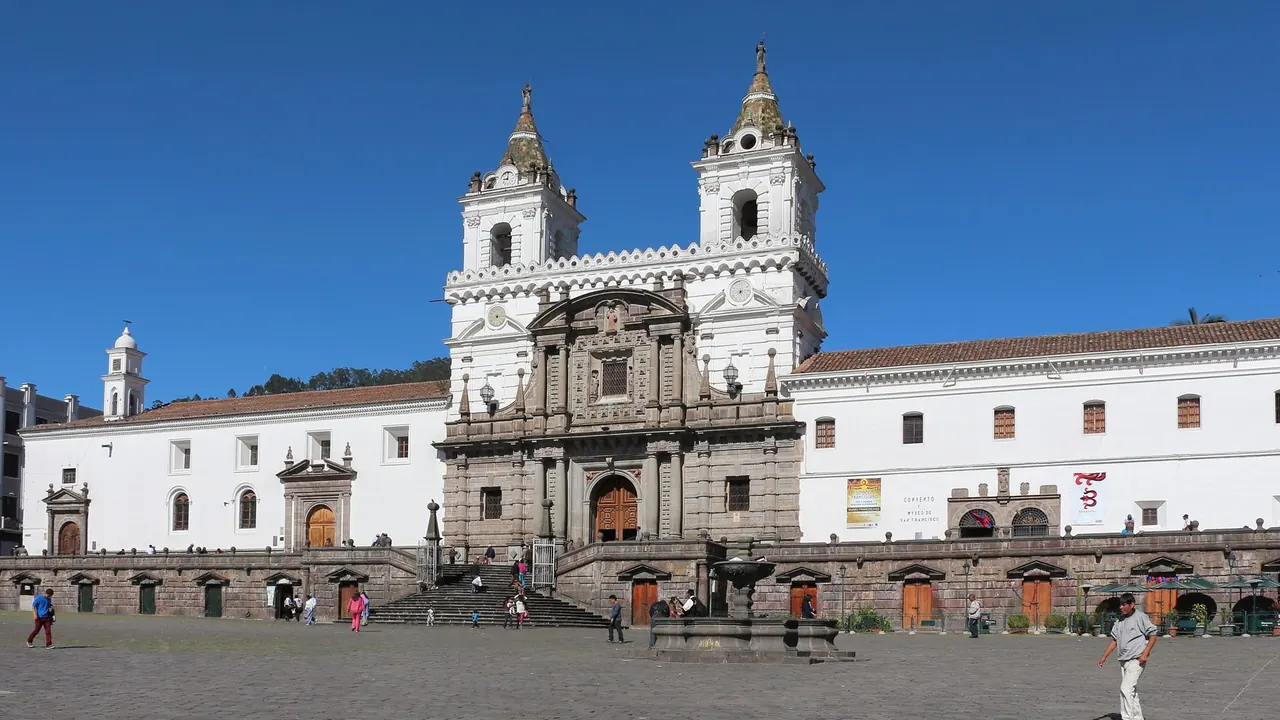
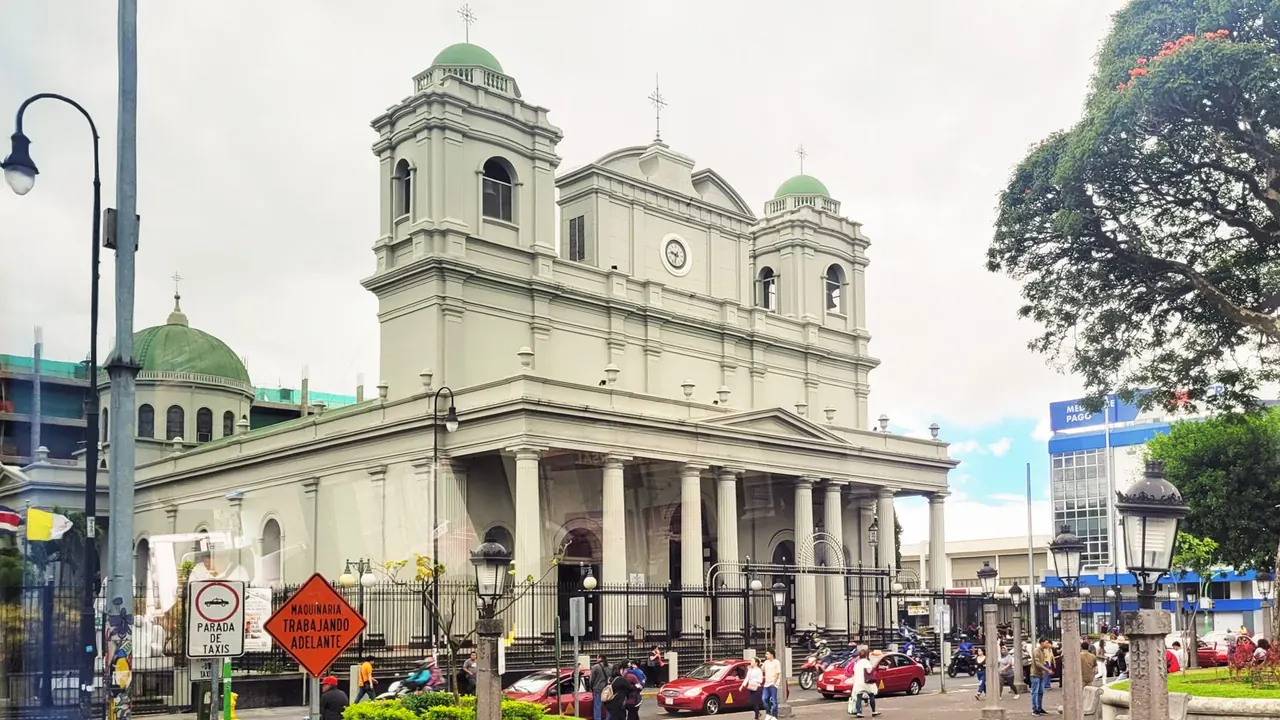
Photos: Quito by Bernard Gagnon, CC BY-SA 3.0, cropped; San Jose, Costa Rica by Bernard Gagnon, CC0.
Quito or San Jose, Costa Rica?
Our verdict in twelve categories, each scored against the same fixed benchmark cities, and the climate month by month, so you can choose for your trip.
Choose Quito for
- culture and sights
- prices
- wellness
Quito is the city to choose if you want the city itself to be the reason for the trip. Its colonial centre is one of the great old towns of the Americas, the volcanoes start at the edge of the suburbs, and day-to-day costs are low. The cool air and the altitude ask for a slower first few days, so it suits adults who like walking churches and museums by day and hiking above the clouds at the weekend.
Choose San Jose, Costa Rica for
- families
- beaches
San Jose is better for travellers who mainly want Costa Rica's countryside and see the capital as the place they arrive. The city has a day or two of sights at most, but it is lower, warmer and easier on children. Crater rims, rainforest, white-water rivers and the Pacific coast are all within a few hours' drive, which makes it a sensible first stop for families and anyone heading on to the beach.
Scoreboard
Twelve categories on one fixed scale from 0 to 100. The shaded stretch is the gap between the two.
Your match
Pick a travel style or drag the sliders, and both match scores follow your weighting.
Wins on culture and sights and prices with your weighting.
Wins on families and beaches with your weighting.
What matters to you?
Category by category
What the scores mean for a trip.
Beaches & swimming
Neither city has a beach, but San Jose is the closer of the two to the sea. The Pacific at Jaco or Puntarenas is about two hours' drive away, with warm water all year, so a beach trip is a long day out or an easy next stop.
From Quito, the coast is a long day's drive or a domestic flight, and sand means a separate leg, often the Galápagos. In town, both cities only offer hotel pools, though Quito also has warm municipal pools in the valleys below the city.
Food & drink
Quito eats better, mostly because highland cooking has more variety: locro de papa, hornado, llapingachos, sugared empanadas de viento, and canelazo on cold nights. The food courts of the Mercado Central and Mercado Santa Clara add juices from unfamiliar fruits, and Ecuadorian cacao gives the city something sweet to explore.
San Jose's cooking is simpler, with gallo pinto and the casado plate eaten in family-run sodas or at its own Mercado Central. Its strength is coffee from the surrounding slopes, and Barrio Escalante is where to go for a more ambitious meal.
Culture & sights
This is the biggest gap between the two cities. Quito's historic centre was one of the first places on the UNESCO list. You can step from the gold-covered La Compañía to the San Francisco monastery, climb the towers of the Basílica del Voto Nacional, and finish with Guayasamín's paintings at the Capilla del Hombre.
Earthquakes have left San Jose with mostly mid-century concrete. Its gilded Teatro Nacional, the Pre-Columbian Gold Museum, the Jade Museum and the National Museum in the old Bellavista fortress are worth seeing, but they make one or two days rather than a whole trip.
Nightlife
The two are about even, but the nights are laid out differently. Quito's going out is concentrated in La Mariscal around Plaza Foch, a busy weekend mix of salsa clubs and backpacker bars, with quieter cocktail places in La Floresta and an early stroll along La Ronda.
San Jose is more spread out and more local. There are craft-beer bars in Escalante, cheap student bars in San Pedro, and the walled El Pueblo complex, where salsa and merengue run late. In both cities, visitors take taxis between areas after dark.
Nature & outdoors
Both are surrounded by volcanoes, but Quito puts them closer to hand. The TelefériQo lifts you from the city to the páramo for the walk up Rucu Pichincha, Cotopaxi's glacier is about two hours south, and the cloud forest around Mindo is famous for its birdwatching.
San Jose has its own strengths. Poas and Irazu let you look into active craters, Braulio Carrillo drops from cloud forest to rainforest, and the Pacuare and Reventazon rivers offer white-water rafting that Quito cannot match.
Day trips
The two are evenly matched, but the outings are different in kind. Quito's best days out are Indigenous and Andean: the Saturday market at Otavalo with the weaving villages nearby, and the equator line at Mitad del Mundo. Beyond those, most trips head to the mountains.
San Jose's trips revolve around coffee and colonial history. They include the basilica and ruined church at Cartago, the old church in the Orosi valley, painted oxcarts at Sarchi and farm tours on the slopes of the volcanoes. All are pleasant, though none is a destination on its own.
Good for families
San Jose is the easier city with children, mainly because it sits far lower. Quito's altitude can make small children tired and unwell for the first days, on top of steep streets and heavy traffic. Its equator line, cable car and Yaku water museum are enjoyable, but families usually keep their days short.
In San Jose, the Museo de los Ninos and the lawns of La Sabana fill a city day. Butterfly farms, sloths in the waterfall gardens and crater rims reached by road make easy outings, and families tend to stay in the quieter western suburbs.
Getting around
Quito is easier to get around. A metro line runs the length of its long, narrow valley, backed by the Trolebús and Ecovía bus corridors, though these get crowded and attract pickpockets at rush hour. Its compact old town is walkable, if steep and breathless at first.
San Jose has no metro, and its buses, run by private companies from scattered terminals, are hard for a visitor to work out. Traffic slows almost every trip, so taxis in town and a hire car or shuttle beyond are the usual choice.
Shopping & style
There is little between them, and neither is a fashion city, but the souvenirs are different. Quito's are crafted and wearable: genuine toquilla-straw Panama hats, alpaca textiles, tagua-nut carvings, silver and bean-to-bar chocolate. Committed buyers save their money for Otavalo.
San Jose's best buy is a bag of local coffee, along with oxcart miniatures and Boruca masks from the craft market and browsing in the Mercado Central. In both cities, brand shopping is left to suburban malls.
Affordability
Quito is clearly the cheaper of the two. Meals, transport and taxis cost very little, and characterful guesthouses in colonial houses are good value. Costs climb only for guided volcano trips, imported drinks and, above all, the Galápagos.
San Jose is mid-range. Sodas, buses and hotels are reasonable, but sit-down restaurants and alcohol come close to North American prices, and national parks charge foreigners far more than locals.
Live music & performing arts
The programmes are similar in size, and both centre on a gilded nineteenth-century theatre: the Teatro Nacional Sucre in Quito and the Teatro Nacional in San Jose, each home to a national symphony orchestra.
What sets Quito apart is its folk ballet of Andean music and dance, along with occasional baroque and choral concerts in its old churches. San Jose offers salsa bands in dance halls, Spanish-language drama in small theatres and larger touring concerts. Either is worth an evening, but not a whole trip.
Wellness & relaxation
Quito has the better place to unwind, even though it lies outside the city. Papallacta's steaming thermal pools in the misty páramo are about an hour and a half away, and El Tingo's simple public pools are closer still.
San Jose has no bathing tradition. Its country's famous hot springs at Arenal are too far for a day, so rest means the modest pools of the Orosi valley or a quiet lodge among the coffee farms. Both cities are noisy, but only Quito's altitude makes the first days tiring.
When should you go?
Pick your month. The climate figures are measured averages, not a forecast.
Quito in July
San Jose, Costa Rica in July
Daytime high, °C
Rainfall in the month, mm
Where the figures come from
Quito's station stands 208 m above the city centre, so the centre is likely a little warmer than the figures say.
San Jose, Costa Rica's station stands 241 m below the city centre, so the centre is likely a little cooler than the figures say.
Temperature and rainfall are climate normals, averaged over the years shown. Quito: 1961-1990 normals, Izobamba-Santa Catalina (16.8 km from centre). San Jose, Costa Rica: 1991-2020 normals, Juan Santamaria (16.8 km from centre).
Quito barely changes temperature through the year, with days around 18°C and cool evenings in every month, so it is never too hot for walking the old town. What changes is the rain. June to August is the dry spell, with only 32mm in July and the most sunshine of the year, and this is the best time for clear views of the volcanoes. Rain builds again from October and is heaviest in March and April.
San Jose is much warmer, with days of about 28°C all year and the hottest spell in March and April. It has a sharp dry season from December to April, when rain is rare and both the city and trips to the coast are at their easiest. From May to November the rain is heavy, peaking at about 330mm in September and October, usually as afternoon downpours. The two seasons work in opposite directions: Quito is at its best in the middle of the year, when San Jose is wet, and San Jose is at its best early in the year, when Quito's rain is building.
Which traveller are you?
On a culture and arts trip, Quito is the clear choice. Its colonial centre, gilded churches and Quito school altarpieces, along with museums such as Casa del Alabado, fill several days, while San Jose's handful of sights takes one or two.
For a trip on a tight budget, Quito stretches money further. Set lunches, market juices, metro rides and guesthouses in colonial houses all cost little. In San Jose, cheap sodas help, but restaurants, alcohol and park fees for foreigners soon add up.
On a family trip with children, San Jose is easier. Its lower altitude spares small children the tiredness and sickness that Quito can bring, and sloths, butterfly farms, waterfall gardens and the Museo de los Ninos are all close by.
Before you go
| Measure | Quito | San Jose, Costa Rica |
|---|---|---|
| Official language | Spanish, Shuar, Northern Quichua | Spanish |
| Currency | US Dollar (USD) | Costa Rican Colon (CRC) |
| Sockets | AB120 V, 60 Hz | AB120 V, 60 Hz |
| Driving side | Right | Right |
| Time zone | UTC-5 | UTC-6 |
| Emergency number | 911 | 911 |
| Elevation | 2,850 m | 1,161 m |
| Main airport | Mariscal Sucre International Airport (UIO)20 km from centre22 non-stop destinations | Juan Santamaría International Airport (SJO)16 km from centre49 non-stop destinations |
| Public holidays this year | 11 days | 11 days |
By the numbers
| Measure | Quito | San Jose, Costa Rica |
|---|---|---|
| City population | 1,763,275 | 335,007 |
| People per km² | 4,735 | 7,511 |
| Museums within 10 km | 16 | 9 |
| UNESCO World Heritage sites within 50 km | 2 | 0 |
Where else could you go?
Every comparison below shares a destination with this one, so you can follow Quito or San Jose, Costa Rica somewhere new.