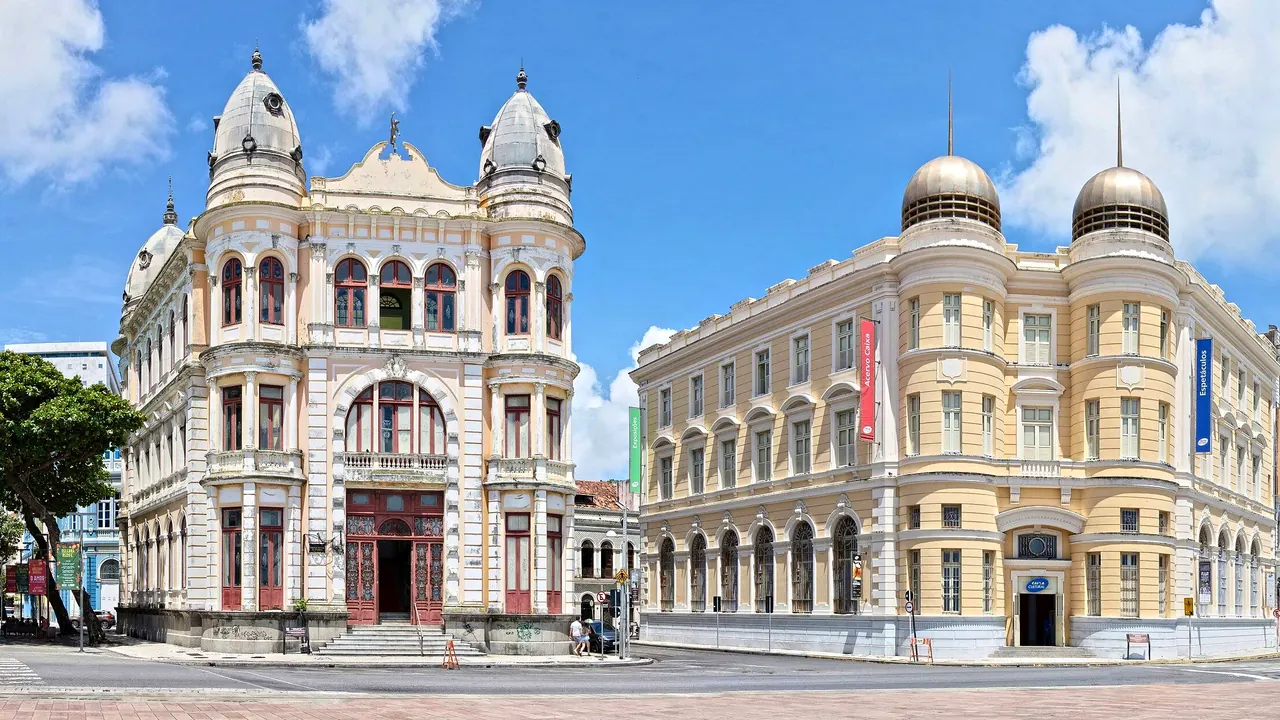
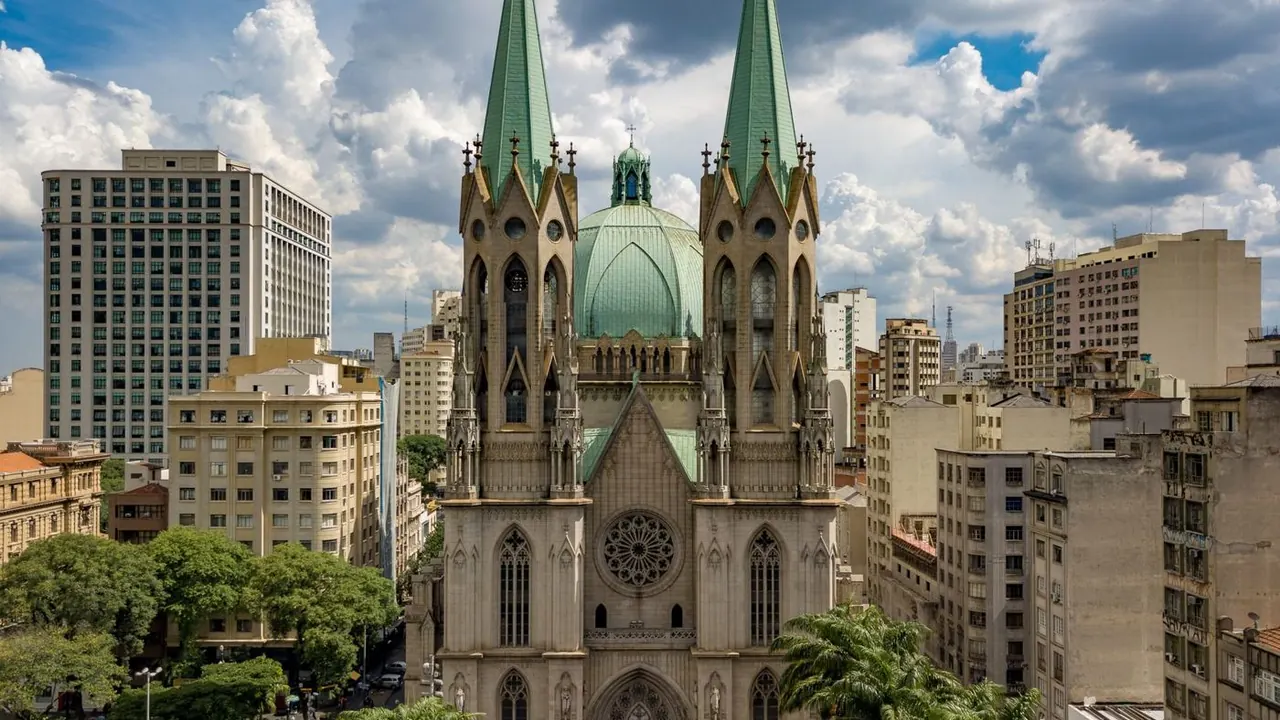
Photos: Recife by Wilfredor, CC0; Sao Paulo by Webysther Nunes, CC BY-SA 4.0, cropped.
Recife or Sao Paulo?
Our verdict in twelve categories, each scored against the same fixed benchmark cities, and the climate month by month, so you can choose for your trip.
Choose Recife for
- beaches
- prices
- day trips
Recife suits a warm-water trip with a strong regional flavour. You get a beach on the doorstep at Boa Viagem, reef pools and resort coast an hour south, Olinda's colonial hill town next door, and frevo and maracatu that belong to this city and nowhere else. It is also the cheaper of the two. The trade-off is a city that is tiring to move around and has few big-city extras.
Choose Sao Paulo for
- shopping
- nightlife
- food and drink
Sao Paulo is the choice for people who travel to eat, go out and shop. It has immigrant cooking from Liberdade to Bixiga, bar districts that run until morning, Oscar Freire's fashion streets and a real calendar of concerts, opera and samba. The sea is a drive down the escarpment, though, and it is a place for urban appetites, not lazy days on the sand.
Scoreboard
Twelve categories on one fixed scale from 0 to 100. The shaded stretch is the gap between the two.
Your match
Pick a travel style or drag the sliders, and both match scores follow your weighting.
Wins on beaches and prices with your weighting.
Wins on shopping and nightlife with your weighting.
What matters to you?
Category by category
What the scores mean for a trip.
Beaches & swimming
Recife has a beach as part of daily life. You can walk out of a Boa Viagem hotel onto the sand, where coconut sellers and football games start early and low-tide pools inside the reef are warm enough to wade in. Shark warnings keep real swimming off the city shore, so serious swimmers head south to the raft-reached pools of Porto de Galinhas or the sheltered lagoon at Muro Alto.
Sao Paulo sits up on its plateau, and its nearest sand is Santos or Guarujá, reached by the Serra do Mar road. Those beaches are broad and urban, and the prettier coves of Ubatuba and Ilhabela need a weekend. On a Sao Paulo trip the beach is an excursion, not a daily routine.
Food & drink
Recife eats regionally, and that is its charm: carne de sol with macaxeira, sururu broths, crab cracked with a mallet at a beach barraca, bolo de rolo for dessert. The best of it is casual, and once you step outside Pernambuco's own cooking the range thins quickly.
Sao Paulo is in another league for anyone who plans the day around meals. A century of immigration put ramen and sushi in Liberdade, pizza in Bixiga and kibbeh on lunch counters across town, alongside padaria breakfasts, feijoada days and the Mercado Municipal's mortadella sandwich. At the top end, Jardins and Pinheiros cook ambitious menus built on Amazonian and Atlantic Forest ingredients, the kind of dining Recife does not try to match.
Culture & sights
The two are fairly level, but they offer different centuries. Recife's appeal is colonial and older: the Dutch-era sugar port, the rebuilt Kahal Zur Israel synagogue on Rua do Bom Jesus, the gilded Capela Dourada, the eccentric Brennand castle and ceramic garden, and Olinda over the city line. Expect faded stretches between the highlights.
Sao Paulo is a twentieth-century city, best for art museums and architecture. MASP's glass easels, Brazilian painting at the Pinacoteca, Niemeyer's Ibirapuera pavilions and the Copan, and Lina Bo Bardi's SESC Pompeia are its highlights, though colonial heritage is thin and the sights are spread far apart.
Nightlife
Recife's evenings are relaxed and local: pavement tables on Rua da Moeda, forró drifting over from the next bar, a smarter crowd in Casa Forte and Graças. It only reaches full intensity at Carnival, when the Galo da Madrugada fills the streets.
Sao Paulo goes out hard every week of the year. A typical night runs from a Vila Madalena boteco to a cocktail bar to a club after 2am, with Baixo Augusta for a grittier alternative crowd and electronic venues known well beyond Brazil. It also has one of Latin America's largest LGBTQ+ scenes, and Thursday already feels like a weekend.
Nature & outdoors
Neither city is built for the outdoors, but Sao Paulo has a slight edge on land. Ibirapuera gives it a proper city park, and the forested Serra do Mar, with waterfalls and the misty village of Paranapiacaba, offers real hiking within a couple of hours if the traffic allows.
Recife's nature is flat and watery: river trips on the Capibaribe, mangroves, a patch of Atlantic forest at Dois Irmãos. Its strengths are on the sea, with snorkelling, kitesurfing and paddleboarding on the coast to the south, but there are no hills to walk.
Day trips
Recife has the single outing that makes a trip: Olinda, a short taxi ride away, whose whitewashed churches and painted houses are worth an afternoon and an evening. Add Porto de Galinhas for the reef pools, and Igarassu or Itamaracá for small colonial and Dutch traces.
Sao Paulo's options are more modest. They include Santos and its old coffee exchange, the weekend craft market at Embu das Artes and the wineries of São Roque. Its standout colonial town, Paraty, is too far to visit in a day, and every outing starts by fighting your way out of the city.
Good for families
Sao Paulo gives families more to fill the days. There is the hands-on Catavento science museum, a zoo with a drive-through safari, a large aquarium, playground space in Ibirapuera and theme parks near Vinhedo. Recife's best moments for children are wading among fish in the Porto de Galinhas pools, plus the Dois Irmãos zoo, and many families end up in a coastal resort instead of the city.
Both cities welcome children warmly and both are tiring with small ones. In Sao Paulo the strain is long drives and crowds. In Recife it is heat, broken pavements and keeping an eye on bags.
Getting around
Sao Paulo at least gives visitors a usable metro, clean and simple, linking Paulista, Liberdade, Luz, the old centre and Pinheiros. The network is small for the city's size and traffic is notorious, but neighbourhoods like Jardins and Vila Madalena work well on foot.
Recife leans almost entirely on ride-hailing, because its metro serves suburbs and the airport, not the sights. The Boa Viagem promenade is pleasant to walk, while the old centre empties after dark, so evenings there mean a car.
Shopping & style
Sao Paulo is Brazil's place to shop. Choose from Brazilian labels and swimwear on Rua Oscar Freire, lavish malls, the wholesale scrum of Rua 25 de Março and independent design shops in Pinheiros. Recife's malls cover everyday fashion, and there is no comparable boutique street.
What Recife does better is handmade regional craft. That means clay figurines and cordel woodcuts in the old prison cells of the Casa da Cultura, Carnival puppets in Olinda and pottery from Alto do Moura in Caruaru.
Affordability
Recife is the cheaper stay overall. Beer, coconuts and kiosk lunches cost little, seafront rooms in Boa Viagem are fairly priced and museums are close to free. The exceptions are Carnival week and the Porto de Galinhas resorts.
Sao Paulo is cheap at street level, with padaria coffee, set lunches and metro rides, but it is among Brazil's priciest cities once you move up. Hotels in Jardins or Itaim and the restaurants that draw food travellers there cost close to Southern European levels.
Live music & performing arts
Recife's music is rooted in the place. It has frevo brass with its umbrella dancers, maracatu drum processions, manguebeat and ciranda in the streets of Recife Antigo and Olinda. The Paço do Frevo and the Teatro Santa Isabel complete a scene that is lively, but formal performance is limited.
Sao Paulo covers far more ground. The state symphony plays in the restored railway hall of Sala São Paulo, the Theatro Municipal stages opera and ballet, and Portuguese-language musicals have long runs. Samba circles, choro and jazz clubs fill the evenings, and the SESC centres run low-cost concerts and dance across the city.
Wellness & relaxation
Neither city is a place to rest, and neither has a bathing tradition. Recife is hot, loud and full of traffic, so the best way to unwind is to leave it. A few slow days at a spa resort by the calm water of Muro Alto or Porto de Galinhas will do far more than any hotel massage in town.
Sao Paulo is fast, loud and late-running, but it keeps its relaxation inside the city. There are polished day spas and beauty salons in Jardins and Itaim, and Japanese-style relaxation spots tied to its Japanese community. For quiet hours outdoors, try an afternoon under Ibirapuera's trees or a Sunday on car-free Paulista.
When should you go?
Pick your month. The climate figures are measured averages, not a forecast.
Recife in July
Sao Paulo in July
Daytime high, °C
Rainfall in the month, mm
Temperature and rainfall are climate normals, averaged over the years shown. Recife: 1991-2020 normals, Recife (4 km from centre). Sao Paulo: 1991-2020 normals, Sao Paulo (5.9 km from centre).
Recife is hot every month, with daytime highs around 31°C for most of the year. The sea is warm enough for a long dip all year and is still about 26°C at its coolest, from July to September. The rainy season falls in the southern autumn and winter, from April to July, and peaks in June at about 388mm. October to December is the best time to go: dry, and the sunniest stretch of the year. January and February are still good beach months. In any season the midday heat makes long sightseeing walks hard work.
Sao Paulo's year runs the other way. Its summer, December to March, is the wet season, and January brings close to 297mm of rain. From May to September it is dry and mild, with highs near 23°C in midwinter. That is comfortable weather for museums and long days on foot, though it is a little less sunny than Recife. This makes the two awkward to combine in one trip. Recife is at its best in late spring, while Sao Paulo is most pleasant in winter, which is when Recife is at its wettest.
Which traveller are you?
For a beach and sun trip, Recife is the clear pick. Boa Viagem is right in the city for sunbathing and wading, and Porto de Galinhas, Muro Alto and Carneiros are an easy drive away. Sao Paulo's coast means a long, traffic-prone drive down the mountains.
On a food and nightlife trip, Sao Paulo wins comfortably. It has Japanese counters in Liberdade, Italian cantinas in Bixiga and top kitchens in Pinheiros, followed by boteco evenings in Vila Madalena and clubs that close after dawn. Recife's plastic-table bar nights are fun, but they are a smaller scene.
On a trip with a tight budget, Recife stretches money further. Beach kiosks, per-kilo lunches, cheap ride-hailing and near-free museums keep daily costs low. Sao Paulo's everyday basics are also cheap, but its hotels, cocktail bars and acclaimed restaurants are priced close to Southern Europe.
Before you go
| Measure | Recife | Sao Paulo |
|---|---|---|
| Official language | Portuguese | Portuguese |
| Currency | Brazilian Real (BRL) | Brazilian Real (BRL) |
| Sockets | CN60 Hz | CN60 Hz |
| Driving side | Right | Right |
| Time zone | UTC-3 | UTC-3 |
| Emergency number | Police 190, ambulance 192, fire 193 | Police 190, ambulance 192, fire 193 |
| Elevation | 6 m | 760 m |
| Main airport | Recife/Guararapes - Gilberto Freyre International Airport (REC)9 km from centre39 non-stop destinations | São Paulo/Guarulhos–Governor André Franco Montoro International Airport (GRU)21 km from centre104 non-stop destinations |
| Public holidays this year | 14 days | 15 days |
By the numbers
| Measure | Recife | Sao Paulo |
|---|---|---|
| City population | 1,488,920 | 11,451,999 |
| People per km² | 6,805 | 7,519 |
| Museums within 10 km | 21 | 90 |
| UNESCO World Heritage sites within 50 km | 1 | 0 |
| Swim season, months above 21 °C | 12 months | - |
Where else could you go?
Every comparison below shares a destination with this one, so you can follow Recife or Sao Paulo somewhere new.
- Paratyvs Sao Paulo
- Rio de Janeirovs Sao Paulo
- Florianopolisvs Sao Paulo
- Buziosvs Sao Paulo
- Salvadorvs Recife
- Foz do Iguacuvs Sao Paulo