Brazzaville
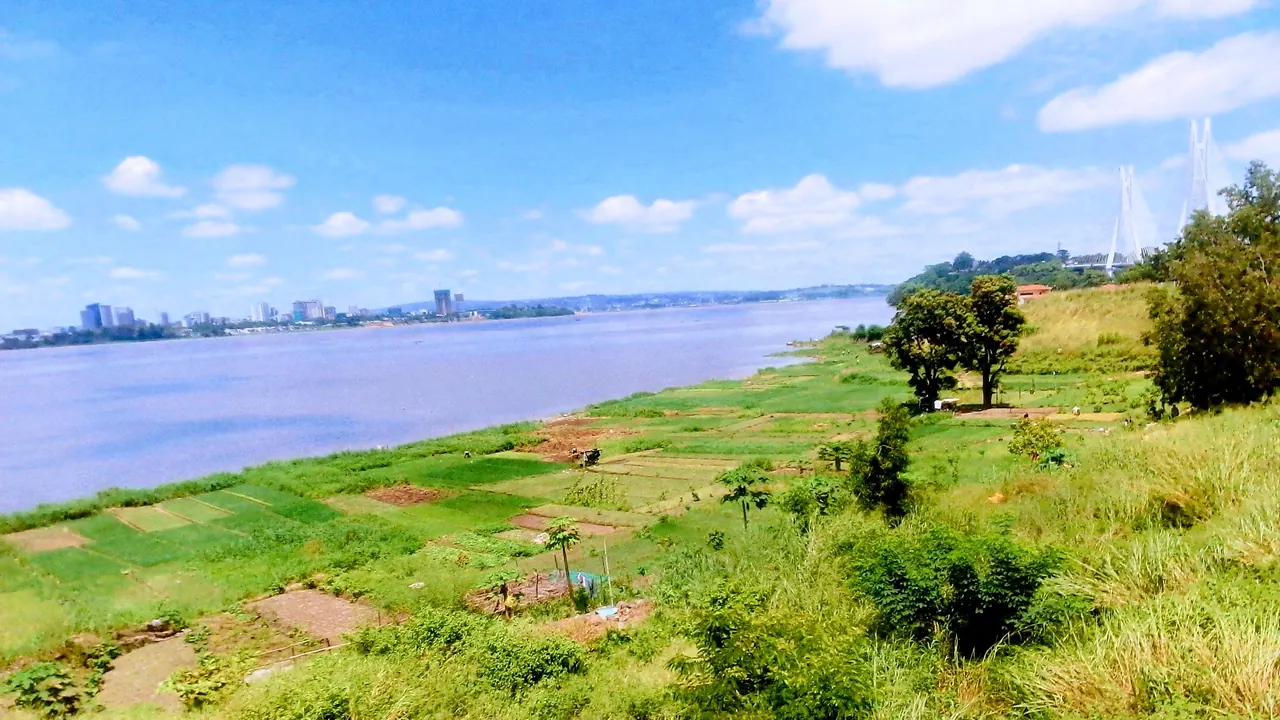
The Congo River seen from the Corniche in Brazzaville, with a pylon of the Corniche viaduct
- Nightlife45
- Food & drink40
- Live music & the arts38
Photo: BOKOBA veroly, CC BY-SA 4.0, cropped
Match
25
Every category weighted equally
- Beach & sun23
- Culture & arts27
- Food & nightlife30
- Family trip22
- Outdoors23
- Relax & unwind22
- Shopping & style27
- On a budget26
Brazzaville in twelve categories
Our verdict on each, scored 0 to 100 against the same fixed benchmark cities, so a score means the same thing on every page.
Beaches & swimming. Scores 5 out of 100.
Food & drink. Scores 40 out of 100.
Culture & sights. Scores 24 out of 100.
Nightlife. Scores 45 out of 100.
Nature & outdoors. Scores 35 out of 100.
Day trips. Scores 10 out of 100.
Good for families. Scores 15 out of 100.
Getting around. Scores 25 out of 100.
Shopping & style. Scores 24 out of 100.
Affordability. Scores 30 out of 100.
Live music & performing arts. Scores 38 out of 100.
Wellness & relaxation. Scores 12 out of 100.
Brazzaville category by category
Beaches & swimming
5Brazzaville has no beach life to speak of. The city faces the Congo River, which is wide, fast and full of strong currents and rapids, so swimming in it is not something a visitor should consider. The Atlantic coast at Pointe-Noire is a long way west and needs a flight or a long overland journey. For a swim, the realistic option is a hotel pool.
Food & drink
40Eating in Brazzaville centres on Central African home cooking: saka-saka, cassava leaves pounded and stewed with fish or palm oil, maboke, river fish steamed in leaf parcels, smoked fish, grilled chicken and chikwangue, the dense fermented cassava bread sold wrapped in leaves. The best of it is found in simple open-air eateries and grill spots along the river and in Poto-Poto and Bacongo, often eaten with cold local beer.
There is also a French layer from colonial times, with bakeries, cafés and a few restaurants serving French and Lebanese food to the diplomatic and business crowd. The overall scene is small, though, and a visitor will find good local dishes rather than a city to eat their way through.
Culture & sights
24The sights are few but distinctive. The Basilique Sainte-Anne, with its steep green-tiled roof and tall pointed arches, is the city's finest building, a striking piece of mid-century colonial architecture. The marble Mémorial Pierre Savorgnan de Brazza honours the explorer who gave the city its name, and the Sacré-Coeur cathedral is among the oldest churches in the region. The Poto-Poto school of painting, founded in the 1950s, still has studios where artists work in its recognisable style.
Beyond these, the national museum is modest and the colonial quarter around the river is pleasant rather than remarkable. A day or two covers what there is to see.
Nightlife
45Going out in Brazzaville means the nganda, the open-air bar with plastic chairs, crates of large beer bottles and loud Congolese rumba and ndombolo on the sound system. Bacongo and Poto-Poto are the heart of it, and on weekend nights these neighbourhoods stay up late with dancing in the street-side terraces. Bacongo is also home to the sapeurs, the dandies in flamboyant suits who show themselves off around the bars.
The city centre has a handful of hotel bars and nightclubs that attract expatriates and the local well-off. It is a genuine local scene with real character, but small, and visitors unfamiliar with the city are best going out with someone who knows it and travelling by taxi at night.
Nature & outdoors
35The great natural feature is the Congo River itself, here broad enough that Kinshasa's skyline is visible across it. Just downstream of the city the river breaks into the Rapides du Djoué, a powerful stretch of white water that is a popular place to sit and watch. Beyond the suburbs lies the rolling grassland and gallery forest of the Batéké plateau.
The main outing is the Lésio-Louna reserve, several hours north, where orphaned western lowland gorillas have been returned to the wild and can sometimes be seen from a boat. Organised hiking, cycling or water sports barely exist, and outings need a driver and some planning.
Day trips
10There is very little to visit as a day out. The surrounding countryside is mostly rural villages and plateau, with no historic towns, heritage sites or wine regions within easy reach. Kinshasa lies just across the river by ferry, but crossing means a separate visa and slow border formalities, so it is a trip to plan rather than a casual outing. Most visitors spend their time in the city and treat excursions as nature trips.
Good for families
15Brazzaville is not set up for a family vacation. There are no zoos, aquariums or theme parks aimed at children, few playgrounds, and the heat, humidity and malaria risk mean careful health preparation. Children are warmly welcomed by Congolese families, and hotel pools and the riverside at the rapids give some relief, but otherwise there is little to fill a day with young children.
Getting around
25There is no metro or tram, and the minibuses known as foula-foula follow routes that are hard for a visitor to read. In practice everyone uses the green and white taxis, which are plentiful and can be shared or hired for a trip. The administrative centre near the river can be walked in parts, but pavements are uneven, the heat is heavy and the districts of Poto-Poto and Bacongo are a drive away. Hiring a car with a driver is the easiest way to cover the city and its outskirts.
Shopping & style
24Shopping here is about markets and local craft. The Marché Total in Bacongo and the Poto-Poto market are large, crowded and practical, selling wax-print fabrics, produce, smoked fish and household goods. The more rewarding buys are paintings from the Poto-Poto artists' studios, carvings, and a made-to-measure outfit from one of the tailors who serve the city's sharp-dressed sapeurs. There are no shopping streets or malls worth seeking out, and imported goods are limited and costly.
Affordability
30Brazzaville is expensive for a visitor, despite local food, taxis and market goods being cheap. The problem is accommodation: hotels of a reasonable international standard are few and priced for business travellers and the oil and diplomatic sector. Restaurants serving foreign food and anything imported, from wine to sun cream, cost well above European levels. A visitor eating at local grills and riding shared taxis can save, but the bed for the night keeps the overall cost high.
Live music & performing arts
38Brazzaville is one of the two homes of Congolese rumba, the guitar-led dance music shared with Kinshasa across the river and recognised by UNESCO as intangible heritage. Live bands play in bars and dance halls in Poto-Poto and Bacongo, usually late and at weekends, and hearing one is the best musical experience the city offers. The Festival Panafricain de Musique, held here at intervals since the 1990s, brings musicians from across the continent.
Outside that, formal performing arts are thin: there is no opera or orchestra season, and theatre and dance are occasional, often hosted by cultural institutes. Finding live music takes local advice rather than a published listings guide.
Wellness & relaxation
12There is no bathing or spa tradition in Brazzaville. Wellness comes down to the pools and occasional spa or massage rooms of the larger hotels. The pace in the centre can be slower than in many African capitals, and a late afternoon by the river watching the light over the water is pleasant, but nobody comes here to rest and recover.
When should you go?
Pick a month to see what it is like. The climate figures are measured averages, not a forecast.
Brazzaville in July
Daytime high, °C
Rainfall in the month, mm
The whole year
Shaded against this destination’s own year: the deepest cell is its best month for that figure and the palest its weakest.
Temperature and rainfall are climate normals, averaged over the years shown. Brazzaville: 1991-2020 normals, Brazzaville / Maya-Maya (3.2 km from centre).
Before you go
| Measure | Brazzaville |
|---|---|
| Official language | French |
| Currency | CFA Franc BEAC (XAF) |
| Sockets | CE230 V, 50 Hz |
| Driving side | Right |
| Time zone | UTC+1 |
| Emergency number | Police 117, fire 118 |
| Elevation | 320 m |
| Main airport | Maya-Maya International Airport (BZV)3 km from centre16 non-stop destinations |
| Public holidays this year | 11 days |
By the numbers
| Measure | Brazzaville |
|---|---|
| Population | 2,145,783 |
| People per km² | 3,649 |
| Museums within 10 km | 2 |
| UNESCO World Heritage sites within 50 km | 0 |
Compare Brazzaville with
Every comparison with a written verdict behind it.