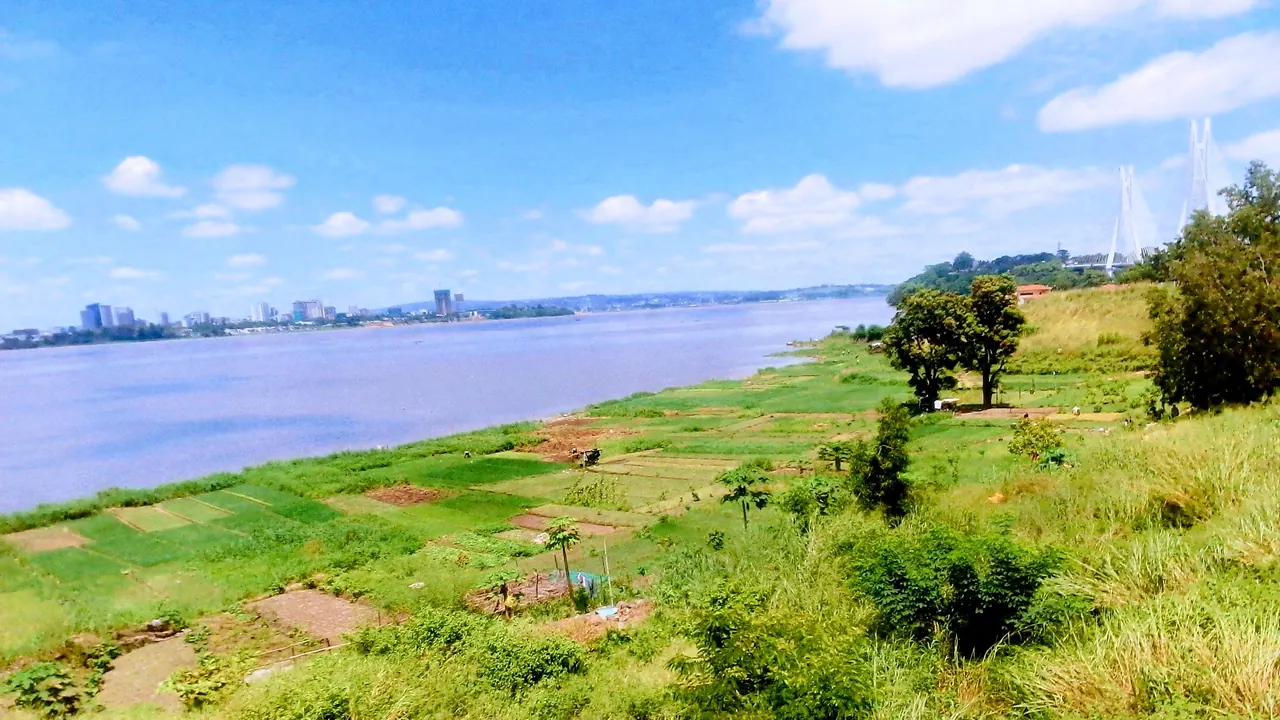
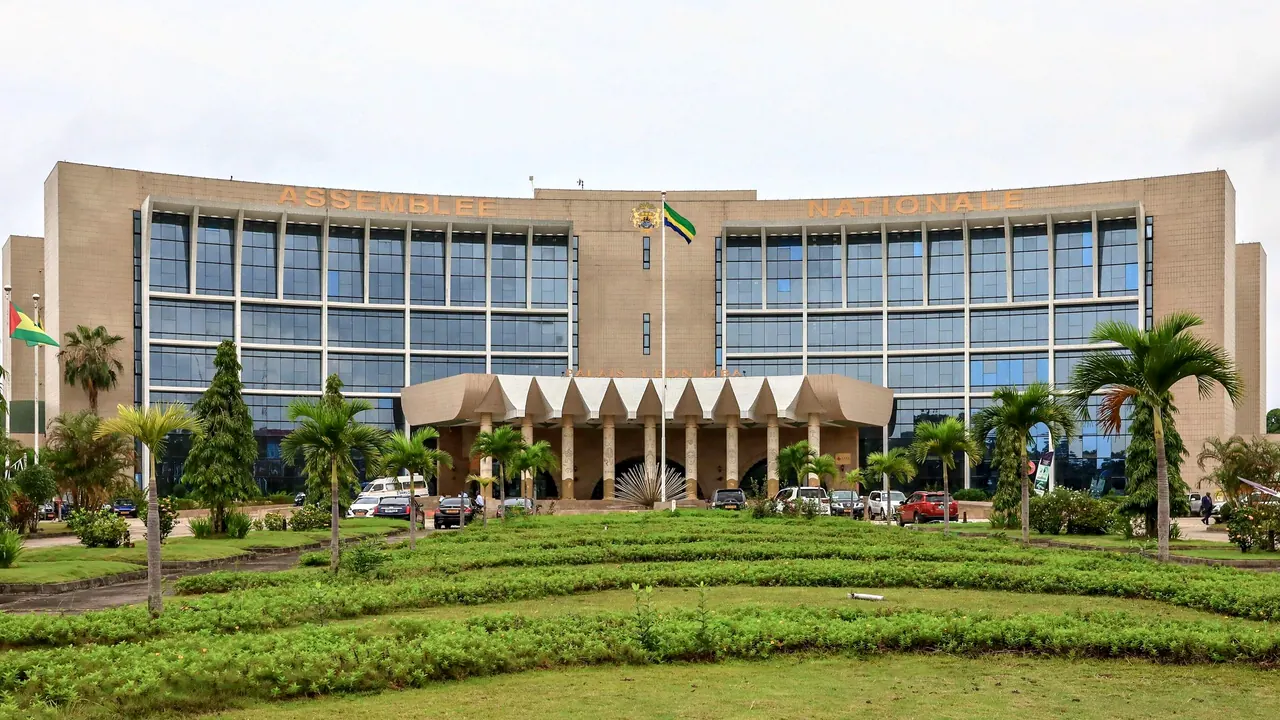
Photos: Brazzaville by BOKOBA veroly, CC BY-SA 4.0, cropped; Libreville by Titlutin, CC BY 4.0, cropped.
Brazzaville or Libreville?
Our verdict in twelve categories, each scored against the same fixed benchmark cities, and the climate month by month, so you can choose for your trip.
Choose Brazzaville for
- live music and the arts
- prices
- culture and sights
Brazzaville suits a traveller who comes for the people and the music more than the scenery. Congolese rumba belongs to this side of the river as much as to Kinshasa, and the nganda bars of Bacongo and Poto-Poto, the sharp-suited sapeurs and the painters' studios give a short stay real character. Beds are expensive, but a little less so than in Gabon, and the river and the Djoué rapids are the main natural attraction.
Choose Libreville for
- beaches
- nature and the outdoors
- wellness
Libreville is the better pick for anyone who wants the sea and the wild within a boat ride. Pointe Denis offers a proper sand beach across the estuary, and the Pongara and Akanda parks bring turtles, mangroves and wading birds close to the capital. Its own sights and music are thinner and it costs more, so it works best as a base for the coast and the parks, not as a city to explore for its own sake.
Scoreboard
Twelve categories on one fixed scale from 0 to 100. The shaded stretch is the gap between the two.
Your match
Pick a travel style or drag the sliders, and both match scores follow your weighting.
Wins on live music and the arts and prices with your weighting.
Wins on beaches and nature and the outdoors with your weighting.
What matters to you?
Category by category
What the scores mean for a trip.
Beaches & swimming
This is the sharpest difference between the two. Brazzaville sits on the Congo River, whose currents and rapids rule out swimming, and the nearest Atlantic shore at Pointe-Noire is a flight away, so a swim means a hotel pool.
Libreville lies on the Gulf of Guinea, with a sea that is warm all year. The city shore has sand, though the water near the estuary is not always clean. The beaches worth the trip are Pointe Denis, a boat ride across the Komo, and the rocky coves and calmer pools of Cap Estérias about 30km north.
Food & drink
Both kitchens rest on cassava, smoked fish and simple open-air eateries, with a French and Lebanese layer for the diplomatic crowd, and neither is a city to eat your way through. Brazzaville's dishes come from the river: saka-saka of pounded cassava leaves and maboke, fish steamed in leaf parcels, eaten at grills in Poto-Poto and Bacongo with cold beer.
Libreville cooks more with forest produce, so look for poulet nyembwe in palm-nut sauce and anything made with smoky odika, plus grilled fish on the seafront in the evening. The Mont-Bouët market shows what the city eats, and sit-down meals are dearer because so much is imported.
Culture & sights
Neither capital holds a visitor for long, but they offer different things. Brazzaville's strengths are buildings and living art: the green-roofed Basilique Sainte-Anne, the marble de Brazza memorial, the old Sacré-Coeur cathedral and the working studios of the Poto-Poto painters.
Libreville has little historic architecture, but its National Museum of Arts and Traditions holds the Fang, Punu and Kota masks and reliquary figures at the root of Gabonese art. The Église Saint-Michel, with its wooden columns carved with biblical scenes, is the other sight to seek out. In both, a day or two is enough.
Nightlife
Both scenes are small and local, and in both you take a taxi after dark. Brazzaville's nights happen at street level, in nganda bars with plastic chairs and loud rumba and ndombolo in Bacongo and Poto-Poto, where the sapeurs show off their suits between the terraces.
Libreville gathers its nightlife in Quartier Louis, where lounges and nightclubs sit close together and weekends run until dawn to Afrobeats, coupé-décalé and international hits. Drinks in the smarter places there cost a good deal.
Nature & outdoors
Libreville has far more nature on its doorstep. Pongara across the estuary protects beaches, mangroves and nesting leatherback turtles, and Akanda's channels draw migratory wading birds. Humpback whales pass offshore in the dry months, and the Raponda Walker arboretum offers short rainforest walks at the edge of town.
Brazzaville's great sight is the Congo itself, with the white water of the Rapides du Djoué just downstream and the Batéké plateau beyond. The orphaned gorillas of Lésio-Louna are the big outing, but they are several hours north and need a driver.
Day trips
Day trips are poor from both cities, and for the same reason: no historic towns lie within easy reach. Brazzaville's obvious neighbour, Kinshasa, is only a ferry ride across the river, but it needs a separate visa and slow border formalities. From Libreville the nearest place of real interest is Lambaréné, with the Schweitzer hospital and museum, which is several hours by road and better as an overnight stay.
Good for families
For a family, Brazzaville offers little beyond hotel pools and an afternoon at the Djoué rapids. Congolese families welcome children warmly, but there are no zoos, aquariums or theme parks, and the heavy heat wears young children down quickly.
Libreville has no more built for children, but its days out are different: weekend beaches such as Pointe Denis and boat trips to watch turtles or whales in season, which suit older children best. Malaria is present in both, and both countries require a yellow fever certificate for entry, so either trip needs careful health planning.
Getting around
You can walk parts of Brazzaville's administrative centre by the river, though the pavements are uneven and the heat is heavy. The green and white taxis, shared or hired, cover the rest. Poto-Poto and Bacongo are a drive away, and a car with a driver is the easiest way to reach the outskirts.
Libreville is harder to manage on foot. It stretches for many kilometres along the coast, and traffic jams build at rush hour. Shared taxis flagged in the street do most of the work, and the beaches and parks across the estuary add a boat transfer to any plan. Neither city has a metro, tram or bus network a visitor would use.
Shopping & style
Neither has shopping streets worth seeking out, so in both the good buys are crafts. Brazzaville's are more personal: a canvas from the Poto-Poto studios or a made-to-measure outfit from a tailor who dresses the sapeurs, plus wax-print cloth from the Marché Total and Poto-Poto market.
Libreville's artisan stalls sell Fang-style masks, carvings and soapstone figures from Mbigou, and it is worth asking about provenance before buying anything sold as old. Its malls stock French imports at high prices.
Affordability
Both are costly because of their hotels, but Brazzaville is easier on the budget. Its local grills, shared taxis and market goods are cheap, and the main expense is a room of decent standard.
Libreville costs more on almost every front. Mid-range beds are scarce, the oil economy pushes up restaurant meals, and the boat transfers and guided park trips that make a stay worthwhile add up quickly.
Live music & performing arts
Music is where Brazzaville pulls clearly ahead. It is one of the two homes of Congolese rumba, recognised by UNESCO, and live bands play late at weekends in the dance halls of Poto-Poto and Bacongo. The Festival Panafricain de Musique also comes here at intervals.
In Libreville, live music mostly means bands in bars and clubs, and theatre and concerts depend on the French cultural institute. Its most striking tradition, the music and dance of Bwiti ceremonies, belongs to religious life, and visitors rarely see it.
Wellness & relaxation
Brazzaville offers little for rest beyond a late afternoon by the Congo, watching the light settle on the water, and its centre keeps an unhurried pace for an African capital. That makes a pleasant pause in a trip, but not a reason to come.
Libreville gives you a real escape: a weekend in a simple lodge across the estuary, with the sea in front of you and the noise and traffic of the centre left behind. Apart from that, both cities rely on hotel pools and the spa or massage rooms of the larger hotels, with no bathing tradition behind them. Brazzaville lies inland with no sea breeze to soften its heat, so resting there mostly means a shaded pool.
When should you go?
Pick your month. The climate figures are measured averages, not a forecast.
Brazzaville in July
Libreville in July
Daytime high, °C
Rainfall in the month, mm
Temperature and rainfall are climate normals, averaged over the years shown. Brazzaville: 1991-2020 normals, Brazzaville / Maya-Maya (3.2 km from centre). Libreville: 1991-2020 normals, Libreville (5.4 km from centre).
The two cities follow the same rhythm. A short dry season runs from June to August, when the rain almost stops and the heat eases a little to the high 20s, with long wet months on either side. That dry spell is the most comfortable time to walk the streets in either city, though the skies are greyer then. Brazzaville is the hotter of the two in the months before, reaching 33°C in March and April, and it sees barely any rain in July (1mm).
Libreville's rains are far heavier, peaking at around 506mm in November, so October to December is hard going. For the beach, the sea is warmest, about 29°C, from January to April, which is also when Libreville gets most sun, and it cools to 25°C in August. Brazzaville has no sea to plan around.
Which traveller are you?
On a beach and sun trip, Libreville is the only real choice. The sea stays warm all year and Pointe Denis across the estuary has long pale sand. Brazzaville faces a river too fast to swim in and offers only hotel pools.
For a culture and arts trip, Brazzaville gives you more. Both cities have few sights, but here you can hear Congolese rumba played live in Poto-Poto and Bacongo dance halls and visit the studios of the Poto-Poto painting school.
On an outdoors trip, Libreville wins clearly. Two national parks lie within a boat ride, with nesting leatherback turtles, mangrove channels and passing humpback whales. Brazzaville's big outing, the gorillas of Lésio-Louna, is several hours' drive north.
Before you go
| Measure | Brazzaville | Libreville |
|---|---|---|
| Official language | French | French |
| Currency | CFA Franc BEAC (XAF) | CFA Franc BEAC (XAF) |
| Sockets | CE230 V, 50 Hz | C220 V, 50 Hz |
| Driving side | Right | Right |
| Time zone | UTC+1 | UTC+1 |
| Emergency number | Police 117, fire 118 | Police 1722, ambulance 1300, fire 18 |
| Elevation | 320 m | 13 m |
| Main airport | Maya-Maya International Airport (BZV)3 km from centre16 non-stop destinations | Libreville Leon M'ba International Airport (LBV)6 km from centre24 non-stop destinations |
| Public holidays this year | 11 days | 11 days |
By the numbers
| Measure | Brazzaville | Libreville |
|---|---|---|
| Population | 2,145,783 | 899,000 |
| People per km² | 3,649 | 4,757 |
| Museums within 10 km | 2 | 1 |
| UNESCO World Heritage sites within 50 km | 0 | 0 |
| Swim season, months above 21 °C | - | 12 months |
Where else could you go?
Every comparison below shares a destination with this one, so you can follow Brazzaville or Libreville somewhere new.
- São Tomévs Libreville
- Pointe-Noirevs Brazzaville
- Pointe-Noirevs Libreville
- Accravs Libreville
- Kigalivs Brazzaville
- Accravs Brazzaville