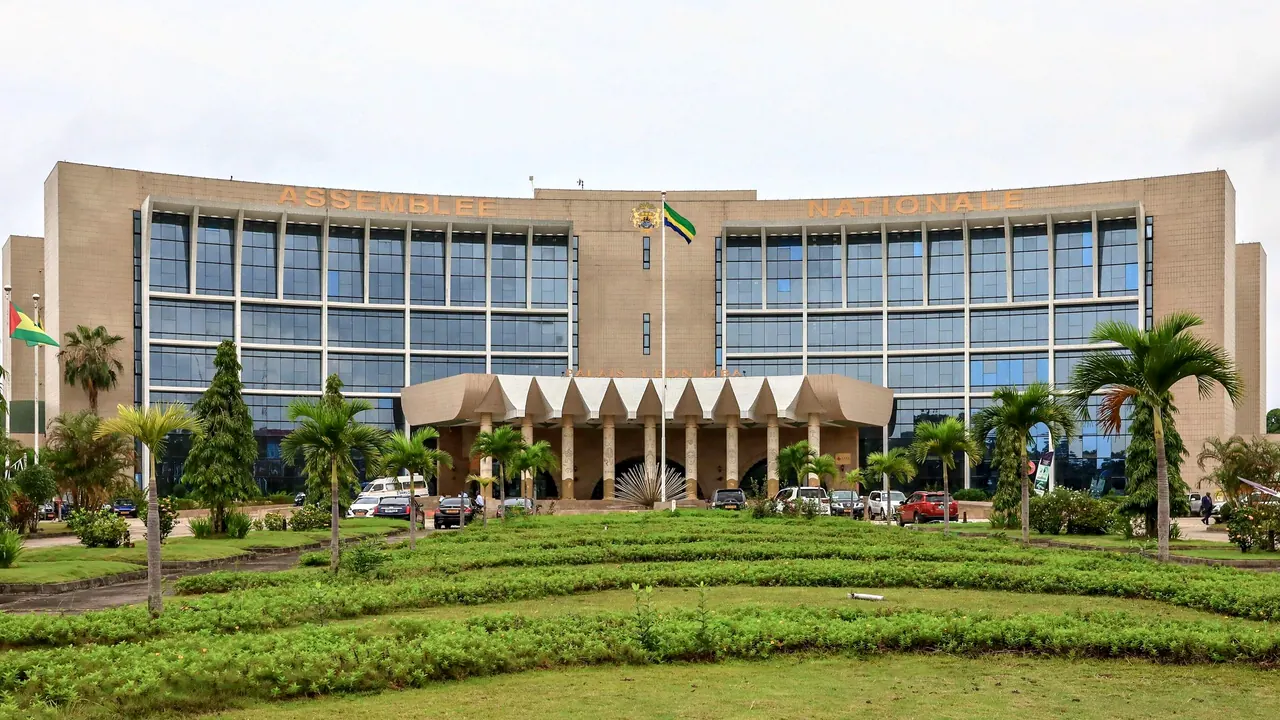
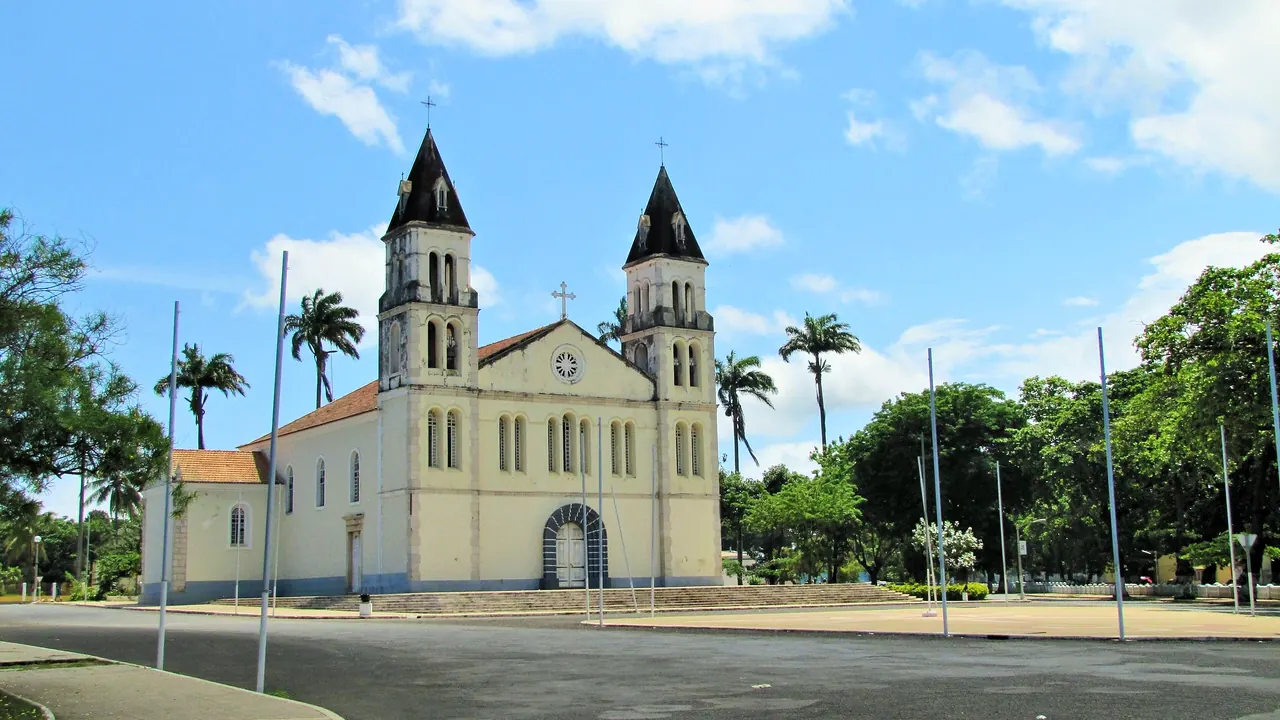
Photos: Libreville by Titlutin, CC BY 4.0, cropped; São Tomé by Chuck Moravec, CC BY 2.0, cropped.
Libreville or São Tomé?
Our verdict in twelve categories, each scored against the same fixed benchmark cities, and the climate month by month, so you can choose for your trip.
Choose Libreville for
- nightlife
- shopping
- food and drink
Libreville makes sense for a traveller who wants a working Central African capital with some life after dark, and who treats the city mainly as a base for boat trips: turtles on the Pongara beaches, wading birds in the Akanda mangroves, a weekend on the sand at Pointe Denis. Quartier Louis gives the evenings an energy that São Tomé cannot match, and the craft stalls have more to buy. Expect to pay heavily for all of it, and to see little in the way of sights.
Choose São Tomé for
- day trips
- prices
- nature and the outdoors
For a slower, greener trip, São Tomé is the stronger choice. The island fits volcanic cloud forest, the needle of Pico Cão Grande, quiet coves and the crumbling cacao roças into a small space, so a week of day trips is easy to fill, and the leve-leve pace suits anyone who wants to rest. It costs less overall, though the roads are slow and the nights end early.
Scoreboard
Twelve categories on one fixed scale from 0 to 100. The shaded stretch is the gap between the two.
Your match
Pick a travel style or drag the sliders, and both match scores follow your weighting.
Wins on nightlife and shopping with your weighting.
Wins on day trips and prices with your weighting.
What matters to you?
Category by category
What the scores mean for a trip.
Beaches & swimming
Both have sea warm enough to swim in every month, but the beaches work differently. Libreville's best sand, at Pointe Denis, lies across the Komo estuary and needs a boat. The city shore has hotel beaches, but the water near the centre is not always clean, and Cap Estérias to the north adds rocky coves and pools.
São Tomé has the edge for swimmers who like quiet. Lagoa Azul has clear water and snorkelling over coral half an hour from town, the northern coves are often empty, and the palm-backed southern beaches facing Ilhéu das Rolas are the loveliest in either place, if a long drive away. Facilities there are almost nil.
Food & drink
The two kitchens are related, built on smoked fish, plantain and palm, and neither has much range. The difference is in emphasis. Libreville has what you would expect of a larger city: French bakeries and brasseries, Lebanese and West African cooking, and smoky odika sauce in the maquis, though sit-down meals are expensive.
São Tomé sticks closer to its own produce. The things to look for are calulu stew, palm wine tapped on the island, and chocolate and coffee from the old plantations, served in a few relaxed seafront places rather than anywhere formal.
Culture & sights
Neither is a destination for sights, but São Tomé has more of a story to tell. Its pastel Portuguese town and the sixteenth-century Forte de São Sebastião, whose museum covers plantation slavery and the Batepá massacre, fill a good half day, and the roças out in the countryside carry that history further.
Libreville is a modern capital with little old architecture. Its two real rewards are the carved wooden columns of the Église Saint-Michel in Nkembo and the Fang, Punu and Kota masks in the National Museum of Arts and Traditions.
Nightlife
Libreville is the place to go out. Quartier Louis packs bars, lounges and clubs into a few streets, weekends run until dawn, and the music mixes Congolese rumba, Afrobeats and coupé-décalé. It is not a large scene, and drinks in the smarter places are costly, but it is a real one.
São Tomé hardly competes. There is beer at open-air bars on the bay and a handful of weekend dance spots playing kizomba and zouk. It is friendly, and most visitors are in bed early before a morning in the forest.
Nature & outdoors
Both have turtles nesting from about November to February and humpback whales offshore in the middle of the year, so the wildlife calendar is much the same. The difference is the land. São Tomé is a volcanic island almost covered in forest, with guided hikes in Obô Natural Park to the Lagoa Amélia crater, a two-day climb of Pico de São Tomé, waterfalls and the startling spike of Pico Cão Grande, plus a long list of endemic birds.
Libreville's outdoors is flatter and mostly reached by boat: mangrove channels and wading birds in Akanda, beaches and coastal forest in Pongara, and short rainforest walks at the Raponda Walker arboretum. It is rewarding, but you spend more time watching than hiking.
Day trips
This is where the two differ most. From São Tomé town, a day out can take in Roça Agostinho Neto and its ruined hospital, coffee at Monte Café in the hills, estate ruins and fishing villages at Água Izé and São João dos Angolares, or the equator monument on Ilhéu das Rolas.
Libreville has no towns or heritage sites within easy reach, so outings mean the beaches and parks. The nearest place of real interest, Lambaréné and the Albert Schweitzer hospital on the Ogooué, is several hours away by road and needs an overnight stay.
Good for families
For families, the choice is between a capital's comforts and an island's calm. Libreville has hotel pools to fall back on and weekend boat trips to the sand at Pointe Denis. Against that, sightseeing means heavy traffic and draining heat, and Gabon requires a yellow fever vaccination for entry.
São Tomé moves at a gentler pace, with quiet coves and turtle-watching nights, but medical care is basic and the best places lie at the end of long, bumpy drives. Malaria is present all year in both, and both suit older children who enjoy wildlife far better than toddlers.
Getting around
Getting around is awkward in both places, for different reasons. Libreville runs for many kilometres along the coast, so you rely on shared taxis and sit in rush-hour jams, and the parks across the estuary need a boat.
São Tomé's town is compact enough to walk, but the rest of the island needs a driver, a four-wheel drive or a tour. The roads are slow, the interior tracks turn to mud in the rains, and a short distance on the map can take most of a day.
Shopping & style
Libreville gives shoppers more to work with: craft stalls selling Fang-style masks, carvings and Mbigou soapstone, the crowded Mont-Bouët market and a few malls. São Tomé has its municipal market and a handful of craft stalls, and the best things to buy are edible, bars of island chocolate and bags of coffee.
Affordability
Both are expensive for the region, but Libreville costs more. Oil money and imports push hotels and restaurants high, mid-range rooms are scarce, boat transfers add up, and cheap street grills hardly change the total.
São Tomé is noticeably easier on the budget. Basic guesthouses, local food and shared taxis cost little, though the plantation lodges charge international prices and a hired driver is a real expense.
Live music & performing arts
Neither has an opera house, an orchestra or a regular stage programme. What differs is the tradition behind them. São Tomé has Tchiloli, a masked drama based on a sixteenth-century Portuguese play, and the Danço-Congo dance theatre, both performed at festivals and seen only with luck.
Libreville has theatre and concerts through the French cultural institute and live Congolese and Gabonese bands in its bars, while the music of Bwiti ceremonies stays out of most visitors' reach.
Wellness & relaxation
For rest, São Tomé has the edge, less because of treatments than because of its pace. The leve-leve way of life, the stillness of a plantation estate and the slightly cooler air make it easy to unwind.
Libreville relies on the spas and massage rooms of its larger hotels, and the best escape is a simple lodge across the estuary. In the city itself, the constant heat and humidity wear many visitors down.
When should you go?
Pick your month. The climate figures are measured averages, not a forecast.
Libreville in July
São Tomé in July
Daytime high, °C
Rainfall in the month, mm
Where the figures come from
São Tomé has no weather station within reach, so its figures come from a gridded climate model rather than a measured record, and read a broad area rather than one spot.
Temperature and rainfall are climate normals, averaged over the years shown. Libreville: 1991-2020 normals, Libreville (5.4 km from centre). São Tomé: 2001-2020 normals, NASA POWER reanalysis grid, no weather station within 90 km.
Both places lie close to the equator and stay warm all year, and the sea is warm enough for swimming every month. In both, the dry season falls in the middle of the year. Libreville is almost rainless in July, but June to August are also its greyest months, with less sunshine than the wet season. Then the rain comes back hard: October and November are a downpour, each with well over 450mm, and highs near 30°C with heavy humidity make long walks through the city tiring for most of the year.
São Tomé is a little cooler, with highs around 25°C in July and August, and even its wettest months get far less rain than Libreville's. The dry gravana from June to September is the time for forest trails and the long road south. The sea dips to about 26°C at that point, still comfortable, and warms again towards the end of the year, when turtles come ashore on both coasts.
Which traveller are you?
For a food and nightlife trip, Libreville is the clear pick. Quartier Louis keeps going until dawn at weekends, and meals range from palm-nut chicken in the maquis to French brasseries and Lebanese cooking. Evenings on São Tomé finish early by comparison.
On an outdoors trip, São Tomé wins comfortably. Guided hikes cross cloud forest to the Lagoa Amélia crater and up a 2,024m peak, Pico Cão Grande rises out of the jungle, and the roças fill whole days. Libreville's parks are seen mostly from a boat.
On a trip on a tight budget, São Tomé makes the money last longer. Simple guesthouses, market food and shared taxis cost little there, while Libreville's oil-driven hotel and restaurant prices stay high whatever you do. On the island, though, set money aside for a driver.
Before you go
| Measure | Libreville | São Tomé |
|---|---|---|
| Official language | French | Portuguese |
| Currency | CFA Franc BEAC (XAF) | Dobra (STN) |
| Sockets | C220 V, 50 Hz | CF220 V, 50 Hz |
| Driving side | Right | Right |
| Time zone | UTC+1 | UTC |
| Emergency number | Police 1722, ambulance 1300, fire 18 | 112 |
| Elevation | 13 m | 137 m |
| Main airport | Libreville Leon M'ba International Airport (LBV)6 km from centre24 non-stop destinations | São Tomé International Airport (TMS)5 km from centre6 non-stop destinations |
| Public holidays this year | 11 days | 8 days |
By the numbers
| Measure | Libreville | São Tomé |
|---|---|---|
| Population | 899,000 | 65,468 |
| People per km² | 4,757 | 3,851 |
| Museums within 10 km | 1 | 1 |
| UNESCO World Heritage sites within 50 km | 0 | 1 |
| Swim season, months above 21 °C | 12 months | 12 months |
Where else could you go?
Every comparison below shares a destination with this one, so you can follow Libreville or São Tomé somewhere new.
- Príncipevs São Tomé
- Pointe-Noirevs Libreville
- Brazzavillevs Libreville
- Accravs Libreville
- Dakarvs Libreville
- Zanzibarvs São Tomé