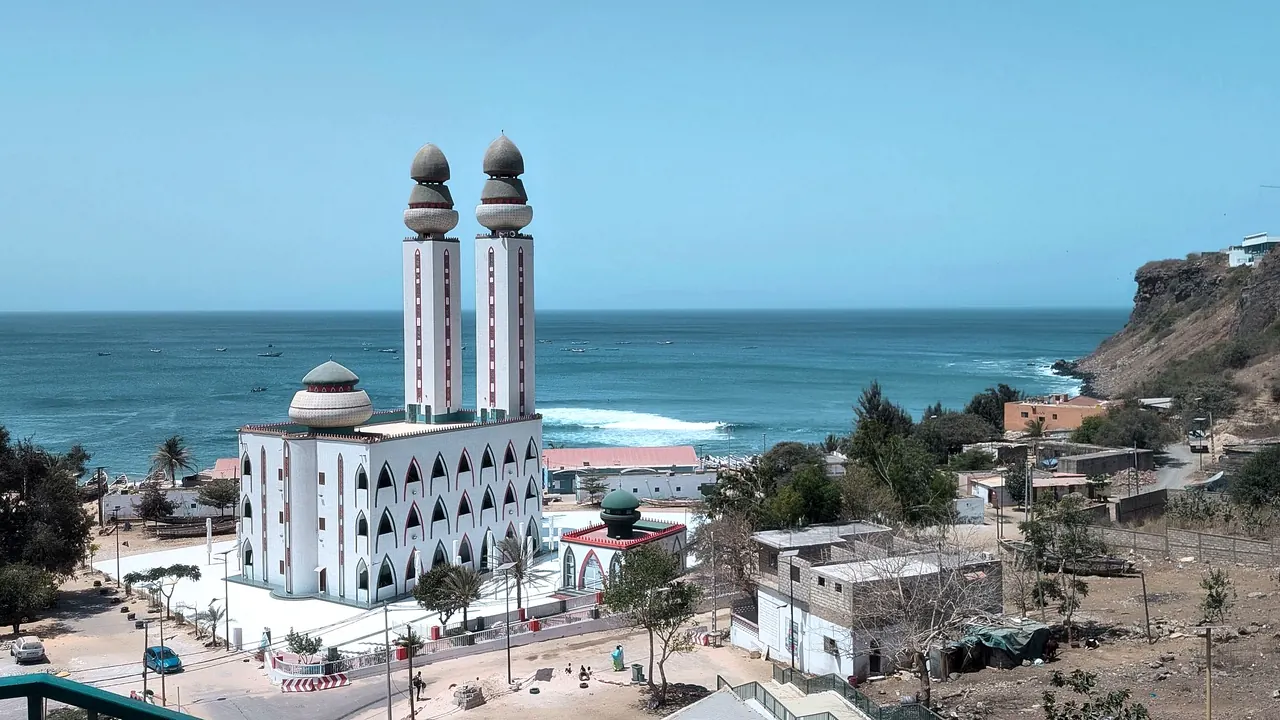
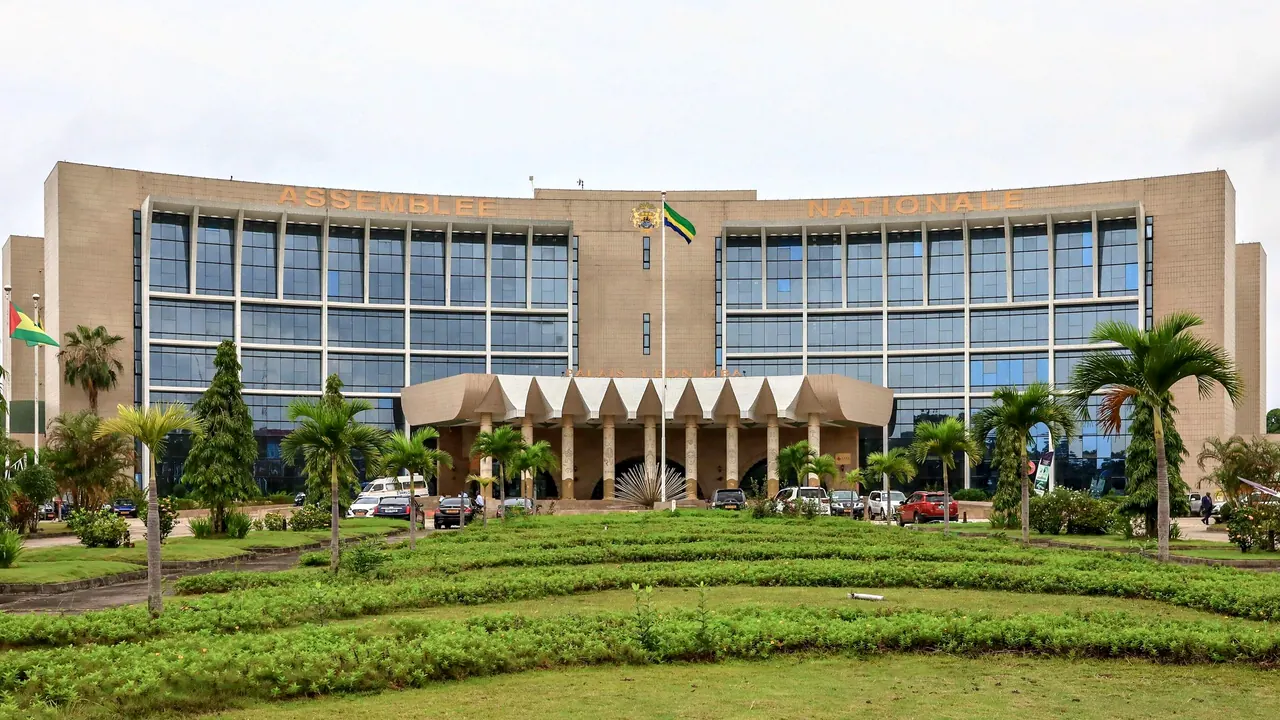
Photos: Dakar by Issathiome, CC BY-SA 4.0, cropped; Libreville by Titlutin, CC BY 4.0, cropped.
Dakar or Libreville?
Our verdict in twelve categories, each scored against the same fixed benchmark cities, and the climate month by month, so you can choose for your trip.
Choose Dakar for
- live music and the arts
- prices
- culture and sights
Dakar is the better pick for most travellers who want a city to explore. It gives you Gorée Island and strong African art museums, one of West Africa's great cuisines, mbalax bands playing long past midnight and fabric markets with tailors who will make you clothes. It also has a rail line, ride-hailing taxis and real day trips down the Petite Côte, and it costs noticeably less if you eat locally and stay in guesthouses.
Choose Libreville for
- nature and the outdoors
- beaches
Libreville makes sense when the city is only a starting point for wild coast and forest. Across the estuary and to the north, Pongara and Akanda offer nesting leatherback turtles, mangrove channels full of wading birds and passing humpback whales, and the sea stays warm all year. Expect a high price level, few sights in town and boats for most outings, and plan the trip around nature rather than the capital.
Scoreboard
Twelve categories on one fixed scale from 0 to 100. The shaded stretch is the gap between the two.
Your match
Pick a travel style or drag the sliders, and both match scores follow your weighting.
Wins on live music and the arts and prices with your weighting.
Wins on nature and the outdoors and beaches with your weighting.
What matters to you?
Category by category
What the scores mean for a trip.
Beaches & swimming
The two are broadly level for beaches, but the experience differs. Dakar's sand is right in town: N'Gor and Yoff on the north shore, the coves around the Almadies and the calm water of car-free N'Gor island a few minutes away by pirogue. The Atlantic here is a surf sea, cool and rough for half the year.
In Libreville the water is warm in every season, but the city shore is ordinary and not always clean. The beach worth having is Pointe Denis, across the Komo estuary by boat, with the rocky pools of Cap Estérias as a road alternative. So Dakar gives you more beach life on foot, and Libreville gives you warmer water at the end of a boat ride.
Food & drink
Dakar is the far stronger place to eat. Senegalese cooking has a real reputation, and the city serves it everywhere: thieboudienne at lunch, yassa and mafé, mutton from the charcoal grills of the dibiteries at night and the day's catch cooked on the shore after the pirogues land at Soumbédioune. Café Touba, attaya tea and a long-standing Lebanese community add to the range.
Libreville has distinctive dishes worth trying, such as poulet nyembwe in palm-nut sauce and anything made with smoky odika, served in open-air maquis and at seafront fish grills. Beyond them the choice is narrow for a capital, and imported ingredients make sit-down meals expensive.
Culture & sights
Here Dakar is well ahead. Gorée Island alone justifies a visit, a UNESCO-listed island of ochre houses whose House of Slaves confronts the Atlantic slave trade directly. On the mainland, the Museum of Black Civilisations and the IFAN museum hold collections from across Africa, and you can meet working artists at the Village des Arts.
Libreville has two things worth seeking out: the carved wooden columns of the Église Saint-Michel in Nkembo and the Fang, Punu and Kota reliquary figures in the National Museum of Arts and Traditions. After that, a cathedral and the seafront boulevard round off a single morning.
Nightlife
Both cities stay out until dawn at weekends, but Dakar has the bigger and more varied scene. You can choose between ocean-facing lounges in Almadies and Ngor, expat bars on the Plateau and local dance floors in Point E and Mermoz. A night out centres on dressing up and dancing, and venues are spread out, so you taxi between them.
Libreville packs its nights into Quartier Louis, which makes bar-hopping easy. It is a small scene, though, with Congolese rumba and coupé-décalé on the sound systems and steep drink prices in the smarter places.
Nature & outdoors
Libreville has the richer natural setting. Pongara, just across the estuary, combines beaches, mangroves and coastal forest where leatherback turtles nest in large numbers. Akanda's mudflats draw migratory waders, and humpbacks pass offshore. You can even walk under real rainforest at the Raponda Walker arboretum without leaving town, though you explore by guided boat or on foot with a guide, not on marked trails.
Dakar's outdoors is mostly its rugged coast. It has basalt cliffs, the Mamelles hills and Africa's westernmost point, with year-round surf breaks around Ngor and Ouakam. The seabird islands, Lac Rose and the Bandia reserve's giraffes add variety, but inland the land is flat, dry and built-up.
Day trips
Dakar has a short list of day trips, but a real one. You can follow the Petite Côte through Toubab Dialaw and the Somone lagoon to Mbour, where pirogues ride the surf in at dusk, or go on to Joal-Fadiouth's shell island. Touba's Great Mosque is a long but manageable day inland.
Libreville has almost nowhere to go by road for the day. Excursions mean boats to beaches and parks, and Lambaréné with its Schweitzer hospital is far enough away to need a night.
Good for families
Neither city is built for children, but Dakar is easier. It has calm water at N'Gor island, a ferry ride to Gorée and giraffes and rhinos seen from the car at Bandia, and the Petite Côte resorts are nearby if the city wears you out. Broken pavements, traffic and dust still tire small children.
Libreville suits older children who enjoy a boat trip to see turtles or whales, but daily life revolves around the hotel pool. Gabon also requires yellow fever vaccination for entry, on top of the malaria precautions both cities need.
Getting around
Dakar is clearly the easier city to move around. The TER suburban railway and the rapid bus line run clean, simple services along the main corridors, and where they don't reach, cabs are everywhere and ride-hailing apps take the haggling out of the long ride between the Plateau and the Almadies. Peak-hour jams can be bad, but you are rarely stuck for a way to get somewhere.
Libreville gives a visitor far less to work with. There is no train or bus network you would realistically use, so you flag down shared taxis that charge by the stretch, or have your hotel book a driver. Your best days out, to Pointe Denis and the parks across the estuary, also mean arranging a boat.
Shopping & style
Dakar gives you a reason to shop that Libreville cannot match: cloth. Wax prints and bazin from the HLM market can go straight to a tailor and come back as a shirt or boubou within days. Soumbédioune's artisan village adds carving, leather and silver, and there are Senegalese designer boutiques in Almadies and Mermoz.
Libreville's offer comes down to crafts: Fang-style masks and Mbigou soapstone figures, where you should ask about the provenance of anything sold as old. Mont-Bouët market is worth visiting to watch the city at work rather than to buy.
Affordability
Dakar is the cheaper of the two by a clear margin. Comfortable hotels and expat restaurants can cost almost as much as in southern Europe, but local food, taxis and guesthouses let you travel modestly if you choose to.
Libreville offers no such way out. Oil money and imports keep rooms and meals expensive, mid-range hotels are scarce, and the boat transfers and guided trips you need to see its parks push the bill up further.
Live music & performing arts
Music is one of Dakar's great strengths. This is the home of mbalax, and the big names still play late-night hometown shows. You will hear sabar drumming at weddings and wrestling bouts, and the Sorano National Theatre stages the national ballet, with hip-hop and jazz alongside.
Libreville has no opera house or orchestra of its own. Staged events come mostly through the French cultural institute, and bands play in bars, while Bwiti ceremonial music stays within religious life and out of visitors' reach.
Wellness & relaxation
Neither city is a place to unwind, and both offer little beyond hotel spas and massage. In Dakar you escape the noise and harmattan dust on N'Gor island or at a Petite Côte lagoon. Libreville's version is a simple lodge across the estuary, though the constant humidity leaves many visitors more tired than rested.
When should you go?
Pick your month. The climate figures are measured averages, not a forecast.
Dakar in July
Libreville in July
Daytime high, °C
Rainfall in the month, mm
Temperature and rainfall are climate normals, averaged over the years shown. Dakar: 1991-2020 normals, Dakar / Yoff (10 km from centre). Libreville: 1991-2020 normals, Libreville (5.4 km from centre).
Dakar is dry for most of the year. From November to June there is almost no rain and plenty of sun, and highs in the high twenties make walking the streets comfortable. The sea is the catch. From December to May upwelling keeps it as cool as 19°C, so swimming is bracing. It warms to about 28°C from July to October, but that is also the rainy season, peaking in August at around 162mm, with heavy, humid heat. November and early December are the sweet spot: dry and sunny, with the sea still warm.
Libreville runs almost the other way round. It is wet for most of the year, with the heaviest rain from October to December, when November alone can bring over 500mm, and steamy heat around 30°C. The short dry season from June to August is the easiest time to get about. It is a little cooler, but grey, with much less sunshine than Dakar ever sees. The sea stays warm enough to swim in every month.
Which traveller are you?
On a culture and arts trip, Dakar is the clear choice. Gorée's House of Slaves, the Museum of Black Civilisations, the Village des Arts studios and late mbalax shows give you days and nights of things to do. Libreville's sights fill a short walk.
For an outdoors trip, Libreville wins. Two national parks lie on its doorstep, with leatherback turtles on Pongara's beaches, boat trips through Akanda's mangroves and whales offshore in season. Dakar's outdoors is mostly surf, cliffs and a game reserve on flat, dry land.
On a trip on a tight budget, Dakar goes much further. Thieboudienne at local lunch spots, cheap taxis and modest guesthouses keep costs down. In Libreville the oil economy keeps rooms, meals, boat transfers and park trips expensive whatever you do.
Before you go
| Measure | Dakar | Libreville |
|---|---|---|
| Official language | French, Wolof, Balanta, Badyara | French |
| Currency | CFA Franc BCEAO (XOF) | CFA Franc BEAC (XAF) |
| Sockets | CEK230 V, 50 Hz | C220 V, 50 Hz |
| Driving side | Right | Right |
| Time zone | UTC | UTC+1 |
| Emergency number | Police 17, fire 18 | Police 1722, ambulance 1300, fire 18 |
| Elevation | 10 m | 13 m |
| Main airport | Blaise Diagne International Airport (DSS)39 km from centre32 non-stop destinations | Libreville Leon M'ba International Airport (LBV)6 km from centre24 non-stop destinations |
| Public holidays this year | 9 days | 11 days |
By the numbers
| Measure | Dakar | Libreville |
|---|---|---|
| Population | 1,438,725 | 899,000 |
| People per km² | 18,029 | 4,757 |
| Museums within 10 km | 8 | 1 |
| UNESCO World Heritage sites within 50 km | 1 | 0 |
| Swim season, months above 21 °C | 8 months | 12 months |
Where else could you go?
Every comparison below shares a destination with this one, so you can follow Dakar or Libreville somewhere new.
- São Tomévs Libreville
- Pointe-Noirevs Libreville
- Brazzavillevs Libreville
- Accravs Libreville
- Essaouiravs Dakar
- Marrakechvs Dakar