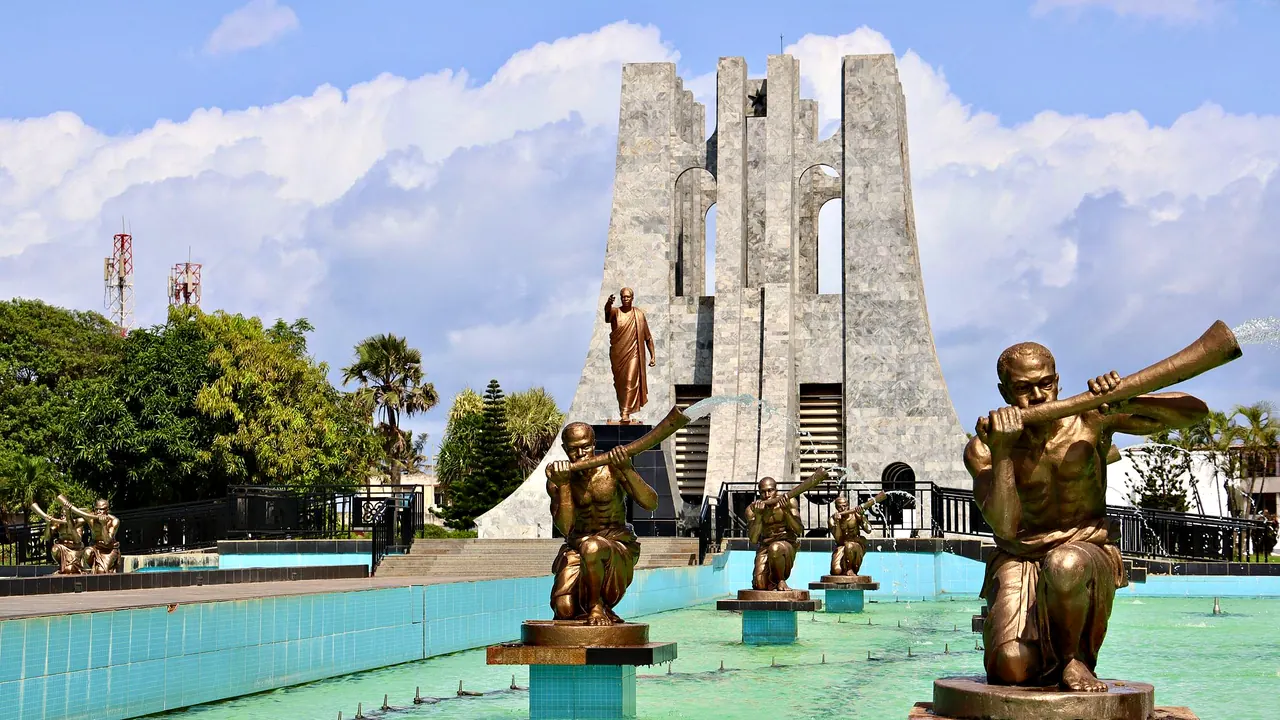
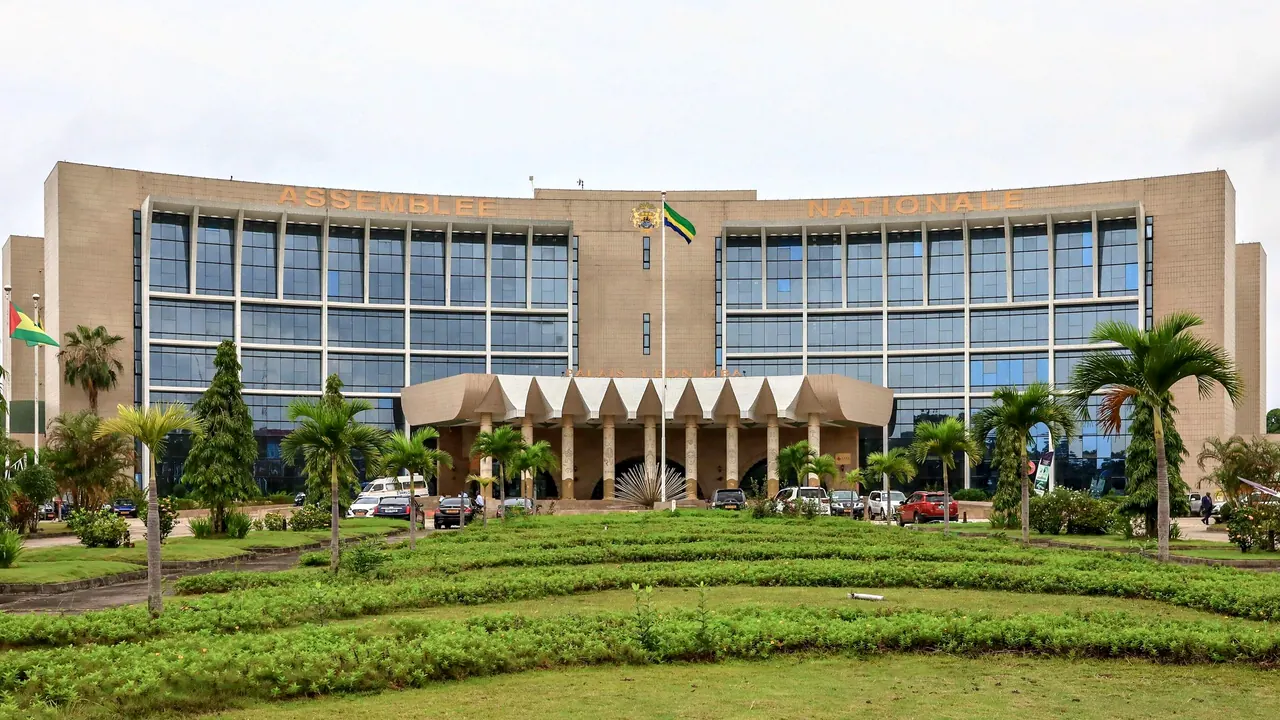
Photos: Accra by Ana Kenk, Pexels License; Libreville by Titlutin, CC BY 4.0, cropped.
Accra or Libreville?
Our verdict in twelve categories, each scored against the same fixed benchmark cities, and the climate month by month, so you can choose for your trip.
Choose Accra for
- prices
- live music and the arts
- shopping
Accra suits travellers who want a city with a pulse after dark and a culture they can taste and hear. Chop bars and morning waakye, highlife band nights and Afrobeats clubs, Makola's wax-print stalls and tailors who turn cloth into clothes within days. It also costs less to eat, drink and get about, and it has more history to walk through, from Jamestown's forts to Nkrumah's mausoleum, with the Cape Coast castles close enough for an overnight trip.
Choose Libreville for
- nature and the outdoors
- beaches
Libreville rewards someone who comes for wildlife and the coast rather than the city. Pongara and Akanda are right on its doorstep, with nesting leatherbacks, mangrove channels and passing humpbacks. Pointe Denis, across the estuary, gives an easier beach day than Accra's surf-pounded shore. Expect a quiet, expensive capital with few sights of its own, best used as a base for boat trips and lodge weekends.
Scoreboard
Twelve categories on one fixed scale from 0 to 100. The shaded stretch is the gap between the two.
Your match
Pick a travel style or drag the sliders, and both match scores follow your weighting.
Wins on prices and live music and the arts with your weighting.
Wins on nature and the outdoors and beaches with your weighting.
What matters to you?
Category by category
What the scores mean for a trip.
Beaches & swimming
Both cities face the Gulf of Guinea with warm water all year, but Libreville gives the better beach day. Pointe Denis, a long strip of pale sand across the Komo estuary, is under an hour away by boat, and Cap Estérias to the north has rocky coves and calmer pools. Just avoid swimming near the centre, where the water is not always clean.
Accra's city shore is rougher. Heavy Atlantic swell, rip currents and litter make Labadi a place for drumming and horse rides rather than swimming. The sandbar at Bojo and the surf village of Kokrobite are worth the drive, but they are outings, not a reason to pick the city.
Food & drink
Accra eats better, and mostly on the street. Morning waakye, kenkey with fried fish and pepper, jollof and lantern-lit kelewele stalls, plus the chop bars of Osu, Jamestown and the Makola area, give a visitor plenty to work through.
Libreville's own cooking is distinctive: poulet nyembwe and anything with smoky odika, eaten in maquis or at seafront fish grills. It also has a French layer of bakeries and brasseries that Accra lacks. Still, the range is narrow and sit-down meals are costly, so it makes a smaller food trip.
Culture & sights
Neither is a museum city, but Accra has more to see. Independence Square, the Nkrumah mausoleum and the Du Bois Centre tell the story of independence. Jamestown's lighthouse and forts hold the older coast, and the painted coffins of Teshie add a modern twist, enough for two or three days.
Libreville is a short walk by comparison. The carved wooden columns of Église Saint-Michel in Nkembo and the Fang, Punu and Kota masks at the National Museum of Arts and Traditions are the highlights. After those, most visitors head for the forest.
Nightlife
Accra is the stronger night out by some way. Evenings run from roadside grills to rooftop bars in Osu and Labone and on to Afrobeats and amapiano clubs, with late beach parties at Labadi and Kokrobite. In December, when the diaspora comes home, the whole month turns into a party.
Libreville packs its scene into Quartier Louis, where bars and clubs sit close together and play Congolese rumba and coupé-décalé until dawn. It is spirited at weekends but small, and drinks in the smarter places are dear.
Nature & outdoors
Libreville has wild country right at its edge. Leatherbacks nest on Pongara's beaches across the estuary from about November to February, and Akanda's mangrove channels draw migratory waders. Humpbacks pass offshore in the cooler mid-year months, and the Raponda Walker arboretum puts real rainforest inside the city.
From Accra, nature means a drive: shaded trails in Achimota Forest, the cooler Aburi ridge, baboons and caves at Shai Hills, and boats on Lake Volta about two hours away. All pleasant, but nothing as close or as wild as Gabon's coastal parks.
Day trips
Neither is a great base for excursions, but Accra at least has a list. There are woodcarvers at Aburi, glass-bead villages around Somanya, the dam town of Akosombo and old forts at Prampram and Senya Beraku. The outstanding trip, the castles of Cape Coast and Elmina, deserves a night away.
From Libreville, outings go to parks and beaches, not to other towns. Lambaréné, with the Albert Schweitzer hospital on the Ogooué, is the nearest place of real interest, and it is several hours away by road.
Good for families
Both welcome children warmly and offer little built for them, and both need malaria precautions. Accra has more to fill the days: Achimota Forest, the Aburi gardens, the baboons at Shai Hills and air-conditioned mall play areas. Older children enjoy the drumming and markets too.
Libreville adds a yellow fever vaccination to the planning and leans on hotel pools and weekends at Pointe Denis. Its boat trips to see turtles or whales are the one thing Accra cannot match, and they suit older children best.
Getting around
Both are equally hard work. Neither has a metro or tram, both sprawl along the coast, and in both the traffic jams at rush hour.
The difference is the vehicle. Accra runs on ride-hailing apps and taxis, with crowded trotro minibuses for the bold. Libreville relies on shared taxis flagged in the street, and anything across the estuary means a boat. On foot, parts of Osu and Jamestown work in Accra, and in Libreville short stretches of the seafront do.
Shopping & style
Accra is the better place to shop, and it is built on cloth. You will find wax print at Makola Market, kente, drums and carvings at the Arts Centre, and tailors who make up fabric in a few days. A handful of Ghanaian designers in Osu and Labone show the contemporary side.
Libreville's buys are crafts: Fang-style masks, carvings and soapstone from Mbigou, where it pays to ask about the origin of anything sold as old. Mont-Bouët market is more spectacle than shopping, and the malls sell French imports at high prices.
Affordability
Accra is the cheaper stay by a wide margin. Street food, chop bars, local beer and ride-hailing cost little. Reliable hotels and imported goods are dear, though, and prices rise in December.
In Libreville, oil money and imports push hotels and restaurants well above most of Africa. Mid-range rooms are scarce, and boat transfers and guided park trips add up quickly. Market food and shared taxis help only at the margins.
Live music & performing arts
Accra is a music city and Libreville is not. Highlife bands still play bars and garden venues, and Afrobeats stars fill arenas in December. The ship-shaped National Theatre stages dance and the national symphony, and the Chale Wote festival fills Jamestown with performance each year.
Libreville has no opera house or resident orchestra. Concerts and theatre come mostly through the French cultural institute, and Congolese and Gabonese bands turn up in bars. Bwiti ceremonial music belongs to religious life, and visitors rarely see it.
Wellness & relaxation
Neither is a place to unwind in town. Both rely on hotel spas and pools, and in both the heat and traffic wear you down. The escape is what differs: from Accra it is the beach lodges of Kokrobite or the cooler Aburi hills, while from Libreville it is a boat across the estuary to a simple lodge between forest and sea.
When should you go?
Pick your month. The climate figures are measured averages, not a forecast.
Accra in July
Libreville in July
Daytime high, °C
Rainfall in the month, mm
Temperature and rainfall are climate normals, averaged over the years shown. Accra: 1991-2020 normals, Accra (5.9 km from centre). Libreville: 1991-2020 normals, Libreville (5.4 km from centre).
Accra is hot all year, with highs of 33°C from January to April that make midday walking hard going. The driest, sunniest stretch runs from November to February. The main rains come in May and June, peaking at 167mm in June. July and August are a little cooler and fairly dry, but the sea drops to around 23°C then and the skies turn greyer. A shorter wet spell follows in October. For warm water and sun, the months around the turn of the year are its best.
Libreville's weather runs almost the other way, and rain matters more there than heat. It is wet for most of the year, and October and November are a deluge, with around 506mm in November. The dry season, June to August, is the time to be outdoors, with July down to about 8mm. That season is also grey and slightly cooler, with less sun and a cooler sea. From January to April the sea is at its warmest, but heavy downpours come with it. Neither city ever gets too cold, and Libreville's highs stay a few degrees below Accra's.
Which traveller are you?
On a food and nightlife trip, Accra is the clear pick. Chop bars, jollof and kelewele stalls fill the evening, then Osu rooftops lead on to Afrobeats clubs and beach parties, peaking in December. Libreville's Quartier Louis is fun but small and dear.
For an outdoors trip, choose Libreville. Accra has the shaded but tame trails of Achimota Forest near the centre, with Shai Hills a drive away. Pongara and Akanda lie a boat ride from Libreville, with nesting leatherbacks, mangrove birdlife and passing whales.
On a trip on a tight budget, Accra goes much further. Street food, local beer and ride-hailing are cheap there. In Libreville, oil-driven prices, scarce mid-range rooms and costly boat transfers make even a simple stay expensive.
Before you go
| Measure | Accra | Libreville |
|---|---|---|
| Official language | English | French |
| Currency | Ghana Cedi (GHS) | CFA Franc BEAC (XAF) |
| Sockets | G230 V, 50 Hz | C220 V, 50 Hz |
| Driving side | Right | Right |
| Time zone | UTC | UTC+1 |
| Emergency number | 999 | Police 1722, ambulance 1300, fire 18 |
| Elevation | 61 m | 13 m |
| Main airport | Kotoka International Airport (ACC)6 km from centre36 non-stop destinations | Libreville Leon M'ba International Airport (LBV)6 km from centre24 non-stop destinations |
| Public holidays this year | 11 days | 11 days |
By the numbers
| Measure | Accra | Libreville |
|---|---|---|
| Population | 1,782,150 | 899,000 |
| People per km² | 10,301 | 4,757 |
| Museums within 10 km | 3 | 1 |
| UNESCO World Heritage sites within 50 km | 1 | 0 |
| Swim season, months above 21 °C | 12 months | 12 months |
Where else could you go?
Every comparison below shares a destination with this one, so you can follow Accra or Libreville somewhere new.
- São Tomévs Libreville
- Pointe-Noirevs Libreville
- Brazzavillevs Libreville
- Brazzavillevs Accra
- Dakarvs Accra
- Luandavs Accra