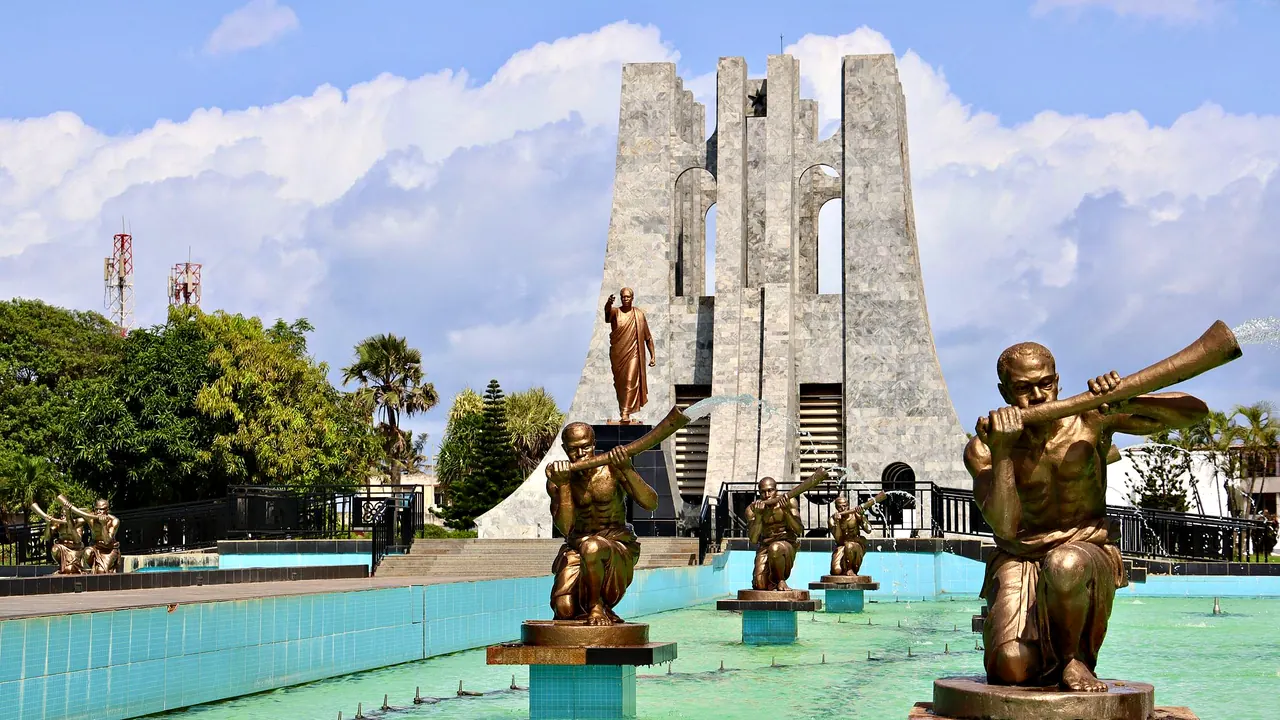
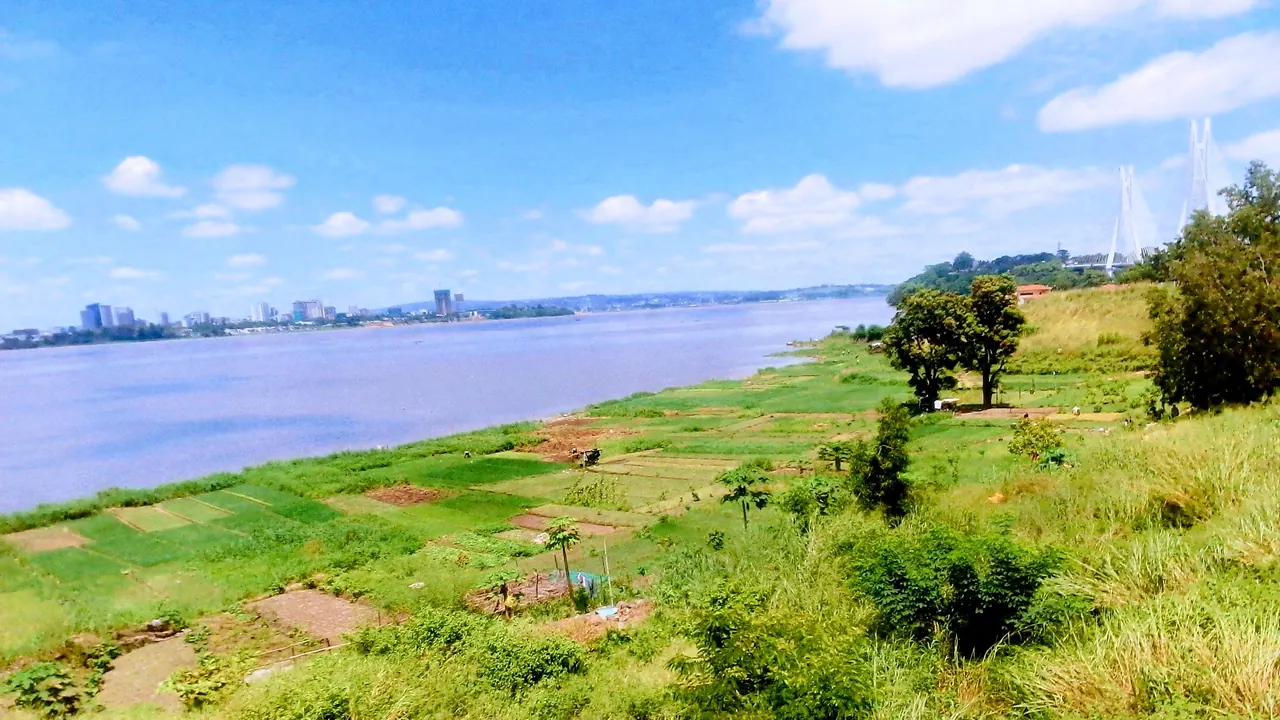
Photos: Accra by Ana Kenk, Pexels License; Brazzaville by BOKOBA veroly, CC BY-SA 4.0, cropped.
Accra or Brazzaville?
Our verdict in twelve categories, each scored against the same fixed benchmark cities, and the climate month by month, so you can choose for your trip.
Choose Accra for
- beaches
- prices
- shopping
Accra is the easier and fuller choice for most trips. It has an Atlantic coast with good beach villages within reach, a street-food culture built around jollof, kelewele and chop bars, a night scene that runs from rooftop bars to Afrobeats clubs, and a few outings into the hills and along the Volta. It suits a first trip to West Africa, a group of friends going out, or anyone who wants markets, history and music on one stay.
Choose Brazzaville for
- getting around
Brazzaville is for the traveller who already has a reason to be there, or who is going for something specific: Congolese rumba heard live in a Bacongo dance hall, the sapeurs in their suits, the Congo River rushing through the Djoué rapids, and orphaned gorillas returned to the wild at Lésio-Louna. It is smaller, dearer and harder to arrange, with no coast, but what it has is genuinely its own.
Scoreboard
Twelve categories on one fixed scale from 0 to 100. The shaded stretch is the gap between the two.
Your match
Pick a travel style or drag the sliders, and both match scores follow your weighting.
Wins on beaches and prices with your weighting.
Wins on getting around with your weighting.
What matters to you?
Category by category
What the scores mean for a trip.
Beaches & swimming
Accra has a coastline and Brazzaville does not. In the city itself the Atlantic swell and rip currents make Labadi more a place to watch drumming and horse rides than to swim. But Kokrobite, the sandbar at Bojo across its short canoe crossing, and the quieter shores at Prampram and Ada make good days out in warm water.
Brazzaville faces the Congo River, whose currents and rapids rule out swimming entirely, and Pointe-Noire on the Atlantic is a flight or a long road journey away. A hotel pool is the only place to swim.
Food & drink
Both cities run on home cooking built around starches, stews and fish, but Accra's food is easier to explore on foot. Waakye stalls in the morning, kelewele under lanterns at night, chop bars serving fufu and groundnut soup, and grilled tilapia by the sea give a visitor a fuller day of eating, with a thin international layer in Osu and East Legon.
Brazzaville's saka-saka, maboke steamed in leaves and chikwangue are worth seeking out at the river grills and in Poto-Poto and Bacongo. Its French bakeries and cafés are something Accra lacks, but the overall choice is smaller.
Culture & sights
Neither city has strong museums, but Accra tells a clearer story. Nkrumah's mausoleum, Independence Square and the Du Bois Centre cover the independence era, the forts and lighthouse of Jamestown and Osu Castle reach back to the coastal trade, and the Teshie coffin workshops add a contemporary touch. That fills two or three days.
Brazzaville's sights are fewer and mostly buildings: the green-tiled Basilique Sainte-Anne, the marble de Brazza memorial and the old Sacré-Coeur cathedral. The Poto-Poto painting studios are its most distinctive cultural stop. A day or two covers it all.
Nightlife
Accra has the bigger and more varied night out. A typical evening moves from roadside grills to rooftop lounges in Osu and Labone, then to clubs playing Afrobeats and amapiano, with beach parties at Labadi and Kokrobite at weekends. December, when the diaspora returns, turns the city into one long party season.
Brazzaville is rawer and smaller: open-air nganda bars in Bacongo and Poto-Poto, rumba and ndombolo on loud speakers, dancing on the terraces and sapeurs showing off between them. It is full of character, but it is best visited with a local friend and a taxi home.
Nature & outdoors
The two are fairly level, but their landscapes are very different. Accra's outdoors lie in the cool Akuapem ridge at Aburi with its walking and biking routes, the rocks, caves and baboons of Shai Hills, boats on Lake Volta and mangroves at Ada, all reachable fairly easily.
Brazzaville's draw is the Congo River itself, with Kinshasa visible across it and the Djoué rapids just downstream, and the Batéké plateau's grassland beyond. Its standout is a wildlife trip to see gorillas at Lésio-Louna, though there is little organised activity and every outing needs a driver.
Day trips
Accra has a short list of easy outings: woodcarvers at Aburi, glass-bead villages around Somanya, the dam at Akosombo, the river mouth at Ada and old forts along the coast. Its greatest excursion, the slave-trade castles of Cape Coast and Elmina, is far enough away to be best done with an overnight stay.
Brazzaville offers almost nothing comparable, only rural villages and plateau. Kinshasa is just across the water, but the separate visa and slow border crossing make it a trip in its own right rather than an afternoon out.
Good for families
Neither city is built for children, and both call for malaria precautions, but Accra manages a little better. Hotel pools, sand to play on at the beach, the baboons at Shai Hills, the Aburi gardens and air-conditioned mall play areas give families a few easy days, and older children tend to enjoy the markets and drumming.
Brazzaville has no zoo, aquarium or real playgrounds, so beyond the hotel pool and an afternoon at the rapids there is little to fill a family's day.
Getting around
Both are hard work in much the same way, with no metro, heat, broken pavements and a car with driver as the easiest choice for anything beyond town. In Accra, ride-hailing apps do most of the work but sit in heavy traffic, and the trotro minibuses are confusing to a newcomer. Walking is only practical in Osu and Jamestown.
Brazzaville relies on its green-and-white taxis, plentiful and easy to share or hire, while the foula-foula minibuses are best left to locals. The riverside administrative centre can be walked in parts, but Poto-Poto and Bacongo, where the evenings happen, are a drive away.
Shopping & style
Accra gives a shopper far more to work with. Makola Market's wax-print stalls, the Arts Centre's kente, drums and carvings, and a handful of Ghanaian design boutiques in Osu and Labone sit alongside malls for the basics. Buying cloth and having a tailor make it up in a few days is the classic purchase.
Brazzaville has the same tailoring habit, with an outfit cut by a sapeur's tailor as the memorable buy, and paintings from the Poto-Poto studios are its other prize. Otherwise it is practical markets like Marché Total, no malls worth the trip, and costly imports.
Affordability
Both cities share the same trap: cheap street food and taxis, but costly hotels with reliable power and air-conditioning. Accra keeps it more manageable, and a visitor eating at chop bars and using ride-hailing spends modestly, although December pushes prices up.
In Brazzaville the gap is wider. Its few international-standard hotels are priced for oil and diplomatic travellers, and imported food, wine and even sun cream cost more than in Europe, so the room alone keeps a stay expensive.
Live music & performing arts
Accra's music scene is broader and easier to find. There are highlife band nights in garden bars, big Afrobeats and hiplife concerts in the December season, the ship-shaped National Theatre for dance, drama and the symphony, and the Chale Wote festival filling Jamestown's streets.
Brazzaville has one great asset: it is a home of Congolese rumba, and hearing a live band late on a weekend in Poto-Poto or Bacongo is a real experience. Beyond that and the pan-African music festival held at intervals, formal performance is rare and finding a show depends on local advice.
Wellness & relaxation
Neither city is a place to rest, and in both wellness means hotel spas and pools. Accra has the edge because a slower pace is close at hand: a night or two at the beach lodges of Kokrobite or in the cooler Aburi hills makes a good break from the noise and traffic.
Brazzaville's centre is calmer than Accra's, and a late afternoon watching the light over the river is pleasant. But there is no nearby retreat to escape to.
When should you go?
Pick your month. The climate figures are measured averages, not a forecast.
Accra in July
Brazzaville in July
Daytime high, °C
Rainfall in the month, mm
Temperature and rainfall are climate normals, averaged over the years shown. Accra: 1991-2020 normals, Accra (5.9 km from centre). Brazzaville: 1991-2020 normals, Brazzaville / Maya-Maya (3.2 km from centre).
Accra is hot all year and has two rainy spells. The heavier one runs from April to June, peaking in June at around 167mm, and a shorter, lighter one comes in October. November to February is the best stretch: dry, sunny and with the sea near 28°C, though the midday heat makes long walks tiring. July and August are a few degrees cooler and almost dry, but cloudier, and the sea drops to about 23°C.
Brazzaville has it almost the other way round. Its long rainy season runs from October to May and peaks in November at around 262mm, with heavy downpours. From June to August it hardly rains at all and highs ease to 28°C or so, which makes these the most comfortable months for getting about and heading out to the plateau, though the skies are often grey. So Accra is at its best in the northern winter, and Brazzaville is best in the northern summer, when Accra is at its coolest but cloudiest.
Which traveller are you?
For a beach and sun trip, Accra is the only real option. The city beaches are for crowds and drumming, but Kokrobite, the sandbar at Bojo and quieter Prampram are all close. Brazzaville sits on a dangerous river, and the coast is a flight away.
On a tight budget, Accra goes further. Both cities charge a lot for a decent hotel, but Brazzaville's rooms are priced for oil and diplomatic business, and imported things cost more there. In Accra, chop bars, street food and ride-hailing keep daily spending modest.
For an outdoors trip, Brazzaville has the wildlife experience: gorillas seen from a boat at Lésio-Louna, plus the Djoué rapids and the Batéké plateau. It takes planning and a driver. Accra's Aburi ridge and Shai Hills are easier to reach but tamer.
Before you go
| Measure | Accra | Brazzaville |
|---|---|---|
| Official language | English | French |
| Currency | Ghana Cedi (GHS) | CFA Franc BEAC (XAF) |
| Sockets | G230 V, 50 Hz | CE230 V, 50 Hz |
| Driving side | Right | Right |
| Time zone | UTC | UTC+1 |
| Emergency number | 999 | Police 117, fire 118 |
| Elevation | 61 m | 320 m |
| Main airport | Kotoka International Airport (ACC)6 km from centre36 non-stop destinations | Maya-Maya International Airport (BZV)3 km from centre16 non-stop destinations |
| Public holidays this year | 11 days | 11 days |
By the numbers
| Measure | Accra | Brazzaville |
|---|---|---|
| Population | 1,782,150 | 2,145,783 |
| People per km² | 10,301 | 3,649 |
| Museums within 10 km | 3 | 2 |
| UNESCO World Heritage sites within 50 km | 1 | 0 |
| Swim season, months above 21 °C | 12 months | - |
Where else could you go?
Every comparison below shares a destination with this one, so you can follow Accra or Brazzaville somewhere new.
- Pointe-Noirevs Brazzaville
- Librevillevs Brazzaville
- Librevillevs Accra
- Kigalivs Brazzaville
- Dakarvs Accra
- Luandavs Accra