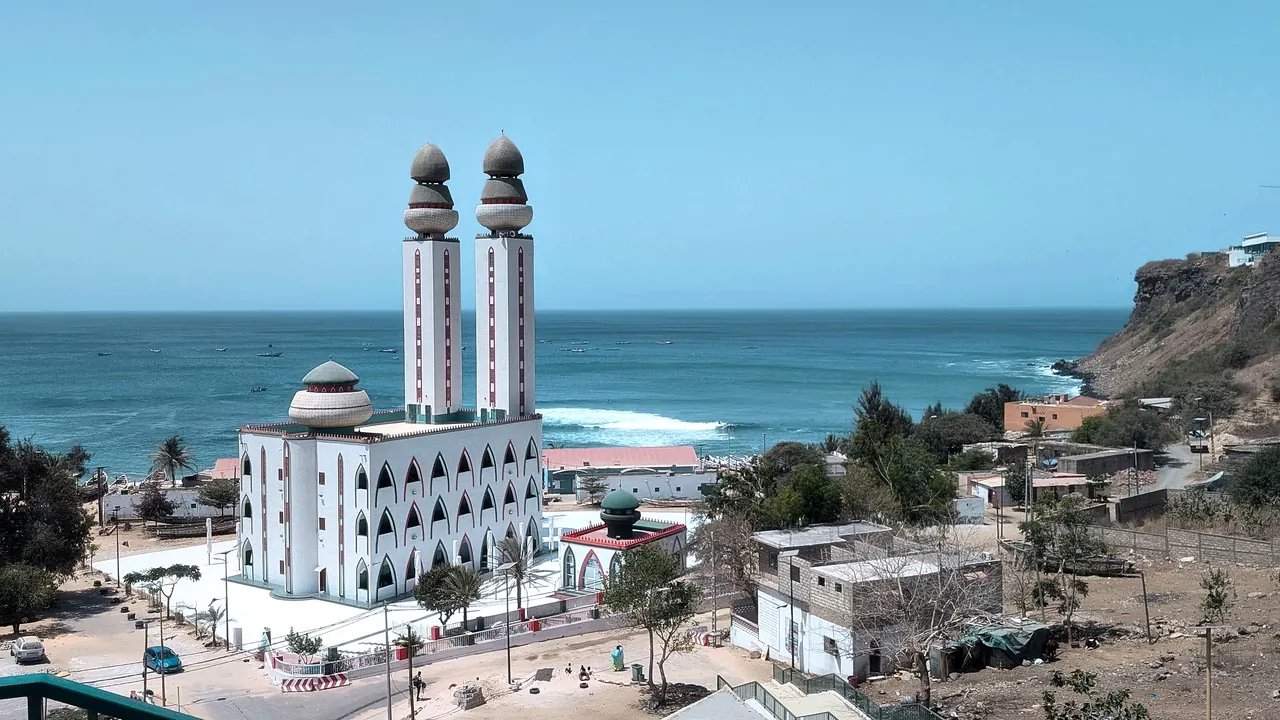
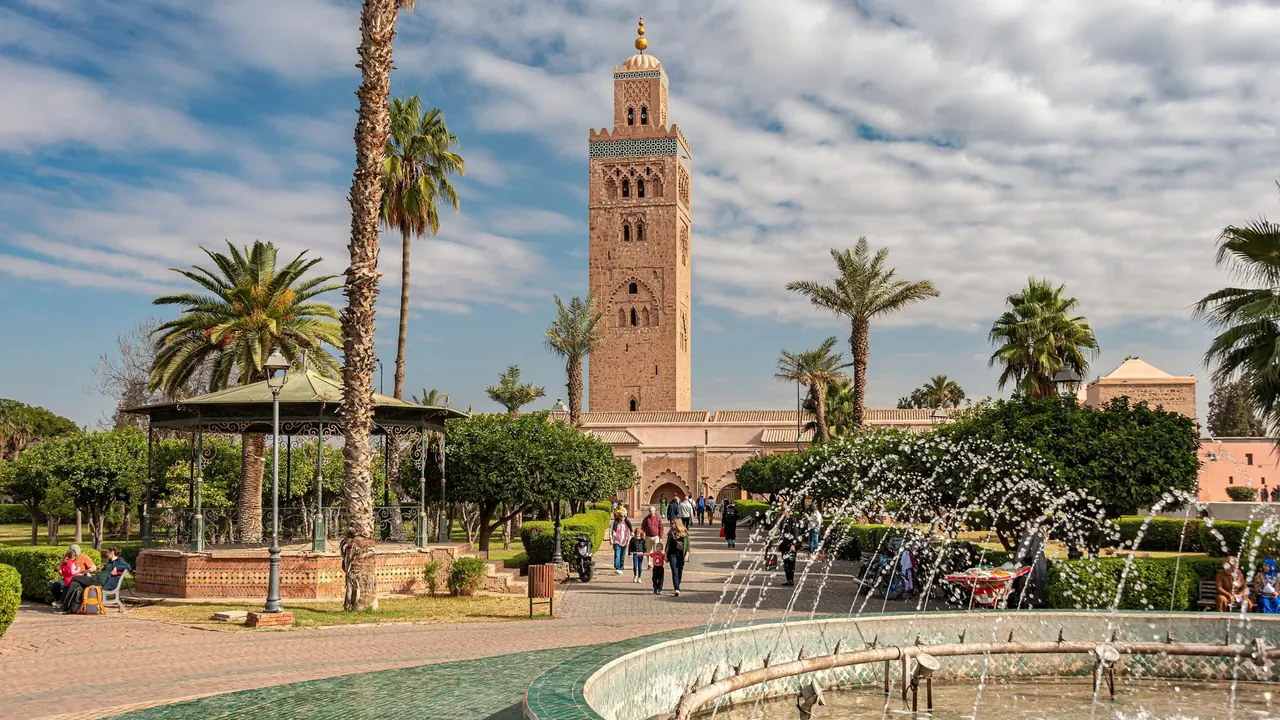
Photos: Dakar by Issathiome, CC BY-SA 4.0, cropped; Marrakech by Jorge Franganillo, CC BY 2.0, cropped.
Dakar or Marrakech?
Our verdict in twelve categories, each scored against the same fixed benchmark cities, and the climate month by month, so you can choose for your trip.
Choose Dakar for
- beaches
- live music and the arts
- nightlife
Dakar is for travellers who want the ocean in the trip. Beaches, surf breaks and island hops are all within the city, nights run on dancing until dawn, and mbalax is played live in its home town. It also suits anyone drawn to West African history and art, with Gorée Island and the city's museums of African art at the centre. You need patience for traffic and hotel costs, and you get little of the polish of a resort city.
Choose Marrakech for
- wellness
- shopping
- nature and the outdoors
Marrakech rewards a trip built around one historic old town. The walled medina packs palaces, madrasas and souks into a walkable maze. Hammams and courtyard riads make rest easy, and the High Atlas and the Agafay desert are close enough for real outdoor days. It is the better choice for shoppers and for travellers watching their spending, and the weaker one for anyone who wants a beach or a big night out.
Scoreboard
Twelve categories on one fixed scale from 0 to 100. The shaded stretch is the gap between the two.
Your match
Pick a travel style or drag the sliders, and both match scores follow your weighting.
Too close to call, 2 points apart
Wins on beaches and live music and the arts with your weighting.
Wins on wellness and shopping with your weighting.
What matters to you?
Category by category
What the scores mean for a trip.
Beaches & swimming
Dakar is a seaside city. It sits on a peninsula, with N'Gor, Yoff, sheltered Anse Bernard and the Almadies coves all in town, and the car-free N'Gor island a few minutes away by pirogue for calm swimming. The catch is the season: the water is cool and the surf heavy through winter and spring. It turns warm only in the humid rainy months, and you should avoid the water near the port and Hann Bay.
Marrakech has no coast at all. Swimming there means a riad plunge pool or a hotel pool, which matter a great deal in summer. The nearest beach is the cool, windy shore at Essaouira, a long drive away, and the Lalla Takerkoust reservoir makes a lakeside afternoon rather than a beach day.
Food & drink
Both cities eat well, and in both the best meals are home-style, but the flavours are quite different. Dakar cooks with the sea: thieboudienne at lunch, yassa and peanut mafé, fish grilled on the shore at Ngor and Ouakam after the pirogues land at Soumbédioune, and charcoal mutton at the dibiteries after dark. French bakeries and Lebanese mezze add variety.
Marrakech is about slow cooking: tagines, Friday couscous, pastilla and tanjia from the hammam embers, plus grill stalls and snail soup on Jemaa el-Fna at dusk. Its weakness is repetition, since many medina menus serve the same few dishes. Wine with dinner also means a licensed restaurant or hotel.
Culture & sights
Marrakech has the richer sightseeing because almost everything sits inside one walled, UNESCO-listed medina. On foot you can reach the Koutoubia minaret, the Ben Youssef Madrasa, the Saadian Tombs, the Bahia and El Badi palaces and the storytellers of Jemaa el-Fna. The Jardin Majorelle and the Yves Saint Laurent museum add a modern chapter just outside the walls.
Dakar's sights are fewer and spread out, but its high points are powerful. Gorée Island and the House of Slaves are a moving reckoning with the Atlantic slave trade. The Museum of Black Civilisations and the IFAN collections cover African art more broadly than Marrakech's small museums do.
Nightlife
Dakar is the place to go out. Bars fill around midnight, clubs often run until dawn, and you can choose between ocean-facing lounges in Almadies and Ngor, expat bars on the Plateau and local dance floors in Point E and Mermoz. Nights there are about dressing up and dancing more than drinking.
In Marrakech the evening is the theatre of Jemaa el-Fna followed by a long dinner. Going out after that means lounge bars and a few big clubs in Hivernage and Gueliz, at resort prices, and the city suits a sunset cocktail better than a night that ends at dawn.
Nature & outdoors
Marrakech has the great landscapes. The snow-capped High Atlas is within an easy drive, with village walks from Imlil, waterfalls in the Ourika valley, the climb of Jebel Toubkal and winter skiing at Oukaimeden. Closer in, the stony Agafay desert offers camel rides, balloon flights and clear night skies.
Dakar's outdoors is mostly its coast: basalt cliffs, the Mamelles lighthouse and Africa's westernmost point. Surfers will find reef and point breaks around Ngor, Ouakam and Yoff that Marrakech cannot offer. Inland there is only Lac Rose and the giraffes at Bandia, as the country around is flat and built-up.
Day trips
Neither city is a strong base for days out, but Dakar has a few more that fit into a day. The Petite Côte gives you Toubab Dialaw, the Somone lagoon, the pirogues landing at Mbour and the shell island of Joal-Fadiouth. Touba's Great Mosque is a long but realistic outing by motorway.
Marrakech's best-known escapes, Essaouira and the kasbahs of Ait Benhaddou, really need a night away. Closer in, the choice comes down to village souks at Asni or Amizmiz and the lone Almohad mosque at Tinmel.
Good for families
Both cities are warm towards children and short on things made for them, but Dakar is a little easier. Its beaches, especially calm N'Gor island, give children a natural playground, and the Gorée ferry and the Bandia safari make good outings. On the other hand, you need malaria precautions, and the traffic and broken pavements tire small legs.
Marrakech asks more of younger children, with crowded lanes shared with motorbikes, persistent sellers and fierce summer heat. A riad or resort with a pool makes it workable, and older children who enjoy markets get the most from it.
Getting around
Getting around takes effort in both cities, though for different reasons. Dakar is stretched along a long peninsula, so distance is the issue. The TER railway and rapid bus line handle the main corridors well, and taxis and ride-hailing apps cover the rest, but peak-hour jams can be severe.
In Marrakech, the medina itself is the challenge. It is compact and walkable, but it is a maze of unnamed alleys shared with carts and motorbikes. You will need petit taxis to reach Gueliz or Majorelle, and there is no rail transport within the city.
Shopping & style
Marrakech is a shopping destination in its own right. The souks north of Jemaa el-Fna are arranged by trade, so you can follow lanes of leatherworkers, dyers, metalworkers and carpet sellers. Gueliz boutiques and the Sidi Ghanem showrooms then offer calmer, design-led alternatives.
Dakar's shopping centres on one thing done well: fabric. You can choose wax prints or bazin at the HLM market and have a tailor make a garment within days. The Soumbédioune artisan village covers carvings, leather and drums.
Affordability
Marrakech is easier on the budget, mainly because of where you sleep. Simple medina riads offer real character for modest money, and palace entries, taxis and stall food are all cheap. Bargaining in the souks decides what you pay for souvenirs.
In Dakar, eating locally and getting around by taxi cost little, but comfortable hotels charge close to southern European rates. Decent budget rooms are scarce, so a trip there costs more than its street prices suggest.
Live music & performing arts
Dakar is a music city. It is the home of mbalax, with bands playing late in clubs and music bars, and the biggest names still play hometown shows. Sabar drumming breaks out at weddings and wrestling matches. The Sorano National Theatre and the Grand Théâtre national add ballet, traditional ensembles and concerts, alongside hip-hop and jazz.
Marrakech's performance happens mainly in one place: the gnawa musicians, drummers and storytellers of Jemaa el-Fna each evening. Apart from the Popular Arts Festival and the tourist dinner shows, there is little to buy a ticket for.
Wellness & relaxation
Marrakech is built for unwinding. Bathing is part of daily life here, from the neighbourhood hammam with black soap and a kessa glove to marble spas with argan oil massages. The riad courtyard, with its fountain and orange trees, shuts out the noise of the lanes.
Dakar offers hotel spas in Almadies and Ngor and some yoga, in a city that is loud and dusty in the harmattan. Real calm there means retreating to N'Gor island or heading down to the Petite Côte.
When should you go?
Pick your month. The climate figures are measured averages, not a forecast.
Dakar in July
Marrakech in July
Daytime high, °C
Rainfall in the month, mm
Temperature and rainfall are climate normals, averaged over the years shown. Dakar: 1991-2020 normals, Dakar / Yoff (10 km from centre). Marrakech: 1991-2020 normals, Marrakech (5.1 km from centre).
Dakar stays warm all year, with daytime highs that hardly change from season to season, so the calendar is decided by rain and the sea. From November to June it is almost completely dry, but from December to May the Atlantic cools to about 20°C and the surf is heavy. The sea warms to near 28°C from July, just as the rainy season arrives, and August brings around 162mm of humid downpours. November is the best month for a beach trip, with the water still warm, the rain gone and plenty of sun.
Marrakech works the other way round. Summer is harsh, reaching 38°C in July, and the long, blazing sunny days leave only early mornings for walking the medina. Winter days are mild at about 19°C, with modest rain spread from November to April. The best months for walking are March to May and October into November. That makes Marrakech the better city in spring, while Dakar's comfortable stretch runs from late autumn through winter.
Which traveller are you?
For a beach and sun trip, Dakar is the clear choice. It has city beaches at N'Gor and Yoff, calm water on N'Gor island and warm late-season seas. Marrakech is inland, so swimming there means a riad plunge pool and the nearest coast is hours away.
On a relaxing and wellness trip, Marrakech wins easily. It has a hammam in every quarter, argan oil and clay treatments, and quiet riad courtyards with fountains. Dakar has no bathing tradition, and the city is noisy and dusty, so rest there comes mostly from hotel spas.
For a food and nightlife trip, Dakar has more to offer. The eating is just as good, with thieboudienne, seafront fish grills and dibiteries. After dinner the city keeps dancing to mbalax and Afrobeats until dawn, while evenings in Marrakech wind down after Jemaa el-Fna and a rooftop drink.
Before you go
| Measure | Dakar | Marrakech |
|---|---|---|
| Official language | French, Wolof, Balanta, Badyara | Arabic, Standard Moroccan Tamazight |
| Currency | CFA Franc BCEAO (XOF) | Moroccan Dirham (MAD) |
| Sockets | CEK230 V, 50 Hz | CE50 Hz |
| Driving side | Right | Right |
| Time zone | UTC | UTC+1 |
| Emergency number | Police 17, fire 18 | Police 19/112, ambulance 15, fire 15 |
| Elevation | 10 m | 465 m |
| Main airport | Blaise Diagne International Airport (DSS)39 km from centre32 non-stop destinations | Marrakesh Menara Airport (RAK)6 km from centre113 non-stop destinations |
| Public holidays this year | 9 days | 11 days |
By the numbers
| Measure | Dakar | Marrakech |
|---|---|---|
| City population | 1,438,725 | 1,002,697 |
| People per km² | 18,029 | 4,360 |
| Museums within 10 km | 8 | 14 |
| UNESCO World Heritage sites within 50 km | 1 | 1 |
| Swim season, months above 21 °C | 8 months | - |
Where else could you go?
Every comparison below shares a destination with this one, so you can follow Dakar or Marrakech somewhere new.
- Essaouiravs Marrakech
- Agadirvs Marrakech
- Casablancavs Marrakech
- Rabatvs Marrakech
- Fesvs Marrakech
- Chefchaouenvs Marrakech