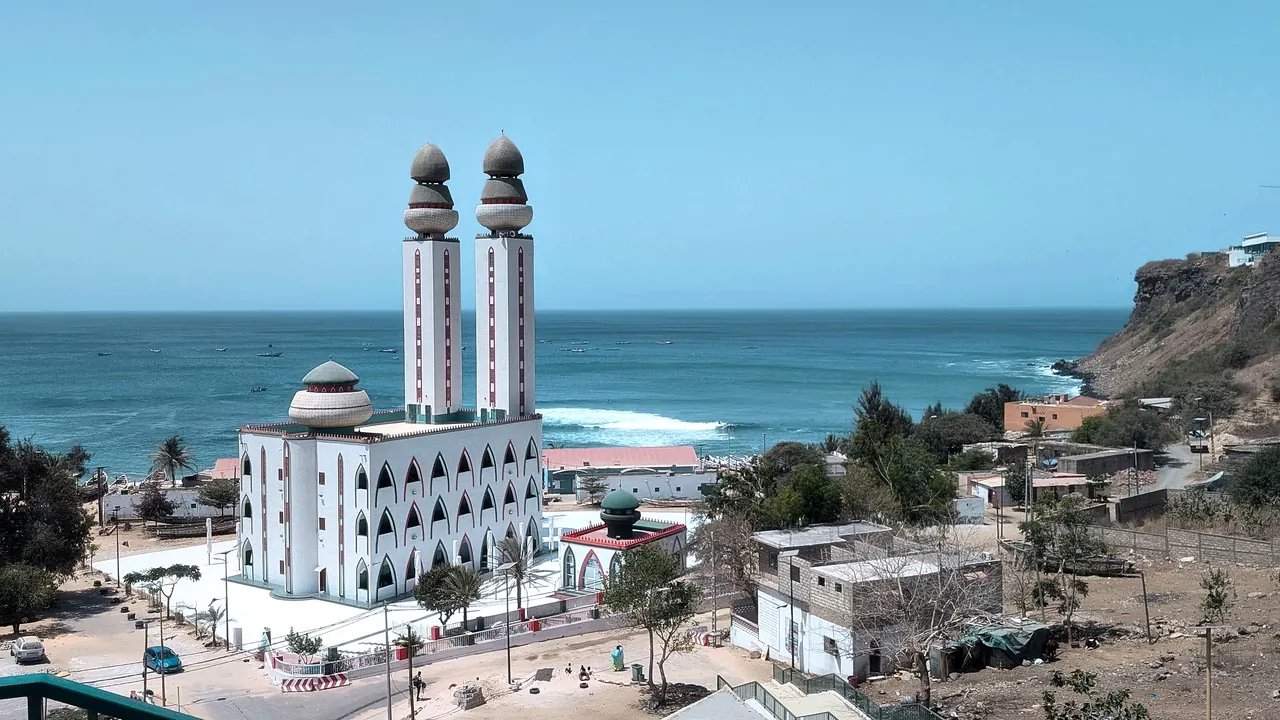
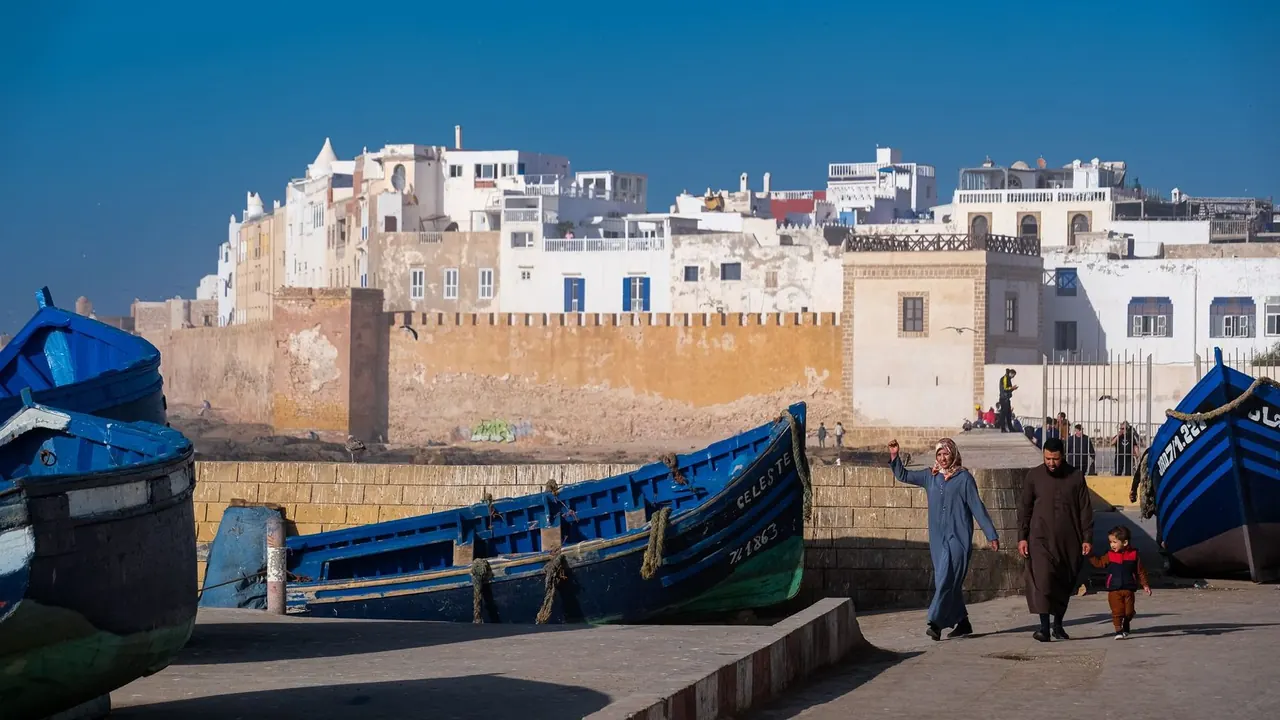
Photos: Dakar by Issathiome, CC BY-SA 4.0, cropped; Essaouira by Manel Cusido, Pexels License.
Dakar or Essaouira?
Our verdict in twelve categories, each scored against the same fixed benchmark cities, and the climate month by month, so you can choose for your trip.
Choose Dakar for
- nightlife
- live music and the arts
- day trips
Dakar suits travellers who want a big West African capital with plenty to do. You get the cooking of the dibiteries and the Soumbédioune fish grills, mbalax bands that start after midnight, the history of Gorée Island and a surf coast inside the city. It also takes more effort, with taxis for almost every journey, heavy traffic and hotels that are not cheap. It rewards energetic visitors more than those who want to rest.
Choose Essaouira for
- wellness
- getting around
- prices
Essaouira is the choice for a slower, cheaper trip on foot. Its walled medina, harbour grills and windy bay make a calm base for kitesurfing, mornings on riad roof terraces and hammam scrubs, and children manage its car-free lanes easily. Evenings end early and there is little to explore further away, so it is a place to unwind, not to go out.
Scoreboard
Twelve categories on one fixed scale from 0 to 100. The shaded stretch is the gap between the two.
Your match
Pick a travel style or drag the sliders, and both match scores follow your weighting.
Too close to call, 2 points apart
Wins on nightlife and live music and the arts with your weighting.
Wins on wellness and getting around with your weighting.
What matters to you?
Category by category
What the scores mean for a trip.
Beaches & swimming
Dakar has more beaches to choose from and warmer water. There are N'Gor and Yoff on the north shore, little Anse Bernard below the Plateau, and calm water around car-free N'Gor island, a short pirogue ride away. The sea is properly warm from July to November, although that is the rainy season, and it cools from December to May, when the surf builds.
Essaouira has a single wide crescent of sand. It is lovely for walking, riding and watching kites, but the water stays cool all year and the wind blows sand across the bay for much of the day. Swimming is mostly limited to calm mornings and the sheltered corner by the port.
Food & drink
Dakar has far more to eat. Thieboudienne at lunch, yassa and mafé, mutton grilled at the dibiteries after dark, and café Touba and attaya on the street already give plenty of variety. French bakeries and Lebanese mezze add more on top of that.
Essaouira's best meal is simpler. You pick sardines or spider crab at the harbour grills and eat them on the spot, and then there are fish tagines, Friday couscous and amlou. After that the choice narrows quickly, and only a few places serve wine with dinner.
Culture & sights
Gorée Island gives Dakar a weight that Essaouira cannot match, and its House of Slaves is a powerful memorial to the Atlantic slave trade. On the mainland, the Museum of Black Civilisations, the IFAN collections of masks and textiles and the Dak'Art biennale add depth. You can easily fill three or four days, although the sights are spread across the city.
Essaouira is the opposite: a single UNESCO-listed walled medina, laid out in the 18th century as a grid of whitewashed houses with blue shutters, that you can see on foot in a day or two. It offers more atmosphere than depth, and its highlights are the cannon-lined Skala ramparts and the old mellah.
Nightlife
This is where the two differ most. Dakar goes out late, from ocean-facing lounges in Almadies and Ngor to clubs in Point E and Mermoz playing Senegalese pop and Afrobeats until dawn. Nights there are about dressing up and dancing more than heavy drinking.
Essaouira has rooftop drinks at sunset, a few riad bars and a couple of beach bars where the kitesurfers gather, but no clubs. Most evenings end with a stroll along the ramparts.
Nature & outdoors
Essaouira gets more out of its setting. The wind makes its bay one of Africa's best-known kitesurfing and windsurfing spots. Inland, goats climb trees on argan-covered hills, the dunes at Diabat suit horse and camel rides, and an empty coast to the south makes for long walks. Eleonora's falcons breed on the islands offshore.
Dakar's outdoors is mostly its rugged shoreline: basalt cliffs, the Mamelles hills and the reef breaks that make it a serious surf city. Inland the land is flat, dry and built-up, so reaching Lac Rose and the Bandia reserve means about an hour on the road.
Day trips
Dakar has the better choice of outings. Within a couple of hours down the Petite Côte, the artists' village of Toubab Dialaw, the Somone lagoon and the fishing port of Mbour make easy days, and at Mbour you can watch the pirogues ride in through the surf late in the afternoon. Two longer days are worth the effort: Joal-Fadiouth, the village on an island of shells reached by a long wooden bridge, and Touba's Great Mosque by motorway. Saint-Louis is too far to visit without staying a night.
Essaouira is more isolated, and its outings are small and close by: the beach at Sidi Kaouki, the thuya carvers at Ghazoua, the argan cooperatives on the inland roads and the half-buried fort ruins near Diabat. Safi's pottery quarter is about two hours up the coast. Marrakech and Agadir work better as stops on the way in or out than as return trips.
Good for families
Essaouira is the easier place with children. The small, mostly car-free medina is minutes from the beach, and camels, fishing boats and the gulls on the ramparts keep young children busy. There is nothing built for them, though, and steep riad stairs need watching.
Dakar welcomes children just as warmly, but heavy traffic, broken pavements, heat, dust and malaria precautions make the days harder. The best outings are N'Gor island, the Gorée ferry and the Bandia safari, ideally from a base by the sea in Almadies or Ngor.
Getting around
Essaouira is a walking town. Between the port and the beach promenade almost nothing is more than twenty minutes away along flat, car-free lanes, and porters wheel your bags to the riad. Only the coastal villages and argan cooperatives need a driver.
Dakar stretches along a long peninsula, and the Plateau is a long ride from the northern beach districts. The TER railway and the rapid bus line help on the main routes, but most journeys mean a taxi or a ride-hailing app and patience in the traffic.
Shopping & style
Both cities are better for crafts than fashion, but you bring home different things. In Dakar it is cloth: wax prints and bazin from the HLM market, which a tailor can make into a garment within a few days. Soumbédioune adds carvings and drums, and you bargain hard in crowded markets.
Essaouira is calmer, with less pressure from sellers. Its speciality is fragrant thuya wood inlaid into boxes and trays, alongside argan cosmetics, rugs and small galleries of naive and gnawa-inspired painting.
Affordability
Essaouira is the cheaper stay. Riads are good value, the medina costs nothing to explore and fish at the port is inexpensive. Only the smarter riads, rooftop restaurants and places serving alcohol charge noticeably more.
Dakar is cheap at street level, where thieboudienne, taxis and market goods cost little. Comfortable hotels, however, charge close to southern European rates, and decent budget rooms are few, so accommodation is where most of the difference in cost lies.
Live music & performing arts
Dakar has a far richer live scene, and it runs all year. Senegal's percussion-heavy dance music, mbalax, is played by full bands in the city's clubs and music bars, and the country's biggest stars still play at home. Neighbourhood weddings and wrestling bouts bring out sabar drummers and dancers, the Daniel Sorano National Theatre presents the national ballet, and the Grand Théâtre national takes the larger concerts. Hip-hop, jazz and Afro-fusion fill the gaps, and only opera and classical music are missing.
Essaouira offers one tradition rather than a full scene. Gnawa is the trance music of the Afro-Moroccan brotherhoods, played on the guembri and iron castanets, and you can hear it here in its home town. To hear it at its fullest, go during the yearly Gnaoua World Music Festival, when free concerts on the squares and ramparts pair gnawa masters with jazz musicians. At other times you catch it informally in a few restaurants and squares, and there is no theatre at all.
Wellness & relaxation
Essaouira is made for slowing down: sea air, long breakfasts on roof terraces, an afternoon with a book, and hammams offering black soap scrubs and argan oil massages. The wind that blows much of the year is the main thing that can disturb the calm.
Dakar is noisy and dusty, and wellness there means a hotel spa or a yoga class in Almadies or Ngor. To really rest, spend a night on N'Gor island or go down to the lagoons of the Petite Côte.
When should you go?
Pick your month. The climate figures are measured averages, not a forecast.
Dakar in July
Essaouira in July
Daytime high, °C
Rainfall in the month, mm
Temperature and rainfall are climate normals, averaged over the years shown. Dakar: 1991-2020 normals, Dakar / Yoff (10 km from centre). Essaouira: 1991-2020 normals, Essaouira (1.4 km from centre).
Dakar is dry from November to June, with highs in the mid-twenties from December to May. Cool upwelling keeps the sea brisk in those months, though. The rains arrive in July and peak in August at about 162mm, when highs near 31°C come with heavy humidity. The best balance is November and December. The rain has gone, the heat has eased and the sea keeps much of its autumn warmth, which reaches about 28°C from August to October.
Essaouira stays mild all year and is never too hot to walk the medina. Its wet months run from November to March, while May to August is dry and the sunniest stretch. The sea never rises above about 20°C and the summer trade wind sweeps the bay, so summer there suits walks, kitesurfing and roof terraces more than swimming. For warm water, go to Dakar in late autumn. For a cool escape in July or August, Essaouira is far more comfortable than Dakar's humid rainy season.
Which traveller are you?
For a food and nightlife trip, Dakar wins easily. An evening can move from charcoal-grilled mutton at a dibiterie to live mbalax and then to dance floors in Point E or Almadies that run until dawn. Essaouira's medina has gone quiet well before midnight.
On a relaxing and wellness trip, Essaouira is the gentler choice. Its slow rhythm, traffic-free lanes, neighbourhood hammams and surf-and-yoga stays along the coast make rest easy. In noisy, congested Dakar you have to leave for N'Gor island or the Petite Côte to find calm.
On a trip on a tight budget, Essaouira stretches money further. Riad rooms are good value, the ramparts and medina cost nothing to wander and the port grills are cheap. Dakar's street food costs little too, but decent rooms there are scarce and expensive.
Before you go
| Measure | Dakar | Essaouira |
|---|---|---|
| Official language | French, Wolof, Balanta, Badyara | Arabic, Standard Moroccan Tamazight |
| Currency | CFA Franc BCEAO (XOF) | Moroccan Dirham (MAD) |
| Sockets | CEK230 V, 50 Hz | CE50 Hz |
| Driving side | Right | Right |
| Time zone | UTC | UTC+1 |
| Emergency number | Police 17, fire 18 | Police 19/112, ambulance 15, fire 15 |
| Elevation | 10 m | 11 m |
| Main airport | Blaise Diagne International Airport (DSS)39 km from centre32 non-stop destinations | Essaouira-Mogador Airport (ESU)15 km from centre13 non-stop destinations |
| Public holidays this year | 9 days | 11 days |
By the numbers
| Measure | Dakar | Essaouira |
|---|---|---|
| City population | 1,438,725 | 82,962 |
| People per km² | 18,029 | 16,592 |
| Museums within 10 km | 8 | 2 |
| UNESCO World Heritage sites within 50 km | 1 | 1 |
| Swim season, months above 21 °C | 8 months | None |
Where else could you go?
Every comparison below shares a destination with this one, so you can follow Dakar or Essaouira somewhere new.
- Agadirvs Essaouira
- Marrakechvs Essaouira
- Casablancavs Essaouira
- Rabatvs Essaouira
- Fesvs Essaouira
- Chefchaouenvs Essaouira