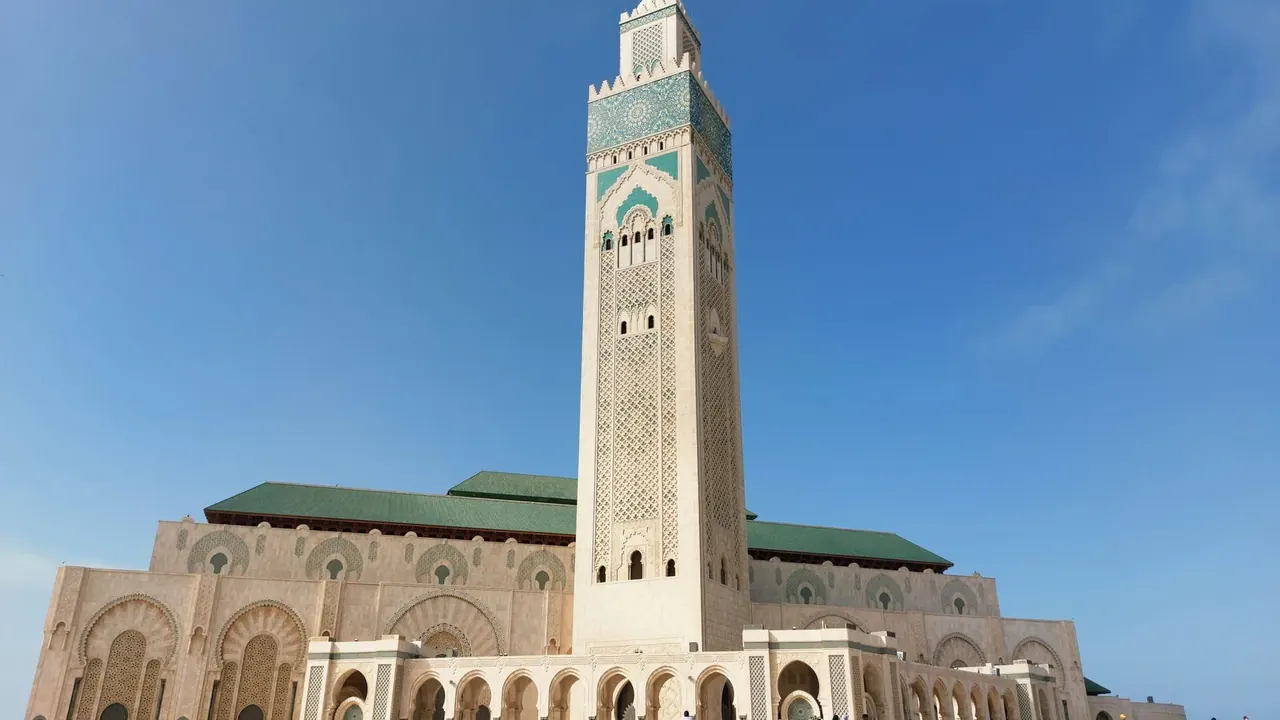
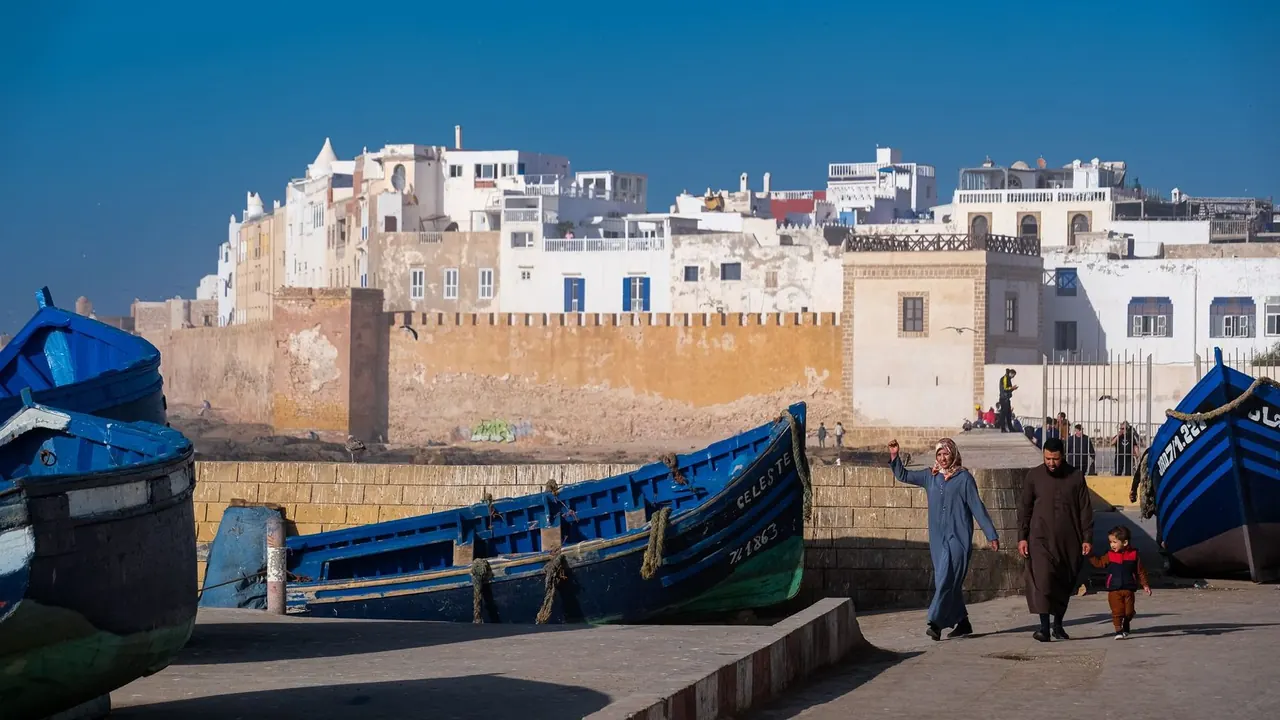
Photos: Casablanca by Samir Bakkah, Pexels License; Essaouira by Manel Cusido, Pexels License.
Casablanca or Essaouira?
Our verdict in twelve categories, each scored against the same fixed benchmark cities, and the climate month by month, so you can choose for your trip.
Choose Casablanca for
- day trips
- nightlife
- food and drink
Casablanca suits travellers who want a working modern city with Morocco's ordinary life going on around them. It has the better food, a real night out along the Corniche at Ain Diab, the country's deepest modern shopping and a fast train to Rabat and beyond. Its sights are the Hassan II Mosque and the Art Deco downtown rather than an old medina, so it works best as two or three busy days at the start or end of a longer trip.
Choose Essaouira for
- nature and the outdoors
- getting around
- wellness
Essaouira is the choice for slowing down. Its walled, car-free medina by the sea, the wind that brings kitesurfers from far away, and evenings spent on rooftops and ramparts make it a place to stay a week and do little. There is not much after dark and few outings beyond the town, but it is easier on foot, calmer and a little cheaper.
Scoreboard
Twelve categories on one fixed scale from 0 to 100. The shaded stretch is the gap between the two.
Your match
Pick a travel style or drag the sliders, and both match scores follow your weighting.
Wins on day trips and nightlife with your weighting.
Wins on nature and the outdoors and getting around with your weighting.
What matters to you?
Category by category
What the scores mean for a trip.
Beaches & swimming
Neither is a sunbathing destination, and both sit on cool Atlantic water, but the beach plays a different role in each. In Casablanca it is the long Corniche sand at Ain Diab, backed by beach clubs whose pools are where many people actually swim, because the swell and currents are strong.
In Essaouira the crescent of sand begins right at the medina walls, so you are on it every day, but for walking, riding and watching kites while the wind blows. Casablanca's sea gets slightly warmer in summer, and Essaouira's sheltered corner by the port gives the calmer swim.
Food & drink
Casablanca eats better and more widely. The fish at the Marché Central, the snack stalls of the Old Medina and the French-influenced brasseries and pâtisseries of Maarif and Gauthier give it range from street food to smart dinners, and a drink with the meal is easier to arrange.
Essaouira has one great experience, choosing fish and crab at the harbour grills and eating them on the spot, plus argan oil and amlou from the countryside. Beyond that the choice narrows quickly to riad dining rooms and cafés, and alcohol is harder to find.
Culture & sights
The two are close in depth but offer quite different things. Casablanca's sights are monumental and modern: the Hassan II Mosque over the ocean, which non-Muslims can tour, then the Art Deco and neo-Moorish boulevards of the protectorate, the Habous quarter and the Museum of Moroccan Judaism.
Essaouira is a single, whole townscape: the eighteenth-century UNESCO-listed grid of whitewashed houses, the cannon-lined Skala ramparts and the old mellah. It is more atmospheric to wander, Casablanca more varied to visit, and each takes only a day or two.
Nightlife
Casablanca is the only one of the two with a real night out. The Corniche at Ain Diab has lounges, beach clubs and clubs playing house and Arabic pop late at weekends, and downtown and Maarif add hotel bars and cocktail lounges, though you need taxis between them.
Essaouira ends the day with a sunset drink on a rooftop and a walk on the ramparts. There are no clubs, the medina is quiet before midnight, and the few late crowds are surfers in a couple of beach bars.
Nature & outdoors
Essaouira has far more to do outdoors. Its steady wind makes the bay a famous kitesurfing and windsurfing spot, with harder waves at Moulay Bouzerktoun and Sidi Kaouki, and there are horse and camel rides to the Diabat dunes, argan forest with tree-climbing goats, and Eleonora's falcons on the islands in summer.
Casablanca sits on a flat plain where the outdoors means jogging the Corniche towards El Hank, learner surf at Ain Diab and Dar Bouazza, and shaded trails in the Bouskoura eucalyptus forest. Neither has mountains within easy reach.
Day trips
Casablanca is much the better base for outings. Rabat, with the Kasbah des Oudayas and the Chellah ruins, is about an hour by train, and El Jadida's Portuguese cistern, whitewashed Azemmour and the oyster lagoon at Oualidia all lie down the coast.
Essaouira is cut off by comparison. Its outings are small and local, such as Sidi Kaouki, the thuya workshops at Ghazoua and the argan cooperatives, and Marrakech is around three hours away, so it is better as a stop on the way in.
Good for families
Casablanca has the attractions built for children, but it is hard going between them. The Corniche mall has a large aquarium and indoor rides, Ain Diab has an old amusement park and zoo, and the calm beach club pools are far safer than the rough sea. Heavy traffic and broken pavements make every move across town tiring, so it suits a few days with older children.\n\nEssaouira has nothing purpose-built, yet it is one of the easier places in Morocco for simple days. The small, mostly car-free medina leads straight to the beach, and the camels, the fishing boats and the gulls on the ramparts keep children busy. Watch the steep riad stairs, the open terraces and the summer wind on the sand.
Getting around
Essaouira is much simpler. The flat, compact medina, port and beach promenade are all within about twenty minutes on foot, and porters with hand carts bring luggage to the riads. Only Sidi Kaouki or the argan cooperatives need a driver.
Casablanca sprawls, so visitors combine the clean tram lines to downtown and Ain Diab with red petits taxis that share rides and sometimes skip the meter. Only the downtown core is pleasant to walk, but fast trains make the rest of Morocco far easier to reach than from Essaouira.
Shopping & style
Casablanca has the slight edge because it covers modern shopping too: the huge Corniche mall, Maarif's fashion streets and local designers, plus the Derb Ghallef flea market. Its crafts are limited to the tidy Habous shops.
Essaouira is the better place for crafts specifically, with thuya wood carved in workshops under the ramparts, argan cosmetics, silver, rugs and small galleries of naive and gnawa-inspired painting, all sold with little pressure. It has no fashion or brand shopping at all.
Affordability
Both are cheap for daily life, with Essaouira a little easier on the budget overall. Its riads are good value, especially outside summer, and its main sight costs nothing to wander.
Casablanca's rooms are the sticking point, since many hotels are priced for business travellers and good guesthouses are scarce, and Corniche dining and drinks add up. In both, alcohol and smarter rooftop or seafront places cost more than the rest.
Live music & performing arts
Casablanca has the formal stages that Essaouira lacks. A large modern theatre on Place Mohammed V puts on concerts, dance and touring productions, and the French and other cultural institutes run film, theatre and music. Each year there is also a long-running jazz festival and a hip-hop and urban music festival that grew out of the city's own scene, though between those dates it can be quiet, so check the programme first.\n\nEssaouira's strength is a single tradition.
It is the home of gnawa, and once a year the Gnaoua World Music Festival fills the squares and ramparts with free concerts. The rest of the year the music is informal, heard in a few restaurants and squares, and there is no theatre or concert programme.
Wellness & relaxation
Essaouira is far easier to unwind in. The traffic-free medina, sea air, roof terraces and sunset on the ramparts set the pace, and coastal villages host yoga and surf-and-yoga stays, with argan-oil massages in riad spas. Only the persistent wind takes the edge off outdoor lounging.
Casablanca has the larger bathing offer, from neighbourhood hammams to smart spas in Maarif and thalassotherapy on the Corniche, but the loud, crowded city around them makes rest something you schedule rather than something the place gives you.
When should you go?
Pick your month. The climate figures are measured averages, not a forecast.
Casablanca in July
Essaouira in July
Daytime high, °C
Rainfall in the month, mm
Where the figures come from
Essaouira has no rain gauge within 25 km of the centre, so its rainfall comes from a gridded climate dataset read at the city rather than from a gauge further away.
Temperature and rainfall are climate normals, averaged over the years shown. Casablanca: 1991-2020 normals, Casablanca (5.6 km from centre). Essaouira: 1991-2020 normals, Essaouira (1.4 km from centre).
Casablanca has a warmer, sunnier summer. From June to September the days are dry and reach about 27°C in August, with long sunshine and the sea at its warmest, around 23°C, which is the only stretch when the beach really pulls. Rain comes back in October and is heaviest in November at about 78mm, but winters stay mild enough for walking the streets all year, and spring is pleasant for sightseeing.
Essaouira barely changes through the year. Summer highs sit around 22°C and the sea tops out near 20°C, so it never feels like a hot beach town, and the trade wind blows hardest from spring to late summer. September and October are often the most comfortable months, a little warmer and calmer. Winters are mild and wetter, but drier than Casablanca's, and the town never gets too hot to wander.
Which traveller are you?
For a food and nightlife trip, Casablanca is the clear pick. Seafood grilled at the Marché Central, brasseries in Maarif and Gauthier, then lounges and clubs on the Corniche until late give it a range of evenings that Essaouira simply cannot match.
On a relaxing and wellness trip, Essaouira wins. The car-free medina, roof-terrace breakfasts, sunset on the ramparts and the yoga and surf retreats along the coast set a slow pace, while Casablanca's traffic and noise work against rest outside its hammams.
On an outdoors trip, Essaouira is the stronger base. The bay is one of Africa's best-known kitesurfing and windsurfing spots, with horse rides to Diabat and argan hills inland, whereas flat Casablanca offers mainly the Corniche promenade, learner surf and the Bouskoura forest.
Before you go
| Measure | Casablanca | Essaouira |
|---|---|---|
| Official language | Arabic, Standard Moroccan Tamazight | Arabic, Standard Moroccan Tamazight |
| Currency | Moroccan Dirham (MAD) | Moroccan Dirham (MAD) |
| Sockets | CE50 Hz | CE50 Hz |
| Driving side | Right | Right |
| Time zone | UTC+1 | UTC+1 |
| Emergency number | Police 19/112, ambulance 15, fire 15 | Police 19/112, ambulance 15, fire 15 |
| Elevation | 115 m | 11 m |
| Main airport | Mohammed V International Airport (CMN)26 km from centre112 non-stop destinations | Essaouira-Mogador Airport (ESU)15 km from centre13 non-stop destinations |
| Public holidays this year | 11 days | 11 days |
By the numbers
| Measure | Casablanca | Essaouira |
|---|---|---|
| City population | 3,215,935 | 82,962 |
| People per km² | 8,375 | 16,592 |
| Museums within 10 km | 3 | 2 |
| UNESCO World Heritage sites within 50 km | 0 | 1 |
| Swim season, months above 21 °C | 5 months | None |
Where else could you go?
Every comparison below shares a destination with this one, so you can follow Casablanca or Essaouira somewhere new.