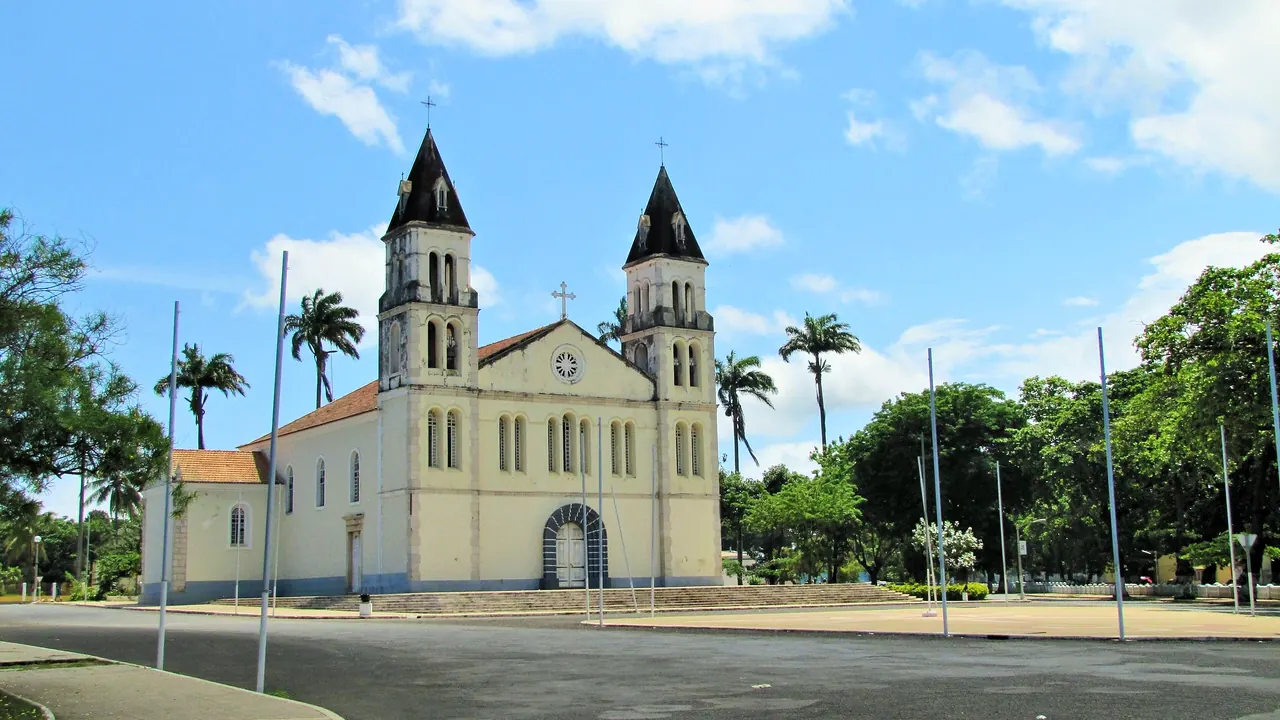
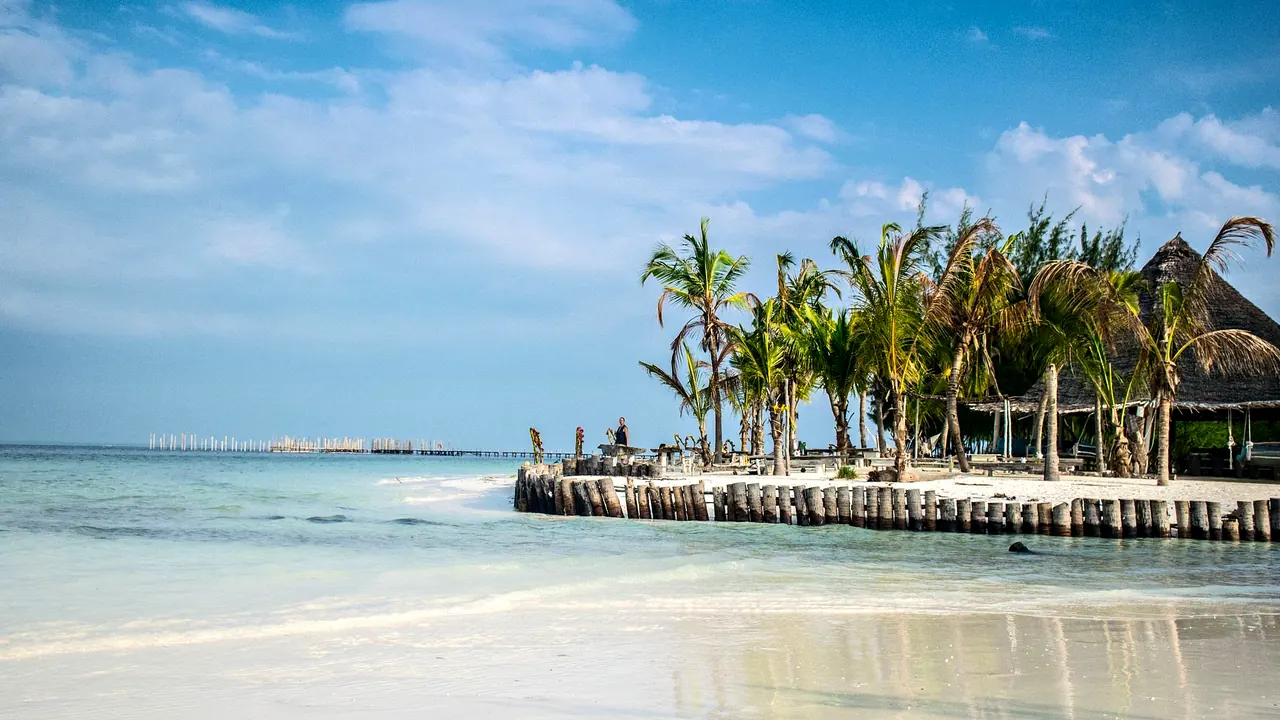
Photos: São Tomé by Chuck Moravec, CC BY 2.0, cropped; Zanzibar by Ákos Helgert, Pexels License.
São Tomé or Zanzibar?
Our verdict in twelve categories, each scored against the same fixed benchmark cities, and the climate month by month, so you can choose for your trip.
Choose São Tomé for
- nature and the outdoors
São Tomé is for travellers who care more about wild country than comfort. Cloud forest climbs to the Lagoa Amélia crater, the volcanic needle of Pico Cão Grande, endemic birds and nesting turtles make it one of the most striking natural trips in Africa, and the old cacao roças add a haunting layer of history. In return you accept slow, muddy roads, few good rooms, simple food and evenings that end early.
Choose Zanzibar for
- culture and sights
- wellness
- nightlife
Zanzibar makes the easier and more rounded vacation. The white coral beaches of the north coast, the carved doors and alleys of Stone Town, spiced Swahili cooking and resorts with pools mean a family, a couple or a first-time visitor to Africa can relax without much planning. Its outdoors is reef and lagoon rather than mountain, and the far wilder interior is the thing it does not offer.
Scoreboard
Twelve categories on one fixed scale from 0 to 100. The shaded stretch is the gap between the two.
Your match
Pick a travel style or drag the sliders, and both match scores follow your weighting.
Wins on nature and the outdoors with your weighting.
Wins on culture and sights and wellness with your weighting.
What matters to you?
Category by category
What the scores mean for a trip.
Beaches & swimming
São Tomé's sea is as warm as Zanzibar's, but its beaches take more effort. Close to the capital you get small, quiet coves such as Lagoa Azul and Praia dos Tamarindos, and the grey and golden southern sands of Praia Piscina and Jalé are an overnight trip, with no facilities and sometimes strong surf. Their reward is that you will often have them to yourself.
Zanzibar is a true beach destination. Kendwa and Nungwi in the north have white coral sand, swimming at any tide and sunsets over the water, and Matemwe offers a quieter stretch facing the reef. Choose your coast with care, though: at Paje and Jambiani the sea pulls far back at low tide, so swimming there follows the tide table.
Food & drink
São Tomé eats simply: calulu stewed with smoked fish and greens, breadfruit, plantain, fish grilled by the shore and palm wine, with superb local chocolate and coffee from the plantations. There are only a few restaurants, so expect good ingredients rather than choice.
Zanzibar has more to explore, at least in Stone Town. Clove-scented pilau and biryani, coconut fish curries, urojo from street stalls and the evening seafood grills of Forodhani Gardens show centuries of Omani and Indian trade. The beach towns fall back on resort buffets, and alcohol is mostly limited to hotels and tourist restaurants.
Culture & sights
Both islands carry the history of slavery and colonial trade, but Zanzibar shows far more of it. São Tomé's capital is a small, faded Portuguese town with a cathedral, a pink palace and the sixteenth-century fort whose museum tells of the plantations and the Batepá massacre. Half a day covers it, and the more moving heritage is out at the roças.
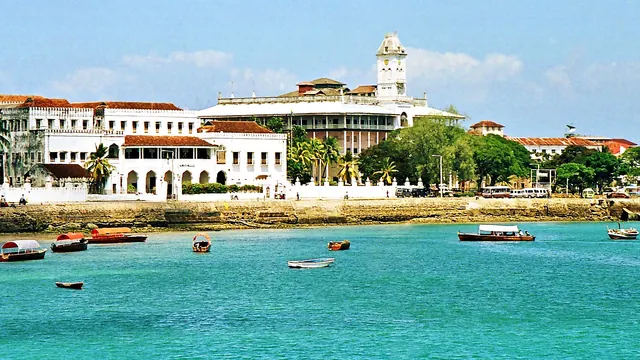
Stone Town is a UNESCO-listed Swahili trading town you can spend days getting lost in. It has carved doors, mosques and Hindu temples, the sultans' Palace Museum and the Anglican cathedral built on the site of East Africa's last open slave market, with a memorial and the underground holding chambers beside it. Around it are Omani palace ruins and the Persian baths at Kidichi.
Nightlife
Neither island is a place for clubbing, but Zanzibar gives you more to do after dark. São Tomé's evenings mean beer at open-air bars on the bay and, at weekends, a few local spots dancing to kizomba and zouk until late. It is friendly but small.
Zanzibar's nights happen on the beach: bonfires and bars at Nungwi and Kendwa, a full-moon party that draws people from across the island, kitesurfer bars in Paje and rooftop sundowners in Stone Town. Most of it is quiet by midnight, and Ramadan calms everything further.
Nature & outdoors
On land, São Tomé is in another league. Obô Natural Park covers a steep, volcanic interior of cloud forest, waterfalls and crater lakes, Pico de São Tomé rises to 2,024m, and Pico Cão Grande stands out of the jungle like a spire. Add endemic birds, nesting turtles and passing humpbacks, though you will need guides, mud-proof boots and patience on the roads.
Zanzibar's outdoors lies mostly offshore. The protected reef at Mnemba atoll offers clear snorkelling and diving, boats from Kizimkazi look for dolphins, and the shallow east-coast lagoon is excellent for kitesurfing. On land, Jozani Forest and its red colobus monkeys are the highlight in a flat landscape of farms.
Day trips
The two are much alike for outings, and both lean on old plantations, but in different ways. São Tomé's days out lead to the crumbling colonial roças, such as Agostinho Neto's long avenue and the coffee estate at Monte Café, and on to east-coast fishing villages and the equator monument on Ilhéu das Rolas. Some estates also take overnight guests.
Zanzibar's trips are shorter and gentler: boats to the giant tortoises on Changuu and to swimming sandbanks, spice farms ending in a village lunch, and Stone Town itself if you are staying on the beach. Dar es Salaam and Pemba are within reach but work better as overnight trips.
Good for families
Zanzibar is much easier with children. North-coast resorts have pools and calm water, Kendwa can be swum at any tide, and tortoises on Changuu, monkeys in Jozani and turtles on the reef make good outings. Both islands need malaria precautions and have limited medical care.
São Tomé suits adventurous families with older children who will enjoy turtle-watching nights and quiet coves. With toddlers, the long, bumpy drives and the lack of comforts tip the balance firmly towards Zanzibar.
Getting around
Getting around Zanzibar is far simpler. Stone Town is best explored on foot, the main roads are paved, and a taxi or hotel transfer reaches Nungwi or Paje in about an hour. Dala-dala minibuses cover the villages for those who don't mind crowds.
On São Tomé, the capital is walkable and taxis are easy to find, but beyond town you need a driver, a four-wheel drive or a tour. The narrow southern road and the tracks inland, muddy in the rains, mean a short distance on the map can take most of a day.
Shopping & style
Zanzibar gives you a market to wander. Darajani and the Stone Town lanes sell spices by the bag, kanga cloth, carved chests, Tingatinga paintings and tanzanite, though stock repeats and you are expected to haggle. On São Tomé there is little to buy beyond a few carvings and printed cloth, but its chocolate and coffee make better gifts than most souvenirs.
Affordability
Zanzibar is the easier island to do cheaply. Stone Town guesthouses, the Forodhani stalls, dala-dalas and simple bungalows around Paje and Jambiani keep costs down, although north-coast resorts, diving and taxis soon add up.
São Tomé offers fewer ways to save. Local food and shared taxis cost little, but comfortable rooms are rare, the restored plantation lodges charge international prices, and the hired driver you need to see the island becomes a major cost. Basic guesthouses are the main way round it.
Live music & performing arts
Zanzibar has a living music you can actually hear. Taarab, a blend of Swahili poetry with Arabic and Indian melody, is rehearsed and performed in Stone Town's music school and cultural halls, and the dry season brings festivals of East African music and film.
São Tomé has the rarer tradition in Tchiloli, a masked drama of a sixteenth-century Portuguese play with flutes and drums, and the related Danço-Congo. Both appear only at festivals and community events, so seeing either is mostly a matter of luck.
Wellness & relaxation
Both islands run at an unhurried pace, but only Zanzibar adds pampering. Its coastal resorts have spas offering coconut-oil and spice massages, and yoga is easy to find in Paje and Jambiani.
São Tomé's version of rest is the leve-leve rhythm of a remote plantation house or an empty stretch of coast, with almost no treatments on offer. That suits travellers who want stillness rather than service.
When should you go?
Pick your month. The climate figures are measured averages, not a forecast.
São Tomé in July
Zanzibar in July
Daytime high, °C
Rainfall in the month, mm
Where the figures come from
São Tomé has no weather station within reach, so its figures come from a gridded climate model rather than a measured record, and read a broad area rather than one spot.
Zanzibar's temperatures are measured 78 km from the centre, at Dar Es Salaam Airport.
Zanzibar has no rain gauge within 25 km of the centre, so its rainfall comes from a gridded climate dataset read at the destination rather than from a gauge further away.
Temperature and rainfall are climate normals, averaged over the years shown. São Tomé: 2001-2020 normals, NASA POWER reanalysis grid, no weather station within 90 km. Zanzibar: 1991-2020 normals, Dar Es Salaam Airport (77.9 km from centre).
Both islands sit close to the equator, so the sea is warm enough to swim in every month and the real question is rain. São Tomé is at its best in the dry gravana from June to September, when July and August see only about 22mm. The rest of the year is wet, heaviest in March, April and November, and the forest trails of Obô turn to mud. Days stay mild, between 25°C and 28°C, so walking the capital is comfortable all year apart from the heavy midday sun.
Zanzibar, measured around Stone Town, is hotter, with highs of 33°C from December to March that make the old town's alleys tiring at midday. Its good windows are June to October and January to February, with long sunny days. April is the month to avoid, with around 363mm and the fewest sunshine hours, and November and December bring a shorter rainy spell. From June to September both islands are dry at once, the best time for either.
Which traveller are you?
For an outdoors trip, São Tomé is the stronger choice. Guided hikes through cloud forest to the Lagoa Amélia crater, a two-day climb of Pico de São Tomé, endemic birds and turtle nights give a wilderness that flat, farmed Zanzibar cannot match on land.
On a beach and sun trip, Zanzibar wins clearly. The north coast at Kendwa and Nungwi has powder-white sand and water deep enough to swim at any tide, a short transfer away, while São Tomé's finest sands lie a long, winding drive south.
For a culture and arts trip, pick Zanzibar. Stone Town's coral-stone lanes, the Palace Museum, the slave market memorial and taarab music fill several days, while São Tomé's small capital takes half a day and its Tchiloli drama is hard to catch.
Before you go
| Measure | São Tomé | Zanzibar |
|---|---|---|
| Official language | Portuguese | English, Swahili |
| Currency | Dobra (STN) | Tanzanian Shilling (TZS) |
| Sockets | CF220 V, 50 Hz | G230 V, 50 Hz |
| Driving side | Right | Left |
| Time zone | UTC | UTC+3 |
| Emergency number | 112 | Police 112, ambulance 115, fire 114 |
| Elevation | 137 m | - |
| Main airport | São Tomé International Airport (TMS)5 km from centre6 non-stop destinations | Abeid Amani Karume International Airport (ZNZ)40 non-stop destinations |
| Public holidays this year | 8 days | 13 days |
By the numbers
| Measure | São Tomé | Zanzibar |
|---|---|---|
| Population | 65,468 | 896,721 |
| People per km² | 3,851 | 569 |
| Museums within 10 km | 1 | - |
| UNESCO World Heritage sites within 50 km | 1 | - |
| Swim season, months above 21 °C | 12 months | 12 months |
Where else could you go?
Every comparison below shares a destination with this one, so you can follow São Tomé or Zanzibar somewhere new.
- Dar es Salaamvs Zanzibar
- Príncipevs São Tomé
- Dianivs Zanzibar
- Mombasavs Zanzibar
- Librevillevs São Tomé
- Ngorongorovs Zanzibar