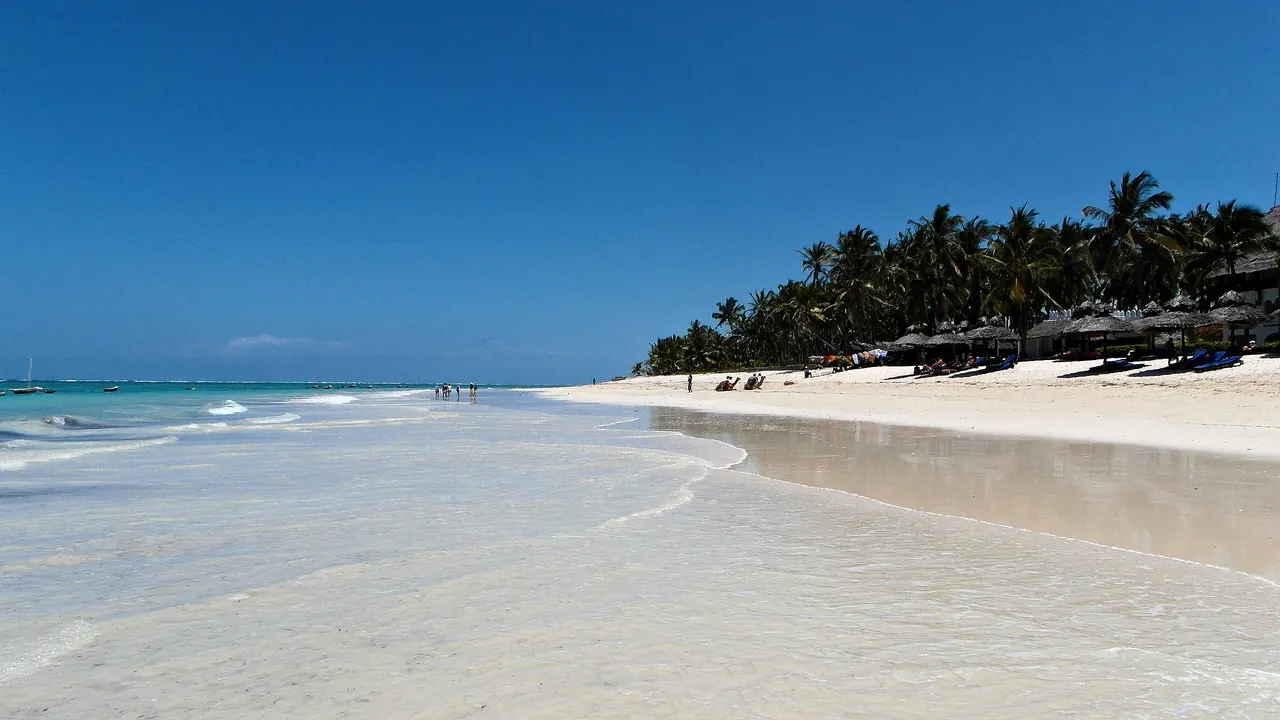
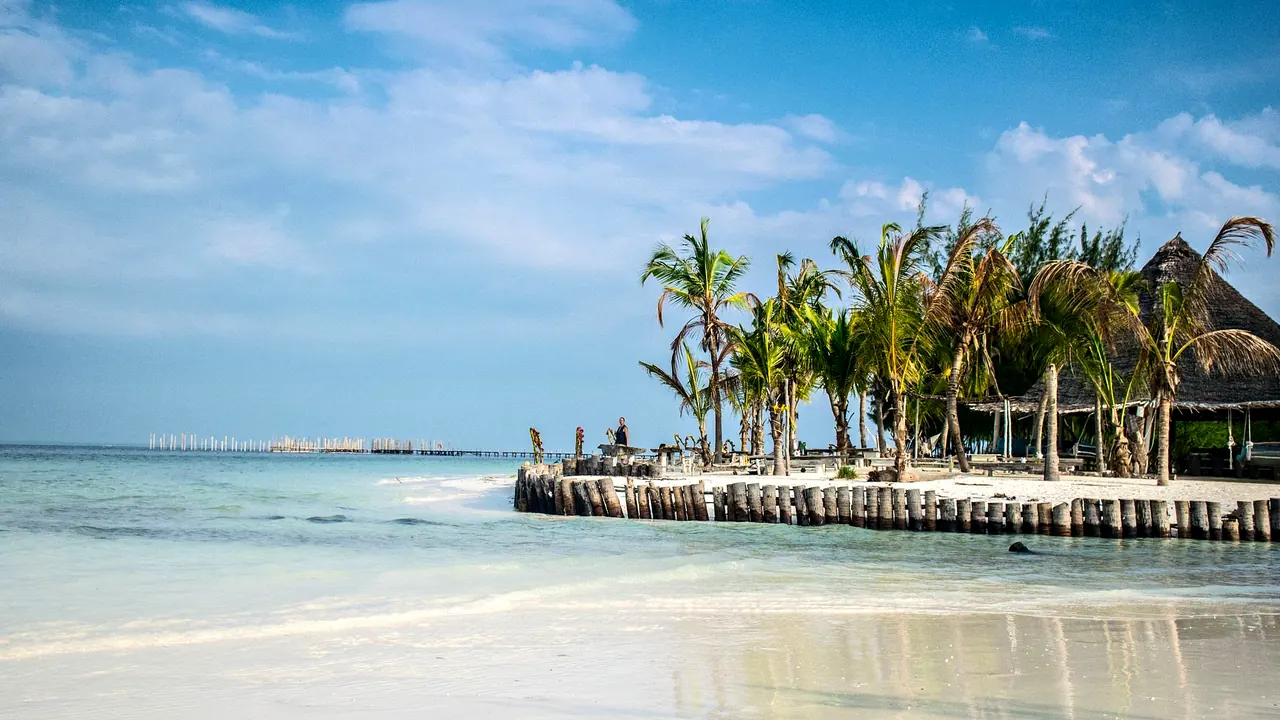
Photos: Diani by Roma Neus, CC BY 3.0, cropped; Zanzibar by Ákos Helgert, Pexels License.
Diani or Zanzibar?
Our verdict in twelve categories, each scored against the same fixed benchmark cities, and the climate month by month, so you can choose for your trip.
Choose Diani for
- prices
- families
- beaches
Diani suits travellers who want one long beach, a resort base and as little fuss as possible. The days run between the lagoon, the reef and a boat out to Kisite-Mpunguti, with the Shimba Hills elephants as a gentle extra. It costs a little less if you stay away from the beachfront and eat locally, and the night-time strip stays open later than anything on the island. It does not give you a historic town to explore, though, and for that you will be driving to Mombasa.
Choose Zanzibar for
- culture and sights
- live music and the arts
- food and drink
Zanzibar gives you a beach vacation with a proper old town attached. Stone Town's lanes, the Forodhani evening market, taarab music and the spice stalls add culture, food and shopping that Diani can't match. The island also has more than one kind of coast, from the deep water at Kendwa to the quiet tidal villages around Jambiani. Pick it if you want your days by the sea broken up with days of walking and eating in a Swahili trading town.
Scoreboard
Twelve categories on one fixed scale from 0 to 100. The shaded stretch is the gap between the two.
Your match
Pick a travel style or drag the sliders, and both match scores follow your weighting.
Wins on prices and families with your weighting.
Wins on culture and sights and live music and the arts with your weighting.
What matters to you?
Category by category
What the scores mean for a trip.
Beaches & swimming
Both have the same white coral sand and water warm enough to swim in all year, so the difference is in the layout. Diani is a single unbroken beach about 17km long with a calm lagoon behind the reef. Its large tides mean you plan your swims around high water. Galu and Kinondo in the south are wider and quieter than the hotel-lined centre.
Zanzibar spreads its beaches around the island. Kendwa and Nungwi in the north stay deep enough to swim at any tide and look west to the sunset. The east coast around Paje and Jambiani empties at low tide in the same way as Diani. So on Zanzibar you choose your beach by tide and mood, and in Diani you choose which end of the same strand to stay on.
Food & drink
Zanzibar eats better, mostly thanks to Stone Town. The evening market in Forodhani Gardens, urojo from street stalls, clove-scented biryani and spiced coffee in the squares make eating part of the sightseeing. Out at the beach villages the range narrows, though, and alcohol is mostly found in hotels and tourist restaurants.
In Diani most meals are at hotels or along the beach road. The grilled seafood with coconut and tamarind is good, but menus lean towards international guests and Italian cooking is common. For real Swahili depth you would make the trip to Mombasa's old town, whereas Zanzibar has it on the island.
Culture & sights
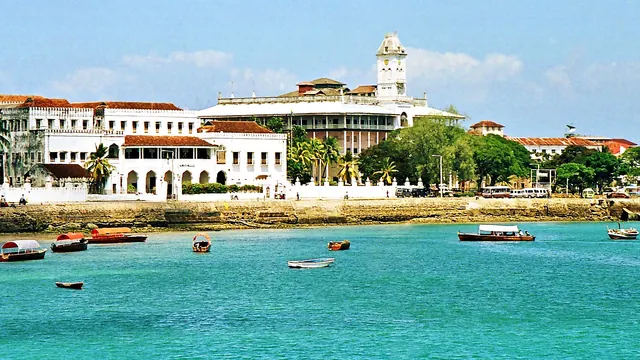
This is where the two differ most. Zanzibar has Stone Town, a UNESCO-listed Swahili trading town of carved doors, mosques, Hindu temples and merchant houses. It also has the Old Fort, the sultans' Palace Museum and the cathedral built over the last open slave market in East Africa. Further out are the Omani ruins at Maruhubi and Mtoni and the Persian baths at Kidichi.
Diani has two genuine sights. One is the centuries-old Kongo Mosque among the baobabs at the Tiwi river. The other is the sacred Kaya Kinondo forest of the Mijikenda, walked with a local guide. Both are worth a morning, but anyone keen on history ends up heading north to Mombasa.
Nightlife
The two are about level, but they go out in different ways. Diani has proper open-air clubs on its central strip, playing reggae, Afrobeats and house past midnight. They fill up most at weekends and over Christmas, when Kenyans come down from Nairobi and Mombasa.
Zanzibar has hardly any clubs. Its evenings are bonfires and beach bars at Nungwi and Kendwa, the full-moon party, kitesurfers' bars in Paje and rooftop sundowners in Stone Town. Most places are quiet by midnight, and drinking stays inside hotels and tourist bars on this conservative island.
Nature & outdoors
Both are flat coral coasts where the outdoors means reef, lagoon and patches of forest, with a rare colobus monkey in each. Diani's extras are dhow trips to Kisite-Mpunguti for coral and dolphins, humpback whales offshore from about July to October, and the Shimba Hills inland, where you can see elephants and sable antelope.
Zanzibar has snorkelling in clear water around Mnemba atoll, red colobus at close range in Jozani Forest and dolphin boats from Kizimkazi. Both are good kitesurfing spots, with Paje's shallow lagoon on the island and the open monsoon beach at Diani.
Day trips
Neither has a long list of outings, and what's on offer differs in scale. From Diani the big day is Mombasa, a real city with Fort Jesus, the old town and the spice market. Getting there can be slow because of the Likoni ferry. To the south, Shimoni and Wasini add coral gardens, a village visit and the slave-trade caves.
Zanzibar's outings are shorter and gentler: the giant tortoises on Changuu, swims on sandbanks, spice farm tours and the old mosque at Kizimkazi. For anyone staying on the beach, Stone Town itself is the obvious day out. Dar es Salaam and Pemba are within reach, but both work better as overnight trips.
Good for families
For families the two are much alike: a resort with a pool, warm water, malaria precautions and no theme parks or museums. Diani gives children one calm lagoon, rock pools at low tide and an easy day of game viewing in the Shimba Hills. Parents should watch for sea urchins and the beach vendors.
On Zanzibar, Kendwa's beach can be swum at any tide, which is a real help with toddlers. Children also tend to love the tortoises and the Jozani monkeys. Against that, medical care is limited, and the long road transfers and Stone Town's narrow lanes can wear small children out.
Getting around
Neither is easy without a driver, but the problems differ. Diani runs along one road with patchy pavements. Tuk-tuks, motorbike taxis and matatus handle short hops, the Ukunda airstrip brings you in from Nairobi, and the beach itself makes the best footpath at low tide.
Zanzibar has a town you can walk, in Stone Town's maze of lanes. The beach areas, though, are an hour or more apart by taxi or transfer. Dala-dalas are slow and crowded, and hiring a car means a local permit and frequent police checkpoints.
Shopping & style
Zanzibar is the better place to shop, because it has a market town. In Darajani market and the Stone Town lanes you can buy cloves, vanilla and cardamom by the bag, Tingatinga paintings, carved chests, silver and tanzanite. Even so, much of the stock repeats from stall to stall.
Diani's shopping is curio stalls, a couple of small centres on the beach road and vendors on the sand. Kikoi cloths, kiondo baskets and Kisii soapstone are the things to look for. For a real market you would go to Mombasa.
Affordability
Diani comes out a little cheaper, mainly because more of its beds are simple. Guesthouses and cottages set back from the beach, meals in local places and tuk-tuk rides keep a stay modest. The money goes on the beachfront resorts, especially over Christmas and New Year, and on imported wine and spirits. Organised boat or diving trips and the fees foreigners pay at Kisite-Mpunguti and the Shimba Hills add to the bill.
Zanzibar has cheap options too: guesthouses in Stone Town, supper at the Forodhani stalls, dala-dala rides and simple bungalows in Paje or Jambiani. But much of the island's accommodation is mid-range to upmarket. Taxis between Stone Town and the coasts add up, on top of diving, boat trips and imported drinks. It costs most around Christmas and in July and August.
Live music & performing arts
Zanzibar has a musical tradition of its own, and Diani does not. Taarab, the island's blend of Swahili poetry with Arabic and Indian melody, can be heard at the Stone Town music school and in cultural halls. Ngoma drumming also turns up at village celebrations, and the dry-season calendar brings festivals of East African music and film.
In Diani, live performance means hotel shows of acrobats and Mijikenda or Maasai dance, plus the occasional band at a beach bar.
Wellness & relaxation
Zanzibar is the more restful choice. The days in its beach villages follow the tide and the call to prayer, its spas use coconut oil and local spices, and yoga is easy to find around Paje and Jambiani. Stone Town gets crowded in the daytime, so unwinding is done on the coast.
Diani has resort spas, massage huts on the beach and a few retreat lodges in the coastal forest. The early mornings and long shaded afternoons slow you down here too. Choose Galu at the southern end to be away from the bars and traffic of the central strip.
When should you go?
Pick your month. The climate figures are measured averages, not a forecast.
Diani in July
Zanzibar in July
Daytime high, °C
Rainfall in the month, mm
Where the figures come from
Diani's temperatures are measured 32 km from the centre, at Mombasa.
Diani has no rain gauge within 25 km of the centre, so its rainfall comes from a gridded climate dataset read at the destination rather than from a gauge further away.
Zanzibar's temperatures are measured 78 km from the centre, at Dar Es Salaam Airport.
Zanzibar has no rain gauge within 25 km of the centre, so its rainfall comes from a gridded climate dataset read at the destination rather than from a gauge further away.
Temperature and rainfall are climate normals, averaged over the years shown. Diani: 1991-2020 normals, Mombasa (31.7 km from centre). Zanzibar: 1991-2020 normals, Dar Es Salaam Airport (77.9 km from centre).
Both are hot all year and the sea is warm enough to swim in every month, but the rains come at different times. Diani is at its best from December to March. January and February are almost dry, with days of about 33°C, hot enough that walking about at midday is hard going. The long rains start in April and peak in May at about 310mm, and October and November bring a second, lighter wet spell. July and August are the coolest months at around 28°C, easier for being out in the middle of the day, and the sea is a little cooler then but still easy to swim in.
Zanzibar is driest from June to September, with very little rain and highs around 30°C. The long sunny days carry on into October. Its long rains hit harder than Diani's, peaking in April at about 360mm. The short rains return in November and December, just as Diani is drying out. January and February are drier again, though not as dry as on the Kenyan coast. So Diani is the safer choice for a Christmas trip and Zanzibar for July or August, while January and February suit both.
Which traveller are you?
On a culture and arts trip, Zanzibar is the clear choice. Stone Town's coral-stone lanes, the Palace Museum, the slave market memorial and evenings of taarab music give you days of things to see. In Diani the heritage amounts to one old mosque and a sacred forest.
For a trip on a tight budget, Diani stretches your money a little further. Stay in a cottage back from the beach, eat pilau and mishkaki at local places and get around by tuk-tuk. On Zanzibar more of the beds are mid-range to upmarket, and taxis between coasts add up.
For a food and nightlife trip, Zanzibar wins on the food: the Forodhani night market, urojo and spiced Stone Town cooking. The nights are close. Diani's open-air clubs run later, while the island has its bonfires, rooftop sundowners and full-moon party.
Before you go
| Measure | Diani | Zanzibar |
|---|---|---|
| Official language | English, Swahili | English, Swahili |
| Currency | Kenyan Shilling (KES) | Tanzanian Shilling (TZS) |
| Sockets | G240 V, 50 Hz | G230 V, 50 Hz |
| Driving side | Left | Left |
| Time zone | UTC+3 | UTC+3 |
| Emergency number | Police 112/999, ambulance 112/999, fire 112/999 | Police 112, ambulance 115, fire 114 |
| Main airport | Moi International Airport (MBA)22 non-stop destinations | Abeid Amani Karume International Airport (ZNZ)40 non-stop destinations |
| Public holidays this year | 10 days | 13 days |
By the numbers
| Measure | Diani | Zanzibar |
|---|---|---|
| Population | - | 896,721 |
| People per km² | - | 569 |
| Swim season, months above 21 °C | 12 months | 12 months |
Where else could you go?
Every comparison below shares a destination with this one, so you can follow Diani or Zanzibar somewhere new.
- Mombasavs Diani
- Ngorongorovs Diani
- Ngorongorovs Zanzibar
- Masai Maravs Diani
- Serengetivs Zanzibar
- Mahevs Diani