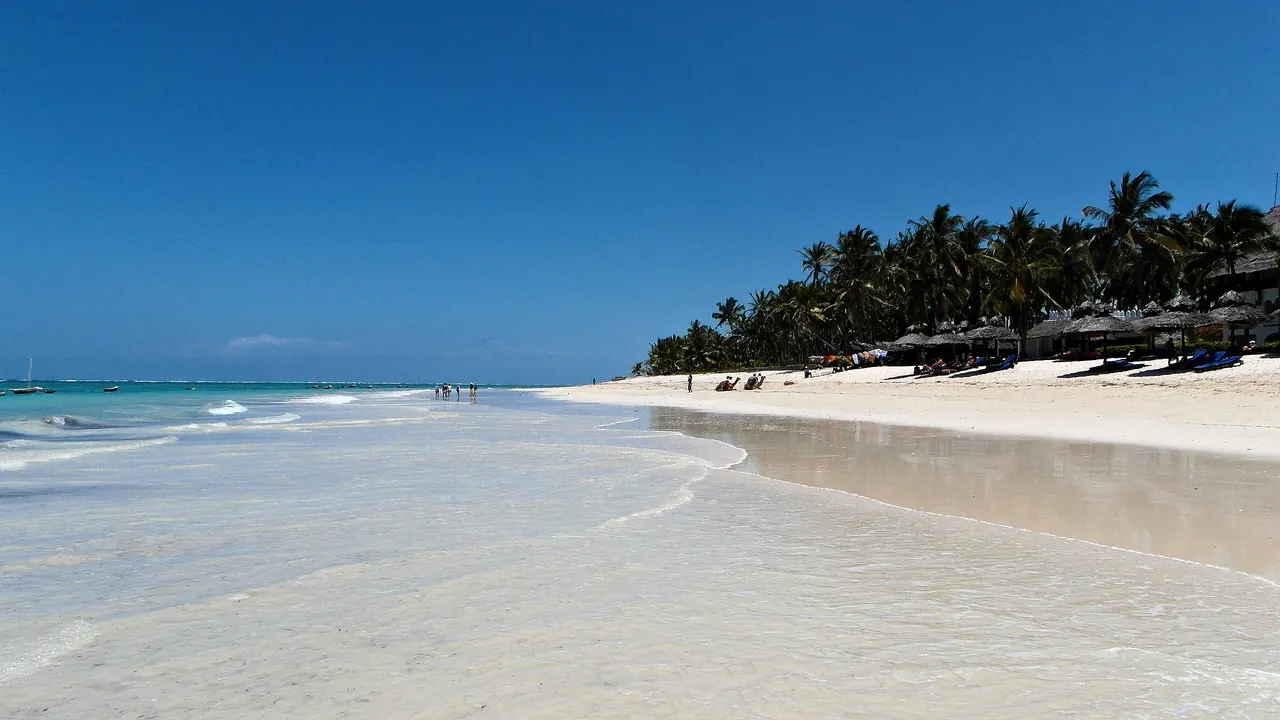
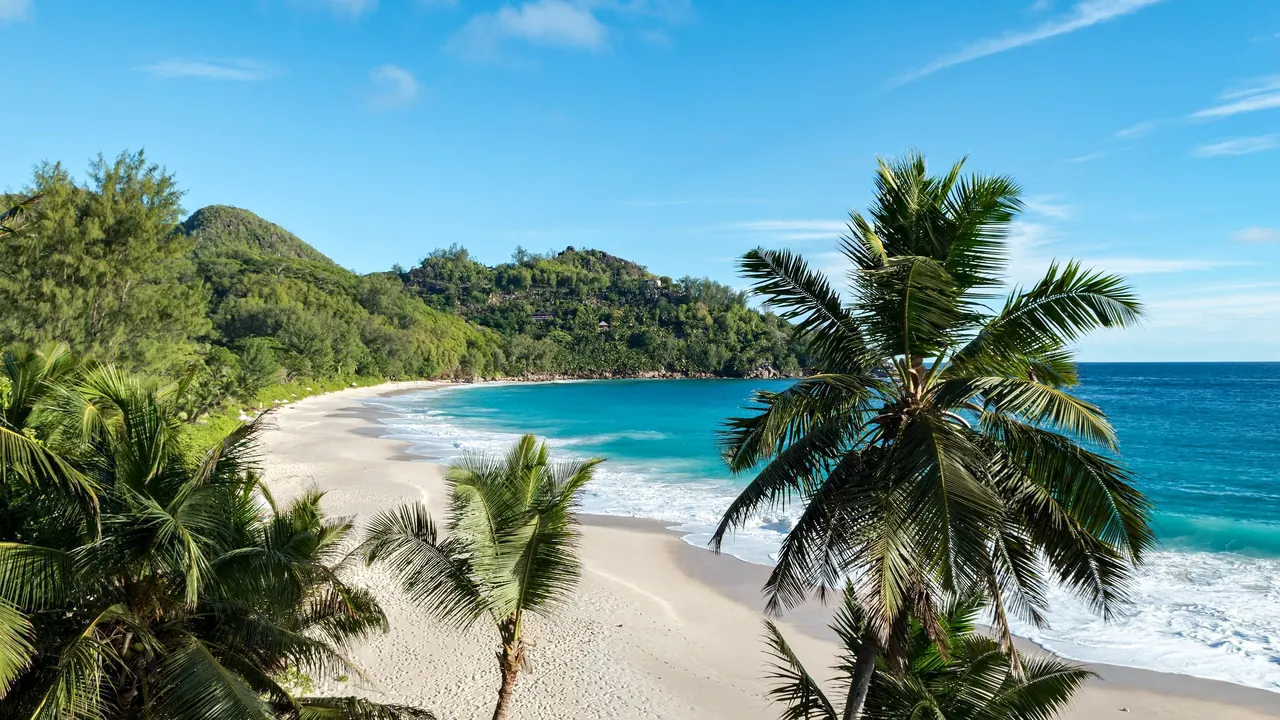
Photos: Diani by Roma Neus, CC BY 3.0, cropped; Mahe by dronepicr, CC BY 2.0, cropped.
Diani or Mahe?
Our verdict in twelve categories, each scored against the same fixed benchmark cities, and the climate month by month, so you can choose for your trip.
Choose Diani for
- prices
- nightlife
- shopping
Diani suits travellers who want a long, warm tropical beach without a tropical-island bill. Away from the beachfront resorts it can be done cheaply, the central strip has bars and open-air clubs that run past midnight on busy weekends, and it comes with things Mahe can't offer: a day in Mombasa's old town and a first look at elephants and antelope in the Shimba Hills.
Choose Mahe for
- nature and the outdoors
- wellness
- food and drink
Mahe is the better choice if you want scenery behind the sand and can pay for it. Granite coves, cloud-forest trails climbing straight up from the bays, three marine parks and ferries to Praslin and La Digue make a richer island to explore, and its secluded hotels are made for doing very little. The cost is a much higher bill and evenings that are over by eleven.
Scoreboard
Twelve categories on one fixed scale from 0 to 100. The shaded stretch is the gap between the two.
Your match
Pick a travel style or drag the sliders, and both match scores follow your weighting.
Too close to call, 1 point apart
Wins on prices and nightlife with your weighting.
Wins on nature and the outdoors and wellness with your weighting.
What matters to you?
Category by category
What the scores mean for a trip.
Beaches & swimming
These are two of the finest beach destinations in the Indian Ocean, and both have warm water all year. What sets them apart is the shape of the coast. Diani is one continuous 17km strand of white coral sand behind a reef, and the tide sets the timetable: you swim at high tide and walk out over rock pools at low tide.
Mahe has more than sixty separate beaches tucked between granite boulders, from the long, easy curve of Beau Vallon to small coves such as Anse Soleil. Here the wind decides which coast is calm, and some exposed bays have strong currents, so choosing a beach takes a little more thought.
Food & drink
Neither is a food destination, but Mahe has slightly more to offer. Its Creole cooking, from octopus curry and ladob to grilled snapper, is easy to find in roadside takeaways all over the island, and the Victoria market shows what islanders actually buy.
Diani's best food is Swahili-spiced seafood, but most meals happen in hotels and on the beach road, where many menus lean towards Italian dishes for European visitors. Serious Swahili cooking means a trip to Mombasa.
Culture & sights
Both are thin on sights, and anyone travelling for heritage will run out of things to see quickly in either. The heritage they do have is different. Diani's is sacred and still in use: the old coral-stone Kongo Mosque among the baobabs, and the Mijikenda forest of Kaya Kinondo, walked with a local guide. Mahe tells a colonial Creole story through Victoria's Clock Tower, cathedrals and Hindu temple, the Sans Souci mission ruins and the plantation houses at Domaine de Val des Prés.
Nightlife
Diani is clearly the livelier of the two after dark. Its beach bars and open-air clubs play reggae, Afrobeats and house past midnight, especially at weekends and over Christmas and New Year, when Kenyans come down from Nairobi and Mombasa.
Mahe has almost no nightlife. Beau Vallon's evening street market with local bands is the highlight, Victoria has a club or two on Friday and Saturday nights, and on weeknights the island goes to bed early.
Nature & outdoors
Mahe has much more varied nature. Granite peaks rise to over 900m behind the beaches, with short, steep trails through cloud forest and pitcher plants, and the marine parks, granite dive sites and nearby tortoise and seabird islands add more.
Diani is flat, and its outdoor life is in the water: the Kisite-Mpunguti reef, dolphins, passing humpback whales and some of the best kitesurfing on the coast. What it has that Mahe lacks is land mammals, from colobus monkeys by the road to elephants in the Shimba Hills.
Day trips
Mahe has more and better outings. You can take the ferry to Praslin for the coco de mer palms of the Vallée de Mai, go on to La Digue's bicycles and plantation, or make shorter boat trips to the marine-park islets. They do all end up feeling similar, though, and the ferries depend on the weather.
Diani has fewer choices but more contrast. Its one big day out is a real city: Fort Jesus, the carved doors of Mombasa's old town and the spice market, with Wasini island and the Shimoni caves to the south.
Good for families
Families will find these two much alike: both are resort-and-beach vacations with nothing built for children, no aquarium, zoo or children's museum. The details differ. Diani needs malaria precautions and has persistent beach vendors, but older children get dolphin trips and game viewing in the Shimba Hills. Mahe is malaria-free and very safe, with resort kids' clubs and giant tortoises, but its steep roads and some strong-current beaches suit families with small children who are happy to stay by the pool and the calmer bays.
Getting around
Getting around takes some effort in both. Diani is one flat beach road where tuk-tuks and motorbike taxis are always passing, and at low tide the sand is the nicest walkway. Mahe is small, but its roads twist over mountain passes with no pavements and left-hand traffic, so most visitors hire a car or depend on slow buses and costly taxis. Mahe does have the easier links onward, with ferries and small planes to the other islands leaving from right by Victoria.
Shopping & style
Shopping is a minor part of a trip to either, and you'll come home with crafts rather than fashion. Diani's stalls sell Kenyan things, such as kikoi and kanga cloths, kiondo baskets and Kisii soapstone, and you are expected to bargain. Mahe's buys are spices, vanilla and chilli sauce from the Victoria market, plus the polished coco de mer nut, which needs an export permit.
Affordability
This is where the two differ most. Diani can be very cheap if you stay off the beachfront and eat locally. Its real costs are the international resorts, the park fees for foreigners and organised boat trips.
On Mahe almost everything is imported, and rooms, meals, car hire and diving all cost accordingly. Guesthouses, market fish and the bus help, but even a careful stay costs far more than in Diani.
Live music & performing arts
Neither has a stage or concert life to plan around, so performance means hotel shows and bands at beach bars. In Diani the hotel shows are acrobats and Mijikenda or Maasai dance. Mahe's are drum-led sega and moutya, and late October brings the Festival Kreol, when Victoria fills with Creole music and dance.
Wellness & relaxation
Mahe is the more restful choice. Many of its hotels have a bay to themselves, and the larger resorts on the west and south coasts have spas in hillside pavilions that use local vanilla and coconut, though treatments cost a lot.
Diani offers resort spas, simple beachfront massage huts and a few yoga lodges in the coastal forest, all much more affordable. For real quiet, though, you need to stay down at Galu, away from the central strip.
When should you go?
Pick your month. The climate figures are measured averages, not a forecast.
Diani in July
Mahe in July
Daytime high, °C
Rainfall in the month, mm
Where the figures come from
Diani's temperatures are measured 32 km from the centre, at Mombasa.
Diani has no rain gauge within 25 km of the centre, so its rainfall comes from a gridded climate dataset read at the destination rather than from a gauge further away.
Mahe's station stands 237 m below the place it is measured for, so that place is likely a little cooler than the figures say.
Temperature and rainfall are climate normals, averaged over the years shown. Diani: 1991-2020 normals, Mombasa (31.7 km from centre). Mahe: 1991-2020 normals, Seychelles International Airport (10 km from centre).
The two run on almost opposite calendars. Diani is at its best from December to March. Those months are dry and the sea is warm, but around the main beach it is hot, reaching 33°C by day, so walking anywhere is best done early. The long rains arrive in April and peak in May at about 310mm, and a shorter wet spell follows in October and November. July and August are the coolest and most comfortable months on land, with the sea at its coolest too, though still fine for swimming.
Mahe's wettest months fall in Diani's dry season. December to February bring the heaviest rain, with January reaching around 442mm, and January and February are also the least sunny months. From June to August the island is at its driest, with July down to about 88mm, and there is plenty of sunshine. May is the sunniest month of all. Daytime heat stays steady near 30°C all year and the sea is warm in every month, so on Mahe the season matters more for rain and wind than for temperature.
Which traveller are you?
On a trip on a tight budget, Diani is the clear choice. Simple guesthouses set back from the beach, local pilau and roadside skewers, and tuk-tuk rides keep a stay cheap. On Mahe even the thrifty guesthouse-and-bus approach costs well above a typical tropical vacation.
For an outdoors trip, Mahe gives far more. You can hike steep trails through Morne Seychellois to views over the reef, snorkel three marine parks, dive granite reefs and see giant tortoises and seabird islands. Diani's outdoors is mostly water, with kitesurfing and dolphins.
On a relaxing and wellness trip, Mahe is the better retreat. Many hotels sit alone on their own bay, and the larger resorts have hillside spa pavilions. Diani can be calm around Galu, but its central strip has more traffic, vendors and late bars.
Before you go
| Measure | Diani | Mahe |
|---|---|---|
| Official language | English, Swahili | French, English, Seychellois Creole |
| Currency | Kenyan Shilling (KES) | Seychelles Rupee (SCR) |
| Sockets | G240 V, 50 Hz | G240 V, 50 Hz |
| Driving side | Left | Left |
| Time zone | UTC+3 | UTC+4 |
| Emergency number | Police 112/999, ambulance 112/999, fire 112/999 | 112 or 999 |
| Main airport | Moi International Airport (MBA)22 non-stop destinations | Seychelles International Airport (SEZ)19 non-stop destinations |
| Public holidays this year | 10 days | 13 days |
By the numbers
| Measure | Diani | Mahe |
|---|---|---|
| Population | - | 77,000 |
| People per km² | - | 490 |
| Swim season, months above 21 °C | 12 months | 12 months |
Where else could you go?
Every comparison below shares a destination with this one, so you can follow Diani or Mahe somewhere new.