Seychelles
Mahe
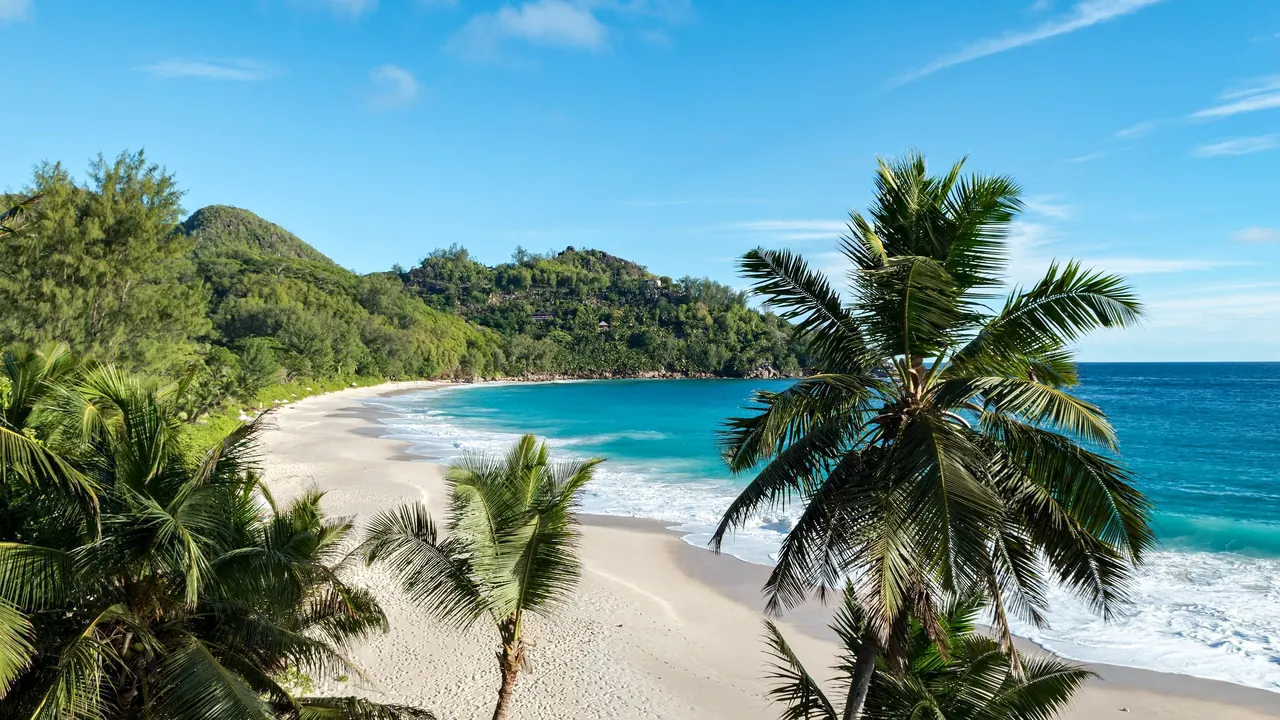
Anse Intendance from the lookout in southern Mahe
- Beaches93
- Nature & outdoors78
- Wellness & relaxation60
Match
40
Every category weighted equally
- Beach & sun48
- Culture & arts31
- Food & nightlife32
- Family trip46
- Outdoors49
- Relax & unwind49
- Shopping & style33
- On a budget37
Mahe in twelve categories
Our verdict on each, scored 0 to 100 against the same fixed benchmark cities, so a score means the same thing on every page.
Beaches & swimming. Scores 93 out of 100.
Food & drink. Scores 42 out of 100.
Culture & sights. Scores 20 out of 100.
Nightlife. Scores 15 out of 100.
Nature & outdoors. Scores 78 out of 100.
Day trips. Scores 42 out of 100.
Good for families. Scores 47 out of 100.
Getting around. Scores 35 out of 100.
Shopping & style. Scores 17 out of 100.
Affordability. Scores 14 out of 100.
Live music & performing arts. Scores 12 out of 100.
Wellness & relaxation. Scores 60 out of 100.
Mahe category by category
Beaches & swimming
93Mahe has more than sixty beaches, and the sea is warm enough to swim in every month, usually 27°C to 29°C. The beaches are white sand between smooth granite boulders, backed by takamaka trees and palms. Beau Vallon in the north-west is the long, easy family beach, with calm water for much of the year and somewhere to eat nearby. The south and west are quieter: Anse Intendance and Anse Takamaka for surf and drama, Anse Royale and Anse Forbans for sheltered snorkelling, and Petite Anse and Anse Soleil for small, perfect coves.
The winds decide which coast is best. From May to October the south-east trades churn up the southern and eastern shores and wash seaweed onto them, while the north-west stays calm. From November to April it's roughly the other way round. April and October, between the two wind seasons, give glassy water almost everywhere. Some exposed beaches have strong currents and no lifeguards, so swim where the locals do.
Food & drink
42Seychellois Creole cooking is built on the reef and the garden: grilled red snapper and job fish, octopus curry in coconut milk, shark chutney, breadfruit chips and ladob, a sweet stew of plantain or breadfruit in coconut milk. It's very good when it's simple and fresh. The best place to see what islanders eat is the Sir Selwyn Selwyn-Clarke Market in Victoria, with its fish slabs, chillies and spices. Roadside takeaways all over the island sell plates of curry and rice, the cheapest good food you'll find.
Beyond that the choice is thin. Many restaurants are in hotels and resorts, menus repeat from one bay to the next, and nearly everything except fish and fruit is imported. Local drinks are SeyBrew beer, home-grown rum and the fermented palm and sugar-cane drinks called kalou and baka. Come to eat well and simply, not to explore a food scene.
Culture & sights
20Victoria is one of the smallest capitals anywhere, and you can see it in a morning. The silver Clock Tower, the colourful Hindu temple, the Catholic and Anglican cathedrals and the National History Museum tell the short story of a French, then British, colony settled by planters and enslaved and indentured workers. Out on the island are the ruins of the mission school at Sans Souci, set among old trees on a mountain road, the Creole plantation houses and craft workshops at Domaine de Val des Prés, and an old spice estate with a planter's house.
That's most of it. Mahe has no major museum or monument, and visitors who care about heritage will find it all in two or three short outings.
Nightlife
15Evenings on Mahe are mostly sundowners and a long dinner. Beau Vallon has the most life after dark, with beach bars, music at weekends and an evening street market with food stalls and local bands. Around Victoria there are a few bars and a nightclub or two that fill with locals on Friday and Saturday nights, and some large hotels have casinos. On weeknights the island is quiet by eleven. People come here to sleep well, not to go out.
Nature & outdoors
78Behind the beaches, Mahe rises steeply into granite domes and cloud forest. Morne Seychellois National Park covers about a fifth of the island and climbs to over 900m. Short, steep trails such as Copolia, Morne Blanc and Trois Frères go up through cinnamon, tree ferns and endemic pitcher plants to wide views over the reef and the outer islands. The Anse Major path along the north-west coast passes bare granite slabs above empty coves.
Offshore, the Ste Anne, Baie Ternay and Port Launay marine parks have coral, turtles and reef fish for snorkelling and glass-bottom trips. Divers go to the granite reefs off the north-west, and from about August to October whale sharks sometimes pass through. Nearby islands add Aldabra giant tortoises, and Cousin and Aride have huge seabird colonies. The hikes are short rather than epic, and the forest can be hot, wet and slippery.
Day trips
42Day trips here mean islands. The fast ferry crosses to Praslin in about an hour. There you'll find the Vallée de Mai palm forest, where the coco de mer grows, plus a string of beaches and small villages. La Digue is a short hop further on: bicycles, ox carts, the old plantation at L'Union and a slow village life around La Passe. Doing both in a long day is possible, though staying a night is more relaxed. Closer in, boats run out to Ste Anne, Moyenne and the other islets in the marine park, and catamaran trips take you to Curieuse and Cousin from Praslin.
Every outing ends in the same mix of beach, forest and village, and the ferries depend on the weather. There are no other towns or historic sites to vary things.
Good for families
47Mahe is safe and relaxed, and children are welcome everywhere. Beau Vallon and the sheltered bays of the west coast have shallow, calm water in the right season, and many resorts run kids' clubs and have family rooms. Giant tortoises at the botanical garden and on the nearby islands, glass-bottom boats over the marine park and rock-pooling are easy wins.
After that, the island has nothing made for children: no zoo, aquarium, water park or museum aimed at them. The trails are steep, the roads have no pavements, and several of the most beautiful beaches have strong currents for part of the year. It suits families with younger children who are happy with a week of beach and pool.
Getting around
35Mahe is only about 27km long, but its roads twist over mountain passes and along the coast, with sharp bends, steep drops, no pavements and traffic on the left. Public buses reach almost every bay from Victoria. They're slow and packed at peak times, and you'll often need to change in town. Most visitors hire a small car for at least part of their stay, or rely on taxis and hotel transfers, which add up quickly. You can't really get around on foot beyond your own bay. Fast ferries to Praslin and La Digue leave from the Victoria inter-island quay, and small planes fly from the airport just south of town.
Shopping & style
17Shopping is small and souvenir-led. In Victoria, the market sells spices, vanilla, chilli sauces and tea, and the streets around it have shops for printed sarongs, model boats and Creole crafts. Domaine de Val des Prés has craft workshops in old plantation houses, and a few local painters keep studios and galleries around the island. The signature souvenir is a polished coco de mer nut, sold with an export permit. That's about it.
Affordability
14Mahe is an expensive island. Nearly everything is imported, and the price of resort rooms, hotel restaurants, boat trips, diving and car hire reflects it. Hardly anywhere is a bargain. You can bring costs down a lot by choosing a Creole guesthouse or self-catering apartment, buying fish and fruit at the market, eating curry from roadside takeaways and taking the public bus. Even done that way, a stay costs well above what you'd expect from a tropical destination.
Live music & performing arts
12Live performance mostly means hotel shows of sega and moutya, the drum-led Creole dances that grew out of the songs of the enslaved. Bands also play at weekend beach bars. The cultural high point of the year is the Festival Kreol in late October, when Victoria fills with music, dance and Creole food. The rest of the year there's no regular theatre, classical or concert programme a visitor can plan around.
Wellness & relaxation
60Mahe is a place for slowing down. The days follow the light and the tide, the island is quiet, and many hotels sit alone on their own bay with only the sea and the forest around them. The best-known resorts on the west and south coasts have large spas, often in pavilions on the hillside, using coconut, vanilla and local herbs. Some hotels offer yoga and treatments on open-air decks.
Mahe has no bathing or massage tradition of its own, though. Wellness here means the resort spa, and booking a treatment costs a lot. For the deepest calm, stay on the quieter south-west or north-west coast rather than near Victoria or the busier part of Beau Vallon.
Where to stay in Mahe
Beau Vallon in the north-west is the easiest base for a first visit and the natural choice for families. The long beach has calm, shallow water for much of the year, there's food within walking distance, and the beach bars and evening street market give it most of the island's life after dark. The Anse Major path and the north-west dive sites are close by.
For a quiet stay, look to the south and west coasts. Here hotels sit alone on bays such as Anse Intendance, Anse Takamaka and Anse Soleil, with forest behind them and little to do after dinner but sleep. These coasts suit couples, spa days and long, slow beach days, but you'll want a hire car, because you can't walk beyond your own bay and the buses are slow. Staying in or near Victoria suits travellers on a tighter budget who plan to use the buses, since most routes start in town, and it puts the Praslin and La Digue ferries on your doorstep. It's the least restful option.
Mahe is only about 27km long, so one base is enough. Pick your coast by season. From May to October the north-west is calmer, and from November to April the south and east are usually better. On a longer trip, spend a night or two on Praslin or La Digue rather than moving around Mahe.
When should you go?
Pick a month to see what it is like. The climate figures are measured averages, not a forecast.
Mahe in July
Daytime high, °C
Rainfall in the month, mm
The whole year
Shaded against this destination’s own year: the deepest cell is its best month for that figure and the palest its weakest.
Where the figures come from
Mahe's station stands 237 m below the place it is measured for, so that place is likely a little cooler than the figures say.
Temperature and rainfall are climate normals, averaged over the years shown. Mahe: 1991-2020 normals, Seychelles International Airport (10 km from centre).
Before you go
| Measure | Mahe |
|---|---|
| Official language | French, English, Seychellois Creole |
| Currency | Seychelles Rupee (SCR) |
| Sockets | G240 V, 50 Hz |
| Driving side | Left |
| Time zone | UTC+4 |
| Emergency number | 112 or 999 |
| Main airport | Seychelles International Airport (SEZ)19 non-stop destinations |
| Public holidays this year | 13 days |
By the numbers
| Measure | Mahe |
|---|---|
| Population | 77,000 |
| People per km² | 490 |
| Swim season, months above 21 °C | 12 months |
Compare Mahe with
Every comparison with a written verdict behind it.