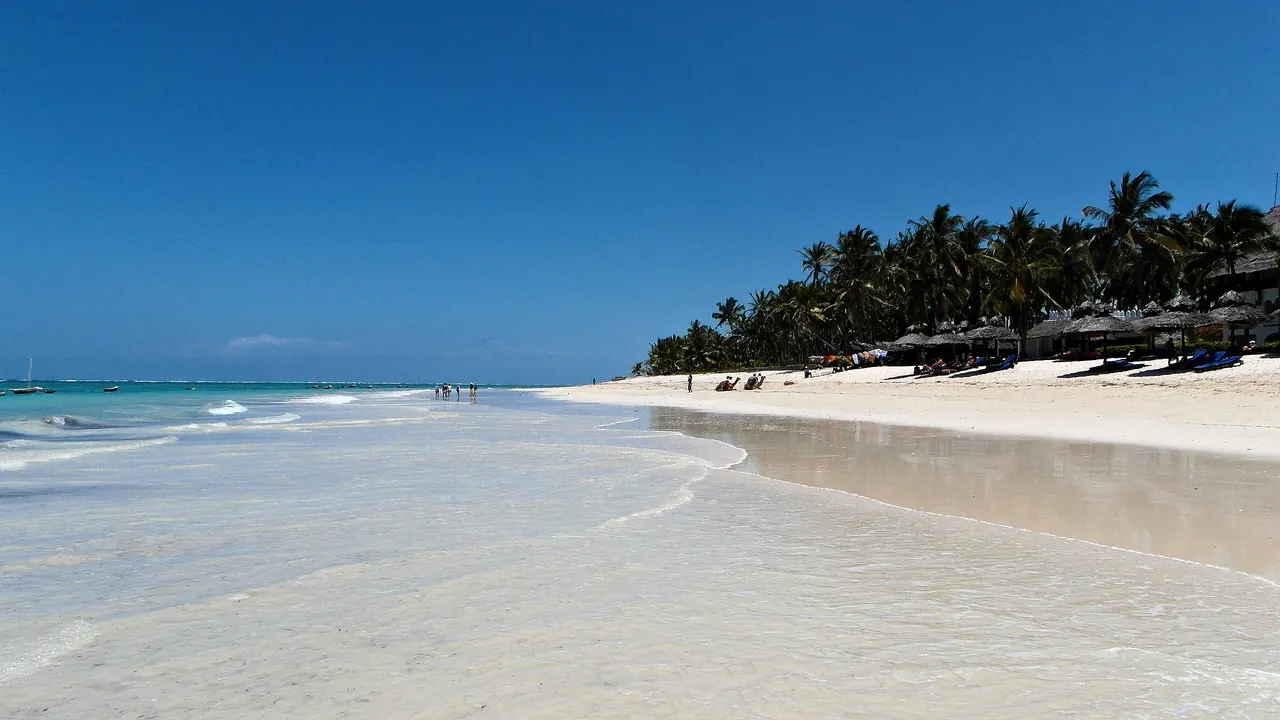
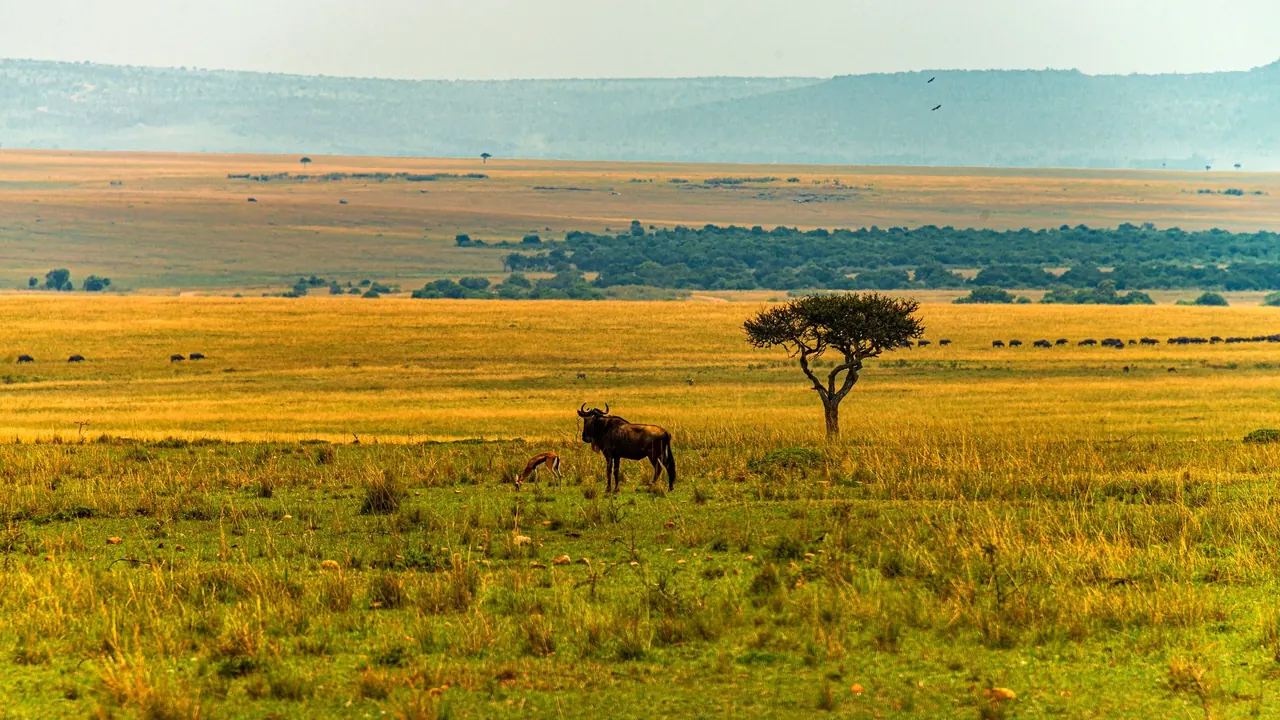
Photos: Diani by Roma Neus, CC BY 3.0, cropped; Masai Mara by Daniel Case, CC BY-SA 4.0, cropped.
Diani or Masai Mara?
Our verdict in twelve categories, each scored against the same fixed benchmark cities, and the climate month by month, so you can choose for your trip.
Choose Diani for
- beaches
- prices
- nightlife
Diani suits a warm-water vacation where the tides set the pace of the day. It has a long white beach, a calm lagoon, reef snorkelling and kitesurfing, with beach bars for the evenings. Costs stay modest if you sleep away from the beachfront resorts, Mombasa's old town is close enough for a day of history, and it is the easier of the two with young children.
Choose Masai Mara for
- nature and the outdoors
The Masai Mara is for travellers whose real goal is wildlife. Lion, leopard and cheetah on open grassland, and the river crossings when the migration is in, go far beyond the colobus monkeys and Shimba Hills elephants you can see from the coast. In return you pay high camp prices, start before dawn, go nowhere without a guide and end the evening by the campfire. Many people avoid choosing by doing both: the Mara first, then Diani to rest.
Scoreboard
Twelve categories on one fixed scale from 0 to 100. The shaded stretch is the gap between the two.
Your match
Pick a travel style or drag the sliders, and both match scores follow your weighting.
Wins on beaches and prices with your weighting.
Wins on nature and the outdoors with your weighting.
What matters to you?
Category by category
What the scores mean for a trip.
Beaches & swimming
This is the clearest gap between the two. Diani has about 17km of fine coral sand, from the Tiwi river down to Galu and Kinondo, with a reef-sheltered lagoon that stays warm all year. You need to plan around the tides, swimming at high tide and walking out over the rock pools at low tide.
The Masai Mara has no beach and no swimming. Its rivers belong to crocodiles and hippos, and the only water you will get into is a lodge pool, often a small plunge pool. Anyone who wants both sand and wildlife on one trip ends up on the coast anyway.
Food & drink
Neither is a place to travel for food, but Diani gives you more choice. Grilled fish, octopus and prawns cooked with coconut and tamarind, small places serving pilau and biryani, and mishkaki skewers from roadside stalls mean you can eat outside your hotel.
In the Mara you eat full board wherever you sleep, and the cooking is only as good as the camp's price. The meals people remember are about the setting, such as breakfast on the plains after a dawn drive, rather than the food itself.
Culture & sights
Diani's heritage is coastal and Swahili. You can see the centuries-old Kongo Mosque, built of coral stone and standing among baobabs by the Tiwi river, and walk with a guide through Kaya Kinondo, a sacred Mijikenda forest. Neither takes long, and for a full day of history you go to Mombasa.
The Mara has no buildings to visit. Its culture is the Maasai way of life, usually seen in an hour at a manyatta. The visit feels more genuine when a conservancy camp arranges it with Maasai guides. Otherwise the sights are animals.
Nightlife
Diani at least has somewhere to go after dark. Open-air clubs and beach bars on the central strip play reggae, Afrobeats and house, and they are busiest at weekends and over Christmas, when Kenyans come down to the coast.
In the Mara the evening is a drink by the fire and an early night, and an askari walks you back to your tent. What you hear at night is lions and hyenas.
Nature & outdoors
The Masai Mara is one of the great wildlife landscapes, and its nature is on a different scale from Diani's. It has open grassland below the Oloololo Escarpment, lion, leopard and cheetah seen with unusual reliability, and the wildebeest crossing the Mara river from about July to October. The conservancies, such as Naboisho and Mara North, add guided walks, night drives and dawn balloon flights.
Diani's outdoor life is mostly in the sea. It offers snorkelling and diving at Kisite-Mpunguti, dolphins, humpback whales passing in the same months as the migration, and steady kitesurfing winds. On land there are colobus monkeys and a short taste of game viewing in the Shimba Hills.
Day trips
Diani makes a reasonable base for outings. Mombasa's Fort Jesus, old town lanes and spice market are about an hour north, and boats from Shimoni go to Wasini island and the slave-trade caves to the south.
The Mara is somewhere you stay, not a base for trips. Narok and the gate trading centres are not worth a day, and the Rift Valley lakes belong to another stage of the journey. Your days are game drives.
Good for families
Diani is the easier choice with small children. The resort pools, warm lagoon and rock pools fill the days, and dolphins and colobus monkeys add variety. Parents still have to manage malaria, sea urchins and the strong sun.
The Mara can be unforgettable for children of about eight and over, especially in family-friendly camps with private vehicles and junior ranger activities. For toddlers, the age limits, pre-dawn drives and unfenced camps make it hard work.
Getting around
In Diani you can flag down a tuk-tuk, motorbike taxi or matatu on the single beach road, and at low tide the sand makes a fine walkway. The marine park and the Shimba Hills are still usually reached with a driver.
You reach the Mara by light aircraft to a grass airstrip or by a long, rough drive. After that every movement is in a guided camp vehicle. It takes no effort because the camp arranges everything, but nothing is in your own hands.
Shopping & style
Diani's curio stalls and beach vendors offer a wider spread of coastal crafts. You can find kikoi and kanga cloths, kiondo baskets, Kisii soapstone and wood carvings, and bargaining is expected.
In the Mara the choice comes down to Maasai beadwork, shukas and small carvings, sold at village visits and in camp shops. Its appeal is that the beadwork is often bought straight from the women who made it.
Affordability
Diani is much cheaper. Away from the beachfront resorts and the Christmas peak, guesthouses, local eating and tuk-tuks keep daily spending low, and the main extras are park fees and boat or diving trips.
The Mara is expensive from the start. The daily reserve or conservancy fee comes before the high full-board camp rate, fly-in transfers add more, and prices climb in the migration months. The green seasons and group camping safaris by road reduce the cost, but not to coastal levels.
Live music & performing arts
Diani's performances are put on for guests. Hotels stage evening shows with acrobats and Mijikenda or Maasai dance, and now and then a reggae or Afro-fusion band plays at a beach bar.
The Mara offers one performance, the adumu, the Maasai jumping dance. It is brief but striking up close, whether you see it at a village visit or after dinner in camp.
Wellness & relaxation
Diani is better for a slow, pampered rest. It has resort spas, massage huts on the sand and yoga lodges in the coastal forest, and the quiet southern end around Galu is the place to stay. Days slow down in the heat and shade.
The Mara's restfulness comes from silence: no traffic, often no phone signal, and long middays on a tent veranda. But the early drives make days start early, and spa treatments only come with the pricier camps.
When should you go?
Pick your month. The climate figures are measured averages, not a forecast.
Diani in July
Masai Mara in July
Daytime high, °C
Rainfall in the month, mm
Where the figures come from
Diani's temperatures are measured 32 km from the centre, at Mombasa.
Diani has no rain gauge within 25 km of the centre, so its rainfall comes from a gridded climate dataset read at the destination rather than from a gauge further away.
Masai Mara has no weather station within reach, so its figures come from a gridded climate model rather than a measured record, and read a broad area rather than one spot.
Temperature and rainfall are climate normals, averaged over the years shown. Diani: 1991-2020 normals, Mombasa (31.7 km from centre). Masai Mara: 2001-2020 normals, NASA POWER reanalysis grid, no weather station within 90 km.
Diani is at its best from December to March. Rain is light in these months, but they are also the hottest, with highs around 33°C, so the beach is lovely and the middle of the day is fierce. The long rains arrive in April and peak in May at about 310mm, a poor time for the beach, and a shorter wet spell follows in October and November. From June to September it is drier and a little cooler, and the sea drops towards 25°C. Travellers who struggle in the January to March heat will find these months the gentlest.
On the plains where most Mara camps stand, days stay mild all year, in the mid to high twenties and never truly hot. The driest stretch is June to October, with July down to around 26mm. This is when the migration arrives and the tracks are easiest to drive. From November to May the rain is heavier, apart from a drier break in February, and the plains turn green and muddy. July to September works well for both, while December and January suit Diani's beach far better than the wet Mara.
Which traveller are you?
On a beach and sun trip, Diani is the only real option. It has a long stretch of white coral sand, a lagoon kept calm by the reef and warm water all year. The Mara has nothing more than a camp plunge pool, hundreds of kilometres from any sea.
For an outdoors trip built around wildlife, the Masai Mara wins easily. Big cats are seen reliably, the migration crosses the rivers and the conservancies offer guided walks and night drives. Diani's reef and kitesurfing are good, but its land wildlife is a gentle sample.
On a tight budget, Diani is far easier on the wallet. Guesthouses set back from the beach, local food and tuk-tuk rides cost little. In the Mara, daily park fees and full-board camps make even a basic camping safari expensive.
Before you go
| Measure | Diani | Masai Mara |
|---|---|---|
| Official language | English, Swahili | English, Swahili |
| Currency | Kenyan Shilling (KES) | Kenyan Shilling (KES) |
| Sockets | G240 V, 50 Hz | G240 V, 50 Hz |
| Driving side | Left | Left |
| Time zone | UTC+3 | UTC+3 |
| Emergency number | Police 112/999, ambulance 112/999, fire 112/999 | Police 112/999, ambulance 112/999, fire 112/999 |
| Main airport | Moi International Airport (MBA)22 non-stop destinations | Jomo Kenyatta International Airport (NBO)60 non-stop destinations |
| Public holidays this year | 10 days | 10 days |
By the numbers
| Measure | Diani | Masai Mara |
|---|---|---|
| Swim season, months above 21 °C | 12 months | - |
Where else could you go?
Every comparison below shares a destination with this one, so you can follow Diani or Masai Mara somewhere new.
- Mombasavs Diani
- Serengetivs Masai Mara
- Zanzibarvs Diani
- Ngorongorovs Masai Mara
- Ngorongorovs Diani
- Mahevs Diani