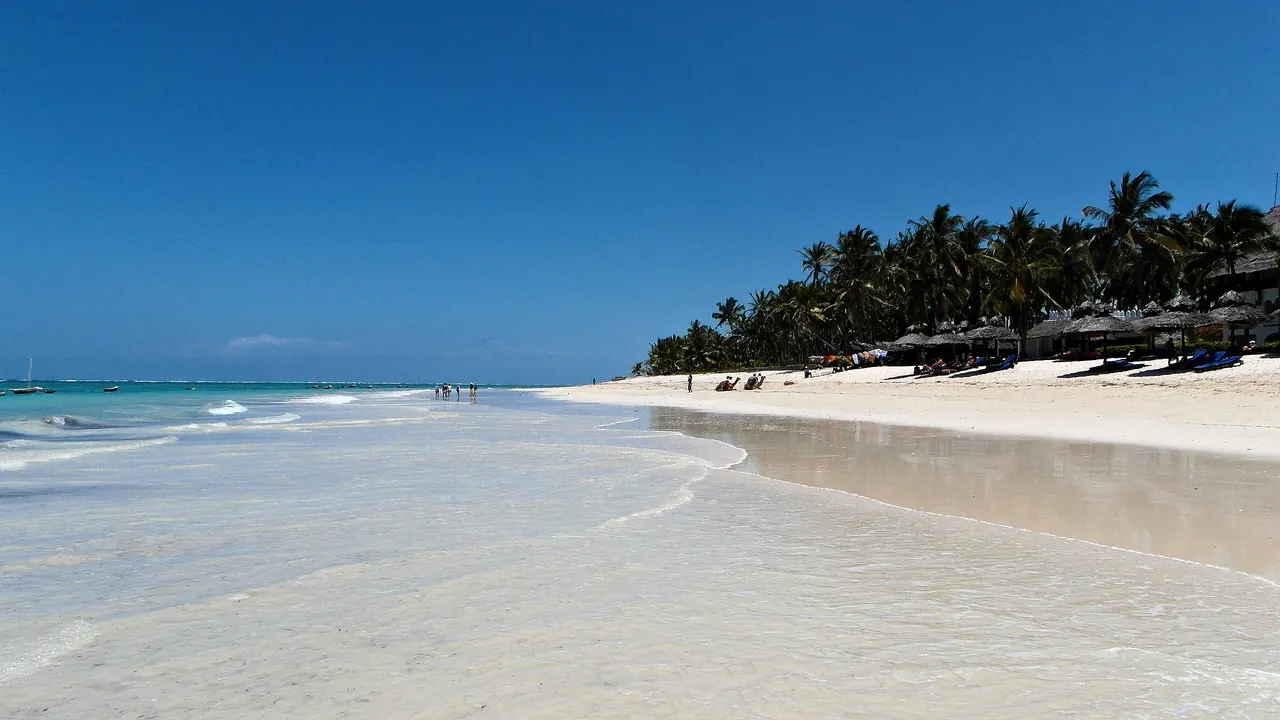
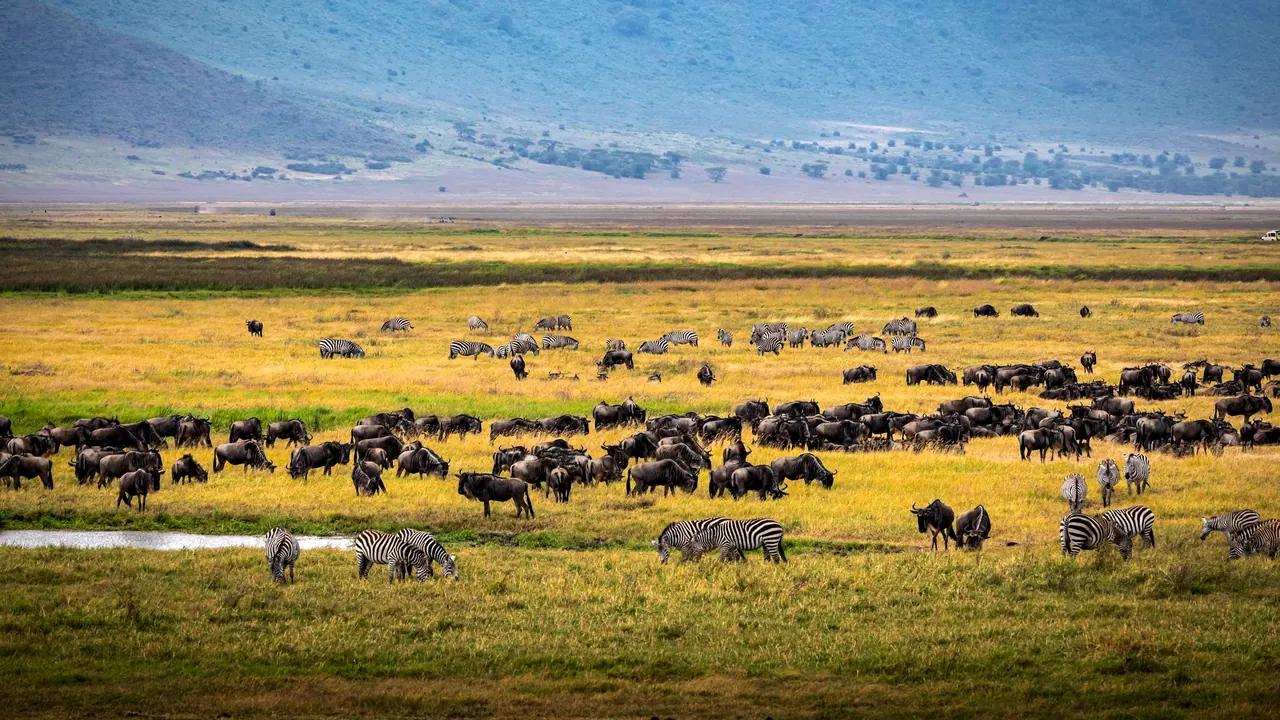
Photos: Diani by Roma Neus, CC BY 3.0, cropped; Ngorongoro by Sergey Guk, Pexels License.
Diani or Ngorongoro?
Our verdict in twelve categories, each scored against the same fixed benchmark cities, and the climate month by month, so you can choose for your trip.
Choose Diani for
- beaches
- prices
- nightlife
Diani suits a warm, unhurried beach vacation. You get a long strip of white coral sand, a calm lagoon inside the reef, dhow trips to the marine park in the south, and enough beach bars to fill a weekend evening. It costs far less to stay, works better for families with young children, and you can get around it yourself by tuk-tuk.
Choose Ngorongoro for
- nature and the outdoors
- culture and sights
Ngorongoro is for travellers who want to see Africa's big animals in one of its great landscapes. The crater floor puts lions, elephants and black rhino within a morning's drive, and Olduvai Gorge adds the deep story of early humans. In return, every day is an expensive guided safari with dawn starts and quiet evenings by the fire, and there is no beach at all. That is why so many safari travellers end their trip on the Indian Ocean.
Scoreboard
Twelve categories on one fixed scale from 0 to 100. The shaded stretch is the gap between the two.
Your match
Pick a travel style or drag the sliders, and both match scores follow your weighting.
Wins on beaches and prices with your weighting.
Wins on nature and the outdoors and culture and sights with your weighting.
What matters to you?
Category by category
What the scores mean for a trip.
Beaches & swimming
Beach life is the whole point of Diani. About 17km of fine coral sand runs from the Tiwi river south to Galu and Kinondo, and the reef keeps the lagoon calm and warm. The big tides mean you plan swims around high water and walk out over the rock pools at low tide.
Ngorongoro has nothing comparable. Its lakes are shallow soda flats left to the flamingos, and the few lodge pools on the cool crater rim tempt hardly anyone. If you need sand at the end of the trip, it means flying to the coast.
Food & drink
Neither is a food destination, but Diani gives you more to choose from. Swahili-style seafood with coconut and tamarind is its strength, along with pilau and beans in coconut sauce in small local eateries and mishkaki skewers from the roadside stalls at night. A shore lunch on a dhow trip is a highlight.
In Ngorongoro you eat where you sleep: set dinners at the lodge and packed lunches on the crater floor. The one real flavour of the place comes from the coffee estates and farm kitchens around Karatu.
Culture & sights
Ngorongoro has the more remarkable heritage, and it is very old rather than built. Olduvai Gorge, where the Leakeys found early human ancestors, and the hominin footprints at Laetoli give the area a significance that Diani cannot match. Maasai herders grazing among the wildlife add a living layer, though boma visits can feel staged.
Diani has two quiet sites: the centuries-old coral-stone Kongo Mosque among the baobabs, and the sacred Kaya Kinondo forest with its Mijikenda guides. For anything more, you go to Mombasa.
Nightlife
Diani is the only one of the two with a night out. The open-air clubs and beach bars on the central strip play reggae, Afrobeats and house past midnight, especially at weekends and over Christmas and New Year. In Ngorongoro, night driving is banned, and evenings end with a drink by the lodge fire before an early bed.
Nature & outdoors
This is where Ngorongoro is in a league of its own. The 19km caldera holds one of the last reliable black rhino populations alongside lions, elephants and great herds of zebra and wildebeest. Beyond it lie the migration plains around Ndutu and the flamingo lake inside Empakaai crater.
Diani's nature is mostly underwater: the fringing reef, the coral and dolphins of Kisite-Mpunguti, and humpback whales offshore in the middle of the year. Kitesurfers come for the monsoon winds. Colobus monkeys in the roadside forest and elephants in the Shimba Hills give only a gentle taste of what Ngorongoro offers in full.
Day trips
Diani has the better day out: Mombasa, with Fort Jesus, the carved doors of the old town and the spice market, although traffic and the Likoni ferry make it a long day. A boat trip from Shimoni to Wasini island adds a Swahili village and coral gardens.
From Ngorongoro, most outings are more game drives. The alternatives are modest: cycling around Mto wa Mbu, a visit to a coffee farm, or a rough two-hour drive to Lake Eyasi to meet the Hadzabe and the Datoga.
Good for families
Diani is the easier choice for families, especially with young children. Resort pools, the warm lagoon and the rock pools keep small children busy, and dolphins and monkeys keep older ones interested. Parents still need to think about malaria, strong sun and sea urchins.
Ngorongoro can give a school-age child a day they will never forget, with lions and rhino seen in a single morning. But the pre-dawn starts, bumpy roads and cold nights are hard on young children, and some rim lodges do not accept them at all.
Getting around
In Diani you can come and go as you please. Tuk-tuks, motorbike taxis and matatus run up and down the single beach road, the sand makes a good walkway at low tide, and there is an airstrip at Ukunda. The road itself is not pleasant to walk, though, and outings further afield usually mean booking a driver.
Ngorongoro gives you no such freedom. You need a 4x4 with a guide-driver for every outing, the drive from Arusha takes three to four hours, and the crater descents and rim road are slow and rough. Once it is booked, someone else handles the logistics, but the days run to a fixed plan.
Shopping & style
Both offer craft stalls rather than real shopping, and Diani has a little more. Look for kikoi and kanga cloth, kiondo baskets and Kisii soapstone, with Mombasa's old town close enough for a proper market. Ngorongoro's choice comes down to Maasai beadwork, shukas and tinga tinga paintings at the roadside stops in Mto wa Mbu and Karatu, and Arusha has a wider range.
Affordability
Diani costs far less. If you stay off the beachfront and eat in local places, you can travel cheaply, and the main costs come from the resorts at peak season, marine park fees and organised boat trips.
In Ngorongoro, most of the cost is fixed and unavoidable. You pay conservation fees for every day, a separate charge for each vehicle that goes down into the crater, and the cost of a 4x4 with a guide. Staying in Karatu or joining a camping safari helps, but it never makes the trip cheap.
Live music & performing arts
Neither has a stage worth planning around, and what each has is put on for visitors. In Diani that means hotel shows with acrobats and Mijikenda dance, plus the odd reggae or Afro-fusion band at a beach bar. In Ngorongoro it is the Maasai jumping dance and song, performed at bomas and occasionally at a lodge in the evening.
Wellness & relaxation
Diani is the more restful choice. Long, hot afternoons in the shade, resort spas, beachfront massage huts and retreat lodges in the coastal forest set an easy pace, especially around quiet Galu in the south.
Ngorongoro's lodges are calm, with fires in the rooms, long views and sometimes a spa. But dawn game drives and rough roads make a safari tiring, and real rest there means an afternoon off between drives.
When should you go?
Pick your month. The climate figures are measured averages, not a forecast.
Diani in July
Ngorongoro in July
Daytime high, °C
Rainfall in the month, mm
Where the figures come from
Diani's temperatures are measured 32 km from the centre, at Mombasa.
Diani has no rain gauge within 25 km of the centre, so its rainfall comes from a gridded climate dataset read at the destination rather than from a gauge further away.
Ngorongoro has no weather station within reach, so its figures come from a gridded climate model rather than a measured record, and read a broad area rather than one spot.
Temperature and rainfall are climate normals, averaged over the years shown. Diani: 1991-2020 normals, Mombasa (31.7 km from centre). Ngorongoro: 2001-2020 normals, NASA POWER reanalysis grid, no weather station within 90 km.
Diani is hot all year, and the sea is warm enough to swim in every month. December to March is the driest stretch and the best time for the beach, though afternoons reach about 33°C. The long rains arrive in April and are heaviest in May, at around 310mm, and June is still fairly wet. October and November bring a shorter rainy spell. July to September is the coolest time, with highs near 28°C and only light rain, which makes it easier to be active away from the shade.
Ngorongoro is milder, with daytime highs in the mid to high twenties all year, and its seasons follow a different pattern. June to September is almost completely dry, and the tracks are at their easiest. Rain returns from November to May and is heaviest in April, at about 143mm. The calving season on the Ndutu plains still falls in the wet months of December to March. From July to September both places are dry and comfortable, so that is the obvious window for combining them.
Which traveller are you?
For a beach and sun trip, Diani is the only real option. It has a long white-sand beach, a warm lagoon that is calm at high tide, and reef snorkelling. Ngorongoro is high inland country with soda lakes that are not for swimming.
On an outdoors trip, Ngorongoro is the clear winner. You descend at dawn into an intact volcanic crater full of lions, rhino and wildebeest, follow the calving herds around Ndutu, and do ranger-led walks into Empakaai. Diani's outdoor life is mostly snorkelling, diving and kitesurfing.
On a tight budget, Diani lets a trip stretch out. The beach and the lagoon cost nothing, so you can stay for weeks and save the paid boat trips for a day or two. In Ngorongoro the clock is always running, so budget visitors keep their stay short and every day fully planned.
Before you go
| Measure | Diani | Ngorongoro |
|---|---|---|
| Official language | English, Swahili | English, Swahili |
| Currency | Kenyan Shilling (KES) | Tanzanian Shilling (TZS) |
| Sockets | G240 V, 50 Hz | G230 V, 50 Hz |
| Driving side | Left | Left |
| Time zone | UTC+3 | UTC+3 |
| Emergency number | Police 112/999, ambulance 112/999, fire 112/999 | Police 112, ambulance 115, fire 114 |
| Main airport | Moi International Airport (MBA)22 non-stop destinations | Kilimanjaro International Airport (JRO)14 non-stop destinations |
| Public holidays this year | 10 days | 13 days |
By the numbers
| Measure | Diani | Ngorongoro |
|---|---|---|
| Swim season, months above 21 °C | 12 months | - |
Where else could you go?
Every comparison below shares a destination with this one, so you can follow Diani or Ngorongoro somewhere new.
- Mombasavs Diani
- Serengetivs Ngorongoro
- Zanzibarvs Diani
- Masai Maravs Ngorongoro
- Zanzibarvs Ngorongoro
- Masai Maravs Diani