Kenya
Diani
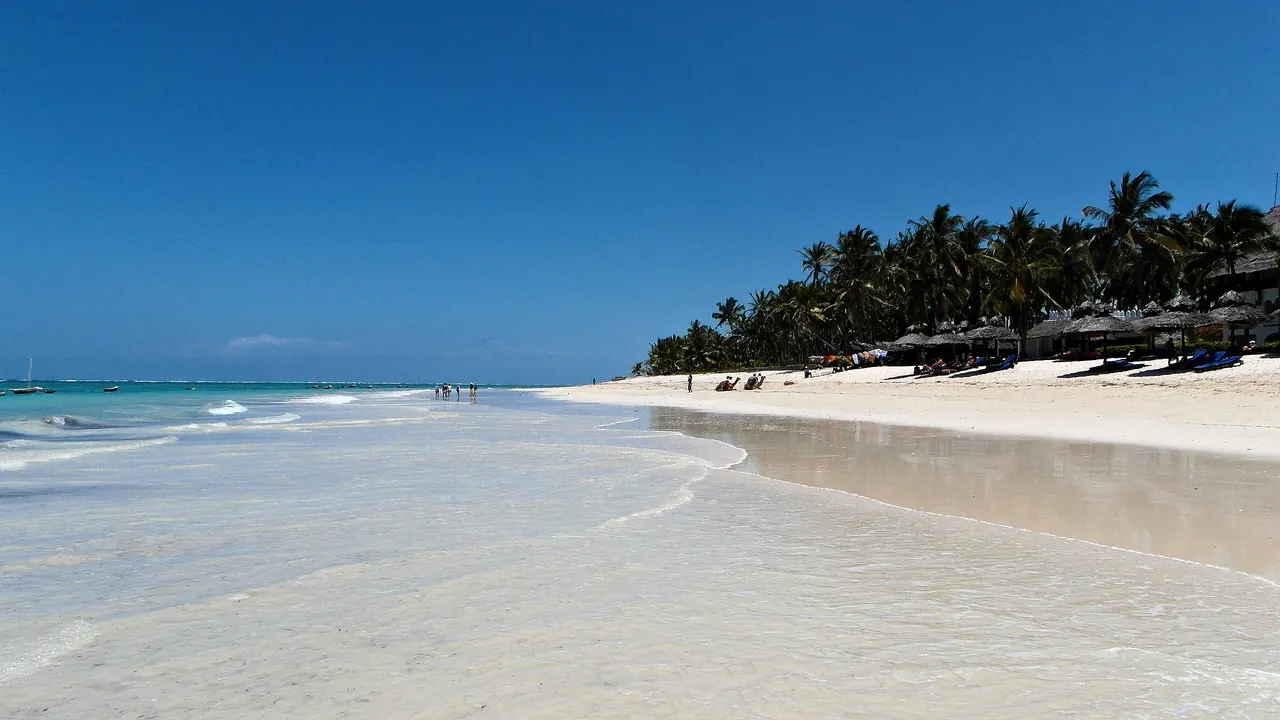
Palm-fringed Diani Beach at low tide
- Beaches89
- Affordability64
- Nature & outdoors60
Match
41
Every category weighted equally
- Beach & sun49
- Culture & arts32
- Food & nightlife34
- Family trip47
- Outdoors47
- Relax & unwind46
- Shopping & style33
- On a budget43
Diani in twelve categories
Our verdict on each, scored 0 to 100 against the same fixed benchmark cities, so a score means the same thing on every page.
Beaches & swimming. Scores 89 out of 100.
Food & drink. Scores 34 out of 100.
Culture & sights. Scores 20 out of 100.
Nightlife. Scores 34 out of 100.
Nature & outdoors. Scores 60 out of 100.
Day trips. Scores 35 out of 100.
Good for families. Scores 46 out of 100.
Getting around. Scores 30 out of 100.
Shopping & style. Scores 20 out of 100.
Affordability. Scores 64 out of 100.
Live music & performing arts. Scores 8 out of 100.
Wellness & relaxation. Scores 46 out of 100.
Diani category by category
Beaches & swimming
89Diani is a single long beach of fine white coral sand, about 17km from the mouth of the Tiwi river in the north to Galu and Kinondo in the south, backed by palms and low coral cliffs. An offshore reef keeps the lagoon calm, and the water is around 27°C to 29°C all year, so swimming is easy and warm. The tides are large, though. At low tide the sea pulls back over rock pools and seagrass. High tide is the time to swim, and low tide is the time to walk out towards the reef.
Galu and Kinondo at the southern end are quieter and wider, while central Diani has the most hotels and beach bars. Seaweed washes up in some months, mostly during the southern monsoon, and vendors walk the main stretch all day. Even so, beach life sets the rhythm of every day here. The driest, sunniest months are December to March.
Food & drink
34Most eating in Diani happens at hotels and the restaurants along the beach road. Seafood is the strength: grilled fish, lobster, prawns and octopus, often cooked with coconut, tamarind and the spices of the Swahili coast. For something more local, small eateries serve pilau, biryani, chapati and beans in coconut sauce. In the evenings, roadside stalls sell mishkaki skewers and cassava crisps.
The range is narrow, and much of the menu is aimed at international guests, with Italian cooking common because of a long-standing European community. On a dhow trip to the southern islands the day usually includes a seafood lunch on the shore. Anyone who wants to go deeper into Swahili food should spend a day in Mombasa's old town.
Culture & sights
20Diani is a beach strip without a historic town. Its heritage is small and quiet but genuine. At the northern end, the Kongo Mosque stands among baobabs by the Tiwi river. It is a coral-stone Swahili mosque several centuries old and is still in use. South of the main strip, Kaya Kinondo is one of the sacred forests of the Mijikenda people, protected as part of a World Heritage listing. Local guides lead visitors along its paths and explain the rituals and taboos that have kept the forest intact.
Apart from these two, there is little to see, and anyone with a serious interest in history plans a day in Mombasa.
Nightlife
34Going out in Diani means a few beach bars and open-air clubs along the central strip. They play reggae, Afrobeats and house, and on busy nights they stay open well past midnight. The liveliest times are weekends and the peak season around Christmas and New Year, when Kenyans from Nairobi and Mombasa come down to the coast. Outside those times many evenings end with sundowners and dinner. Use taxis or tuk-tuks at night rather than walking the dark beach road.
Nature & outdoors
60Diani is flat coast, not dramatic country, and most of its outdoor life happens in the water. Divers and snorkellers have the fringing reef along the beach, and the best coral is at the Kisite-Mpunguti Marine Park, reached by dhow from Shimoni, about an hour and a half south. Dolphins are often seen there, and humpback whales pass offshore from about July to October. The steady monsoon winds make the beach a well-known kitesurfing spot, best from December to March and again in the middle of the year.
On land, rare Angolan colobus monkeys live in the strips of coastal forest along the beach road. About an hour inland, the Shimba Hills reserve has rolling grassland and forest, elephants, sable antelope and a walk to Sheldrick Falls. It is a gentle taste of Kenyan wildlife, not a full safari, because the great savannah parks are a long drive away. Serious hikers will find no mountains and little walking beyond the beach itself.
Day trips
35The main day out is Mombasa, roughly an hour or more to the north, depending on traffic and the Likoni ferry crossing. There a visitor can see the Portuguese-built Fort Jesus, walk the narrow lanes and carved doors of the old town, and visit the spice market. To the south, a boat trip from Shimoni often stops on Wasini island, where there is a small Swahili village and coral gardens. Shimoni also has caves linked to the slave trade.
After that the choices run out. The ruined Swahili towns further up the coast and the island of Lamu are too far for a comfortable day.
Good for families
46For a family, Diani works mostly as a resort vacation. Large hotels with pools, the warm lagoon at high tide and rock pools at low tide keep younger children busy. A dolphin trip, the colobus monkeys and a day of easy game viewing in the Shimba Hills give older children some variety. Kenyan coastal culture is warm towards children.
There are no theme parks, aquariums or museums, so most days are beach days. Parents need to plan for malaria prevention, strong sun, sea urchins on the reef flats and tides that change the beach entirely. Some will also want to keep a little distance from the beach vendors.
Getting around
30Diani is laid out along a single beach road several kilometres long, with hotels on one side and shops on the other. The road has patchy pavements and is not pleasant to walk, but the beach makes a fine walkway at low tide. Tuk-tuks and motorbike taxis are everywhere for short hops, and matatu minibuses run the road. Taxis or hotel drivers are the usual choice after dark.
Ukunda, at the top of the strip, has a small airstrip with flights from Nairobi. Going north to Mombasa or its airport usually means a slow road or the Likoni ferry crossing. Trips to the marine park or the Shimba Hills are almost always booked with a driver.
Shopping & style
20Shopping here is limited to curio stalls, a couple of small shopping centres on the beach road and vendors on the sand. What is worth taking home are Kenyan crafts: kikoi and kanga cloths, kiondo baskets, Kisii soapstone, beadwork and wood carvings. Bargaining is normal and expected. There is no fashion or design scene. For a proper market, go to Mombasa's old town.
Affordability
64How much Diani costs depends on where you stay. Simple guesthouses, cottages set back from the beach, local food and tuk-tuk rides are cheap. The beachfront resorts, especially over Christmas and New Year, are priced for international visitors. Imported wine and spirits, marine park and reserve fees for foreigners, and organised boat or diving trips are the main costs. A visitor willing to eat in local places and stay off the beachfront can travel quite economically.
Live music & performing arts
8Diani has no theatre or concert life. Live performance means hotel evening shows, such as acrobats and traditional Mijikenda or Maasai dance, along with the occasional reggae or Afro-fusion band at a beach bar.
Wellness & relaxation
46Diani has no bathing tradition of its own. Its wellness offer is the resort spas, beachfront massage huts and a few yoga and retreat-style lodges set in the coastal forest. What it does have is pace. Days are shaped by the tides and the heat, mornings start early, and the long afternoons pass in the shade. The quieter southern end, around Galu, is the most restful place to stay, away from the bars and traffic of the central strip.
Where to stay in Diani
Diani is one beach strip, so a single base covers the whole trip, and the real choice is which stretch of the 17km of sand to wake up on. Central Diani, along the middle of the beach road, has the most hotels, the beach bars and the late nights, and suits couples and groups who want restaurants and a little nightlife close at hand. It is also the easiest base for families booking a large resort with a pool, though the vendors are busiest here.
Galu and Kinondo, at the southern end, have a wider, quieter beach and less traffic. This is the place for a restful stay, for honeymooners and for anyone who would rather end the evening with dinner than a club. It is also the closer end for the Kaya Kinondo forest and the road south to Shimoni.
The northern end, towards the Tiwi river and the Kongo Mosque, is calmer and more scattered, with cottages and self-catering houses that suit longer, independent stays. Travellers on a budget can stay in guesthouses set back from the beach or near Ukunda, handy for the airstrip and the Mombasa road, and reach the sand by tuk-tuk.
When should you go?
Pick a month to see what it is like. The climate figures are measured averages, not a forecast.
Diani in July
Daytime high, °C
Rainfall in the month, mm
The whole year
Shaded against this destination’s own year: the deepest cell is its best month for that figure and the palest its weakest.
Where the figures come from
Diani's temperatures are measured 32 km from the centre, at Mombasa.
Diani has no rain gauge within 25 km of the centre, so its rainfall comes from a gridded climate dataset read at the destination rather than from a gauge further away.
Temperature and rainfall are climate normals, averaged over the years shown. Diani: 1991-2020 normals, Mombasa (31.7 km from centre).
Before you go
| Measure | Diani |
|---|---|
| Official language | English, Swahili |
| Currency | Kenyan Shilling (KES) |
| Sockets | G240 V, 50 Hz |
| Driving side | Left |
| Time zone | UTC+3 |
| Emergency number | Police 112/999, ambulance 112/999, fire 112/999 |
| Main airport | Moi International Airport (MBA)22 non-stop destinations |
| Public holidays this year | 10 days |
By the numbers
| Measure | Diani |
|---|---|
| Swim season, months above 21 °C | 12 months |
Compare Diani with
Every comparison with a written verdict behind it.