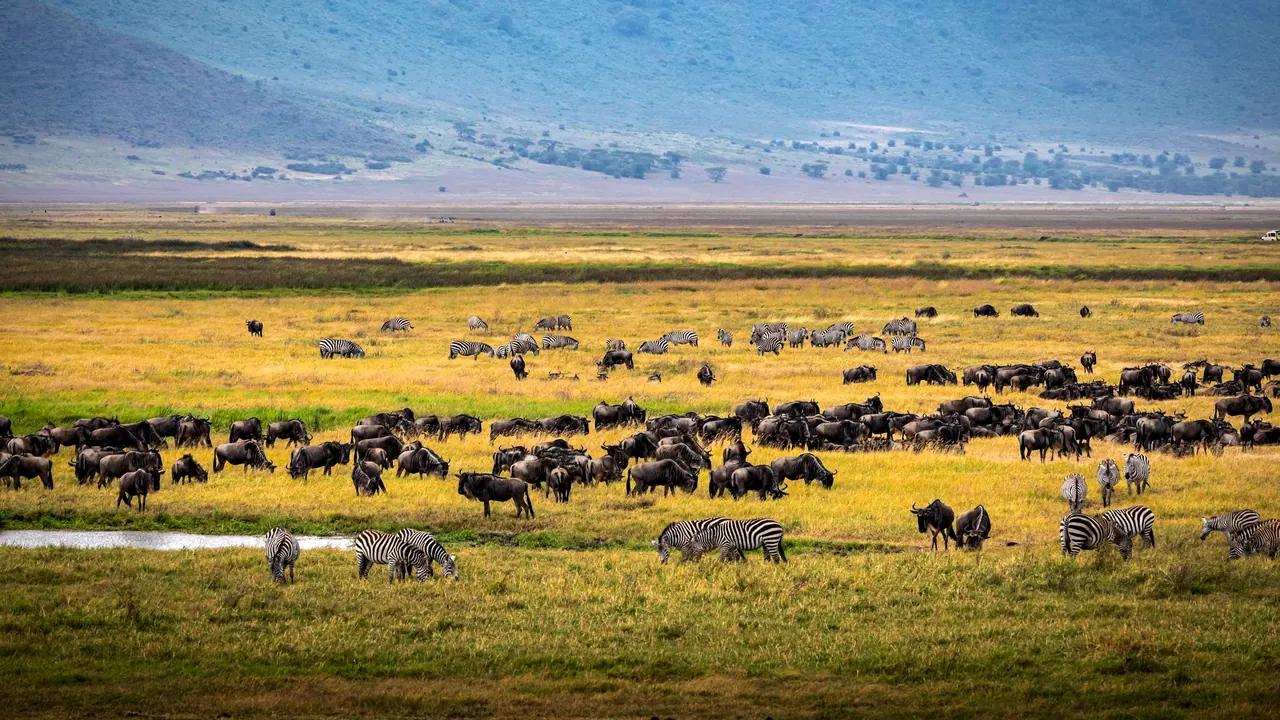
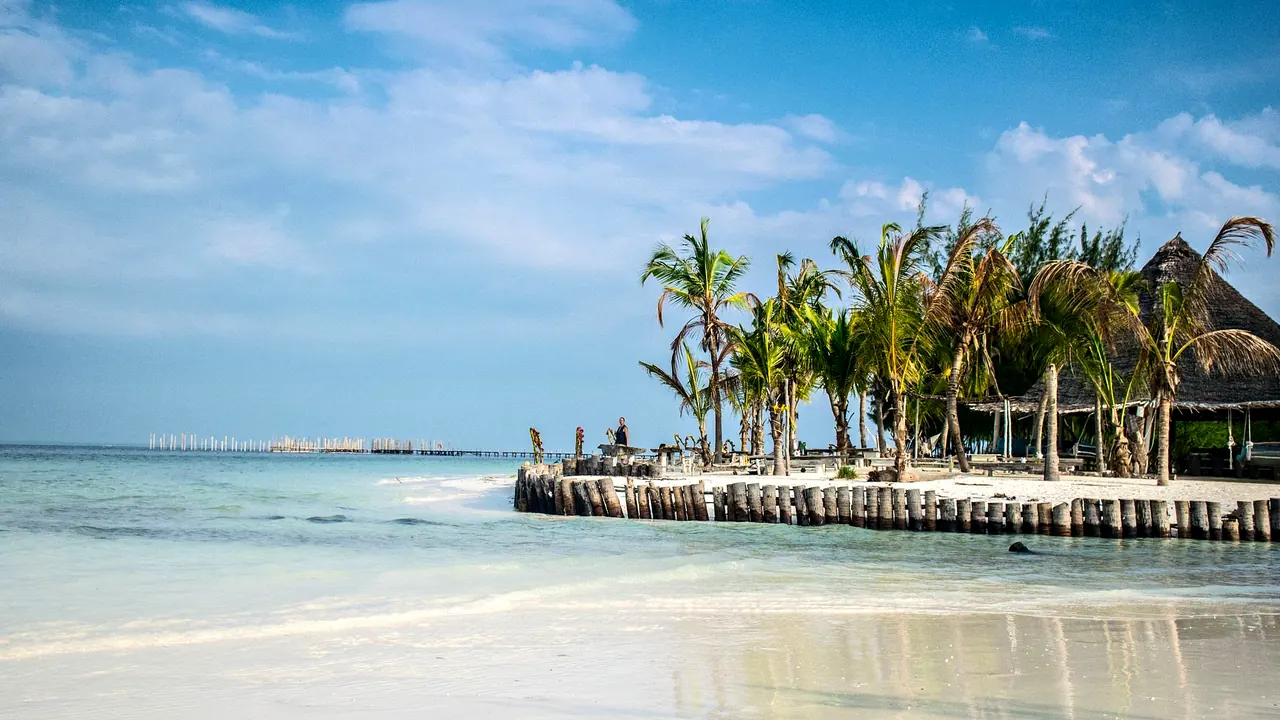
Photos: Ngorongoro by Sergey Guk, Pexels License; Zanzibar by Ákos Helgert, Pexels License.
Ngorongoro or Zanzibar?
Our verdict in twelve categories, each scored against the same fixed benchmark cities, and the climate month by month, so you can choose for your trip.
Choose Ngorongoro for
- nature and the outdoors
Ngorongoro is for the traveller who wants wildlife above everything else. On the crater floor you can see lions, elephants and black rhino within a morning, and the Ndutu plains add the migration in season. Everything else, from the early starts to the set lodge meals and quiet evenings, is there to serve the game drives. It suits a guided safari, not a vacation spent wandering at your own pace.
Choose Zanzibar for
- beaches
- prices
- food and drink
If you want warm sea, slow days and an old town to explore on foot, Zanzibar is the better fit. Its coral-sand beaches, the alleys of Stone Town and its Swahili cooking make for a broader, cheaper and more relaxed stay, with reef snorkelling and forest monkeys as its wildlife. Many travellers sensibly do both, ending a safari with the short flight out to the coast.
Scoreboard
Twelve categories on one fixed scale from 0 to 100. The shaded stretch is the gap between the two.
Your match
Pick a travel style or drag the sliders, and both match scores follow your weighting.
Wins on nature and the outdoors with your weighting.
Wins on beaches and prices with your weighting.
What matters to you?
Category by category
What the scores mean for a trip.
Beaches & swimming
Ngorongoro has no beach and no swimming. Its soda lakes at Magadi and Natron belong to the flamingos, and even lodge pools see little use on the cool rim. Zanzibar is the obvious answer, with powder-white sand and warm water at Kendwa and Nungwi, where you can swim at any tide.
On the island's east coast, from Paje down to Jambiani, the sea pulls back far across the seagrass at low tide, so you plan swims around the tide table. Its beaches are the main reason so many safaris end with a flight to the island.
Food & drink
At Ngorongoro, eating is part of the lodge package: set dinners, buffets and packed lunches on the crater floor. The only real local flavour comes from coffee tastings on the Karatu estates and nyama choma at roadside stops. Zanzibar has a cuisine of its own, Swahili cooking scented with clove and cardamom after centuries of Indian Ocean trade.
Stone Town is where it is best. In the evenings Forodhani Gardens fills with seafood skewers and Zanzibar pizza, and street stalls sell urojo. Out on the beaches the choice narrows to grilled fish and resort menus, and alcohol is found mostly in hotels and tourist places.
Culture & sights
Ngorongoro's heritage is measured in millions of years. At Olduvai Gorge the Leakeys found early human ancestors, and at Laetoli early hominins left footprints in volcanic ash. Both are presented through small displays, and visits to Maasai bomas can feel staged. Culture here makes a stop between game drives rather than a reason to come.
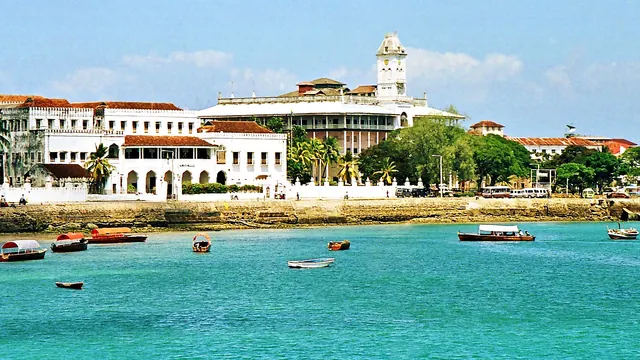
Zanzibar has a living town instead. Stone Town's coral-stone houses and carved doors, the Palace Museum and the cathedral on the site of the last slave market are worth days of walking. Outside town there are Omani palace ruins and the Persian baths at Kidichi.
Nightlife
Neither suits a big night out, but the gap is real. At Ngorongoro the whole evening is a drink at the lodge bar as the crater fades into darkness, since driving after dark is not allowed and game drives start at first light.
Zanzibar at least has places to go. There are beach bars and bonfires at Nungwi and Kendwa, the full-moon party, kitesurfer bars in Paje and rooftop sundowners in Stone Town. Proper clubs barely exist, though, and most places are quiet by midnight.
Nature & outdoors
Here Ngorongoro is in a different league. The caldera, about 19km across, holds lions, elephants, buffalo and one of the last reliable populations of black rhino. Beyond it are the calving herds around Lake Ndutu and the flamingo lake inside Empakaai crater, and further north Ol Doinyo Lengai and Lake Natron.
Zanzibar's outdoors is gentler and mostly in the water: snorkelling with turtles around Mnemba atoll, dolphins off Kizimkazi and kitesurfing in the lagoon at Paje. On land, red colobus monkeys live in Jozani Forest. It is lovely, but a flat coral island cannot match the crater for landscape or wildlife.
Day trips
From Ngorongoro, most outings are simply more safari. Apart from the game drives there are the banana plantations and cycling tours of Mto wa Mbu, the coffee farms around Karatu, and a long morning on rough roads to Lake Eyasi to meet the Hadzabe.
Zanzibar's day trips are small but easier to manage. Boats go to Changuu for the giant tortoises, spice farm tours end with lunch, and Kizimkazi has its old mosque. From the beach towns, Stone Town itself is the main day out. Dar es Salaam and Pemba are within reach but work better as overnight trips.
Good for families
Both are hard work with children, and Zanzibar is a little easier. Ngorongoro can give a school-age child an unforgettable day of lions and rhinos. In return it asks for pre-dawn starts, long bumpy drives and cold nights, and some rim lodges do not take young children at all.
Zanzibar gives up that thrill for ease. North-coast resorts have calm, warm water, Kendwa is swimmable at every tide, and children enjoy the tortoises on Changuu and the monkeys in Jozani. Both destinations need malaria precautions.
Getting around
You cannot visit Ngorongoro independently. Every day needs a 4x4 and a guide-driver, the rim road is rutted, and the drive from Arusha takes three to four hours. Once booked, the logistics take no effort, but they leave little room to change your plans.
Zanzibar gives you more freedom. Stone Town's maze is best on foot, and the beach villages are easy to walk along the sand. Taxis, hotel transfers and slow dala-dalas link the two, with an hour or more between town and the coasts.
Shopping & style
Neither is a place to go shopping, but Zanzibar offers clearly more. At Ngorongoro there is little beyond Maasai beadwork, shukas and carvings at roadside curio stops in Mto wa Mbu and Karatu. Darajani market and the lanes of Stone Town add bags of clove and vanilla, kanga and kikoi cloth, carved chests, silver and tanzanite, though much of it repeats from stall to stall.
Affordability
At Ngorongoro most of the bill is fixed before you choose a bed. Conservation fees are charged per person for every day, the crater descent adds a charge for each vehicle, and a 4x4 with its guide-driver has to be hired daily. Swapping a rim lodge, among the costliest in Tanzania, for a Karatu lodge or a campsite trims only the part you control, so the real saving lies in spending fewer days there.
On Zanzibar the cost mostly follows your own choices. Simple bungalows around Paje and Jambiani keep a stay modest, while northern resorts, imported drinks, taxis between the coasts, diving and boat trips are priced for visitors and add up quickly. Much of the island's accommodation is mid-range or better, and Christmas and July to August are the dearest weeks.
Live music & performing arts
At Ngorongoro, live performance means the Maasai jumping dance, put on for visitors at bomas and lodges, and nothing more. Zanzibar has its own musical tradition in taarab, a blend of Swahili, Arabic and Indian music you can hear at rehearsals in Stone Town's music school. The island also has ngoma drumming and dry-season festivals of East African music and film.
Wellness & relaxation
At Ngorongoro, rest is something you fit in between drives: a fire in the room, a view from the rim, the gardens of a Karatu farm lodge and the odd spa massage after the bumpy tracks. Zanzibar is made for slowing down.
In the beach villages the days follow the tide, coastal resorts offer massages with coconut oil and spices, and yoga is easy to find around Paje and Jambiani.
When should you go?
Pick your month. The climate figures are measured averages, not a forecast.
Ngorongoro in July
Zanzibar in July
Daytime high, °C
Rainfall in the month, mm
Where the figures come from
Ngorongoro has no weather station within reach, so its figures come from a gridded climate model rather than a measured record, and read a broad area rather than one spot.
Zanzibar's temperatures are measured 78 km from the centre, at Dar Es Salaam Airport.
Zanzibar has no rain gauge within 25 km of the centre, so its rainfall comes from a gridded climate dataset read at the destination rather than from a gauge further away.
Temperature and rainfall are climate normals, averaged over the years shown. Ngorongoro: 2001-2020 normals, NASA POWER reanalysis grid, no weather station within 90 km. Zanzibar: 1991-2020 normals, Dar Es Salaam Airport (77.9 km from centre).
Ngorongoro is driest from June to September, when hardly any rain falls and the tracks stay firm. Days run from about 24°C in midwinter to 28°C by September around Karatu and the gate, where these figures are measured. Up on the crater rim the mornings and nights are distinctly cool. The rains come back in November and carry on, with a lighter spell in February, until May. March and April are the wettest months and turn the tracks to mud. The calving season on the Ndutu plains runs from December to March, so seeing it means accepting some rain.
Zanzibar is hot all year and its sea stays between 26°C and 29°C, so it is the rain, not the cold, that decides when to go. April and May are the months to avoid: April alone brings around 363mm, and the days turn grey. June to October is the most reliable stretch, sunny and a little less sticky. January and February make a second, shorter window between the short rains of November and December and the long rains that begin in March. The two dry seasons overlap from June to September, which makes those months the easiest time to combine a safari with the coast.
Which traveller are you?
On an outdoors trip, Ngorongoro is the clear choice. You can drive down into the crater at dawn for lions and black rhino, walk to the flamingo lake in Empakaai and follow the calving herds at Ndutu. That is wildlife on a scale Zanzibar's reef and forest cannot approach.
For a beach and sun trip, Zanzibar wins outright. Ngorongoro has no swimming at all, while the island has white coral sand, warm sea at Kendwa and Nungwi, slow afternoons under the palms and snorkelling at Mnemba close by.
On a tight budget, Zanzibar is far kinder. Stone Town guesthouses, street food at Forodhani and dala-dalas keep costs low. At Ngorongoro, daily park fees, crater vehicle charges and compulsory 4x4 hire make even a camping safari expensive.
Before you go
| Measure | Ngorongoro | Zanzibar |
|---|---|---|
| Official language | English, Swahili | English, Swahili |
| Currency | Tanzanian Shilling (TZS) | Tanzanian Shilling (TZS) |
| Sockets | G230 V, 50 Hz | G230 V, 50 Hz |
| Driving side | Left | Left |
| Time zone | UTC+3 | UTC+3 |
| Emergency number | Police 112, ambulance 115, fire 114 | Police 112, ambulance 115, fire 114 |
| Main airport | Kilimanjaro International Airport (JRO)14 non-stop destinations | Abeid Amani Karume International Airport (ZNZ)40 non-stop destinations |
| Public holidays this year | 13 days | 13 days |
By the numbers
| Measure | Ngorongoro | Zanzibar |
|---|---|---|
| Population | - | 896,721 |
| People per km² | - | 569 |
| Swim season, months above 21 °C | - | 12 months |
Where else could you go?
Every comparison below shares a destination with this one, so you can follow Ngorongoro or Zanzibar somewhere new.
- Serengetivs Ngorongoro
- Dianivs Zanzibar
- Masai Maravs Ngorongoro
- Dianivs Ngorongoro
- Serengetivs Zanzibar
- Mahevs Zanzibar