Tanzania
Stone Town
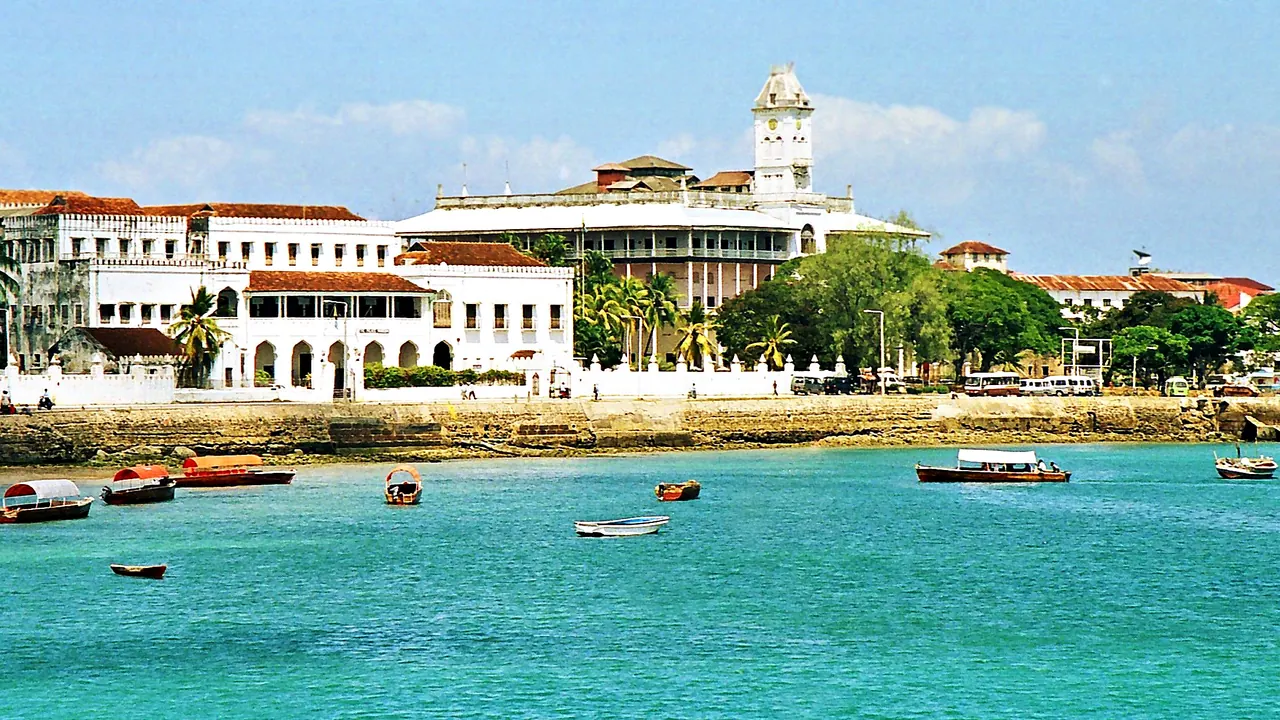
The waterfront with the House of Wonders
- Culture & sights67
- Affordable cities64
- Beaches63
Photo: Dr. Ondřej Havelka (cestovatel), CC BY 4.0, cropped
Match
44
Every category weighted equally
- Beach & sun46
- Culture & arts44
- Food & nightlife42
- Family trip47
- Outdoors46
- Relax & unwind46
- Shopping & style43
- On a budget46
Stone Town in twelve categories
Our verdict on each, scored 0 to 100 against the same fixed benchmark cities, so a score means the same thing on every page.
Beaches & swimming. Scores 63 out of 100.
Food & drink. Scores 55 out of 100.
Culture & sights. Scores 67 out of 100.
Nightlife. Scores 20 out of 100.
Nature & outdoors. Scores 50 out of 100.
Day trips. Scores 33 out of 100.
Good for families. Scores 30 out of 100.
Getting around. Scores 40 out of 100.
Shopping & style. Scores 40 out of 100.
Affordability. Scores 64 out of 100.
Live music & performing arts. Scores 28 out of 100.
Wellness & relaxation. Scores 33 out of 100.
Stone Town category by category
Beaches & swimming
63Stone Town sits right on the sea, but its own shoreline is a working waterfront of dhows, jetties and narrow strips of sand where local boys dive off the sea wall at dusk. It is not a place to lay a towel. The swimming starts a short boat ride out: Nakupenda sandbank and the islets of Changuu and Bawe are white sand on clear, warm water, and the sea around the island sits near 28°C for most of the year.
The beaches Zanzibar is famous for are further away. Nungwi and Kendwa in the north and the long tidal flats of Paje and Jambiani on the east coast are an hour or more by road, and most visitors treat Stone Town as a stop of two or three nights before moving to the coast. On the east coast the tide goes far out, so swimming depends on the time of day.
Food & drink
55Food here is Swahili coastal cooking shaped by centuries of Omani, Indian and Persian trade: coconut fish curries, pilau and biryani heavy with clove and cardamom, octopus, and the sweet, sticky halwa sold in the lanes. The great set piece is the evening grill market in the Forodhani Gardens on the seafront, where stalls lay out lobster tails, skewers, sugar cane juice and the folded, griddled snack locals call Zanzibar pizza. Mornings belong to urojo, a tangy turmeric soup, and to tiny cups of bitter coffee poured by vendors at street-corner benches.
Beyond that the range is modest. Rooftop restaurants serve good seafood with sea views, but many menus repeat the same tourist dishes, and as a Muslim town alcohol is available mainly in hotels and places aimed at visitors.
Culture & sights
67The old town is the sight. A UNESCO-listed maze of coral-stone houses, mosques and Indian merchant buildings, it is best known for its massive carved wooden doors, some studded with brass, which signal the wealth and origins of the families behind them. Wandering the alleys between Shangani, Malindi and the Darajani market is most of a visit.
The named landmarks are compact and close together: the Old Fort built by the Omanis, the sultans' Palace Museum on the seafront, the ornate Old Dispensary, the Persian-built Hamamni baths, and the Anglican cathedral raised on the site of the last open slave market in East Africa, with its sobering memorial and exhibition. Freddie Mercury's birthplace draws a steady trickle of fans. The museums themselves are small and simply presented, so two full days covers it well.
Nightlife
20Evenings in Stone Town centre on sunset and dinner rather than going out. Drinks with a view from a seafront hotel terrace or a rooftop bar are the ritual, followed by food at the night market. Alcohol is served mainly in hotels and places aimed at visitors, as this is a conservative Muslim town, and the lanes go quiet fairly early. There are a couple of beach-style bars with music at weekends, but anyone wanting real parties heads north to Nungwi or Kendwa, where beach bars run later.
Nature & outdoors
50Zanzibar is low and flat, so the outdoors here means the sea and the forest rather than hills. Dhow sailing at sunset, snorkelling over the reefs around the offshore islets and diving trips leave from the town's beaches and harbour. Jozani Forest, under an hour away, protects the rare Zanzibar red colobus monkey, which visitors can watch at close range, alongside a mangrove boardwalk.
Further afield, boats from Kizimkazi in the south go out looking for dolphins, and the Mnemba atoll off the northeast is the island's best snorkelling. Kitesurfing is big on the east coast in the windy months. There is little for walkers or cyclists beyond the plantations, and the heat in the middle of the day keeps most activity to mornings and late afternoons.
Day trips
33Day trips from Stone Town are short outings on one island rather than visits to other towns. The classic half day is a spice farm tour, walking through plantations of clove, nutmeg, vanilla and cinnamon that once made Zanzibar's fortune. Boats run to Changuu, or Prison Island, with its giant tortoises and old quarantine buildings.
North of town are the ruined Maruhubi and Mtoni palaces of the sultans, and further up the coast the Mangapwani slave chambers, a sombre reminder of the trade that ran here after it was officially banned. Nungwi's dhow-building yards and Kizimkazi's ancient mosque fill out the list. There is no other town of real interest on the island, and the mainland at Dar es Salaam is about two hours by fast ferry.
Good for families
30Stone Town is manageable with children but not designed for them. The giant tortoises on Changuu island, boat trips to the sandbanks, red colobus monkeys in Jozani Forest and the food stalls at Forodhani are the highlights for younger visitors. The old town itself is a tight maze of narrow lanes shared with motorbikes and handcarts, with uneven paving that defeats pushchairs, and the midday heat is tiring. Malaria and food hygiene need care. Swahili culture is warm towards children, and families usually find the island easier once they move on to a beach hotel with a pool.
Getting around
40The old town is small enough to cross on foot in twenty minutes, and walking is the only sensible way through it, as most of the lanes are too narrow for cars. It is also a genuine labyrinth: getting lost is part of the experience, and the seafront is the easiest way to reset your bearings. Touts offering to guide you are persistent.
Beyond the old town, transport is harder. Dala-dalas, the shared minibuses, run from the Darajani market area across the island but are crowded and hard to read for a newcomer. Most visitors use taxis, hired drivers or tour transfers to reach beaches, spice farms and Jozani, and the airport is a short drive away.
Shopping & style
40Shopping here is about crafts and markets. The Darajani market is a crowded working market of fish, fruit and spice stalls, and the island's cloves, vanilla and cardamom are the most natural thing to take home. The lanes around Gizenga Street are lined with curio shops selling kanga and kikoi cloth, carved boxes and miniature Zanzibar chests, Maasai beadwork and brightly painted Tingatinga canvases, much of it repeated from shop to shop.
A few boutiques sell better-made textiles, natural soaps and jewellery, and good finds reward patience and bargaining. There is no fashion or luxury shopping to speak of.
Affordability
64Stone Town is cheap at street level and more expensive wherever it caters to visitors. Food at the night market and local cafés, dala-dala rides and simple guesthouses cost little. Boutique hotels in restored merchant houses, rooftop restaurants, alcohol and organised trips such as sandbank and spice tours are priced for foreigners and add up quickly. Bargaining is expected in shops and with taxi drivers, and agreeing a fare before setting off saves arguments.
Live music & performing arts
28Stone Town's own music is taarab, an orchestral style that sets Swahili poetry to Arabic and Indian melody, played on violins, qanun and oud. Visitors can hear it when the town's long-established music clubs rehearse or perform, and at the music academy on the waterfront, though there is no fixed programme and it pays to ask locally.
The calendar peaks with two festivals: Sauti za Busara, a celebrated gathering of African music, and the Zanzibar International Film Festival, both of which fill the town with performers and audiences for their weeks. Outside them there is no theatre, opera or regular concert life, and most evening performances a visitor meets are dinner shows in hotels.
Wellness & relaxation
33The Swahili phrase pole pole, slowly slowly, sets the pace here, and long afternoons on a shaded rooftop or a sea-facing terrace are part of the appeal. The historic Hamamni and other Persian baths survive only as buildings to visit, so there is no living bathing culture. Spa treatments come from boutique hotels in restored merchant houses, often using local spices, coconut oil and clove. The lanes themselves can be tiring, with heat, motorbikes and persistent touts, and for real rest most visitors look to the resorts on the coast.
When should you go?
Pick a month to see what it is like. The climate figures are measured averages, not a forecast.
Stone Town in July
Daytime high, °C
Rainfall in the month, mm
The whole year
Shaded against this city’s own year: the deepest cell is its best month for that figure and the palest its weakest.
Where the figures come from
Stone Town's temperatures are measured 78 km from the centre, at Dar Es Salaam Airport.
Stone Town has no rain gauge within 25 km of the centre, so its rainfall comes from a gridded climate dataset read at the city rather than from a gauge further away.
Temperature and rainfall are climate normals, averaged over the years shown. Stone Town: 1991-2020 normals, Dar Es Salaam Airport (78 km from centre).
Before you go
| Measure | Stone Town |
|---|---|
| Official language | English, Swahili |
| Currency | Tanzanian Shilling (TZS) |
| Sockets | G230 V, 50 Hz |
| Driving side | Left |
| Time zone | UTC+3 |
| Emergency number | Police 112, ambulance 115, fire 114 |
| Elevation | 15 m |
| Main airport | Abeid Amani Karume International Airport (ZNZ)7 km from centre40 non-stop destinations |
| Public holidays this year | 13 days |
By the numbers
| Measure | Stone Town |
|---|---|
| Museums within 10 km | 2 |
| UNESCO World Heritage sites within 50 km | 1 |
| Swim season, months above 21 °C | 12 months |
Compare Stone Town with
Every comparison with a written verdict behind it.