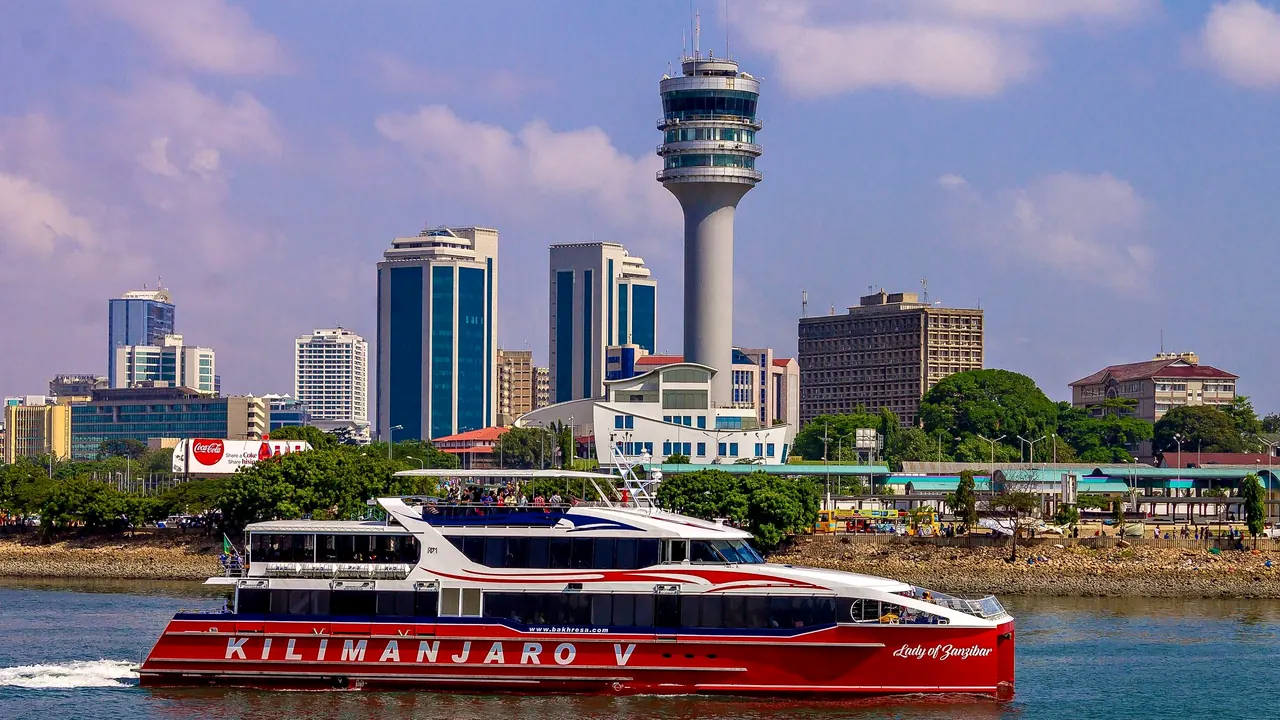
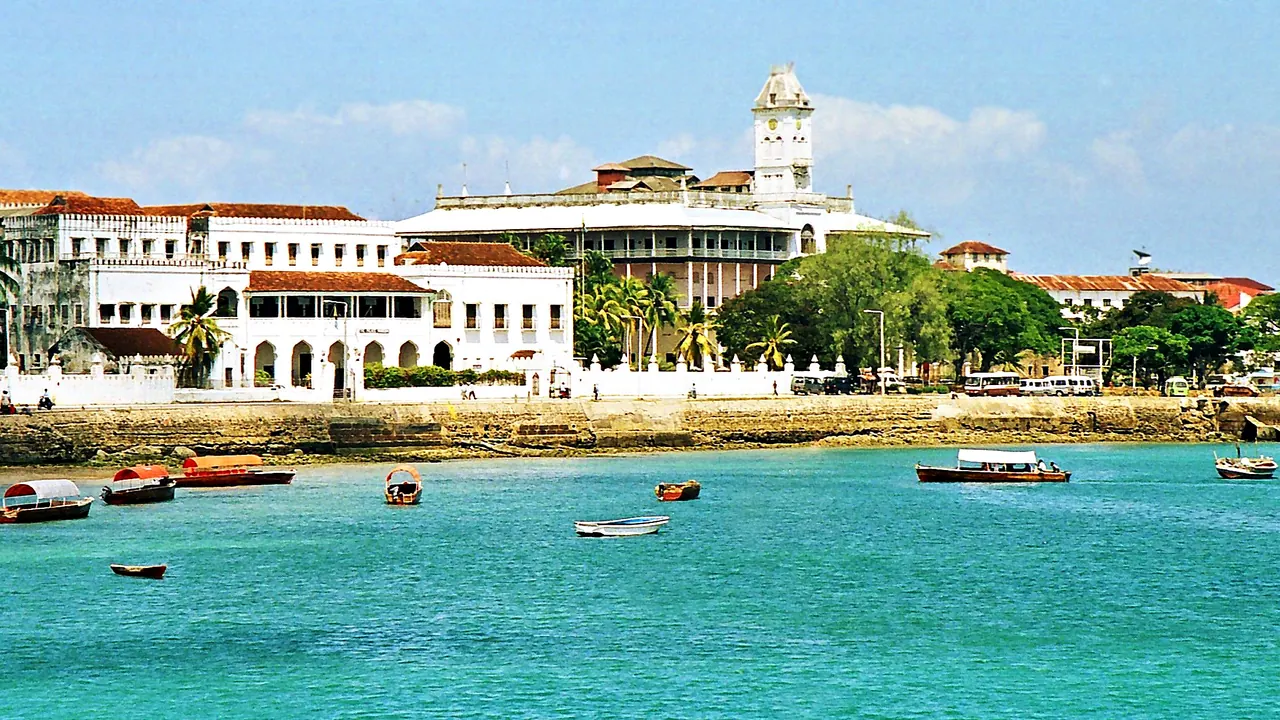
Photos: Dar es Salaam by Dicksonpicha, CC BY-SA 4.0, cropped; Stone Town by Dr. Ondřej Havelka (cestovatel), CC BY 4.0, cropped.
Dar es Salaam or Stone Town?
Our verdict in twelve categories, each scored against the same fixed benchmark cities, and the climate month by month, so you can choose for your trip.
Choose Dar es Salaam for
- nightlife
- day trips
- prices
Dar es Salaam suits travellers who want a working East African city rather than a showpiece. Weekend nights in its beer gardens and clubs run late to bongo flava, the street food is cheap and everywhere, and it makes a good base for outings in two directions: north to Bagamoyo's caravan-route history, or across the water to Zanzibar. The trade-off is sprawl, traffic and not much to see in the city itself.
Choose Stone Town for
- culture and sights
- getting around
- nature and the outdoors
Stone Town is the choice for anyone who comes for history and atmosphere. The coral-stone lanes, carved doors, sultans' palaces and slave-market memorial all lie within an easy walk, and Jozani Forest and the offshore reefs are close by. Evenings are slower and quieter, and the pace is easier to settle into, though most visitors move on to the island's beaches after a few nights.
Scoreboard
Twelve categories on one fixed scale from 0 to 100. The shaded stretch is the gap between the two.
Your match
Pick a travel style or drag the sliders, and both match scores follow your weighting.
Wins on nightlife and day trips with your weighting.
Wins on culture and sights and getting around with your weighting.
What matters to you?
Category by category
What the scores mean for a trip.
Beaches & swimming
Neither place is for swimming off its own shoreline, and both send you out by boat. From Stone Town you go to Nakupenda sandbank, Changuu and Bawe. From the Msasani Peninsula in Dar es Salaam you go to Bongoyo and Mbudya. The sea is just as warm off both.
The real difference is what lies beyond. Dar es Salaam has longer mainland beaches within the city's reach, on the Kigamboni coast across the harbour and at Kunduchi to the north. Stone Town is the gateway to Zanzibar's better-known sand at Nungwi, Kendwa and Paje, but those are an hour or more by road, so a beach stay there means leaving town.
Food & drink
Both cook Swahili coastal food with a strong Indian influence, and the two are close in quality. Stone Town has the better single set piece: the evening grill stalls in Forodhani Gardens, urojo soup in the mornings and spice-heavy pilau. Many of its restaurant menus, though, repeat the same tourist dishes.
Dar es Salaam's eating is spread across the city. You'll find mishkaki and chipsi mayai on the street, biryani and sweet shops in Upanga, and fish fried straight from the auction at Kivukoni. Its grilled-meat-and-cold-beer culture is also easier to find, since alcohol in Stone Town is mostly limited to hotels and places aimed at visitors.
Culture & sights
Stone Town is a sight in itself. Wandering between Shangani, Malindi and Darajani takes you past carved doors, Indian merchant houses and mosques, and the Old Fort, Palace Museum, Old Dispensary, Hamamni baths and the cathedral built on the old slave market all lie within a short walk of each other.
Dar es Salaam has a handful of worthwhile stops rather than a historic core. The National Museum's Olduvai fossils and the Village Museum's traditional houses are the best of them, along with a short colonial walk by the harbour. Much of the coast's deeper history is actually across the water in Stone Town.
Nightlife
Dar es Salaam is the place to go out. On Friday and Saturday the local bars and clubs of Sinza, Mwenge and Mikocheni play bongo flava and Afrobeats into the early hours, and Masaki and Oyster Bay have beach lounges. Venues are far apart, so every night out depends on taxis.
In Stone Town, evenings mean a sundowner on a rooftop or hotel terrace and then dinner at the night market. It is a conservative Muslim town, the lanes go quiet fairly early, and people looking for a party travel up to Nungwi or Kendwa.
Nature & outdoors
Both are flat, and the sea is where you spend your time outdoors, but Stone Town has more close at hand. Jozani Forest, under an hour away, has red colobus monkeys you can watch at close range and a mangrove boardwalk. The island also has Mnemba atoll for its best snorkelling and dolphin boats from Kizimkazi.
Dar es Salaam has good snorkelling and diving around the marine reserve islands, dhow trips through the mangroves and kitesurfing on the northern beaches. On land there is little beyond birdwatching in the Pugu Hills, about an hour inland.
Day trips
Dar es Salaam has two strong day trips. One is Stone Town itself, about two hours away by fast ferry. The other is Bagamoyo up the coast, with its mission buildings, old fort and the medieval Kaole ruins. Both give a full day of history the city lacks.
From Stone Town you stay on the island, on shorter half-day outings: spice farm walks, the tortoises on Prison Island, the ruined Maruhubi and Mtoni palaces and the Mangapwani slave chambers. There is no second town worth the trip, and going back to the mainland adds little that Stone Town doesn't already have.
Good for families
Neither place is built for children, and both need malaria precautions and care with food. What differs is the kind of difficulty. In Dar es Salaam it is traffic, heat and missing pavements, made up for by boat trips, resort pools and a water park to the north. In Stone Town it is narrow lanes with motorbikes and uneven paving that defeats pushchairs, made up for by giant tortoises, colobus monkeys and the Forodhani food stalls.
Getting around
Stone Town is far easier to get around. You can cross the old town on foot in twenty minutes, and the seafront helps you find your way out of the maze. You only need taxis or a hired driver for beaches, spice farms and Jozani.
Dar es Salaam is spread out and slowed by traffic. The rapid bus lanes mostly serve commuters, not visitors. Masaki, the museums and the beaches are far apart, so most trips mean a ride-hailing car and plenty of spare time, especially at rush hour.
Shopping & style
Both are about crafts and markets, with no fashion scene, but what you take home differs. Dar es Salaam has Kariakoo's huge trading grid, the Makonde carvers' workshops at Mwenge and Tingatinga painting where it began. Kanga cloth there is cheap to have tailored. Stone Town's best buys are cloves, vanilla and cardamom from Darajani. The curio shops along Gizenga Street repeat each other, so it pays to hunt out the few better boutiques.
Affordability
Costs work the same way in both: cheap at street level, and close to Western prices wherever the place caters to foreigners. In Dar es Salaam the expense comes from Masaki restaurants, beach resorts and island boat trips. In Stone Town it comes from boutique hotels in old merchant houses, alcohol and organised sandbank or spice tours. Stone Town also expects more bargaining, so agree on taxi fares before you set off.
Live music & performing arts
Neither place has a concert hall, opera or theatre district, so the difference lies in the kind of music each one grew. Dar es Salaam's is pop and dance music: bongo flava and the older dance bands play in bars and beer gardens on Friday and Saturday nights, and a cultural centre sometimes puts on traditional dance or a small play, but you can't plan a trip around any of it.
Stone Town's sound is taarab, which is older and more formal. You find it by asking at the long-established music clubs or the waterfront academy, not by wandering into a bar. The island's year also has two clear high points, the Sauti za Busara music festival and the Zanzibar International Film Festival, so if you time your visit to either, you will see far more on stage than at any other time of year.
Wellness & relaxation
Stone Town is the more restful of the two. Its slow pole pole pace, shaded rooftops and spa treatments with clove and coconut oil in restored merchant houses make it easy to wind down, even if the touts and motorbikes in the lanes can wear you out.
Dar es Salaam is hot, loud and congested, and rest there means a hotel spa in Masaki or a few days at a Kigamboni beach resort. In both places, people looking for a proper break usually head out to the coast.
When should you go?
Pick your month. The climate figures are measured averages, not a forecast.
Dar es Salaam in July
Stone Town in July
Daytime high, °C
Rainfall in the month, mm
Where the figures come from
Stone Town's temperatures are measured 78 km from the centre, at Dar Es Salaam Airport.
Stone Town has no rain gauge within 25 km of the centre, so its rainfall comes from a gridded climate dataset read at the city rather than from a gauge further away.
Temperature and rainfall are climate normals, averaged over the years shown. Dar es Salaam: 1991-2020 normals, Dar Es Salaam Airport (10.5 km from centre). Stone Town: 1991-2020 normals, Dar Es Salaam Airport (78 km from centre).
The two places share almost the same weather, so the season matters more than the choice between them. June to September is the best time for both: the driest and sunniest months, with afternoons around 30°C and the sea cooling to about 26°C, which is still pleasant for swimming. It is also the easiest time to walk the lanes of Stone Town or cross the sprawl of Dar es Salaam.
The long rains run from March to May and fall harder on Zanzibar, with Stone Town taking about 363mm in April, so island boat trips and sandbank outings are often cut short. The short rains return in November and December, again a little heavier on the island. January and February are fairly dry but hot, near 33°C, with the sea at its warmest at 29°C. Good for the beach, but tiring for sightseeing in the middle of the day.
Which traveller are you?
On a culture and arts trip, Stone Town is the clear pick. The whole UNESCO-listed old town is the attraction, with the Old Fort, Palace Museum and Anglican cathedral close together, while Dar es Salaam's museums and colonial churches fill a day.
For a food and nightlife trip, Dar es Salaam has the edge. The food is about as good in both, but Dar's nyama choma beer gardens in Sinza and Mwenge lead into clubs that run late at weekends. Stone Town's evenings end after sunset drinks and the night market.
On an outdoors trip, Stone Town gives more within easy reach. You can watch red colobus monkeys in Jozani Forest, go snorkelling around the islets or on Mnemba atoll, and take dolphin boats from Kizimkazi. From Dar es Salaam there are the marine reserve islands, but the land around the city is flat suburbs.
Before you go
| Measure | Dar es Salaam | Stone Town |
|---|---|---|
| Official language | English, Swahili | English, Swahili |
| Currency | Tanzanian Shilling (TZS) | Tanzanian Shilling (TZS) |
| Sockets | G230 V, 50 Hz | G230 V, 50 Hz |
| Driving side | Left | Left |
| Time zone | UTC+3 | UTC+3 |
| Emergency number | Police 112, ambulance 115, fire 114 | Police 112, ambulance 115, fire 114 |
| Elevation | 12 m | 15 m |
| Main airport | Julius Nyerere International Airport (DAR)10 km from centre39 non-stop destinations | Abeid Amani Karume International Airport (ZNZ)7 km from centre40 non-stop destinations |
| Public holidays this year | 13 days | 13 days |
By the numbers
| Measure | Dar es Salaam | Stone Town |
|---|---|---|
| City population | 4,715,000 | - |
| People per km² | 3,385 | - |
| Museums within 10 km | 3 | 2 |
| UNESCO World Heritage sites within 50 km | 0 | 1 |
| Swim season, months above 21 °C | 12 months | 12 months |
Where else could you go?
Every comparison below shares a destination with this one, so you can follow Dar es Salaam or Stone Town somewhere new.
- Mombasavs Stone Town
- Mombasavs Dar es Salaam
- Arushavs Stone Town
- Arushavs Dar es Salaam
- Nairobivs Stone Town
- Nairobivs Dar es Salaam