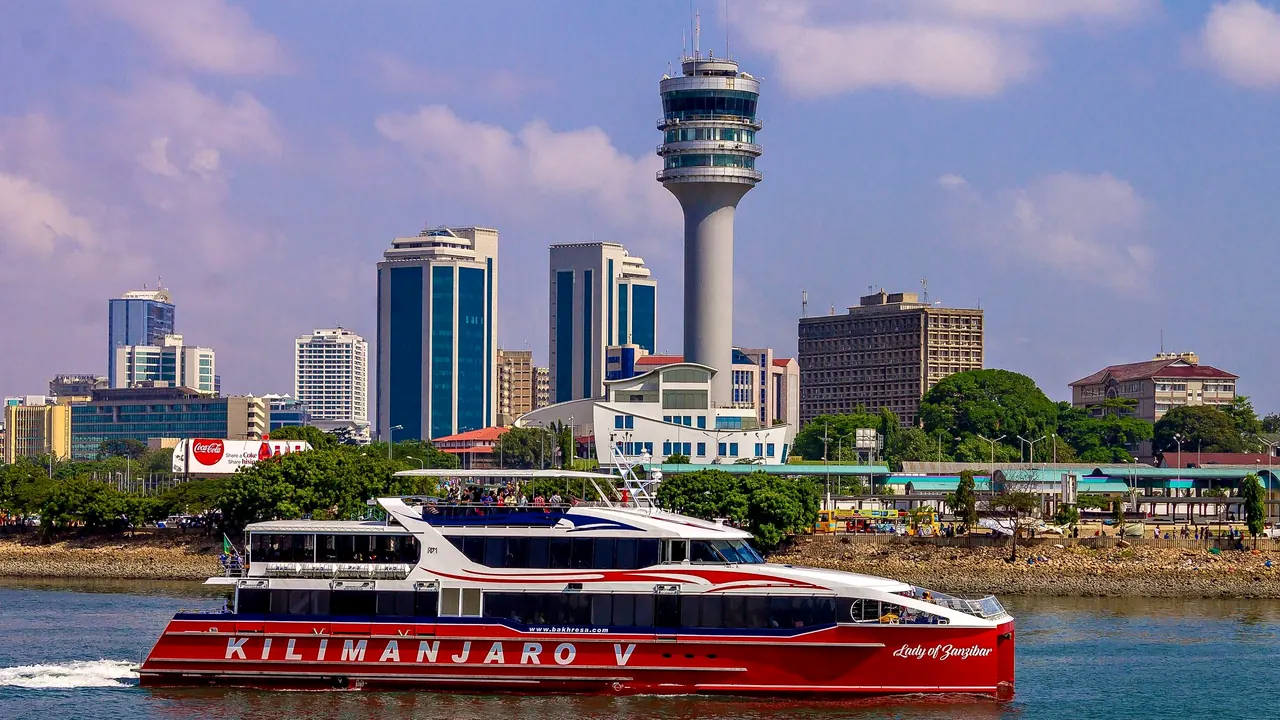
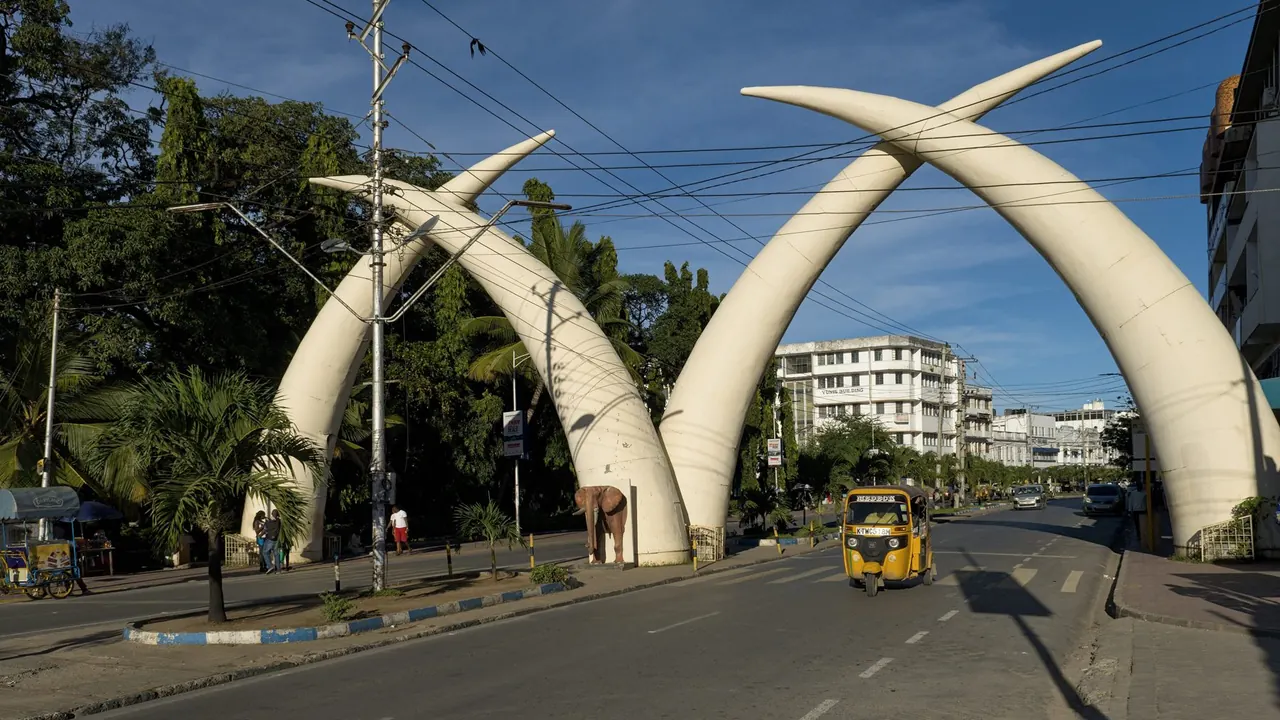
Photos: Dar es Salaam by Dicksonpicha, CC BY-SA 4.0, cropped; Mombasa by Rob Oo, CC BY 2.0, cropped.
Dar es Salaam or Mombasa?
Our verdict in twelve categories, each scored against the same fixed benchmark cities, and the climate month by month, so you can choose for your trip.
Choose Dar es Salaam for
- live music and the arts
- day trips
- shopping
Dar es Salaam suits the traveller who sees the city as a hub rather than a resort. Stone Town on Zanzibar and old Bagamoyo are both within a day's reach, bongo flava and taarab come from its own streets, and Kariakoo shows East African trade at full force. Expect to spend a few days in the city, then move on to the islands or a safari.
Choose Mombasa for
- nature and the outdoors
- culture and sights
- beaches
For a coast vacation that stays in one place, Mombasa is the stronger choice. Its reef-sheltered beaches start right at the hotel door, Fort Jesus and the Old Town give it real history, and the marine parks, Shimba Hills and Tsavo East put coral, elephants and safari within easy reach. Families and travellers who want a slower pace will find the resorts here make for much easier days.
Scoreboard
Twelve categories on one fixed scale from 0 to 100. The shaded stretch is the gap between the two.
Your match
Pick a travel style or drag the sliders, and both match scores follow your weighting.
Wins on live music and the arts and day trips with your weighting.
Wins on nature and the outdoors and culture and sights with your weighting.
What matters to you?
Category by category
What the scores mean for a trip.
Beaches & swimming
The main difference is how far you have to go for a swim. In Dar es Salaam the city's own shore, Coco Beach included, is a place for an evening stroll rather than a swim. The clean water is at the islands of Bongoyo and Mbudya, half an hour away by boat, or on the quieter Kigamboni coast across the harbour.
In Mombasa the beach starts at the hotel. Nyali, Bamburi and Shanzu form one reef-protected strip of coral sand, and Diani to the south is the finest beach on either coast. Both cities have big tides, so time your swims around low water in either place.
Food & drink
The two cities share Swahili coastal cooking and an Indian thread, but Mombasa gives more reason to go out and eat. Its Old Town is the home of Kenya's Swahili kitchen: fish in coconut and tamarind, mahamri with spiced tea, viazi karai from the roadside fryers.
Dar es Salaam's food is more social than refined. The evening meal to seek out is nyama choma with a cold beer, chipsi mayai is the street staple, and the morning auction at the Kivukoni fish market is an outing in itself. Upanga adds biryani and sweet shops. Upmarket dining is unremarkable in both cities.
Culture & sights
Mombasa has the better history on its doorstep. Fort Jesus, fought over by Portuguese, Omanis and the British, stands at the harbour mouth beside an Old Town of carved doors and old mosques, and both are best seen on foot with a guide.
Dar es Salaam has museums rather than a historic quarter. The National Museum's fossils from Olduvai Gorge and the traditional houses at the Village Museum are its highlights, along with a short walk past the German-era churches by the harbour. Its deep coastal history lies on Zanzibar and in Bagamoyo, not in the city itself.
Nightlife
The two are much alike: weekend-driven, informal, and reached by taxi rather than on foot. What differs is where the night happens. Dar es Salaam splits between the expatriate lounges of Masaki and Oyster Bay and the open-air beer gardens and clubs of Sinza and Mwenge, spread across the city.
Mombasa's nights move up the north coast, from the beach bars of Nyali to Mtwapa, a strip of bars and clubs that stays open until dawn. Many resort guests never go beyond a sundowner.
Nature & outdoors
On both coasts the best of the outdoors is in the sea, but how deep it goes differs. In Dar es Salaam it means a snorkelling trip to the reserve islands off the north shore, a dhow under sail past the mangroves, or kitesurfing on the trade winds. On land the city spreads flat into suburbs, birdwatching in the Pugu Hills is the main walk, and a safari is a separate journey by air or a long road.
Mombasa's reef is a reason to come in itself. Divers travel here for reef walls and turtles, glass-bottom boats show the coral to those who would rather not swim, and the mangrove creeks can be paddled by kayak as well as sailed. Big wildlife starts about an hour inland rather than a flight away, though the heat makes hiking on the coast itself hard going.
Day trips
Both have a handful of good outings, but of different kinds. From Dar es Salaam the two big trips are living historic towns: Stone Town on Zanzibar by fast ferry, and Bagamoyo with its caravan-route past and the Kaole ruins nearby.
Mombasa's outings lead to the ruins of medieval Swahili towns along the north coast, from Jumba la Mtwana close by to Gede in its forest near Watamu, plus a dhow day to Wasini. Lamu, the Kenyan coast's equivalent of Stone Town, needs a flight, whereas Dar's needs only a boat.
Good for families
Mombasa is far easier with children. The big resorts in Nyali, Bamburi and Diani have kids' clubs and calm lagoons. Rock-pooling, glass-bottom boats and the giraffes and hippos at Haller Park fill the days, and older children can do a safari in Tsavo.
Dar es Salaam works better as a stop on the way somewhere else. A boat to the islands, a resort pool on the Kigamboni coast and the water park cover most of it. In both cities the heat, traffic and lack of pavements make getting around town tiring, and malaria precautions are needed.
Getting around
Getting around is hard work in both, and most visitors end up using ride-hailing. Dar es Salaam has dedicated bus rapid transit lanes, but they serve commuters more than the places visitors go, and the city's sprawl and traffic make every journey slow.
Mombasa's problem is geography. The town sits on an island, the beaches are spread along the coast, and the Nyali bridge and Likoni ferry can turn short trips into long ones. Tuk-tuks fill the gap, and day trips need a driver.
Shopping & style
Neither has fashion or luxury shopping, and both are good for cloth and carvings. Dar es Salaam has the more striking markets: Kariakoo, one of the great trading markets of East Africa, the Makonde ebony carvers at Mwenge, and Tingatinga painting, a style born in the city.
Mombasa's shopping is quieter and more traditional, with kangas and kikois on Biashara Street, carved Swahili chests and brass in the Old Town, Akamba woodcarvings and spices at Marikiti. Expect to bargain.
Affordability
The costs work the same way in both. Street food, minibuses and simple guesthouses cost very little, while beach resorts, imported drinks and organised outings are priced closer to Western levels. Your budget depends on how you travel more than on which city you pick.
In Dar es Salaam the extra costs come from Masaki restaurants and boat trips to the islands. In Mombasa they come from staying in a beach resort, safari tours and the park fees charged to foreigners.
Live music & performing arts
Neither city has a theatre or concert scene you could plan a trip around, but Dar es Salaam has a little more. It is the home of bongo flava and has a long tradition of dance bands and taarab, and its cultural centres put on traditional dance and small theatre productions. Bagamoyo's arts college is close by.
In Mombasa, taarab is mostly heard at weddings. Live music means weekend bands playing benga and reggae in north-coast bars, and the resorts put on acrobat shows.
Wellness & relaxation
Mombasa is the better place to slow down. Its resort spas often give treatments in open-air pavilions facing the sea, yoga is easy to find around Diani, and the unhurried coastal pace makes long lunches and afternoon naps feel natural.
Dar es Salaam offers hotel spa massages in Masaki and a quiet resort stay on the Kigamboni coast, but most visitors who want real rest go on to Zanzibar.
When should you go?
Pick your month. The climate figures are measured averages, not a forecast.
Dar es Salaam in July
Mombasa in July
Daytime high, °C
Rainfall in the month, mm
Temperature and rainfall are climate normals, averaged over the years shown. Dar es Salaam: 1991-2020 normals, Dar Es Salaam Airport (10.5 km from centre). Mombasa: 1991-2020 normals, Mombasa (5.8 km from centre).
Both cities are hot all year, with daytime highs rarely below 28°C, so rain decides the best time to go. In Dar es Salaam the long rains build from March and peak in April at around 266mm. June to September is the dry, slightly cooler and sunniest stretch, and it is the best time for island boat trips and walking the harbour district. The short rains return in November and December.
Mombasa runs on a slightly different calendar. January and February are its driest months, with almost no rain and the clearest, calmest sea, which makes them ideal for the beach. The wet season comes later than in Dar and peaks in May. July and August are the coolest months for walking the Old Town, and October brings a second wet spell. In both cities the sea stays warm enough to swim all year.
Which traveller are you?
On a beach and sun trip, Mombasa is the obvious pick. The white sand of Nyali, Bamburi and Diani runs right past the hotels, and the reef keeps the lagoons calm. In Dar es Salaam the good beaches mean a boat ride or a ferry crossing.
For an outdoors trip, Mombasa again comes out ahead. You can snorkel the coral gardens of the marine park, look for dolphins at Kisite-Mpunguti, see elephants in the Shimba Hills and spend a safari day in Tsavo East. Outside its islands, Dar's surroundings are flat suburbs.
On a culture and arts trip, Mombasa has Fort Jesus and the lanes of the Swahili Old Town on its doorstep. Dar es Salaam is the better base only if you plan to spend your days in Stone Town on Zanzibar or Bagamoyo.
Before you go
| Measure | Dar es Salaam | Mombasa |
|---|---|---|
| Official language | English, Swahili | English, Swahili |
| Currency | Tanzanian Shilling (TZS) | Kenyan Shilling (KES) |
| Sockets | G230 V, 50 Hz | G240 V, 50 Hz |
| Driving side | Left | Left |
| Time zone | UTC+3 | UTC+3 |
| Emergency number | Police 112, ambulance 115, fire 114 | Police 112/999, ambulance 112/999, fire 112/999 |
| Elevation | 12 m | 50 m |
| Main airport | Julius Nyerere International Airport (DAR)10 km from centre39 non-stop destinations | Moi International Airport (MBA)8 km from centre22 non-stop destinations |
| Public holidays this year | 13 days | 10 days |
By the numbers
| Measure | Dar es Salaam | Mombasa |
|---|---|---|
| City population | 4,715,000 | 1,208,333 |
| People per km² | 3,385 | 4,100 |
| Museums within 10 km | 3 | 0 |
| UNESCO World Heritage sites within 50 km | 0 | 2 |
| Swim season, months above 21 °C | 12 months | 12 months |
Where else could you go?
Every comparison below shares a destination with this one, so you can follow Dar es Salaam or Mombasa somewhere new.
- Stone Townvs Dar es Salaam
- Stone Townvs Mombasa
- Arushavs Mombasa
- Nairobivs Mombasa
- Arushavs Dar es Salaam
- Nairobivs Dar es Salaam