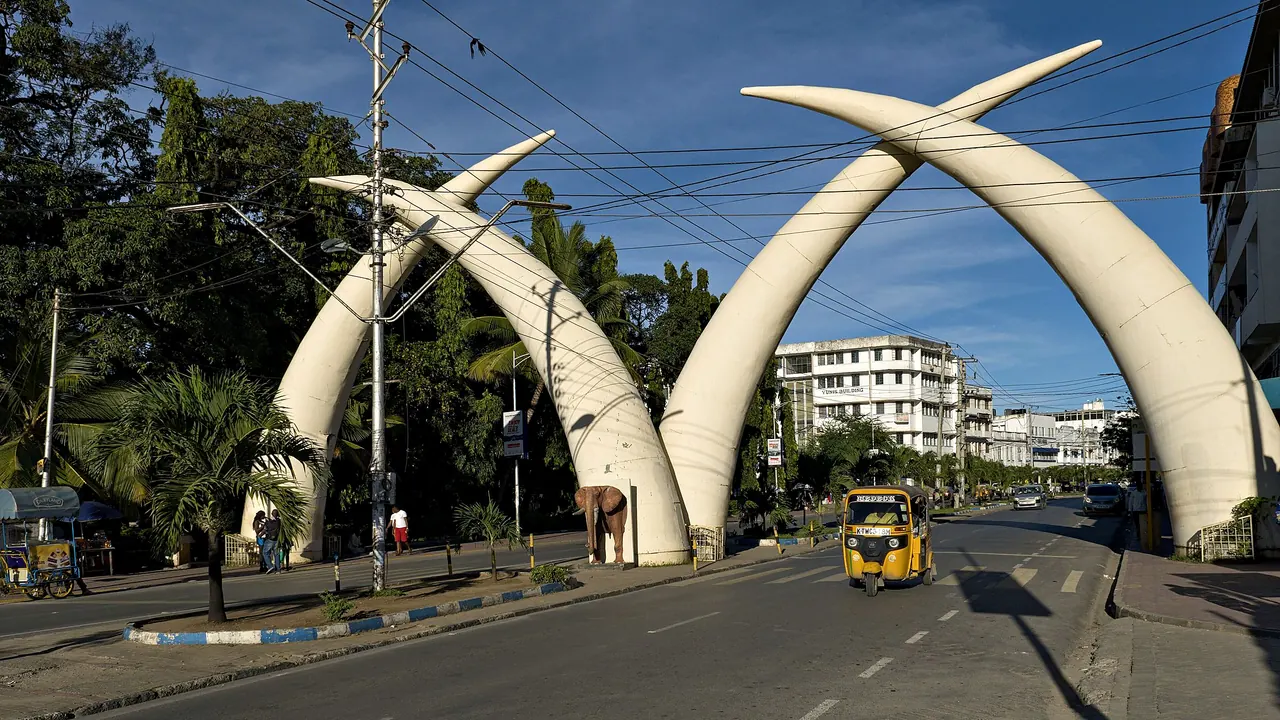
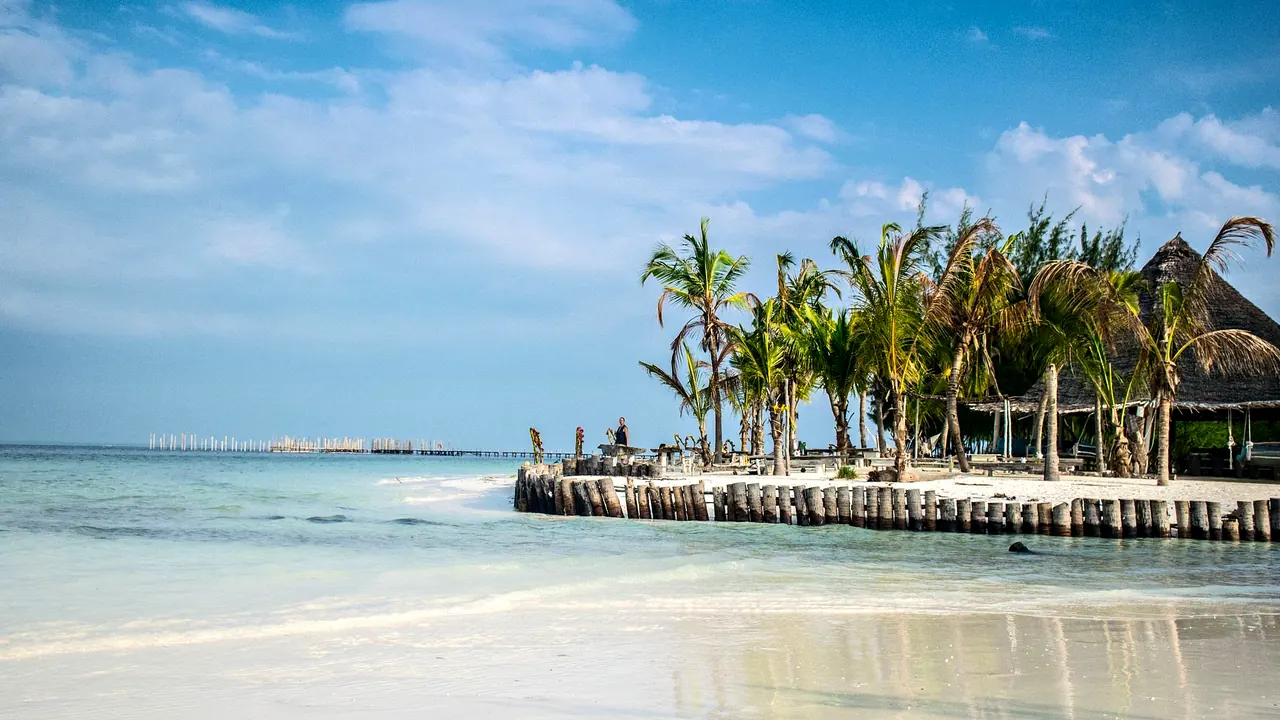
Photos: Mombasa by Rob Oo, CC BY 2.0, cropped; Zanzibar by Ákos Helgert, Pexels License.
Mombasa or Zanzibar?
Our verdict in twelve categories, each scored against the same fixed benchmark cities, and the climate month by month, so you can choose for your trip.
Choose Mombasa for
- nature and the outdoors
- prices
- nightlife
Mombasa suits a traveller who wants a beach base with more going on around it. From the resort strip at Nyali or Diani you can snorkel the marine parks, take a safari day into Tsavo East or the Shimba Hills and go out at night in Mtwapa. It also costs less once you step outside the hotels. You give up some calm, because the town itself is hot, noisy and hard to get around.
Choose Zanzibar for
- wellness
- live music and the arts
- beaches
Zanzibar is the better choice for a slower island stay built around the sea and one memorable old town. Kendwa and Nungwi in the north give you swimming at any tide, the beach villages are quieter than Mombasa's coast, and Stone Town is a more complete historic quarter than anything on the Kenyan side. Expect to pay more for comfort and to find less to do once the sun goes down.
Scoreboard
Twelve categories on one fixed scale from 0 to 100. The shaded stretch is the gap between the two.
Your match
Pick a travel style or drag the sliders, and both match scores follow your weighting.
Too close to call, level with your weighting
Wins on nature and the outdoors and prices with your weighting.
Wins on wellness and live music and the arts with your weighting.
What matters to you?
Category by category
What the scores mean for a trip.
Beaches & swimming
These are two of the finest stretches of coral sand on the East African coast, with the same warm, clear Indian Ocean, and Zanzibar is only slightly ahead. Mombasa's beaches form a resort strip of Nyali, Bamburi and Shanzu north of town, with calm lagoons behind the reef. Diani to the south is the showpiece, but reaching it depends on the Likoni ferry.
Zanzibar's advantage is depth of water. At Kendwa and Nungwi you can swim at any tide and watch the sun set over the sea, while Mombasa's north-coast lagoons drain almost to nothing at low water. Zanzibar's east coast is just as tidal, though, so where you stay matters more than which side of the border you choose.
Food & drink
Both serve the same Swahili coastal cooking of pilau, biryani and fish in coconut, and they are evenly matched. Mombasa adds the Indian community's thalis and sweet shops, mahamri with spiced tea, and evening grills selling cassava and maize. Zanzibar has Forodhani Gardens, an open-air seafood market by the Stone Town waterfront, plus urojo soup and strong coffee in the squares. Alcohol is harder to find on the more conservative island.
Culture & sights
Each has one historic core worth a day or two on foot, and Zanzibar's is slightly more rewarding. Mombasa's highlight is Fort Jesus and its museum of coastal history. Next to it is an Old Town of carved doors and old mosques that is lived-in rather than restored, and the rest of the city is a working port.
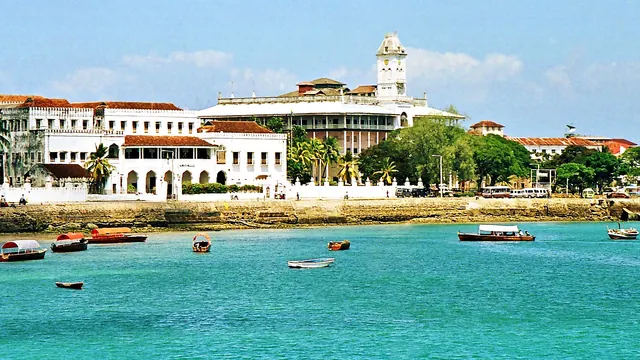
Stone Town is larger and UNESCO-listed, and it is the clearest surviving Swahili trading town. It has the sultans' Palace Museum and the slave market memorial at the Anglican cathedral. Outside town, the Omani palace ruins and the Persian baths add to the story in a way Mombasa's surroundings do not.
Nightlife
Mombasa has the livelier nights. The north coast has proper clubs playing Afrobeats and bongo flava, and Mtwapa's strip keeps going until dawn at weekends, although it is rough around the edges and you need taxis between venues.
On Zanzibar, evenings mean beach bars, bonfires and the full-moon party in Nungwi and Kendwa, with rooftop sundowners in Stone Town. There are almost no clubs, and the island is mostly quiet by midnight.
Nature & outdoors
Mombasa reaches much further into wild country. Besides its own marine park and the dolphin waters of Kisite-Mpunguti, you can get to big land mammals easily: elephants and sable antelope in the Shimba Hills, and the open plains of Tsavo East on a long day or with one night away.
Zanzibar is a flat coral island, so its outdoors is gentler. You can snorkel off Mnemba atoll, see red colobus monkeys in Jozani Forest and kitesurf on the Paje lagoon, but there is no safari without leaving the island.
Day trips
The outings are evenly matched and modest on both. From Mombasa they follow the coast north to the medieval Swahili ruins of Jumba la Mtwana, Kilifi and Gede, or south by dhow to Wasini, but the roads are slow. Zanzibar's outings are smaller and closer: tortoises on Changuu, sandbanks, spice farms and Kizimkazi's old mosque, and from the beach villages Stone Town itself is the main day out.
Good for families
Neither is built for children beyond the resorts, and the two are much alike. Mombasa has an edge in outings, with giraffes and hippos at Haller Park and a Tsavo safari for older children. Zanzibar's appeal is Kendwa's beach, where you can swim at any tide, plus the tortoises and monkeys. On both, families need malaria precautions and should expect long road transfers.
Getting around
Both are hard work without a driver, and Zanzibar is slightly easier. Mombasa's island town is choked at the Nyali bridge and the Likoni ferry, and matatus and boda-bodas are hard going for a newcomer.
On Zanzibar the main roads are paved and quieter, and once you arrive the beach villages can be walked along the sand. The catch is that Nungwi and Paje are each an hour or more from Stone Town.
Shopping & style
Shopping is much the same on both: cloth, carvings and spices, with bargaining expected. Mombasa has Biashara Street for kangas and kikois, Akamba woodcarvings and modern malls in Nyali for everyday needs. Zanzibar adds Tingatinga paintings, tanzanite and Darajani's spice stalls, though much of it repeats from stall to stall.
Affordability
Mombasa is noticeably cheaper. Town guesthouses, street food, matatus and tuk-tuks cost little, and a traveller who stays out of the resorts spends a fraction of what a package guest does.
Zanzibar has cheap corners too, such as Stone Town guesthouses, Forodhani stalls and simple bungalows around Paje. But much of the island's accommodation is mid-range to upmarket, and the taxis, boat trips and diving you need to enjoy it add up quickly.
Live music & performing arts
Neither is a destination for performances, but Zanzibar gives you more chance to hear something real. Taarab has its home in Stone Town, where you can hear it at the music school and in cultural halls, and the dry-season calendar brings festivals of East African music and film. In Mombasa, taarab is mostly heard at weddings, and the rest is weekend bar bands and resort dance shows.
Wellness & relaxation
Zanzibar is the more restful place. Its beach villages run on tides and the call to prayer, with spice-oil massages at the resorts and yoga around Paje and Jambiani, and even Stone Town is calmer than most port towns.
Mombasa has resort spas and yoga on the Diani side, and the coast is relaxed in its own pole pole way. But the town is hot and noisy, so the calm is limited to the beach strips.
When should you go?
Pick your month. The climate figures are measured averages, not a forecast.
Mombasa in July
Zanzibar in July
Daytime high, °C
Rainfall in the month, mm
Where the figures come from
Zanzibar's temperatures are measured 78 km from the centre, at Dar Es Salaam Airport.
Zanzibar has no rain gauge within 25 km of the centre, so its rainfall comes from a gridded climate dataset read at the destination rather than from a gauge further away.
Temperature and rainfall are climate normals, averaged over the years shown. Mombasa: 1991-2020 normals, Mombasa (5.8 km from centre). Zanzibar: 1991-2020 normals, Dar Es Salaam Airport (77.9 km from centre).
The two coasts share a hot, humid climate with similar highs all year, from about 33°C in January to March down to the high twenties in July and August. Both have warm sea all year, with the warmest water early in the year. The main difference is the rain. Mombasa's driest spell is January and February, when there is almost no rain at all. Its long rains peak in May, and October and November bring a second wet spell. Midyear on the Kenyan coast is cooler and fairly dry, and the easiest time for walking the Old Town.
On Zanzibar the long rains come earlier and harder, with April the wettest month at around 363mm and the dullest. From June to September the island is dry, sunny and slightly less hot, which makes it the best stretch for beaches and Stone Town alike. November and December are wetter there than in Mombasa. For a January or February trip Mombasa is the drier pick, and from June to September Zanzibar has the edge.
Which traveller are you?
On an outdoors trip, Mombasa is the stronger base, because one hotel gives you both reef and savannah. Kayaking the mangrove creeks, kitesurfing the south coast and a night inland among big game all fit into one week, which a flat coral island cannot offer.
For a relaxing and wellness trip, Zanzibar is the better choice. The beach villages around Matemwe, Paje and Jambiani move at the pace of the tides, the spas use local spices and coconut oil, and none of the island's beach strips has a town like Mombasa's next door.
On a tight budget, Mombasa is the better pick. You can sleep and eat in town and still reach the north-coast beaches cheaply. On Zanzibar, Kendwa and Nungwi have the island's best swimming, but they are lined with resorts priced for visitors.
Before you go
| Measure | Mombasa | Zanzibar |
|---|---|---|
| Official language | English, Swahili | English, Swahili |
| Currency | Kenyan Shilling (KES) | Tanzanian Shilling (TZS) |
| Sockets | G240 V, 50 Hz | G230 V, 50 Hz |
| Driving side | Left | Left |
| Time zone | UTC+3 | UTC+3 |
| Emergency number | Police 112/999, ambulance 112/999, fire 112/999 | Police 112, ambulance 115, fire 114 |
| Elevation | 50 m | - |
| Main airport | Moi International Airport (MBA)8 km from centre22 non-stop destinations | Abeid Amani Karume International Airport (ZNZ)40 non-stop destinations |
| Public holidays this year | 10 days | 13 days |
By the numbers
| Measure | Mombasa | Zanzibar |
|---|---|---|
| Population | 1,208,333 | 896,721 |
| People per km² | 4,100 | 569 |
| Museums within 10 km | 0 | - |
| UNESCO World Heritage sites within 50 km | 2 | - |
| Swim season, months above 21 °C | 12 months | 12 months |
Where else could you go?
Every comparison below shares a destination with this one, so you can follow Mombasa or Zanzibar somewhere new.
- Dianivs Mombasa
- Dar es Salaamvs Zanzibar
- Dianivs Zanzibar
- Stone Townvs Mombasa
- Dar es Salaamvs Mombasa
- Arushavs Mombasa