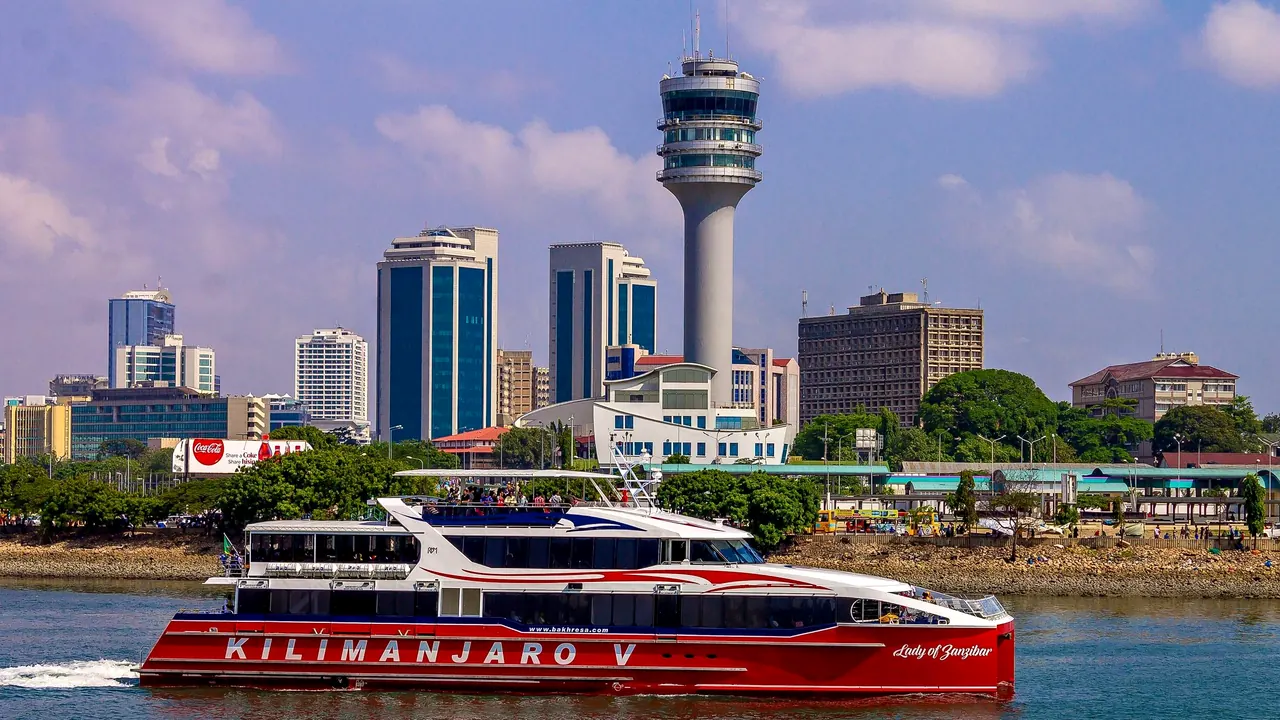
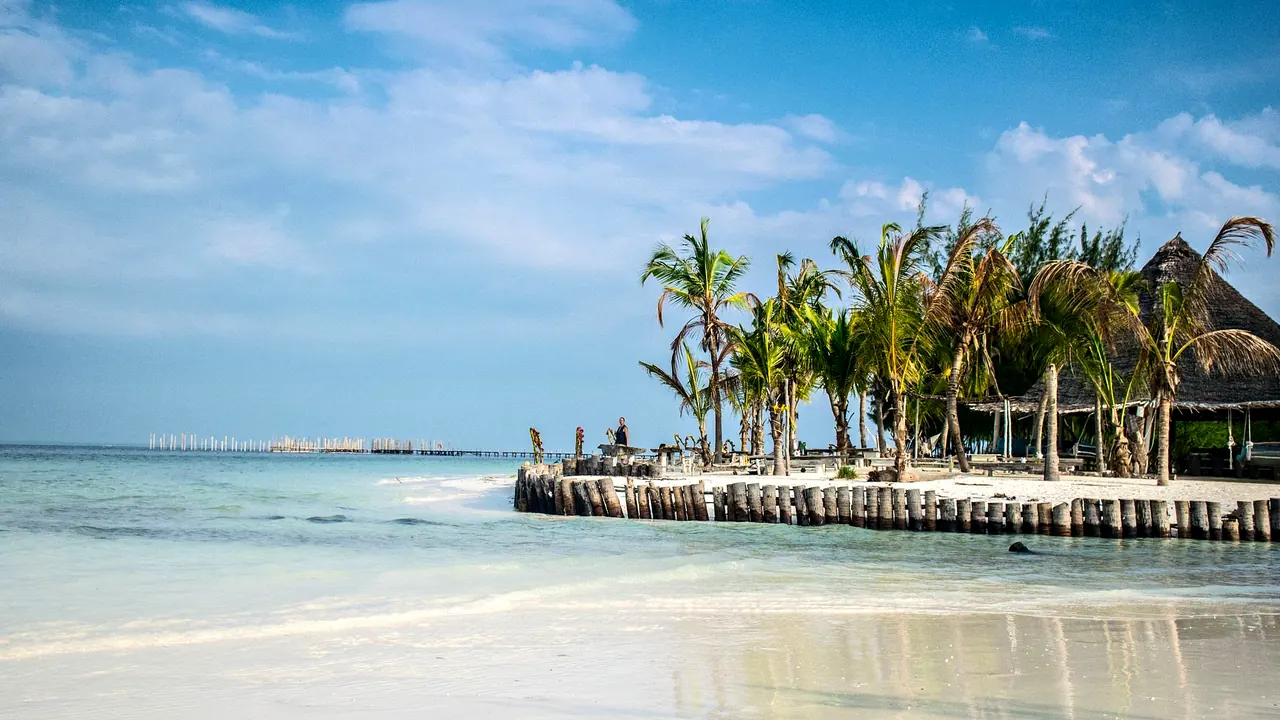
Photos: Dar es Salaam by Dicksonpicha, CC BY-SA 4.0, cropped; Zanzibar by Ákos Helgert, Pexels License.
Dar es Salaam or Zanzibar?
Our verdict in twelve categories, each scored against the same fixed benchmark cities, and the climate month by month, so you can choose for your trip.
Choose Dar es Salaam for
- day trips
- prices
- shopping
Dar es Salaam suits travellers who want an East African city as it really works, on a smaller budget. Its strengths are Kariakoo's trading streets, the Makonde carvers at Mwenge, nyama choma and weekend clubs in the local districts, and day trips to Bagamoyo and Stone Town. It also works as a stopover on the way to a safari. You give up good swimming on the doorstep, an easy pace and much in the way of sights.
Choose Zanzibar for
- culture and sights
- wellness
- beaches
Zanzibar is the better choice for a proper beach vacation with some history attached. Base yourself in the north at Nungwi or Kendwa for swimming at any tide, or on the east coast around Paje for kitesurfing and yoga. Add a few nights in Stone Town to walk its coral-stone lanes. Expect more spent on resorts and transfers, and quiet evenings outside the party nights.
Scoreboard
Twelve categories on one fixed scale from 0 to 100. The shaded stretch is the gap between the two.
Your match
Pick a travel style or drag the sliders, and both match scores follow your weighting.
Wins on day trips and prices with your weighting.
Wins on culture and sights and wellness with your weighting.
What matters to you?
Category by category
What the scores mean for a trip.
Beaches & swimming
Dar es Salaam's own shoreline is not for bathing. Coco Beach is a promenade with seaweed and water of doubtful quality. The good beaches mean a half-hour boat ride to Bongoyo or Mbudya, or a crossing to the palm-lined Kigamboni coast, and the tide pulls the water a long way out there too.
Zanzibar is the clear winner, because a beach stay is what the island is made for. Kendwa and Nungwi on the north coast have powder-white sand, water deep enough to swim at any tide and sunsets over the sea. Matemwe is a quieter choice facing the reef. The east coast around Paje is lovely but tidal, so check the tide table before you swim there.
Food & drink
The two eat from the same Swahili coastal kitchen and are close to level, but the settings differ. Dar es Salaam's best eating is spread across a large city: mishkaki grilled at dusk, nyama choma with a cold beer, Indian biryani and sweet shops around Upanga and Kariakoo, and fried fish straight from the Kivukoni market auction.
On Zanzibar the high points are in Stone Town. There is the evening seafood market in Forodhani Gardens, pilau scented with clove, urojo soup and spiced coffee in the squares. Out at the beaches the choice narrows to grilled fish and resort menus, and alcohol is limited to hotels and tourist places.
Culture & sights
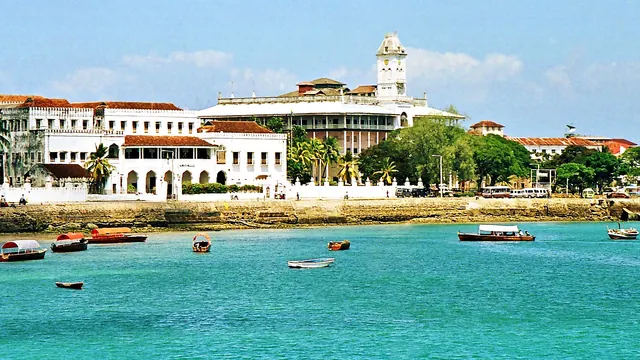
Zanzibar has much more to see. Stone Town is a whole historic trading town of carved doors, mosques, Hindu temples and merchant houses. It also holds the Old Fort, the sultans' Palace Museum and the cathedral built over the last open slave market, with Omani palace ruins and the Persian baths outside town. The pleasure is in walking it rather than ticking off collections.
Dar es Salaam is a working port. A day or two covers the Olduvai fossils at the National Museum, the traditional houses at the Village Museum and the German-era churches by the harbour. Most of the coast's deep history lies outside the city.
Nightlife
Dar es Salaam has a little more going on, and it lasts later. At weekends the beer gardens and clubs of Sinza, Mwenge and Mikocheni play bongo flava and Afrobeats until the early hours, while Masaki and Oyster Bay have the smarter lounges. Midweek is quiet, though, and every move between venues means a taxi.
Zanzibar's evenings are beach bars and bonfires at Nungwi and Kendwa, a famous full-moon party, kitesurfer bars at Paje and rooftop sundowners in Stone Town. There are hardly any clubs, and the conservative island is mostly asleep by midnight.
Nature & outdoors
Zanzibar offers more variety. Jozani Forest has the rare red colobus monkeys at close range and a mangrove boardwalk. The protected reef at Mnemba atoll has turtles and clear water for snorkelling, boats from Kizimkazi go out to find dolphins, and the shallow lagoon at Paje is one of the region's better kitesurfing spots.
Dar es Salaam's outdoors is mainly the marine reserve islands to the north, with their coral, plus dhow trips past the mangroves. Inland there are only the Pugu Hills for birdwatching. Neither place has mountains, and a safari is a separate trip from both.
Day trips
Dar es Salaam has the stronger pair of outings. The fast ferry brings Stone Town within reach for a long day. Bagamoyo, about two hours up the coast by road, was the end of the caravan route from the interior and later a German colonial capital. It has mission buildings and the old fort, with the medieval Kaole ruins nearby.
Zanzibar's excursions are smaller and gentler: giant tortoises on Changuu, a swim from a sandbank, a spice farm tour that ends with lunch, and the old mosque at Kizimkazi. For anyone staying on the beaches, the main day out is Stone Town itself.
Good for families
Zanzibar is the easier choice with children. North coast resorts have pools and calm water, Kendwa can be swum at any tide, and the tortoises, monkeys and turtles make good outings. There is still nothing like a zoo or theme park.
In Dar es Salaam, families mostly pass through. Boat trips to the islands, the Kigamboni resort pools and a water park are the main draws. The heat, traffic and missing pavements make the rest of a stay tiring. Both places need malaria precautions.
Getting around
Neither is easy, but Zanzibar is less of a struggle. Stone Town is a maze best explored on foot, and the beach villages are short walks along the sand. The real cost is the hour or more by taxi or transfer between town and the coasts.
Dar es Salaam sprawls and is ruled by traffic. The rapid bus lanes mostly serve commuters, so visitors end up in ride-hailing cars between Masaki, the museums and the ferry terminals, and journeys take far longer than the map suggests.
Shopping & style
Dar es Salaam is better for shopping and has more that is its own. Kariakoo is a huge trading market worth seeing even if you buy nothing. The Mwenge workshops carve Makonde ebony, Tingatinga painting was born in the city, and kitenge cloth can be tailored cheaply.
Zanzibar's best buys are spices by the bag at Darajani market, plus carved chests, silver and tanzanite in Stone Town. Much of it repeats from stall to stall, and the beach villages have little beyond souvenir stands.
Affordability
Dar es Salaam is the cheaper of the two, as long as you eat locally and use ride-hailing. Simple guesthouses, daladalas and street food cost very little, and the Western-level prices are mostly in Masaki and at the resorts.
On Zanzibar, cheap options exist in Stone Town guesthouses, at the Forodhani stalls and in the simple bungalows around Paje and Jambiani. But much of the island's accommodation is mid-range or better, and taxis, diving and boat trips quickly add up.
Live music & performing arts
Neither has theatre, opera or an orchestra, and they are roughly level. The difference is in the music. Dar es Salaam is the home of bongo flava and the old dance bands, heard in bars and open-air venues at weekends, with some dance and small productions at the cultural centres.
Zanzibar's sound is taarab, which you can hear at rehearsals at the Stone Town music school. Stone Town also hosts dry-season festivals of East African music and film, while the beaches mostly have hotel drumming nights.
Wellness & relaxation
Dar es Salaam is hot, loud and congested, and has no spa or bathing tradition of its own. Rest there means a massage at a hotel spa in Masaki or a few slow days at a Kigamboni resort. Visitors who want a proper restorative break usually take it on Zanzibar.
The island is far better for slowing down. Days in the beach villages are set by the tides and the call to prayer. Resorts on the north and east coasts offer massages with coconut oil and local spices, and yoga is easy to find around Paje and Jambiani.
When should you go?
Pick your month. The climate figures are measured averages, not a forecast.
Dar es Salaam in July
Zanzibar in July
Daytime high, °C
Rainfall in the month, mm
Where the figures come from
Zanzibar's temperatures are measured 78 km from the centre, at Dar Es Salaam Airport.
Zanzibar has no rain gauge within 25 km of the centre, so its rainfall comes from a gridded climate dataset read at the destination rather than from a gauge further away.
Temperature and rainfall are climate normals, averaged over the years shown. Dar es Salaam: 1991-2020 normals, Dar Es Salaam Airport (10.5 km from centre). Zanzibar: 1991-2020 normals, Dar Es Salaam Airport (77.9 km from centre).
Both places are hot in every month and the sea is warm enough to swim all year. In Dar es Salaam the easiest months are June to September. Highs are near 30°C, there is little rain and the days are long and sunny, which makes this the time for walking the harbour streets and taking boats out to the islands. From December to March it is hotter, around 33°C, so do your walking in the mornings and evenings, although January and February are mostly dry.
Zanzibar has the same heat and sunshine through the year but much more rain. The long rains peak in April, when the island gets about 363mm against 266mm in Dar es Salaam. May stays wet and grey on the beaches as well. The short rains of November and December are also heavier on Zanzibar. That leaves June to October and January to February as its best beach months.
Which traveller are you?
For a beach and sun trip, choose Zanzibar. In Dar es Salaam, good sand means a boat to Bongoyo or a ferry over to Kigamboni. Zanzibar's Kendwa and Nungwi have white coral sand on the doorstep and water deep enough to swim at any tide.
On a culture and arts trip, Zanzibar wins. Dar es Salaam's museums and colonial churches fill a day or two. Stone Town's lanes, the Palace Museum and the slave market memorial at the Anglican cathedral take days to absorb properly.
On a trip on a tight budget, Dar es Salaam is the kinder choice. It is a working city, and you can live as residents do: nyama choma at a beer garden, bajaji rides, cloth tailored cheaply. On Zanzibar, the main attractions, the reef, the diving and the north coast, are priced for visitors.
Before you go
| Measure | Dar es Salaam | Zanzibar |
|---|---|---|
| Official language | English, Swahili | English, Swahili |
| Currency | Tanzanian Shilling (TZS) | Tanzanian Shilling (TZS) |
| Sockets | G230 V, 50 Hz | G230 V, 50 Hz |
| Driving side | Left | Left |
| Time zone | UTC+3 | UTC+3 |
| Emergency number | Police 112, ambulance 115, fire 114 | Police 112, ambulance 115, fire 114 |
| Elevation | 12 m | - |
| Main airport | Julius Nyerere International Airport (DAR)10 km from centre39 non-stop destinations | Abeid Amani Karume International Airport (ZNZ)40 non-stop destinations |
| Public holidays this year | 13 days | 13 days |
By the numbers
| Measure | Dar es Salaam | Zanzibar |
|---|---|---|
| Population | 4,715,000 | 896,721 |
| People per km² | 3,385 | 569 |
| Museums within 10 km | 3 | - |
| UNESCO World Heritage sites within 50 km | 0 | - |
| Swim season, months above 21 °C | 12 months | 12 months |
Where else could you go?
Every comparison below shares a destination with this one, so you can follow Dar es Salaam or Zanzibar somewhere new.
- Stone Townvs Dar es Salaam
- Dianivs Zanzibar
- Mombasavs Zanzibar
- Mombasavs Dar es Salaam
- Arushavs Dar es Salaam
- Ngorongorovs Zanzibar