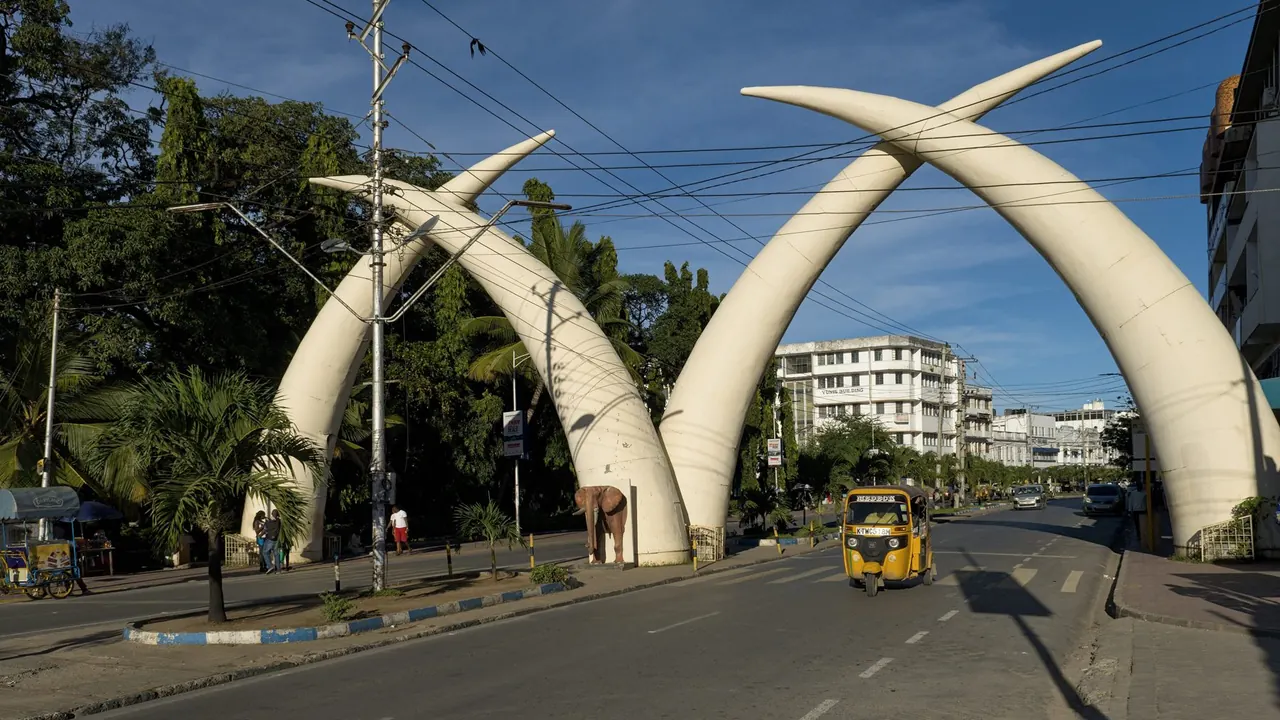
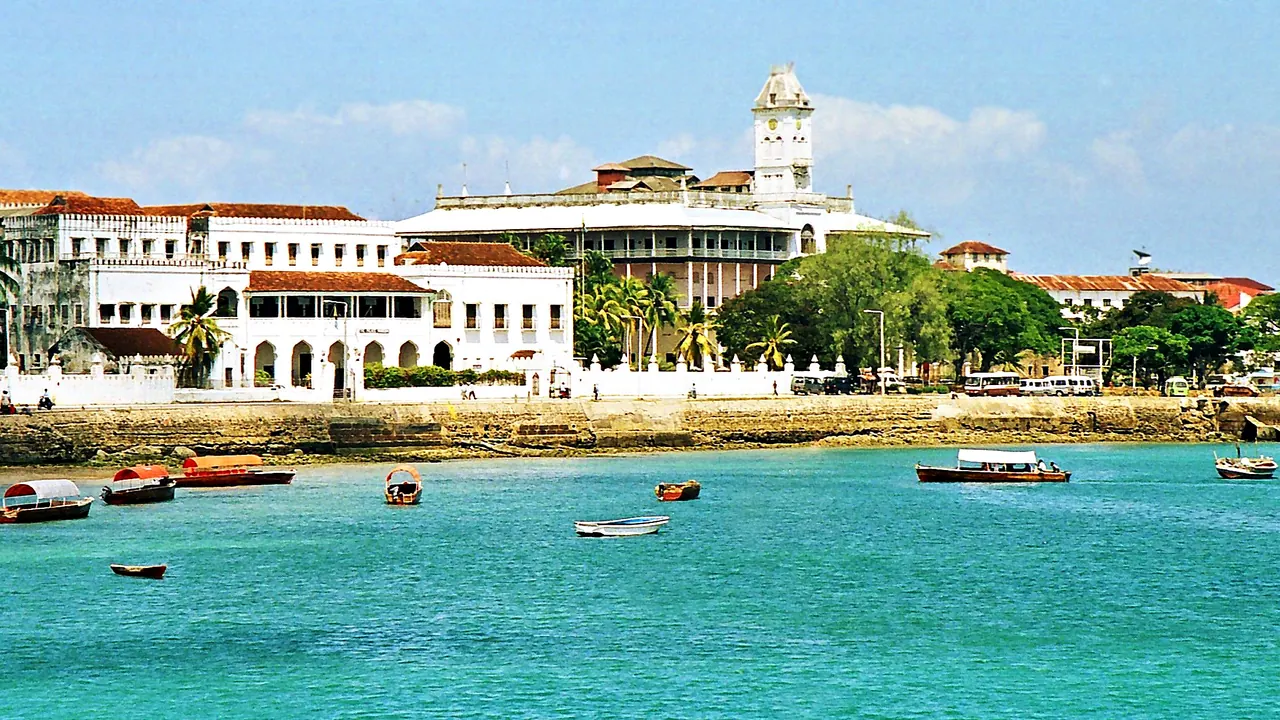
Photos: Mombasa by Rob Oo, CC BY 2.0, cropped; Stone Town by Dr. Ondřej Havelka (cestovatel), CC BY 4.0, cropped.
Mombasa or Stone Town?
Our verdict in twelve categories, each scored against the same fixed benchmark cities, and the climate month by month, so you can choose for your trip.
Choose Mombasa for
- nightlife
- nature and the outdoors
- beaches
Mombasa suits a traveller who wants a proper beach vacation with plenty going on around it. The reef-sheltered sand of Nyali, Bamburi and Diani is close at hand, the marine parks and Tsavo East offer far more nature, and families and anyone wanting a night out on the north coast will find more of both.
Choose Stone Town for
- culture and sights
- getting around
- live music and the arts
For someone who would rather wander than swim, Stone Town is the better choice. Its UNESCO-listed old town of carved doors, sultans' palaces and the cathedral on the old slave market is richer and better kept than Mombasa's, and you can explore it all on foot. Evenings are quiet and the famous beaches are a drive away, so it works best as two or three nights before moving on to the Zanzibar coast.
Scoreboard
Twelve categories on one fixed scale from 0 to 100. The shaded stretch is the gap between the two.
Your match
Pick a travel style or drag the sliders, and both match scores follow your weighting.
Wins on nightlife and nature and the outdoors with your weighting.
Wins on culture and sights and getting around with your weighting.
What matters to you?
Category by category
What the scores mean for a trip.
Beaches & swimming
In Mombasa the beach is right outside the hotel. Nyali, Bamburi and Shanzu form one long strip of coral sand just north of the island, with calm lagoons inside the reef, and Diani lies about an hour south. Stone Town's own shore is a working waterfront of dhows and jetties. To swim, you take a boat out to Nakupenda sandbank or the islets of Changuu and Bawe.
Zanzibar's famous beaches at Nungwi, Kendwa and Paje are an hour or more away by road, which is why most visitors move on rather than stay in town. On both coasts the tide goes a long way out, so plan your swims for high water.
Food & drink
Both cook from the same Swahili tradition of coconut fish, pilau and biryani, so the real difference is where and how you eat. Mombasa's food is spread through the Old Town and the market streets, with a strong Indian side of thalis and sweet shops, and charcoal grills selling cassava and maize at the roadside after dark. Stone Town brings it all together at the Forodhani Gardens evening grill on the seafront and adds octopus, morning urojo and tiny cups of street-corner coffee, though alcohol is found mostly in hotels.
Culture & sights
Stone Town has the richer old town of the two. It is a UNESCO-listed maze of coral-stone houses and brass-studded doors, and the Old Fort, the Palace Museum, the Hamamni baths and the cathedral built over East Africa's last open slave market are all a short walk apart. Simply wandering its lanes is the heart of a visit.
Mombasa has the more dramatic single monument in Fort Jesus, the Portuguese fortress at the harbour mouth. Its Old Town has the same carved doors and old mosques but is smaller and more weathered, and beyond it the city is a working port.
Nightlife
Mombasa has a real night out, though not on the island itself. There are beach bars and clubs playing Afrobeats and bongo flava in Nyali and Bamburi, and further north Mtwapa's loud strip keeps going until dawn at weekends. Taxis between venues are the sensible choice.
Evenings in Stone Town end early. The usual pattern is a sundowner on a rooftop or hotel terrace, then dinner at the night market. In this conservative Muslim town the lanes are quiet by late evening, and anyone wanting a party goes north to Nungwi or Kendwa.
Nature & outdoors
Mombasa reaches much further. Mombasa Marine National Park lies just off the north-coast beaches, Kisite-Mpunguti offers dolphins and reef diving, the Shimba Hills have elephants and sable antelope an hour inland, and Tsavo East puts a real safari within a long day's reach.
Zanzibar's outdoors is gentler and almost all coastal: sunset dhow sailing, snorkelling around the offshore islets, the red colobus monkeys of Jozani Forest and the reefs of Mnemba atoll. In both places the heat pushes activity into the mornings and late afternoons.
Day trips
Day trips from Mombasa go to other places along the coast: the medieval Swahili ruins of Jumba la Mtwana and Gede, the creek at Kilifi, Malindi, and a dhow day out to Wasini. The roads are slow, but there is more variety. Stone Town's outings stay on one small island: a spice farm walk, the tortoises of Changuu, the sultans' ruined palaces and the Mangapwani slave chambers, with no second town worth the drive.
Good for families
Mombasa is easier with children because families stay in the big resorts of Nyali, Bamburi and Diani, with pools, kids' clubs and calm lagoons. Haller Park's giraffes and hippos are close by, and Tsavo is a highlight for older children.
Stone Town's narrow lanes, passing motorbikes and uneven paving are hard going with a pushchair, so families tend to enjoy it as a short stop before a beach hotel. Its treats are the Changuu tortoises and Jozani's monkeys. In both, malaria and food hygiene need care.
Getting around
Stone Town is the easier place to get around, because most of what you come for sits in an old town you can cross on foot in about twenty minutes, maze though it is. Taxis or hired drivers cover the beaches and spice farms, and the airport is close.
Mombasa is spread out. The island, the north-coast resorts and Diani are linked by a congested bridge and the Likoni ferry, so tuk-tuks, ride-hailing and hotel taxis become part of every day. In both places the shared minibuses are hard for newcomers to use.
Shopping & style
Neither is a shopping destination, and both sell kanga and kikoi cloth and carved chests, with bargaining expected. Mombasa's strengths are the cloth merchants of Biashara Street, Akamba woodcarving and modern Nyali malls for everyday needs. Stone Town offers island spices from Darajani market, Tingatinga paintings, and a few boutiques around Gizenga Street with better textiles and natural soaps.
Affordability
Both are cheap at street level and expensive wherever they cater to foreigners, so the cost of a stay depends mostly on how you travel. Mombasa comes out a little cheaper: from a guesthouse in town, street food and tuk-tuks are easy to rely on, and the big costs are resort stays and park fees for safaris. In Stone Town, boutique hotels in old merchant houses, rooftop dining and sandbank and spice tours add up quickly.
Live music & performing arts
Both coasts share taarab, but Stone Town gives you a better chance of hearing it, through its long-established music clubs and the waterfront music academy. Its Sauti za Busara and film festivals also bring the town to life for their weeks. In Mombasa taarab is mostly heard at weddings, and live music means weekend benga and reggae bands in north-coast bars plus resort dance shows. Neither has a theatre or concert scene.
Wellness & relaxation
Mombasa makes rest easier, because its calm is on the beach strips. There, resort spas set treatment pavilions facing the sea and yoga is easy to find around Diani. Stone Town's spas are in boutique hotels and use clove, coconut oil and local spices, and the Hamamni baths are a building to visit rather than a working bath. With the heat, motorbikes and touts in the lanes, real rest on Zanzibar usually means moving out to the coast.
When should you go?
Pick your month. The climate figures are measured averages, not a forecast.
Mombasa in July
Stone Town in July
Daytime high, °C
Rainfall in the month, mm
Where the figures come from
Stone Town's temperatures are measured 78 km from the centre, at Dar Es Salaam Airport.
Stone Town has no rain gauge within 25 km of the centre, so its rainfall comes from a gridded climate dataset read at the city rather than from a gauge further away.
Temperature and rainfall are climate normals, averaged over the years shown. Mombasa: 1991-2020 normals, Mombasa (5.8 km from centre). Stone Town: 1991-2020 normals, Dar Es Salaam Airport (78 km from centre).
Both are hot all year, with highs around 33°C from December to March that make midday walking in either old town hard work. Mombasa is at its best in January and February, when it is almost dry and the sea is warm and calm. The long rains build through April to a peak in May at 269mm, and the short rains return in October and November. From June to September it is cooler, with highs near 28°C. It is fairly dry then, though the sea is at its least clear.
Stone Town's rains come earlier and harder. April is the wettest month at 363mm, and November and December are noticeably wetter than in Mombasa. Its best stretch runs from June to October, which is dry, a little cooler and the sunniest part of the year. So for a midwinter trip Mombasa has the edge, and from June to October the advantage shifts to Stone Town.
Which traveller are you?
On a beach and sun trip, Mombasa is the better base. The calm, reef-sheltered coral sand of Nyali and Bamburi starts just north of the island and Diani is an hour south. In Stone Town, the best sand means a boat or a long drive.
For a culture and arts trip, choose Stone Town. Its UNESCO-listed old town of carved doors, palaces, Persian baths and the slave market memorial is richer and better preserved. You can also hear taarab there through its music clubs and the Sauti za Busara festival.
For an outdoors trip, Mombasa has far more range: snorkelling and diving in two marine parks, elephants in the Shimba Hills and a full safari in Tsavo East. Stone Town's outdoors is mostly dhow sailing, the islet reefs and Jozani's colobus monkeys.
Before you go
| Measure | Mombasa | Stone Town |
|---|---|---|
| Official language | English, Swahili | English, Swahili |
| Currency | Kenyan Shilling (KES) | Tanzanian Shilling (TZS) |
| Sockets | G240 V, 50 Hz | G230 V, 50 Hz |
| Driving side | Left | Left |
| Time zone | UTC+3 | UTC+3 |
| Emergency number | Police 112/999, ambulance 112/999, fire 112/999 | Police 112, ambulance 115, fire 114 |
| Elevation | 50 m | 15 m |
| Main airport | Moi International Airport (MBA)8 km from centre22 non-stop destinations | Abeid Amani Karume International Airport (ZNZ)7 km from centre40 non-stop destinations |
| Public holidays this year | 10 days | 13 days |
By the numbers
| Measure | Mombasa | Stone Town |
|---|---|---|
| City population | 1,208,333 | - |
| People per km² | 4,100 | - |
| Museums within 10 km | 0 | 2 |
| UNESCO World Heritage sites within 50 km | 2 | 1 |
| Swim season, months above 21 °C | 12 months | 12 months |
Where else could you go?
Every comparison below shares a destination with this one, so you can follow Mombasa or Stone Town somewhere new.
- Arushavs Mombasa
- Arushavs Stone Town
- Nairobivs Mombasa
- Nairobivs Stone Town
- Kigalivs Mombasa
- Durbanvs Mombasa