
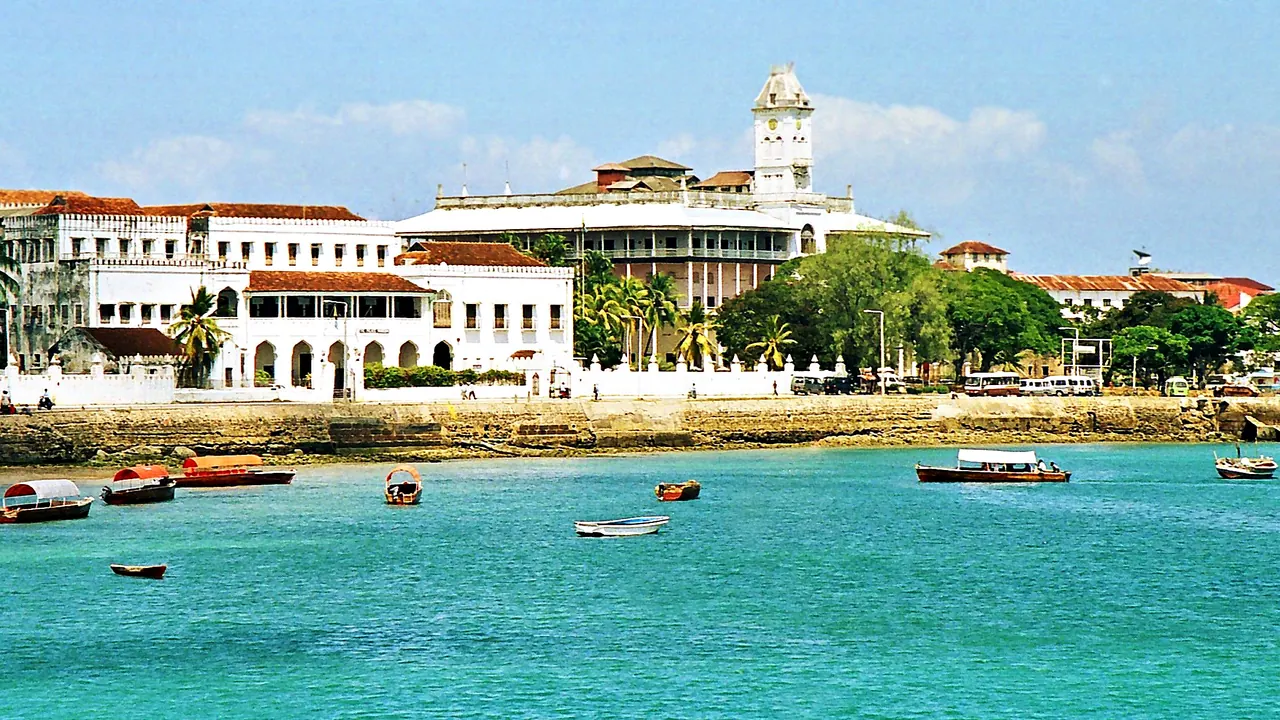
Photos: Nairobi by Lmwangi, CC BY-SA 3.0, cropped; Stone Town by Dr. Ondřej Havelka (cestovatel), CC BY 4.0, cropped.
Nairobi or Stone Town?
Our verdict in twelve categories, each scored against the same fixed benchmark cities, and the climate month by month, so you can choose for your trip.
Choose Nairobi for
- nightlife
- nature and the outdoors
- families
Pick Nairobi if wildlife and open country are the point of the trip. Lions, rhinos and giraffes roam the national park at the edge of the city, the Rift Valley is within two hours, and children can feed giraffes and watch orphaned elephants. Westlands also gives it a proper late night out. The price is long drives in heavy traffic, in a city with little to see in its own streets.
Choose Stone Town for
- beaches
- culture and sights
- getting around
Stone Town suits a slower trip built around history and the sea. Its coral-stone old town, carved doors and slave-market memorial are best explored on foot over a couple of days. The sandbanks and islets are a short boat ride away, and evenings mean sunset drinks and the Forodhani grill. It goes quiet after dark and is hot at midday, so it works best as a first stop before the beaches.
Scoreboard
Twelve categories on one fixed scale from 0 to 100. The shaded stretch is the gap between the two.
Your match
Pick a travel style or drag the sliders, and both match scores follow your weighting.
Wins on nightlife and nature and the outdoors with your weighting.
Wins on beaches and culture and sights with your weighting.
What matters to you?
Category by category
What the scores mean for a trip.
Beaches & swimming
Nairobi has no beach at all. It sits on a highland plateau, so swimming means a hotel or club pool, and the Kenyan coast is a flight away.
Stone Town is the clear choice for the sea, though not on its own waterfront, which belongs to dhows and to boys diving off the sea wall. The good swimming starts a short boat ride out, at Nakupenda sandbank and the islets. Zanzibar's well-known beaches at Nungwi, Kendwa and Paje are an hour or more by road.
Food & drink
Both cities eat well at street level, but Stone Town's food is more of a reason to go. Its Swahili cooking is rich with clove and cardamom, and the evening grill market in the Forodhani Gardens is an outing in itself. Restaurant menus elsewhere repeat each other, though, and alcohol is mostly served in hotels.
Nairobi's strengths are different. There is weekend nyama choma around the charcoal grill with cold beer, very good Indian food from its long-settled South Asian community, and fresh Kenyan coffee in the cafés of Westlands and Kilimani. It offers more variety and easier drinking, but less that you could only find there.
Culture & sights
In Stone Town, the town itself is the sight. It is a UNESCO-listed maze of coral-stone houses and carved doors, and the Old Fort, the Palace Museum, the Hamamni baths and the cathedral on the site of the old slave market are all within a short walk of each other.
Nairobi was founded as a railway depot in 1899 and has no old quarter. The National Museum, with its early human fossils, and the Karen Blixen farmhouse are worth a day, but culture is not what brings people here.
Nightlife
Nairobi wins easily after dark. From Thursday to Saturday, the rooftop bars and clubs of Westlands play Afrobeats and amapiano until dawn, and local pubs fill up for football. You need a ride-hailing car to get between them.
In Stone Town, an evening means a sunset drink on a terrace and then the night market. This is a conservative Muslim town and the lanes go quiet early. Anyone who wants a party goes north to Nungwi.
Nature & outdoors
Nairobi's outdoors is far stronger, and it is a different kind. Nairobi National Park at the city's edge offers a real safari, Karura Forest has shaded trails and the Ngong Hills have ridge walks. The Rift Valley is within two hours, with cycling in Hell's Gate and hikes on Mount Longonot.
Stone Town's outdoors is the sea: dhow sailing, snorkelling over the reefs and diving, plus red colobus monkeys in Jozani Forest. The island is flat and hot, so there is little for walkers or cyclists.
Day trips
Neither city is a strong base for day trips, and from both the outings lead to countryside and history rather than other towns. Near Nairobi there are the tea estates of the Limuru highlands and the stone hand axes left where they were found at Olorgesailie. Kenya's great heritage sites are on the distant coast.
Stone Town's half days stay on the island. They include a walk through the clove and nutmeg plantations, the ruined palaces of the sultans at Maruhubi and Mtoni, and the slave chambers at Mangapwani. The journeys are shorter, and there is more history in them.
Good for families
Nairobi has the better animal encounters for children. They can feed Rothschild's giraffes at the Giraffe Centre, watch baby elephants being bottle-fed at the Sheldrick orphanage and go on a full safari without a long journey. Staying in Karen or Langata keeps all of this close, though traffic and the lack of pavements make the rest of the city tiring.
Stone Town is harder going. Its narrow lanes are shared with motorbikes, the paving defeats pushchairs, the midday heat is draining, and malaria and food hygiene need care. The giant tortoises and sandbank boat trips help, but families usually find things easier once they reach a beach hotel.
Getting around
Stone Town is easier to get around. The old town takes about twenty minutes to cross on foot, and walking is the way to see it, even though the lanes are a labyrinth and touts follow you. To go further you need taxis or a driver.
In Nairobi, almost everything needs a car. The sights are spread across the suburbs, the roads are among the most congested in Africa, matatu routes are hard for a visitor to work out, and walking after dark is not advised. In practice you will use ride-hailing apps every day.
Shopping & style
Both are cities of craft markets, with no fashion or luxury streets, but what you buy is different. Nairobi's Maasai Market moves around the city and sells beadwork, soapstone and kiondo baskets. In the Karen workshops you can watch glass and ceramics being made, and the Westlands malls have the familiar chains.
In Stone Town, spices come first, with cloves and vanilla from the Darajani market. The curio shops around Gizenga Street sell kanga cloth, carved chests and Tingatinga paintings, much of it the same from shop to shop, so patience and bargaining pay off.
Affordability
Costs work in much the same way in both: cheap at street level and much dearer wherever things are aimed at visitors. The difference is where the money goes. In Nairobi, it goes on secure international hotels and on wildlife viewing, which means higher park fees for non-residents plus a vehicle and driver.
In Stone Town, the expensive parts are boutique rooms in old merchant houses, alcohol, and organised sandbank and spice tours. Simple guesthouses and the night market help keep a careful budget under control. Bargaining is expected, and that includes agreeing taxi fares before you set off.
Live music & performing arts
Nairobi has a little more on in an ordinary week. Bands play benga, rumba and jazz in clubs and garden venues, troupes perform traditional dances at Bomas of Kenya, and the National Theatre stages plays in English and Swahili.
Stone Town's own sound is taarab, Swahili poetry set to violins and oud. You can hear it when the old music clubs rehearse or at the music academy on the waterfront. Its year centres on two festivals, Sauti za Busara and the film festival. Outside them, most visitors only see hotel dinner shows.
Wellness & relaxation
Neither city is a place for spas, but Stone Town is the easier place to slow down. The pace is pole pole, afternoons go by on shaded rooftops facing the sea, and hotel spas use clove and coconut oil. The heat and the touts in the lanes take some of the calm away.
Nairobi itself is noisy and congested. Its quiet is in the garden hotels of Karen and Langata, with their lawns, birdsong and cool highland mornings. Visitors to both cities tend to save real rest for elsewhere: the safari lodges from Nairobi and the beach resorts from Stone Town.
When should you go?
Pick your month. The climate figures are measured averages, not a forecast.
Nairobi in July
Stone Town in July
Daytime high, °C
Rainfall in the month, mm
Where the figures come from
Stone Town's temperatures are measured 78 km from the centre, at Dar Es Salaam Airport.
Stone Town has no rain gauge within 25 km of the centre, so its rainfall comes from a gridded climate dataset read at the city rather than from a gauge further away.
Temperature and rainfall are climate normals, averaged over the years shown. Nairobi: 1991-2020 normals, Nairobi ACC/FIC/RCC/MET/COM/ (13.3 km from centre). Stone Town: 1991-2020 normals, Dar Es Salaam Airport (78 km from centre).
Nairobi's altitude keeps it mild all year. Daytime highs never go above 28°C, so walking is comfortable in any month. It gets two rainy seasons: the long rains of April and May and the short rains of November. June to September is the driest stretch, although July and August are the coolest and greyest months. January and February are dry, sunny and warm, and they are the best months overall.
Stone Town is hot all year, with highs of 30°C or more, so the streets are best in the morning and evening. Its long rains are much heavier than Nairobi's, with about 363mm falling in April, and November and December are wet as well. June to October is the best time, dry, very sunny and slightly less hot. The sea is warm enough for swimming in every month and never drops below 26°C.
Which traveller are you?
For a beach and sun trip, Stone Town is the only real choice of the two. The sea is warm all year, the sandbanks and islets are a short boat ride away, and Zanzibar's northern and eastern beaches can be reached by road. In Nairobi, swimming means a hotel pool.
On an outdoors trip, Nairobi is far ahead. You can be on a dawn game drive among lions and rhinos, walk in Karura Forest or the Ngong Hills, and reach Hell's Gate and Mount Longonot in under two hours. In Stone Town the outdoors is mostly snorkelling and sailing.
On a family trip with young children, Nairobi gives them more to remember: feeding giraffes, baby elephants at the orphanage and a safari close to town. Stay in Karen or Langata. In Stone Town, the narrow lanes, the heat and the need for malaria precautions make things harder with small children.
Before you go
| Measure | Nairobi | Stone Town |
|---|---|---|
| Official language | English, Swahili | English, Swahili |
| Currency | Kenyan Shilling (KES) | Tanzanian Shilling (TZS) |
| Sockets | G240 V, 50 Hz | G230 V, 50 Hz |
| Driving side | Left | Left |
| Time zone | UTC+3 | UTC+3 |
| Emergency number | Police 112/999, ambulance 112/999, fire 112/999 | Police 112, ambulance 115, fire 114 |
| Elevation | 1,661 m | 15 m |
| Main airport | Jomo Kenyatta International Airport (NBO)13 km from centre60 non-stop destinations | Abeid Amani Karume International Airport (ZNZ)7 km from centre40 non-stop destinations |
| Public holidays this year | 10 days | 13 days |
By the numbers
| Measure | Nairobi | Stone Town |
|---|---|---|
| City population | 5,545,000 | - |
| People per km² | 7,967 | - |
| Museums within 10 km | 4 | 2 |
| UNESCO World Heritage sites within 50 km | 0 | 1 |
| Swim season, months above 21 °C | - | 12 months |
Where else could you go?
Every comparison below shares a destination with this one, so you can follow Nairobi or Stone Town somewhere new.
- Arushavs Nairobi
- Mombasavs Stone Town
- Arushavs Stone Town
- Mombasavs Nairobi
- Kigalivs Nairobi
- Addis Ababavs Nairobi