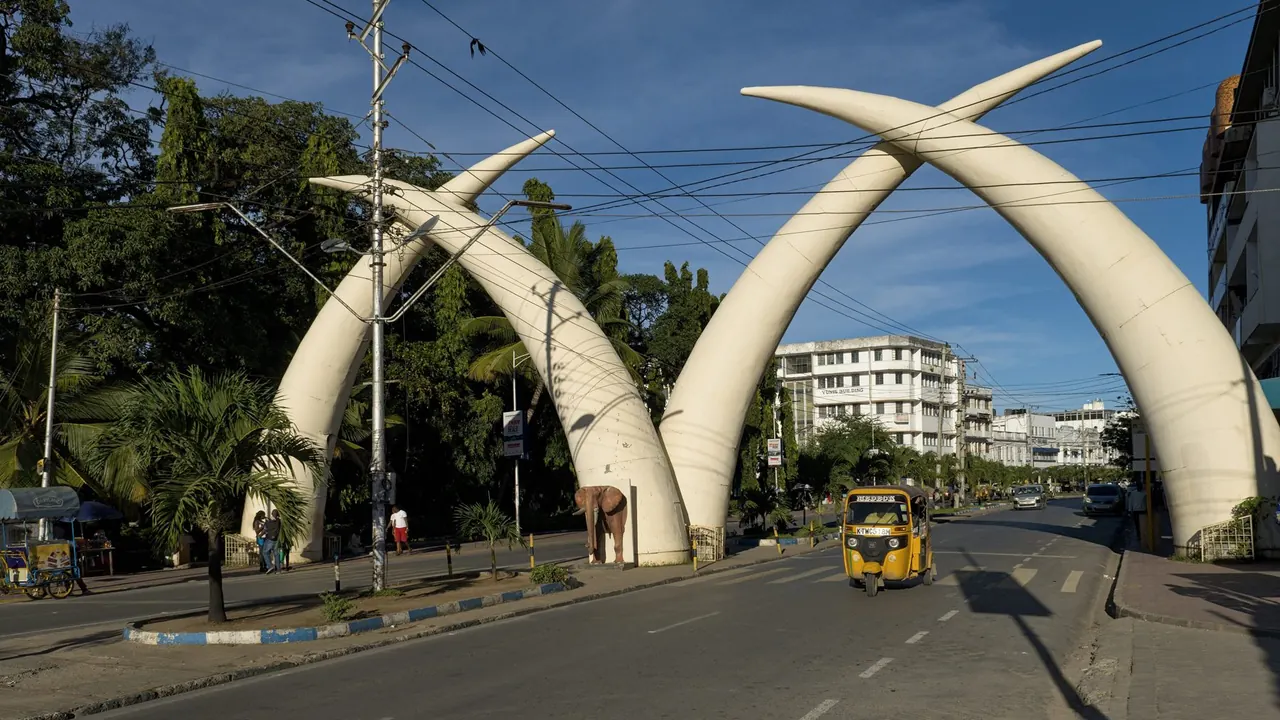
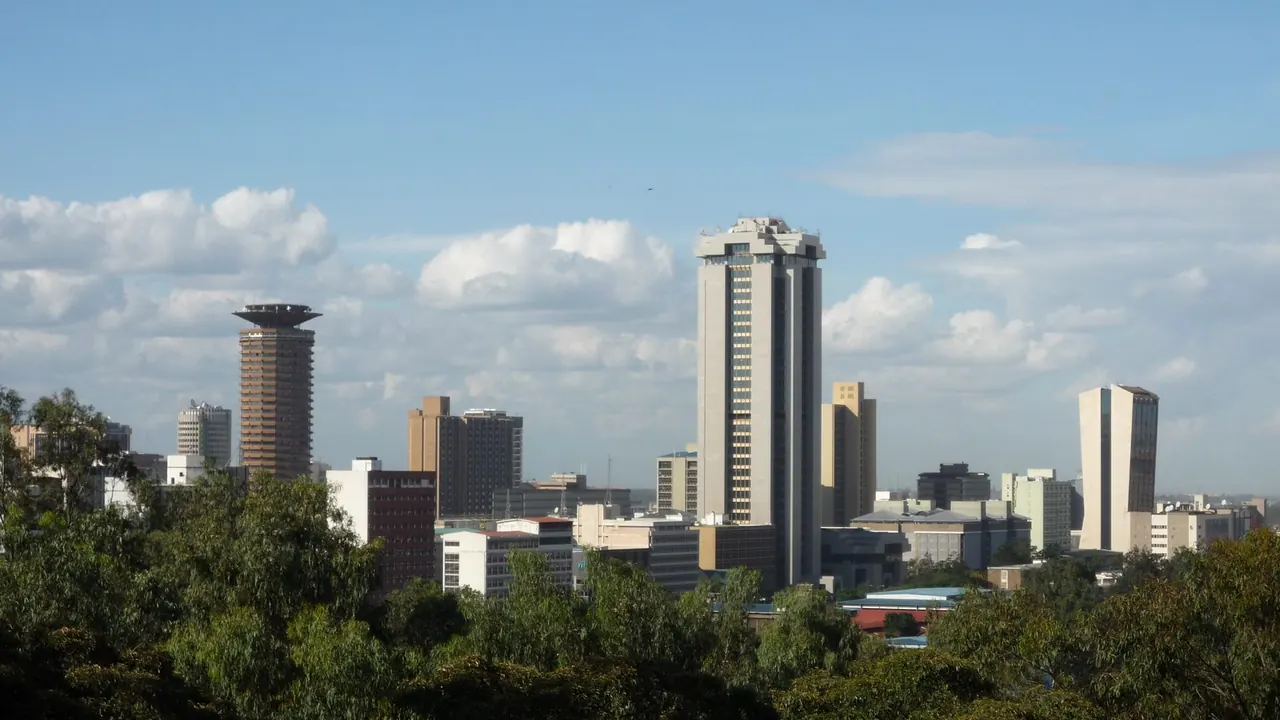
Photos: Mombasa by Rob Oo, CC BY 2.0, cropped; Nairobi by Lmwangi, CC BY-SA 3.0, cropped.
Mombasa or Nairobi?
Our verdict in twelve categories, each scored against the same fixed benchmark cities, and the climate month by month, so you can choose for your trip.
Choose Mombasa for
- beaches
- culture and sights
- day trips
Mombasa is the choice for a trip built around warm sea and long beach days. The coral sand of Nyali, Bamburi and Diani, the reef-sheltered lagoons, the Swahili cooking and the lanes of the Old Town give it a slower, more historic coastal rhythm. It is also the cheaper and more restful of the two once you look beyond the resort walls.
Choose Nairobi for
- live music and the arts
- nightlife
- nature and the outdoors
Travellers who came to Kenya for the animals should pick Nairobi. Lions and rhinos graze within sight of the skyline, the Rift Valley lakes and volcanoes are a couple of hours away, and children get giraffe and elephant encounters that no beach can match. Add a confident late-night scene in Westlands and a real stage for Kenyan music, and Nairobi suits an active, sociable trip better than a lazy one.
Scoreboard
Twelve categories on one fixed scale from 0 to 100. The shaded stretch is the gap between the two.
Your match
Pick a travel style or drag the sliders, and both match scores follow your weighting.
Wins on beaches and culture and sights with your weighting.
Wins on live music and the arts and nightlife with your weighting.
What matters to you?
Category by category
What the scores mean for a trip.
Beaches & swimming
There is no real contest here. Mombasa has a long strip of white coral sand north of the island and the wider, palm-backed beach at Diani to the south, with a warm sea kept calm by the reef. Low tide leaves little depth for swimming, though, and seaweed washes up in the middle of the year.
Nairobi is a highland city with no coast at all, so the only swimming is in a hotel or club pool. Anyone visiting both should save the beach days for the Mombasa part of the trip.
Food & drink
Mombasa has the more distinctive kitchen. Its Swahili cooking is at home in the Old Town lanes, with coconut, tamarind and cardamom in the fish dishes and biryani, and mahamri doughnuts with spiced tea. In the evening, cassava and maize roast on charcoal at the roadside.
Nairobi eats heartier and leans towards meat, with long afternoons of nyama choma at the centre, plus strong Indian and Ethiopian cooking. Its one clear advantage is a large café scene serving Kenyan coffee grown just outside the city, which the coast largely lacks.
Culture & sights
Mombasa has the history Nairobi lacks. Fort Jesus was built by the Portuguese in the 1590s and fought over for centuries, and the carved doors, merchant houses and old mosques of the Old Town carry centuries of trade, even if the quarter is weathered rather than restored.
Nairobi only began as a railway depot in 1899, so its culture lives in museums: the National Museum with its early human fossils, and the Karen Blixen farmhouse. Either city's sights fill a day or two, but Mombasa's have more atmosphere.
Nightlife
Nairobi has the bigger and more assured night out. It centres on the rooftop bars and clubs of Westlands, with quieter cocktail bars in Kilimani and local pubs full of football crowds. The scene belongs to the city itself rather than to visitors.
In Mombasa, going out is a coastal affair: beach bars in Nyali and Bamburi, and the loud, rough-edged late strip at Mtwapa. Many resort guests stop at sundowners. In both cities, getting between venues after dark means a taxi or a ride-hailing car.
Nature & outdoors
Both are strong, but in different settings. Mombasa's best nature is under water: the coral gardens of its marine park, the dolphins of Kisite-Mpunguti and the mangrove creeks. On land, Shimba Hills and Tsavo East are within reach.
Nairobi comes out ahead because its wildlife starts at the city limits, with lions and rhinos in the national park, and the gorges, lakes and volcano rims of the Rift Valley are close by. Its cool altitude also makes walking a pleasure, whereas on the coast the heat holds it back.
Day trips
Outings from Mombasa follow the coast to the ruins of medieval Swahili towns: Jumba la Mtwana under its baobabs close to the city, Mnarani by the creek at Kilifi, and Gede in its forest near Watamu. A dhow day out to Wasini island adds a small fishing village. The roads are slow, though, and Lamu needs a flight.
Nairobi's choice is thinner: a half-day among the Limuru tea estates and the prehistoric hand axes at Olorgesailie in the Rift Valley. The nearby towns are working places rather than sights, so most excursions from the capital head for parks and lakes instead.
Good for families
Nairobi gives children the more memorable encounters. They can feed giraffes at the Giraffe Centre, watch orphaned elephants being bottle-fed at the Sheldrick Trust and go on a safari morning without a long drive. Staying in Karen or Langata keeps all of this close.
Mombasa works best as a resort stay, with pools, kids' clubs, calm lagoons, rock-pooling and the giraffes and hippos of Haller Park. Outside the hotels, both cities are tiring with small children, and the coast adds strong heat and malaria precautions.
Getting around
Neither city is easy, but Mombasa is the less draining. The Old Town and Fort Jesus can be explored on foot, and although the beaches are spread along the coast, most trips are a tuk-tuk or ride-hailing car away. The main delays are on the Nyali bridge and in the Likoni ferry queues.
Nairobi's sights are scattered across distant suburbs, linked by some of Africa's most congested roads. An hour in traffic is common, and walking after dark is not advised. In both cities the matatu minibuses are hard for a newcomer to work out, so visitors rely on taxis or a driver.
Shopping & style
Nairobi has the edge, for crafts and for practical shopping. The Maasai Market moves between sites around the city and sells beadwork, soapstone carvings and kiondo baskets. In the workshops of Karen you can watch glass and ceramic beads being made, and Kenyan coffee and tea make easy gifts.
Mombasa's buys are coastal: kangas and kikois from the cloth merchants of Biashara Street, carved Swahili chests and brass in the Old Town, and spices at Marikiti market. You bargain in both cities, and neither has luxury shopping.
Affordability
Mombasa is the cheaper stay, especially if you eat Swahili street food, sleep in a guesthouse in town and ride tuk-tuks. Costs climb mainly inside the beach resorts and on safari tours.
In Nairobi, most visitors stay in secure international-standard hotels in Westlands, Upper Hill or Karen. Wildlife outings add park fees for foreigners and the cost of a vehicle and driver. A careful traveller can keep spending moderate, but Nairobi is harder to do cheaply than the coast.
Live music & performing arts
Taarab, the coast's sung Swahili poetry over oud and violin, is heard mostly at weddings in Mombasa rather than on any regular stage. That leaves weekend bar bands on the north coast and the acrobat and dance shows put on by the resorts.
In Nairobi, live music and theatre are part of an ordinary weekend. Clubs and garden venues host benga, rumba, Afro-fusion and jazz, Bomas of Kenya presents the traditional dances of the country's many communities, and the Kenya National Theatre stages plays in English and Swahili.
Wellness & relaxation
Mombasa is the better place to slow down. Resort spas with open-air pavilions facing the sea, yoga on the Diani side and the coast's pole pole pace all make rest easy, as long as you stay on the beach strips rather than on the hot, noisy island.
In Nairobi, calm is limited to hotel spas and the garden hotels of Karen and Langata, where cool highland mornings and breakfasts on the veranda help. Many visitors save their rest for a safari lodge or for days on the coast.
When should you go?
Pick your month. The climate figures are measured averages, not a forecast.
Mombasa in July
Nairobi in July
Daytime high, °C
Rainfall in the month, mm
Where the figures come from
Mombasa has no rain gauge within 25 km of the centre, so its rainfall comes from a gridded climate dataset read at the city rather than from a gauge further away.
Temperature and rainfall are climate normals, averaged over the years shown. Mombasa: 1991-2020 normals, Mombasa (5.8 km from centre). Nairobi: 1991-2020 normals, Nairobi ACC/FIC/RCC/MET/COM/ (13.3 km from centre).
Mombasa is hot all year, with daytime highs around 33°C from January to March, and the sea stays warm enough for swimming in every month, near 28°C for much of the year. The best beach weather runs from December to March, when the coast is driest and the water clearest. The long rains peak in May at about 290mm, and October and November bring a second, shorter wet spell. July and August are the least sticky months and the better time for walking Fort Jesus and the Old Town.
Nairobi sits up on its plateau and never gets uncomfortably hot, with highs in the mid-20s right through the year. Its rains fall in April and May and again in November. January and February are its sunniest stretch, while June to September is dry but often grey and cool. That suits game drives and hill walks, but not sunbathing. From January to March the weather is good in both cities, with sunshine in the highlands and the calmest sea on the coast.
Which traveller are you?
On a beach and sun trip, make Mombasa your base and choose between the north-coast resorts, which are close to the Old Town, and Diani, the finer beach about an hour south across the Likoni ferry. Plan your swims around high tide, and fit Nairobi in as a short safari stop.
For an outdoors trip, Nairobi is the stronger base. Game drives start at the city's edge, and Karura Forest and the Ngong Hills offer walks close to town. Hell's Gate, Lake Naivasha and Mount Longonot lie within about two hours, in weather mild enough for hiking.
For a relaxing and wellness trip, Mombasa makes slowing down effortless. The days settle into an early swim before the heat, a long lunch, a massage and a nap, with nowhere you need to be. In Nairobi, hours in traffic between suburbs work against rest.
Before you go
| Measure | Mombasa | Nairobi |
|---|---|---|
| Official language | English, Swahili | English, Swahili |
| Currency | Kenyan Shilling (KES) | Kenyan Shilling (KES) |
| Sockets | G240 V, 50 Hz | G240 V, 50 Hz |
| Driving side | Left | Left |
| Time zone | UTC+3 | UTC+3 |
| Emergency number | Police 112/999, ambulance 112/999, fire 112/999 | Police 112/999, ambulance 112/999, fire 112/999 |
| Elevation | 50 m | 1,661 m |
| Main airport | Moi International Airport (MBA)8 km from centre22 non-stop destinations | Jomo Kenyatta International Airport (NBO)13 km from centre60 non-stop destinations |
| Public holidays this year | 10 days | 10 days |
By the numbers
| Measure | Mombasa | Nairobi |
|---|---|---|
| City population | 1,208,333 | 5,545,000 |
| People per km² | 4,100 | 7,967 |
| Museums within 10 km | 0 | 4 |
| UNESCO World Heritage sites within 50 km | 2 | 0 |
| Swim season, months above 21 °C | 12 months | - |
Where else could you go?
Every comparison below shares a destination with this one, so you can follow Mombasa or Nairobi somewhere new.