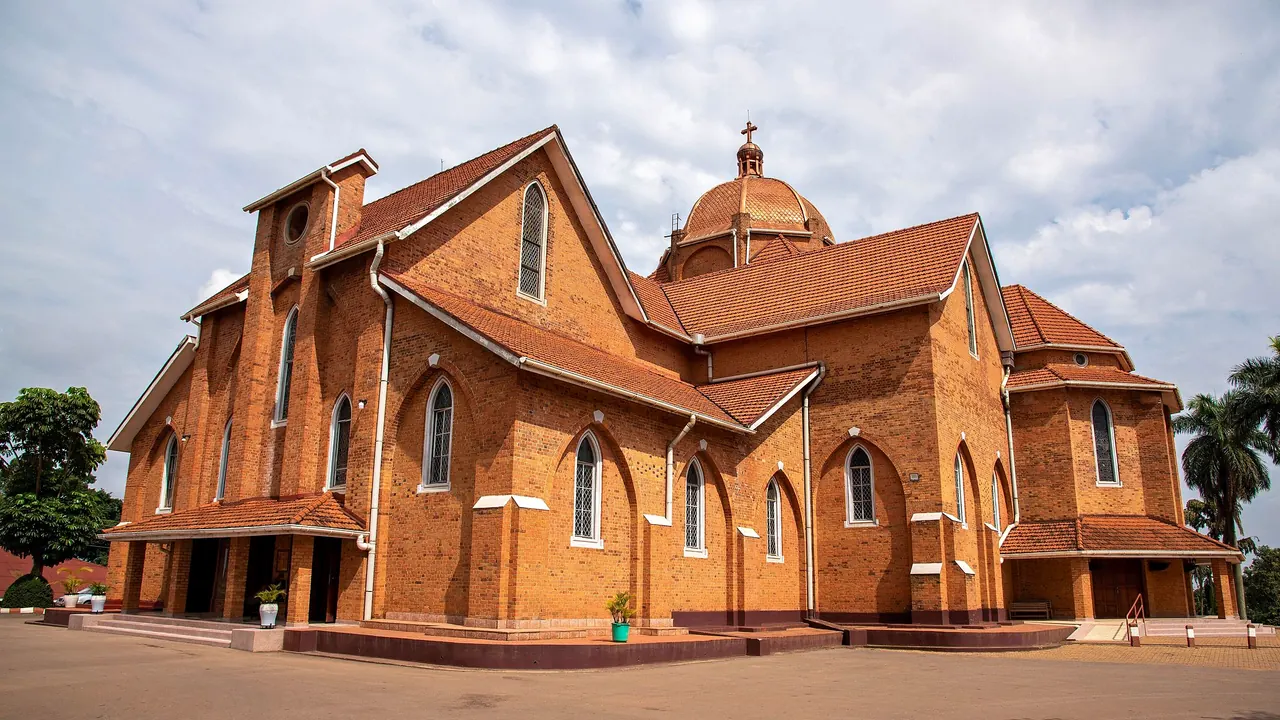
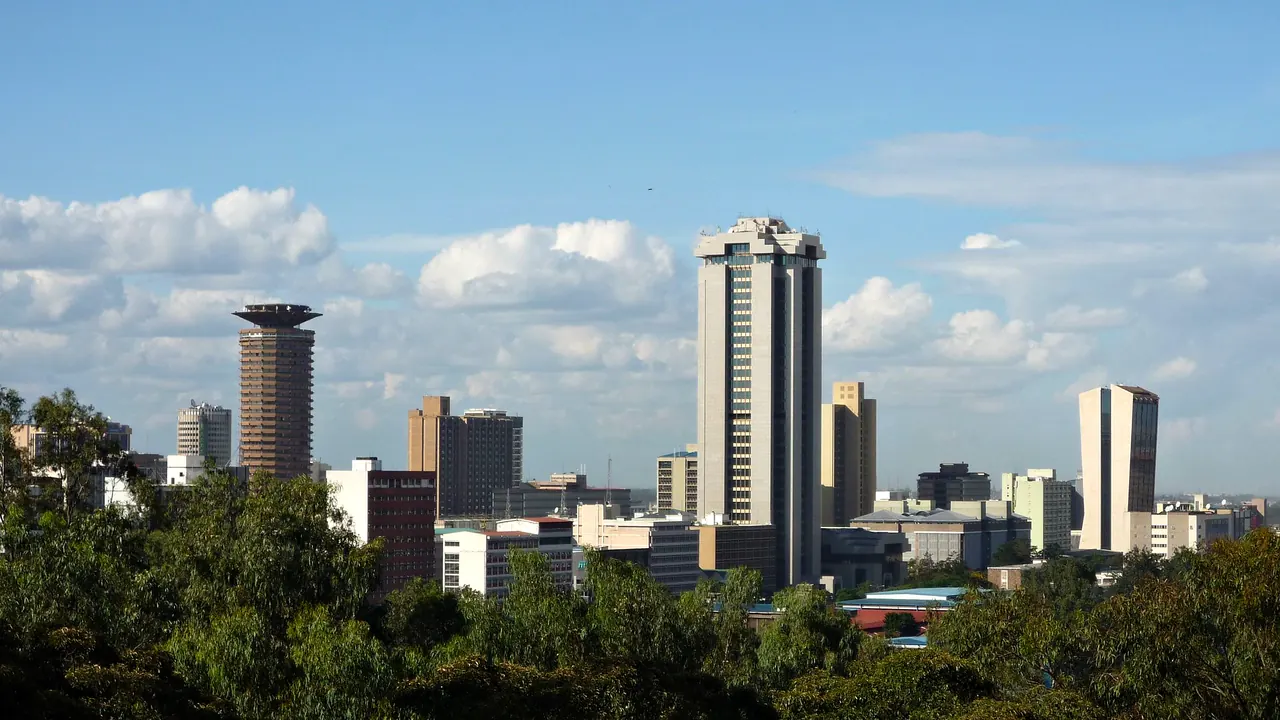
Photos: Kampala by Timothy Akolamazima, CC BY-SA 4.0, cropped; Nairobi by Lmwangi, CC BY-SA 3.0, cropped.
Kampala or Nairobi?
Our verdict in twelve categories, each scored against the same fixed benchmark cities, and the climate month by month, so you can choose for your trip.
Choose Kampala for
- prices
- day trips
- beaches
Kampala suits a traveller who wants a lively, inexpensive city with a lakeshore close by. Evenings out run late even midweek, local food and transport cost little, and Entebbe and the Nile at Jinja make two good days out. Its sights tell the story of a living kingdom through royal tombs, a palace and cathedrals on separate hills, though the city itself needs only a couple of days.
Choose Nairobi for
- nature and the outdoors
- families
- shopping
Choose Nairobi if wildlife is the point of the trip. A national park starts at the edge of the city, there are giraffe and elephant orphanages in Karen and Langata, and the Rift Valley is a couple of hours away. Together these make it much the better base for nature and for children. It costs more, mainly because most visitors stay in secure international hotels, and its sights in town are modest, but no other capital has a safari this close.
Scoreboard
Twelve categories on one fixed scale from 0 to 100. The shaded stretch is the gap between the two.
Your match
Pick a travel style or drag the sliders, and both match scores follow your weighting.
Too close to call, 2 points apart
Wins on prices and day trips with your weighting.
Wins on nature and the outdoors and families with your weighting.
What matters to you?
Category by category
What the scores mean for a trip.
Beaches & swimming
Neither city is a beach destination, but Kampala at least has a shore. The sandy lakeside spots at Ggaba, Munyonyo and Entebbe are good for an afternoon in a deckchair with grilled tilapia, though the risk of bilharzia means you should not swim in the shallows. The Ssese Islands have quieter sand for an overnight stay.
Nairobi sits up on its plateau with no water nearby, and the Kenyan coast is a separate trip by plane or train. In both cities, any actual swimming happens in a hotel pool.
Food & drink
The two kitchens have a lot in common: filling staples, grilled meat with cold beer, strong South Asian and Ethiopian cooking from long-settled communities, and locally grown coffee. Kampala's own dishes are matooke, luwombo slow-cooked in banana leaves and the rolex from roadside stands, and Nakasero Market shows off the country's produce.
Nairobi has the slight edge for eating out. Its weekend nyama choma around the grill is a social ritual, Swahili dishes from the coast add coconut and spice, and the café scene across Westlands, Kilimani and Karen is larger. Neither city has much to offer in fine dining.
Culture & sights
There is little to choose between them in depth, but the subjects differ. Kampala's sights trace the Buganda kingdom and the faiths that arrived in the nineteenth century: the thatched Kasubi Tombs, the royal mile from the Mengo palace to the Bulange, and the cathedrals and national mosque on their separate hills. Because they are spread across those hills, seeing them properly takes two or three days.
Nairobi began as a railway depot in 1899 and has no old quarter, so its sights are mostly museums. The best are the National Museum, with its early human fossils, the Karen Blixen farmhouse and the Railway Museum. A day or two usually covers them, slightly less time than Kampala needs.
Nightlife
Both cities stay out until dawn, but Kampala does it more often and more casually. Clubs fill after midnight on weeknights as well as weekends, from the open-fronted bars of Kabalagala and Ggaba Road to the lounges of Kololo, with Congolese rhumba and Ugandan dancehall setting the tone.
Nairobi's big nights are mostly Thursday to Saturday, centred on the rooftops and clubs of Westlands playing amapiano and gengetone, with quieter wine bars in Kilimani. In both cities, plan on using ride-hailing between venues.
Nature & outdoors
Kampala's outdoors is good but narrower. The birding is excellent, with shoebills in the Mabamba wetland, and there are boat trips on Lake Victoria and rafting on the Nile at Jinja. For gorillas or savannah wildlife, though, you face many hours on the road, while in Nairobi the safari begins at the edge of the city.
Here Nairobi is far ahead. Lions, rhinos and giraffes roam the national park on its southern edge, and Karura Forest has trails and waterfalls inside the city. The Rift Valley, with Hell's Gate, Lake Naivasha and Mount Longonot, is about two hours away.
Day trips
Kampala has the better day trips because it has real towns to visit. Entebbe has its botanical gardens and the boat to the chimpanzees on Ngamba Island. Jinja has colonial-era shopfronts and the source of the Nile. Traffic makes early starts worthwhile.
Nairobi's day trips are thinner, because its best outings are to wildlife and scenery rather than towns. The Limuru tea estates and the stone hand axes at Olorgesailie make pleasant trips, but Kenya's historic towns are on the coast, which is too far for a day.
Good for families
Nairobi is much better for children. Feeding giraffes at the Giraffe Centre, watching orphaned elephants at the Sheldrick Wildlife Trust and a morning game drive are hard to beat, and staying in Karen or Langata keeps all of them close.
Kampala has the wildlife education centre at Entebbe, the Ngamba chimpanzees for older children and some lakeside playgrounds, but little else made for families. Both cities are warm towards children but tiring with them, with heavy traffic and few pavements, and in Kampala you also need to plan for malaria all year round.
Getting around
Both cities are hard work to get around. Neither has a metro, the roads are crowded and visitors find the minibuses difficult to use, so ride-hailing does most of the job in each. In Kampala the sights are scattered across hills, and boda boda motorbikes get through the jams quickly but carry a real accident risk.
In Nairobi you can walk the compact central business district by day, and an elevated expressway speeds up the trip to the airport. Walking after dark is not advised, though, and the main sights are far apart in the suburbs.
Shopping & style
Both are craft cities with no fashion or luxury streets, but Nairobi gives a shopper more to do. The Maasai Market moves between sites around the city and sells beadwork, soapstone and kiondo baskets. In the Karen workshops you can watch glass being blown and textiles woven, and Kenyan coffee and tea make easy gifts.
Kampala brings together barkcloth, baskets and kitenge fabrics at the craft market beside the National Theatre, and Owino Market is more worth seeing than buying from. The malls in both cities are much like malls anywhere.
Affordability
Kampala is the cheaper city, and the gap shows most in what a typical visitor ends up spending. Street food, local beer, boda rides and simple guesthouses cost very little. Only comfortable hotels and gorilla permits push the bill towards European levels.
Nairobi is cheap on the street too, but most visitors stay in secure international hotels in Westlands, Upper Hill or Karen. Foreigners pay higher entry fees at the national park, and a game drive also means paying for a vehicle and driver, so costs add up quickly.
Live music & performing arts
The two are similar in scale. In each, traditional dance is the best introduction for a visitor, and there is little or no opera or orchestral music. In Kampala, a long-established troupe in Ntinda puts on evening shows of drumming and dance, bar bands play kadongo kamu and rhumba most nights, and stand-up comedy is performed in English and Luganda.
Nairobi has its own dance shows in the large auditorium at Bomas of Kenya, plus benga and jazz in garden venues, mostly at weekends. Its theatres stage plays in English and Swahili, and there is a spoken-word scene.
Wellness & relaxation
Neither city is restful, and in both, wellness means hotel spas rather than any local bathing tradition. The calm is found away from the noise, in different settings: Kampala's lakeshore resorts at Munyonyo and the gardens of Entebbe look out over the water, while Nairobi's garden hotels in Karen and Langata offer lawns, birdsong and cool highland mornings.
When should you go?
Pick your month. The climate figures are measured averages, not a forecast.
Kampala in July
Nairobi in July
Daytime high, °C
Rainfall in the month, mm
Where the figures come from
Kampala's temperatures are measured 33 km from the centre, at Entebbe Airport.
Kampala has no rain gauge within 25 km of the centre, so its rainfall comes from a gridded climate dataset read at the destination rather than from a gauge further away.
Temperature and rainfall are climate normals, averaged over the years shown. Kampala: 1957-2025, 17 years observed (rainfall 1991-2020) normals, Entebbe Airport (32.7 km from centre). Nairobi: 1991-2020 normals, Nairobi ACC/FIC/RCC/MET/COM/ (13.3 km from centre).
Kampala's temperature barely changes, with afternoons around 26°C to 27°C all year, so planning comes down to the rain. It has two wet seasons. The heaviest rain is in April, at about 175mm, and there is a second wet spell from September to November. January, February, June and July are the drier months, and the easiest for getting around the hills.
Nairobi sits higher, so it is a little cooler and the weather changes more through the year. June to August is the driest stretch, with July down to about 11mm of rain, but highs fall to 24°C and these are the greyest months, with the least sunshine. January and February are dry and also the sunniest. The long rains of April and May and the short rains of November are the wet spells. If you want dry weather in both cities on one trip, January, February and July are the safest months.
Which traveller are you?
On an outdoors trip, Nairobi is the clear choice. Game drives start at the city's southern edge, and Karura Forest and the Ngong Hills have walks close by. Hell's Gate and Mount Longonot are near enough for a day out. Kampala's shoebills and Nile rafting are fewer, narrower draws.
On a family trip with children, Nairobi has far more to do. Children can feed giraffes in Langata, watch baby elephants being bottle-fed and go on a short morning safari. Kampala's main draw for children is the wildlife centre at Entebbe, and the city itself soon tires them.
On a tight budget, your money goes further in Kampala. Rolex from street stands, market meals, local beer and simple guesthouses all cost little, and outings to Entebbe or Jinja need no park fees. In Nairobi, wildlife fees for foreigners and secure hotels push spending up.
Before you go
| Measure | Kampala | Nairobi |
|---|---|---|
| Official language | English, Swahili | English, Swahili |
| Currency | Uganda Shilling (UGX) | Kenyan Shilling (KES) |
| Sockets | G240 V, 50 Hz | G240 V, 50 Hz |
| Driving side | Left | Left |
| Time zone | UTC+3 | UTC+3 |
| Emergency number | Police 112/999, ambulance 911, fire 112/999 | Police 112/999, ambulance 112/999, fire 112/999 |
| Elevation | 1,190 m | 1,661 m |
| Main airport | Entebbe International Airport (EBB)34 km from centre27 non-stop destinations | Jomo Kenyatta International Airport (NBO)13 km from centre60 non-stop destinations |
| Public holidays this year | 12 days | 10 days |
By the numbers
| Measure | Kampala | Nairobi |
|---|---|---|
| Population | 1,680,600 | 5,545,000 |
| People per km² | 8,892 | 7,967 |
| Museums within 10 km | 4 | 4 |
| UNESCO World Heritage sites within 50 km | 1 | 0 |
Where else could you go?
Every comparison below shares a destination with this one, so you can follow Kampala or Nairobi somewhere new.
- Arushavs Nairobi
- Kigalivs Kampala
- Mombasavs Nairobi
- Stone Townvs Nairobi
- Arushavs Kampala
- Dar es Salaamvs Nairobi