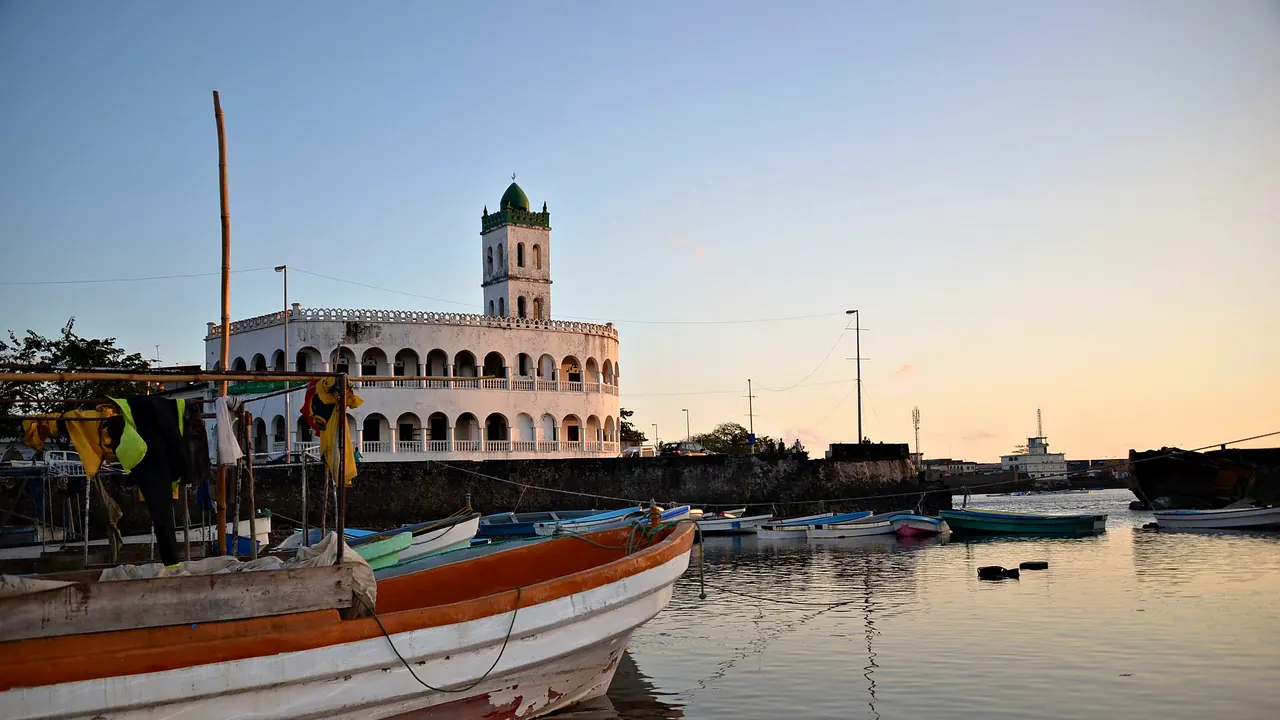
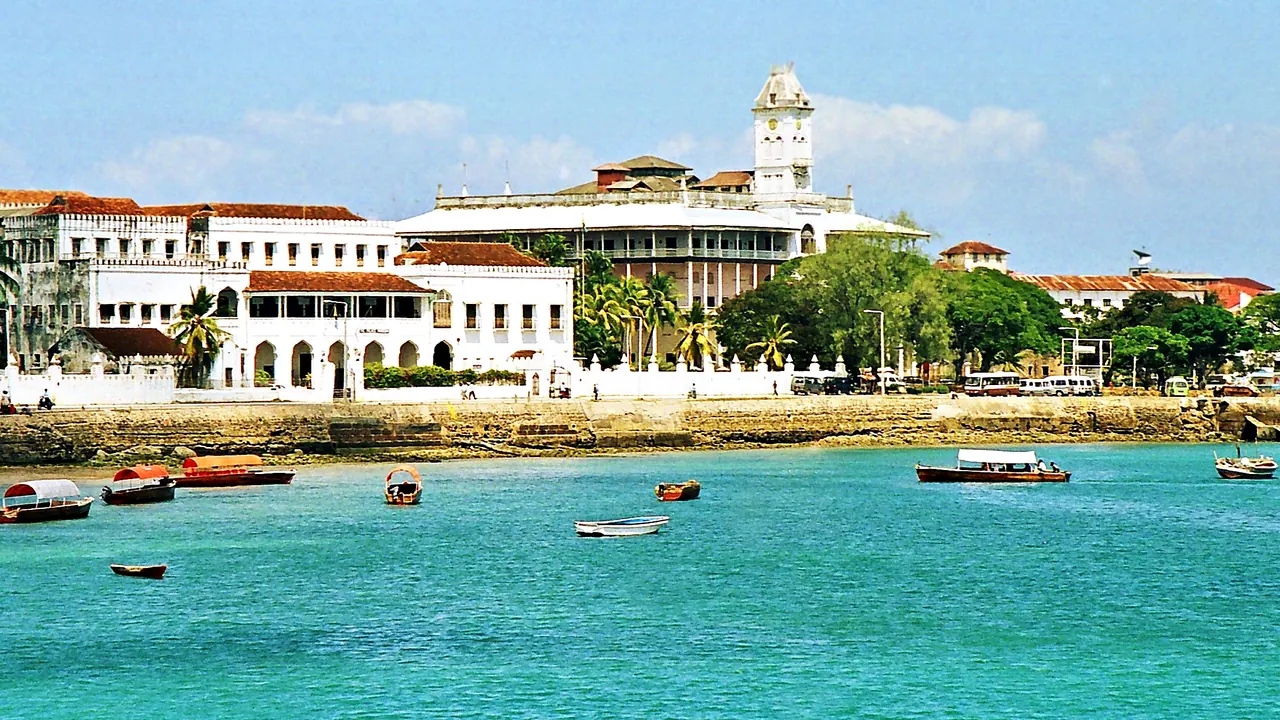
Photos: Moroni by GeGki, CC BY-SA 4.0, cropped; Stone Town by Dr. Ondřej Havelka (cestovatel), CC BY 4.0, cropped.
Moroni or Stone Town?
Our verdict in twelve categories, each scored against the same fixed benchmark cities, and the climate month by month, so you can choose for your trip.
Choose Moroni for
- nature and the outdoors
Moroni suits the self-reliant traveller who wants an island that hardly sees tourists. Its draw is the land itself. Mount Karthala is a two-day climb to a vast summit caldera, black lava runs down to the sea, and quiet white-sand coves lie along the north-west coast. Expect simple food, early nights and a car with a driver to get anywhere, and in return you get very few other visitors.
Choose Stone Town for
- culture and sights
- food and drink
- shopping
Stone Town is the better pick for a first trip to the Swahili coast, or for anyone who wants history, food and a little evening life built into the stay. The UNESCO-listed old town alone fills two days. The Forodhani grill market makes dinner an event, and spice farms, sandbanks and Jozani Forest are easy half days. It also works well as the town stop before moving on to Zanzibar's beaches.
Scoreboard
Twelve categories on one fixed scale from 0 to 100. The shaded stretch is the gap between the two.
Your match
Pick a travel style or drag the sliders, and both match scores follow your weighting.
Wins on nature and the outdoors with your weighting.
Wins on culture and sights and food and drink with your weighting.
What matters to you?
Category by category
What the scores mean for a trip.
Beaches & swimming
The two are level for beaches, but you reach them differently. Neither town has a swimming beach of its own. Moroni's shoreline is black lava, and you drive to the sand: Itsandra is just north, and the white coves near Mitsamiouli, with coral close to shore, are under an hour away. These are quiet village beaches with little shade or service, where modest dress matters.
From Stone Town you take a boat to the sandbanks and islets offshore, such as Nakupenda and Changuu. Its well-known resort beaches at Nungwi, Kendwa and Paje are an hour or more away, and on the east coast the tides decide when you can swim.
Food & drink
Stone Town is clearly the better place to eat. Evenings at the Forodhani Gardens grill market, with lobster, skewers and Zanzibar pizza, are a highlight in their own right. Clove-scented biryani, octopus curry and street-corner coffee fill the rest of the day, even if rooftop menus repeat themselves.
Moroni's cooking is interesting, with langouste in vanilla sauce, mataba and charcoal-grilled fish, but the choice comes down to a few hotel kitchens and simple eateries. You will eat well enough, but you won't go out of your way for a meal.
Culture & sights
Stone Town offers a great deal more to see. Its UNESCO-listed old town of carved doors and merchant houses is a sight in itself. Close by are the Omani fort, the sultans' Palace Museum, the Hamamni baths and the Anglican cathedral with its slave market memorial, enough for two full days.
Moroni has one memorable scene in the Old Friday Mosque above the dhow harbour, plus a coral-stone medina that rewards a slow walk. Add the modest national museum and most visitors have seen it all in a morning.
Nightlife
Both are conservative Muslim towns that go quiet early, but Stone Town at least has an evening routine. You watch the sunset from a hotel terrace or rooftop bar, then eat at the night market, and the beach bars of Nungwi are there for anyone who wants to stay out late. In Moroni the evening is a harbour stroll, tea and perhaps a drink in a hotel bar, with nothing open late.
Nature & outdoors
Moroni has the more dramatic landscape. Karthala, an active volcano of about 2,360m, is a guided two-day climb with a night near the crater rim, and the coast has lava flows, blowholes and Lac Salé. Humpback whales pass offshore from about July to October. Trails are unmarked, though, so it suits walkers who can look after themselves.
Zanzibar is flat, so its outdoors is gentler and easier to arrange. You can watch red colobus monkeys in Jozani Forest, sail a dhow at sunset, snorkel at Mnemba, look for dolphins off Kizimkazi and kitesurf on the east coast.
Day trips
From either town the outings mostly stay on the one island, but they feel quite different. Moroni's are drives by hired car or shared taxi through Grande Comore's old settlements: Iconi, the early capital just south, with its walls and the cliff tied to resistance against raiders, then the ruined fort above Itsandra and the Swahili-style quarters of Ntsaoueni and Mitsamiouli. There is little explanation on site, so a local guide makes all the difference, and Moheli and Anjouan are too far for a day.
Stone Town's half days are easier to book and more varied: a spice farm walk among clove and nutmeg, the giant tortoises on Prison Island, the ruined sultans' palaces at Maruhubi and Mtoni and the Mangapwani slave chambers. No other town on Zanzibar is worth the trip, but Dar es Salaam is about two hours away by fast ferry.
Good for families
Stone Town is the easier of the two with children, mainly because it has things they enjoy: tortoises on Changuu, monkeys at Jozani, sandbank boat trips and the food stalls at Forodhani. It is also easy to move on afterwards to a beach hotel with a pool.
Moroni has the northern beaches and reef shallows but nothing else aimed at children, and its medical care is more basic. It is best left to experienced families with older children. Both need malaria precautions and cope poorly with pushchairs.
Getting around
Stone Town is simpler for a visitor. You can cross the old town on foot in about twenty minutes, though its lanes are a maze and touts follow you. Taxis and drivers are easy to find for spice farms and beaches, and the airport is close.
In Moroni only the harbour and medina are walkable. Beyond them it is shared taxis and taxi-brousse with no maps or timetables, so most visitors hire a car with a driver on potholed roads. Some French helps a great deal.
Shopping & style
The difference comes down to one sprawling market against whole streets of craft shops. In Moroni nearly everything happens at Volo Volo, among produce, fabric and household goods, and the souvenirs are the island's own: ylang-ylang essence from the perfume plantations, embroidered kofia caps and bright chiromani cloth.
Stone Town offers much more choice. Beyond the Darajani market, the lanes around Gizenga Street sell kanga and kikoi, carved boxes and miniature chests, Maasai beadwork and Tingatinga canvases, and a few boutiques stock better textiles and natural soaps. Much of it repeats from shop to shop, so patience and bargaining pay off. In both towns vanilla and cloves are the easiest things to carry home.
Affordability
Stone Town gives better value overall. Both are cheap at street level, but Stone Town has more choice in the middle, from simple guesthouses to restored merchant-house hotels. Prices for tours and taxis come down with a little bargaining.
In Moroni comfort costs more than it is worth. There are only a few hotels of reliable standard and they charge for it, imported goods are dear, and seeing the island means paying for a driver or guide.
Live music & performing arts
On Grande Comore the music happens at weddings. On Zanzibar it happens at clubs and festivals. Moroni's twarab and mgodro dances fill the streets in the grand mariage season, but they belong to the families celebrating, so you hear them only if you are invited or happen to pass by. There is no theatre or concert venue at all.
In Stone Town the music is easier to find. Taarab, played on violins, qanun and oud, comes from the long-established music clubs and the waterfront music academy, though it pays to ask locally when they play. Sauti za Busara and the Zanzibar International Film Festival bring performers and audiences to town for their weeks.
Wellness & relaxation
Neither town has a living bathing culture, but Stone Town at least has spa treatments, offered by boutique hotels and made with clove and coconut oil. Its lanes are tiring, though, and many visitors save real rest for the coast. Moroni is calmer but offers almost nothing organised beyond a few hotel massages. Rest there means a quiet terrace and a long view of the ocean.
When should you go?
Pick your month. The climate figures are measured averages, not a forecast.
Moroni in July
Stone Town in July
Daytime high, °C
Rainfall in the month, mm
Where the figures come from
Moroni has no rain gauge within 25 km of the centre, so its rainfall comes from a gridded climate dataset read at the destination rather than from a gauge further away.
Stone Town's temperatures are measured 78 km from the centre, at Dar Es Salaam Airport.
Stone Town has no rain gauge within 25 km of the centre, so its rainfall comes from a gridded climate dataset read at the destination rather than from a gauge further away.
Temperature and rainfall are climate normals, averaged over the years shown. Moroni: 2005-2025 (rainfall 1991-2020) normals, Hahaya International Airport (19 km from centre). Stone Town: 1991-2020 normals, Dar Es Salaam Airport (78 km from centre).
Both cities are hot all year, with daytime highs around 29°C to 33°C, and both seas stay warm enough for swimming in every month, never dropping below about 26°C. The difference is the rain. Moroni has one long wet season. Rain is heavy from December to May and peaks in January at about 316mm, so the drier stretch from August to October, with September down near 59mm, is the time to go. That is also the best window for the Karthala climb.
Stone Town has two rainy seasons with dry spells in between. The long rains hit in April, at around 363mm, and the short rains return in November and December. June to October is dry and very sunny, and January and February are a second good window, though they are the hottest months for walking the lanes.
Which traveller are you?
On a culture and arts trip, Stone Town is far ahead. Its UNESCO old town, the Palace Museum, the Old Fort and the cathedral on the old slave market site fill two days, and taarab clubs add music. Moroni's medina and museum take a morning.
For a food and nightlife trip, Stone Town again. The Forodhani grill market, morning urojo and rooftop sunset drinks give the evenings some shape. Moroni has simple local eateries, a few hotel dining rooms and hardly any drinking at all.
On an outdoors trip, Moroni wins. Climbing Karthala through cloud forest to its summit caldera is a real expedition, and it has lava shores, Lac Salé and passing humpback whales. Flat Zanzibar offers forest monkeys and snorkelling but little to walk.
Before you go
| Measure | Moroni | Stone Town |
|---|---|---|
| Official language | French, Arabic, Comorian | English, Swahili |
| Currency | Comorian Franc (KMF) | Tanzanian Shilling (TZS) |
| Sockets | CE220 V, 50 Hz | G230 V, 50 Hz |
| Driving side | Right | Left |
| Time zone | UTC+3 | UTC+3 |
| Emergency number | Police 17, ambulance 18 | Police 112, ambulance 115, fire 114 |
| Elevation | 29 m | 15 m |
| Main airport | Prince Said Ibrahim International Airport (HAH)19 km from centre6 non-stop destinations | Abeid Amani Karume International Airport (ZNZ)7 km from centre40 non-stop destinations |
| Public holidays this year | - | 13 days |
By the numbers
| Measure | Moroni | Stone Town |
|---|---|---|
| Population | 85,400 | - |
| People per km² | 2,847 | - |
| Museums within 10 km | 1 | 2 |
| UNESCO World Heritage sites within 50 km | 1 | 1 |
| Swim season, months above 21 °C | 12 months | 12 months |
Where else could you go?
Every comparison below shares a destination with this one, so you can follow Moroni or Stone Town somewhere new.
- Dar es Salaamvs Stone Town
- Mombasavs Stone Town
- Arushavs Stone Town
- Nosy Bevs Moroni
- Nairobivs Stone Town
- Zanzibarvs Moroni