Photos: Moroni by GeGki, CC BY-SA 4.0, cropped; Nosy Be by Anai171, CC BY-SA 4.0, cropped.
Moroni or Nosy Be?
Our verdict in twelve categories, each scored against the same fixed benchmark cities, and the climate month by month, so you can choose for your trip.
Choose Moroni for
- culture and sights
- shopping
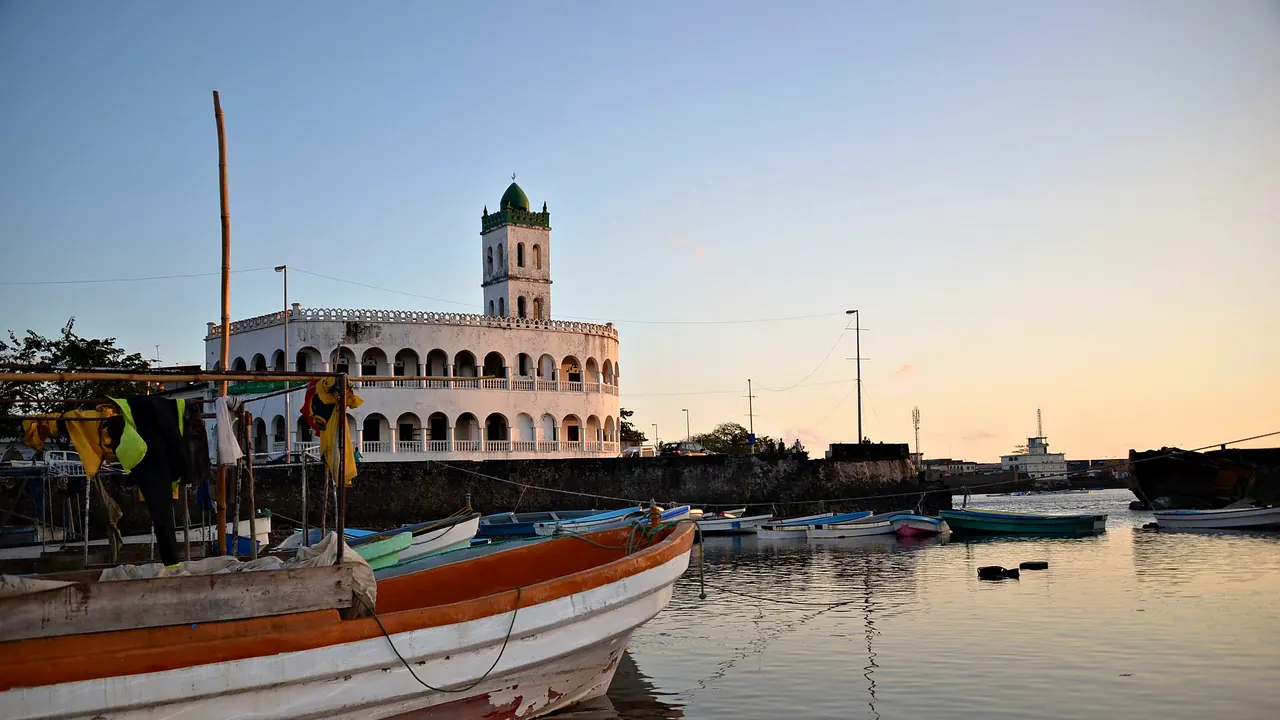
Moroni suits a traveller curious about a little-visited Indian Ocean capital. The Old Friday Mosque looks over the dhow harbour, the coral-stone medina rewards a slow walk, and Mount Karthala rises behind the town for anyone willing to camp a night on a volcano. You base yourself in a quiet, devout town and drive out to the northern beaches. It works for people who care more about Swahili and Arab heritage and an unpolished island than about comfort or evenings out.
Choose Nosy Be for
- wellness
- nightlife
- nature and the outdoors
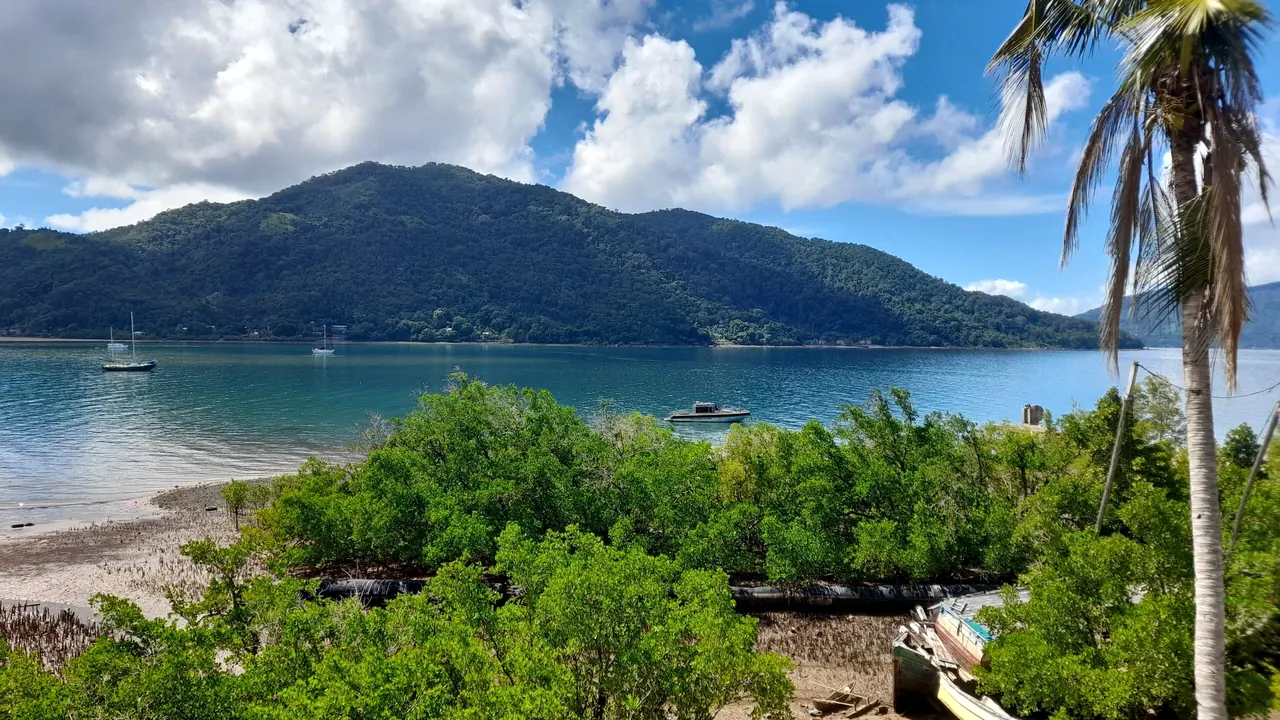
For a warm-water vacation built around the sea and wildlife, Nosy Be is the stronger choice. Days go on boat trips to the sandbar at Nosy Iranja and the turtles of Nosy Tanikely, guided walks in Lokobe among black lemurs and chameleons, and long afternoons at Andilana. Resort pools, massages and a late bar strip in Ambatoloaka are there when you want them. The price is history: beyond the market in Hell-Ville and the sacred banyan, there is little to see.
Scoreboard
Twelve categories on one fixed scale from 0 to 100. The shaded stretch is the gap between the two.
Your match
Pick a travel style or drag the sliders, and both match scores follow your weighting.
Wins on culture and sights and shopping with your weighting.
Wins on wellness and nightlife with your weighting.
What matters to you?
Category by category
What the scores mean for a trip.
Beaches & swimming
Nosy Be is the better place for a beach vacation, because the whole stay is organised around the water. Andilana has a long curve of pale sand and calm sunset swimming, and the boat outing to the sandbar at Nosy Iranja beats anything near Moroni. West coast resorts also supply the loungers and shade that Grande Comore mostly lacks, though the village beaches at Ambatoloaka are narrower and can be weedy at low tide.
Moroni's own shore is black lava, so swimming means a drive to Itsandra or further up the west coast towards Mitsamiouli. Maloudja and Bouni have white sand and coral close to shore, but expect quiet beaches with few facilities, and modest dress near the villages.
Food & drink
The two kitchens share a lot: seafood with coconut and vanilla, rice and leafy stews, and a market at the centre of things. Nosy Be offers more choice, with Malagasy dishes such as romazava at roadside places, French and Italian beach restaurants along the west coast, and rum steeped with vanilla or fruit in almost every bar.
Moroni's table is narrower. You get langouste in vanilla sauce, mataba and charcoal-grilled fish on the seafront, a few hotel dining rooms, and the Volo Volo market for spices. Alcohol is mostly confined to hotels.
Culture & sights
Moroni has the more rewarding sightseeing. The fifteenth-century Old Friday Mosque stands over the dhow harbour, and behind it a medina of coral-stone houses and carved doors is a genuine old Swahili quarter to wander. The national museum, with its volcanoes and coelacanth, fills out a morning.
On Nosy Be the sights are scattered fragments rather than a place. There are weathered colonial fronts in Hell-Ville, the sacred Sakalava banyan where you walk barefoot, a cemetery of Russian sailors from 1905, and the ylang-ylang distilleries.
Nightlife
Nosy Be is far livelier after dark. Ambatoloaka has a short strip of bars and a couple of dance clubs playing salegy and pop until late, especially at weekends, though some visitors find it a little seedy. Moroni has nothing comparable. Evenings there mean a harbour stroll, tea or a hotel dinner, with only the odd weekend dance night.
Nature & outdoors
Nosy Be gives the easier and richer wildlife experience. You reach Lokobe's rainforest by pirogue to look for black lemurs, panther chameleons and boas, snorkel with turtles in the Nosy Tanikely reserve, and from about October go out to see whale sharks offshore. Mont Passot looks over crater lakes, and the hills are planted with vanilla and pepper.
Moroni's outdoors is rawer and suits self-reliant walkers. The highlight is the two-day guided climb of Karthala through cloud forest to its huge caldera, along with lava shores, blowholes, Lac Salé and reefs, but the trails are unmarked.
Day trips
Both offer modest outings, but of different kinds. From Moroni you go by road to Grande Comore's old towns: Iconi with its walls and cliff of resistance, the ruined fort above Itsandra, and the old mosques of Ntsaoueni. A local guide helps, since there is little explanation on site.
From Nosy Be almost every excursion is a boat ride to islets for beaches and wildlife. The exception is the short crossing to Ankify for the cocoa and vanilla plantations of the Sambirano valley. On both, the rest of the country is beyond a day out.
Good for families
Nosy Be works better with children. There is calm water at Andilana, lemurs that come close on Nosy Komba, turtles at Nosy Tanikely, boat rides between islands, and resort pools on the west coast.
Moroni offers families little beyond the northern beaches and reef shallows, plus rough pavements and constant heat. Both need malaria precautions and both have basic medical care, so older children are the safer bet in either.
Getting around
Getting around takes effort in both places, in different ways. In Moroni the old town is compact enough to walk, shared taxis and taxi-brousse run without timetables, and most visitors hire a car and driver for the island, where some French is a real help. On Nosy Be people use tuk-tuks, scooters, quads or hotel drivers on potholed roads, and most of what they come for means a boat trip, after a connecting flight just to arrive.
Shopping & style
Neither is a shopping destination, and both send you home with vanilla, spices and ylang-ylang oil. Moroni's Volo Volo market adds things you can wear, the embroidered kofia caps and bright chiromani cloth. Nosy Be's best buys are the hand-embroidered tablecloths and wood carvings sold along the paths of Nosy Komba, alongside the spice stalls in the Hell-Ville covered market.
Affordability
Nosy Be stretches a budget a little further. Simple guesthouses in Ambatoloaka and Hell-Ville, taxis and market meals cost little, though resorts, imported wine and the daily boat trips come close to European levels.
In Moroni, local life is cheap, but the few hotels of a reliable standard charge mid-range rates for modest quality. Seeing the island usually adds the cost of a car and driver.
Live music & performing arts
Neither has a theatre or concert hall, and the music you hear happens in different settings. In Moroni it comes with the grand mariage weddings, when twarab and women's mgodro dances fill the streets, so hearing it is a matter of luck or an invitation. On Nosy Be salegy bands play the bars of Ambatoloaka and hotel evenings, and the Donia festival takes over Hell-Ville for several days around Pentecost.
Wellness & relaxation
Nosy Be is much better for an unwinding vacation. Resort spas use ylang-ylang oil, vanilla and coconut, masseuses work under the trees on some beaches, and the north-west around Andilana and the outlying island resorts are very calm. Moroni gives you quiet and a sea-view terrace, with treatments limited to a few hotels and nothing organised beyond that.
When should you go?
Pick your month. The climate figures are measured averages, not a forecast.
Moroni in July
Nosy Be in July
Daytime high, °C
Rainfall in the month, mm
Where the figures come from
Moroni has no rain gauge within 25 km of the centre, so its rainfall comes from a gridded climate dataset read at the destination rather than from a gauge further away.
Temperature and rainfall are climate normals, averaged over the years shown. Moroni: 2005-2025 (rainfall 1991-2020) normals, Hahaya International Airport (19 km from centre). Nosy Be: 1991-2020 normals, Fascene Nossi-Be (14.3 km from centre).
Both are hot all year, with daytime highs of about 29°C to 33°C, so rain sets the calendar. Moroni's drier spell is short and comes late. Rain eases from August to October and September is the driest month, while January to April stays wet for weeks on end, with over 300mm in January. Moroni is also a little less hot from July to September, which makes the medina easier to walk then.
Nosy Be has the longer and more distinct dry season, running roughly from May to November. Its clearest, calmest weeks come in July and August, when rain almost stops. May, June, September and October still bring some showers, and by November the rains are building again. From December to March it is very wet, and January gets over 400mm. At both, the sea is warm enough to swim in every month and never drops much below 26°C. Even in the dry months the roads on Nosy Be are hot, so start forest walks early.
Which traveller are you?
On a culture and arts trip, Moroni is the clear pick. Its whitewashed harbour mosque, the medina's carved doors and lanes, the national museum's coelacanth and the old capital at Iconi make up a real heritage visit, which Nosy Be cannot match.
For a beach and sun trip, choose Nosy Be. Andilana's calm water, the sandbar at Nosy Iranja and the quieter islets come with resort comforts, while Moroni's best sand lies a drive away and has little shade or service.
On a food and nightlife trip, Nosy Be gives you far more. Seafood with green pepper, beach restaurants, rhum arrangé at every bar and salegy in Ambatoloaka's late clubs keep the evenings full, while Moroni eats simply and goes to bed early.
Before you go
| Measure | Moroni | Nosy Be |
|---|---|---|
| Official language | French, Arabic, Comorian | French, Malagasy |
| Currency | Comorian Franc (KMF) | Malagasy Ariary (MGA) |
| Sockets | CE220 V, 50 Hz | CEJK50 Hz |
| Driving side | Right | Right |
| Time zone | UTC+3 | UTC+3 |
| Emergency number | Police 17, ambulance 18 | Police 117, ambulance 124, fire 118 |
| Elevation | 29 m | - |
| Main airport | Prince Said Ibrahim International Airport (HAH)19 km from centre6 non-stop destinations | Nosy Be International Airport (NOS)8 non-stop destinations |
| Public holidays this year | - | 10 days |
By the numbers
| Measure | Moroni | Nosy Be |
|---|---|---|
| Population | 85,400 | 60,000 |
| People per km² | 2,847 | 207 |
| Museums within 10 km | 1 | - |
| UNESCO World Heritage sites within 50 km | 1 | - |
| Swim season, months above 21 °C | 12 months | 12 months |
Where else could you go?
Every comparison below shares a destination with this one, so you can follow Moroni or Nosy Be somewhere new.
- Antananarivovs Nosy Be
- Zanzibarvs Moroni
- Stone Townvs Moroni
- Réunionvs Nosy Be
- Port Louisvs Nosy Be
- Mahevs Nosy Be