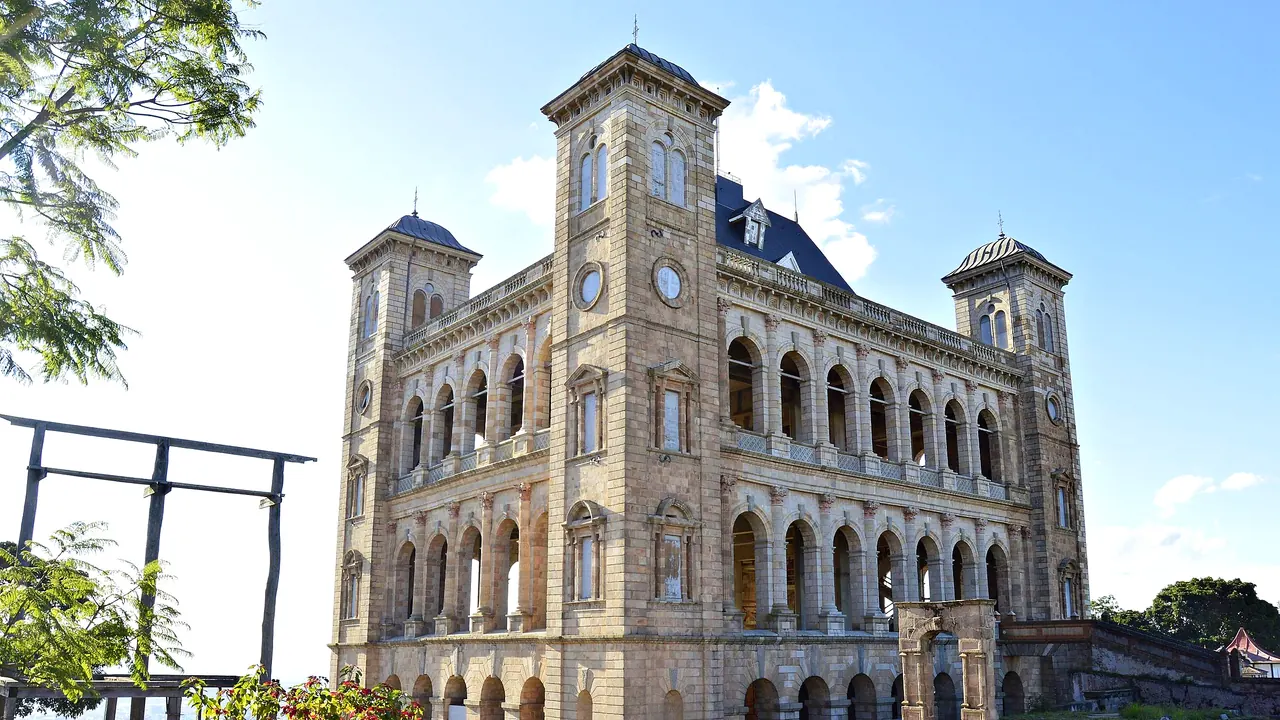
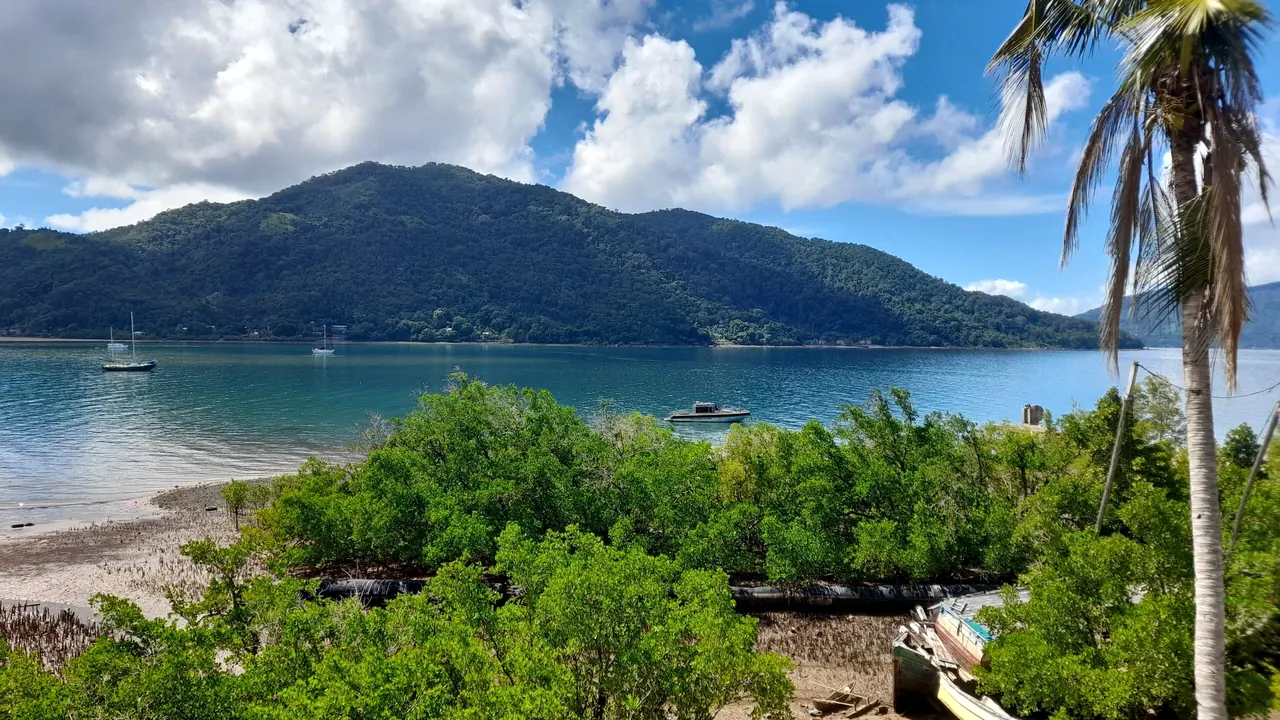
Photos: Antananarivo by ApexDynamo, CC BY-SA 4.0, cropped; Nosy Be by Anai171, CC BY-SA 4.0, cropped.
Antananarivo or Nosy Be?
Our verdict in twelve categories, each scored against the same fixed benchmark cities, and the climate month by month, so you can choose for your trip.
Choose Antananarivo for
- prices
- culture and sights
- shopping
Antananarivo suits the traveller who wants Madagascar's highland history and its people more than its shoreline. The Rova on its ridge, the balconied lanes of the Haute-Ville, the craft market and a weekend of salegy or hiragasy give a day or two of real interest. Everyday costs are very low, which helps. It works best as the opening stop of a longer journey, because the traffic is hard going and the parks and coast are a long way off.
Choose Nosy Be for
- beaches
- nature and the outdoors
- wellness
Nosy Be is the place to go for warm water, lemurs in the forest and the slow pace of an island. Its days revolve around boat trips to sandbars, snorkelling with turtles and evenings with rum on the beach, and families and anyone who wants to rest will find it far easier than the capital. There are almost no sights and little to buy, and a comfortable resort stay costs much more than the mainland.
Scoreboard
Twelve categories on one fixed scale from 0 to 100. The shaded stretch is the gap between the two.
Your match
Pick a travel style or drag the sliders, and both match scores follow your weighting.
Wins on prices and culture and sights with your weighting.
Wins on beaches and nature and the outdoors with your weighting.
What matters to you?
Category by category
What the scores mean for a trip.
Beaches & swimming
Antananarivo has no beach at all. It sits on the central plateau, with only reservoirs and hotel pools nearby, so swimming means planning a separate leg to the coast.
Nosy Be is built around the sea. Andilana in the north-west has the best sand on the main island, and the west-coast villages are handier for a swim, though narrower and weedy at low tide. The finest beaches are offshore, on Nosy Iranja's sandbar and the quieter shores of Sakatia and Komba.
Food & drink
The two eat quite differently, and the capital has a slight edge. Antananarivo has highland Malagasy cooking at its fullest, with ravitoto, romazava and mofo gasy at dawn, plus French bakeries and bistro-style dining rooms in Isoraka and the upper town.
Nosy Be eats from the sea, with prawns, crab and lobster cooked with vanilla, coconut or green pepper. Many beach restaurants in Ambatoloaka lean French or Italian. Both serve rhum arrangé, but neither is a destination to eat your way through.
Culture & sights
Antananarivo is clearly the place for history. The queen's palace in the Rova crowns the highest ridge, and the Haute-Ville around it has brick houses with wooden balconies, Protestant memorial churches and the cathedral at Andohalo. That is enough for a day or two of walking.
On Nosy Be, the sights are a short list: the colonial buildings of Hell-Ville, the sacred Sakalava banyan tree, the Russian sailors' cemetery and the old distilleries. A single morning covers it.
Nightlife
Neither has much going on after dark, though Nosy Be is a little livelier and easier. The Ambatoloaka strip puts a handful of bars and a couple of clubs within walking distance, with salegy and pop until late, despite its seedy edge. Antananarivo's cabarets and clubs draw a mostly local crowd, but the streets empty at night and every outing needs a taxi there and back.
Nature & outdoors
Nosy Be has Madagascar's wildlife on its doorstep. Black lemurs, panther chameleons and boas live in the Lokobe rainforest, and there are turtles and reef fish at Nosy Tanikely. Humpback whales pass from about July to November, and the crater lakes are visible from Mont Passot.
Around Antananarivo the landscape is farmed hills, rice paddies and eucalyptus. A small lemur reserve and the Tsimbazaza gardens are as close as a short stay gets to wildlife, and the real rainforest parks are overnight trips down the escarpment.
Day trips
Both are fairly thin on outings, but in different ways. From Antananarivo you travel by road to places: the royal hill of Ambohimanga, a World Heritage Site, the foundries of Ambatolampy and Lake Mantasoa. Slow roads put anything further out of reach in a day.
From Nosy Be you go out by boat, mostly to beaches and wildlife. Ampangorinana on Nosy Komba is the one real village, and the short crossing to Ankify opens up the cocoa and vanilla plantations of the Sambirano valley.
Good for families
Nosy Be is much the easier of the two with children. It has calm water at Andilana, lemurs on Nosy Komba, turtles to snorkel with and resort pools, although nothing is purpose-built for children and malaria and basic medical care call for planning.
In Antananarivo, the lemur reserve and Tsimbazaza are the only real draws. The traffic, fumes, steep stairs and poor pavements wear small children out quickly, so most families stay a night or two at most.
Getting around
Both take effort, but the island is less of a struggle. Nothing on Nosy Be is much more than an hour by road, and tuk-tuks, scooters or a hotel driver will get you there, though anything offshore means booking a boat.
Antananarivo's lower-town traffic can turn a short hop into an hour. The taxi-be minibuses are hard to work out, so visitors rely on taxis with a fare agreed first, and on steep climbs on foot in the upper town.
Shopping & style
Antananarivo is the better place to buy crafts. The long artisan market towards the airport sells raffia, embroidered linen, carved wood, zebu horn, Antemoro paper and gemstones, and Analakely is worth seeing for its sheer size.
Nosy Be offers a narrower range: spices in the Hell-Ville market, ylang-ylang oil from the distilleries and embroidery on Nosy Komba. Do your souvenir shopping in the capital.
Affordability
Antananarivo is the cheaper stay by a clear margin. Street food, beer, taxis and market crafts cost very little, and the main expenses are a hotel of international standard and a car with a driver for travelling on.
Nosy Be is Madagascar's resort island, and it is priced that way. Simple guesthouses and market meals stay cheap, but west-coast resorts, restaurants serving visitors and the daily boat trips come close to European prices, and you have to fly in.
Live music & performing arts
The capital has the deeper music scene. Hiragasy troupes perform at open-air events on the edge of the city, salegy and valiha players fill concert halls at weekends, and there is a long-running jazz festival. You will still need to ask locally to find out what is on.
Nosy Be's live music is mostly bar bands in Ambatoloaka and dance shows at hotel evenings. The big exception is Donia, the Indian Ocean music festival that fills Hell-Ville for several days around Pentecost.
Wellness & relaxation
Nosy Be is where you go to unwind, and the capital is not. The island's days follow the tide, the north-west around Andilana and the small resorts on the outer islands are especially quiet, and massages use local ylang-ylang, vanilla and coconut.
Antananarivo offers a few hotel spas and the calm of the upper-town lanes as a break from the noise and fumes below, and little more.
When should you go?
Pick your month. The climate figures are measured averages, not a forecast.
Antananarivo in July
Nosy Be in July
Daytime high, °C
Rainfall in the month, mm
Temperature and rainfall are climate normals, averaged over the years shown. Antananarivo: 1991-2020 (rainfall 1961-1990) normals, Antananarivo / Ivato (13 km from centre). Nosy Be: 1991-2020 normals, Fascene Nossi-Be (14.3 km from centre).
Antananarivo sits high enough on the plateau to stay mild. The dry months from May to September are the best time for walking its hills and stairways, with clear skies and cool days that reach only about 21°C in July. October warms up again to the level of midsummer, but it is still fairly dry and the sunniest month of the year, so it is a good time to go. From November to March the rains take over. December can bring 358mm, and heavy rain makes the steep streets hard work.
Nosy Be is hot all year, with daytime highs of 31°C or more around the west coast, where most visitors stay. Its rains come at the same time of year but fall harder, peaking at 404mm in January, so the island is at its best from about May to October, when the sea is calm and clear. The water is warm enough for swimming in every month and is at its coolest in August, at about 26°C. If you are combining the two, go between May and October, when both are at their driest.
Which traveller are you?
For a beach and sun trip, Nosy Be is the only real choice. The capital cannot match the long pale curve of Andilana, the sandbar at Nosy Iranja or the warm, calm water all year, because its nearest sea is a long road journey away.
On a culture and arts trip, Antananarivo gives far more. The royal Rova, the prime ministers' palace, the churches of the Haute-Ville and live hiragasy and valiha music fill a couple of days, while the island's sights take only a morning.
On a trip with a tight budget, Antananarivo stretches your money further. You can explore the Rova and the Haute-Ville lanes on foot by day for almost nothing. On Nosy Be, a cheap stay means a simple guesthouse in Hell-Ville, and you miss most of the islets and reefs that make the journey worthwhile.
Before you go
| Measure | Antananarivo | Nosy Be |
|---|---|---|
| Official language | French, Malagasy | French, Malagasy |
| Currency | Malagasy Ariary (MGA) | Malagasy Ariary (MGA) |
| Sockets | CEJK50 Hz | CEJK50 Hz |
| Driving side | Right | Right |
| Time zone | UTC+3 | UTC+3 |
| Emergency number | Police 117, ambulance 124, fire 118 | Police 117, ambulance 124, fire 118 |
| Elevation | 1,276 m | - |
| Main airport | Ivato International Airport (TNR)13 km from centre18 non-stop destinations | Nosy Be International Airport (NOS)8 non-stop destinations |
| Public holidays this year | 10 days | 10 days |
By the numbers
| Measure | Antananarivo | Nosy Be |
|---|---|---|
| Population | 1,275,207 | 60,000 |
| People per km² | 14,491 | 207 |
| Museums within 10 km | 2 | - |
| UNESCO World Heritage sites within 50 km | 1 | - |
| Swim season, months above 21 °C | - | 12 months |
Where else could you go?
Every comparison below shares a destination with this one, so you can follow Antananarivo or Nosy Be somewhere new.
- Moronivs Nosy Be
- Port Louisvs Antananarivo
- Réunionvs Nosy Be
- Port Louisvs Nosy Be
- Mahevs Nosy Be
- Zanzibarvs Nosy Be