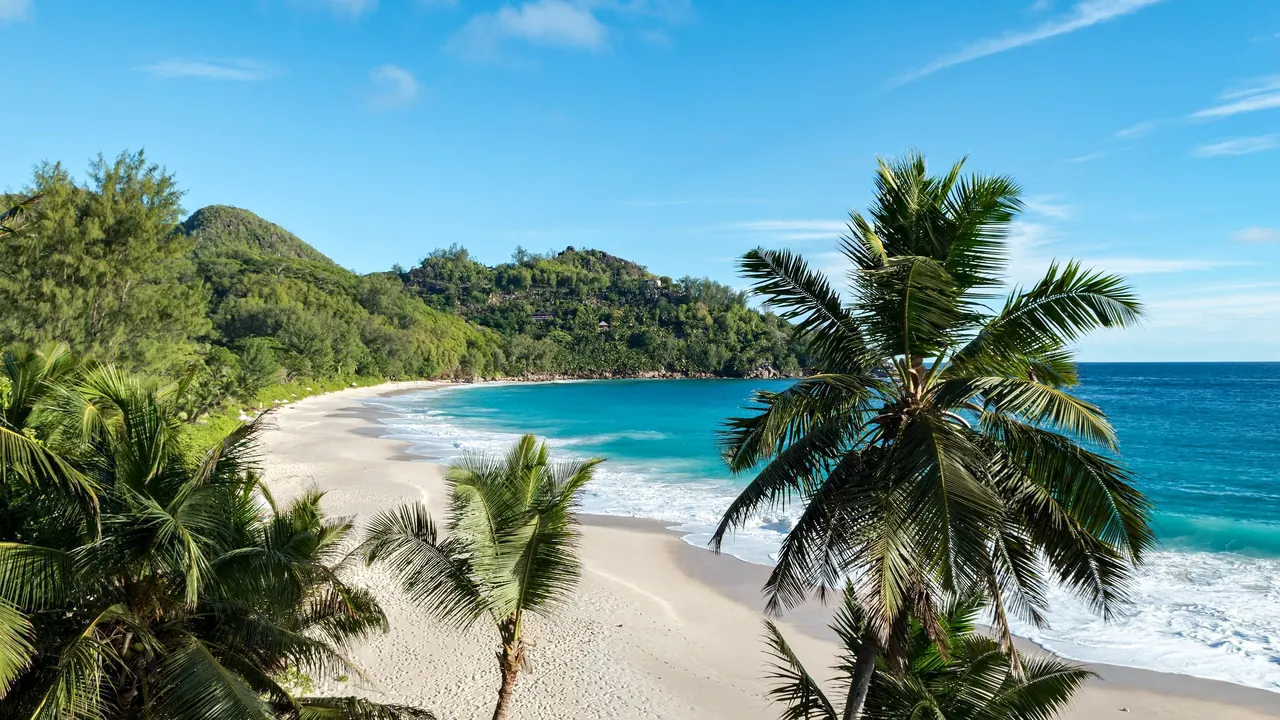
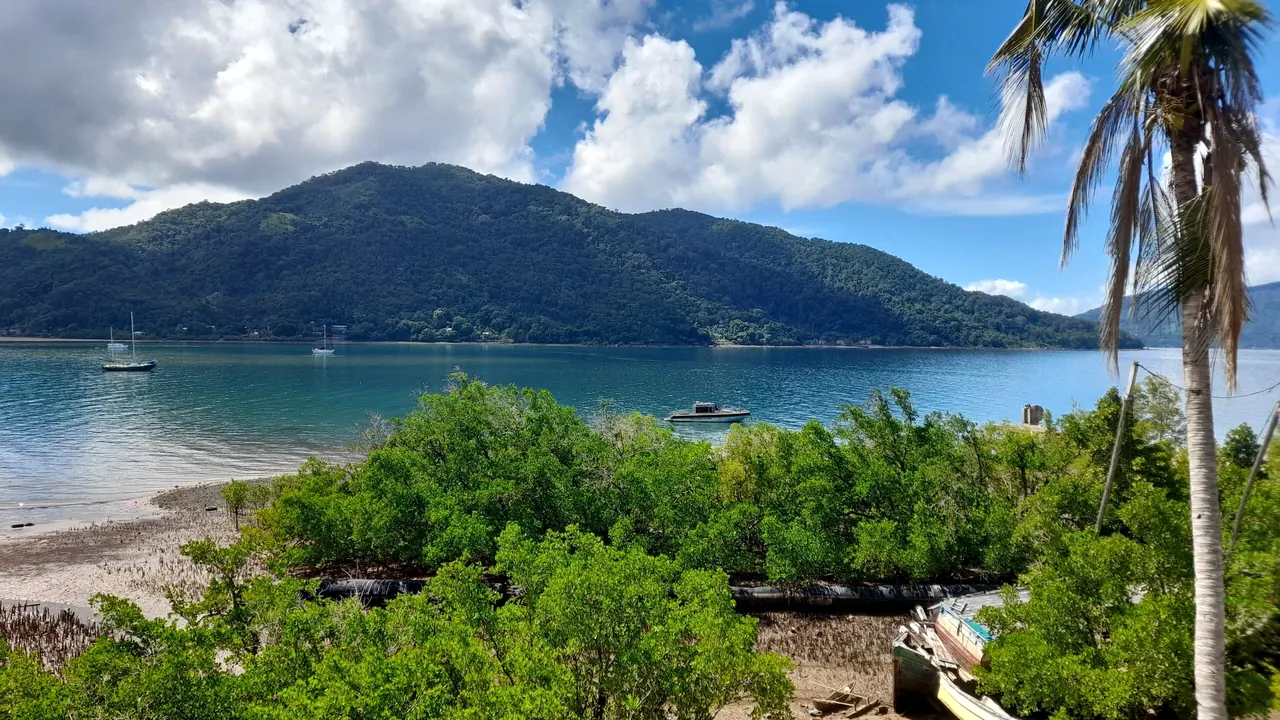
Photos: Mahe by dronepicr, CC BY 2.0, cropped; Nosy Be by Anai171, CC BY-SA 4.0, cropped.
Mahe or Nosy Be?
Our verdict in twelve categories, each scored against the same fixed benchmark cities, and the climate month by month, so you can choose for your trip.
Choose Mahe for
- beaches
- wellness
- day trips
Mahe is the better choice if the beach and a quiet room on it come first, and the budget can take it. Its granite-framed coves run around the whole coast, there is nearly always a calm shore whatever the wind is doing, and the resort spas are the best in either place. It also does a little better on the days away from the sand, with ferries to Praslin and La Digue and a small capital to wander. Families with young children will find it easier going.
Choose Nosy Be for
- prices
- nightlife
- live music and the arts
Travellers who come for wildlife and want their money to last should look at Nosy Be. Lemurs and chameleons in Lokobe, turtles at Tanikely and whales passing offshore make the outdoor side as strong as Mahe's, and local food, taxis and guesthouses cost far less. Evenings in Ambatoloaka have more going on too. In return, the beaches on the main island are weaker, the best sand is a boat ride away, and malaria, rough roads and the extra flight to get there all take more patience.
Scoreboard
Twelve categories on one fixed scale from 0 to 100. The shaded stretch is the gap between the two.
Your match
Pick a travel style or drag the sliders, and both match scores follow your weighting.
Too close to call, 1 point apart
Wins on beaches and wellness with your weighting.
Wins on prices and nightlife with your weighting.
What matters to you?
Category by category
What the scores mean for a trip.
Beaches & swimming
Mahe has the finer beaches and many more of them. Fine white sand sits between rounded granite boulders, Beau Vallon is easy for a long family swim, and there are small coves like Anse Soleil and surf beaches like Anse Intendance to the south. The trade winds change which shore is calm, but some coast is always calm, so the beach suits most of the year.
Nosy Be's best beach on the main island is Andilana, a long, calm curve with sunsets over the Mozambique Channel. The village beaches on the west coast are narrower, with seaweed and shallow water at low tide. The best sand is offshore, at the Nosy Iranja sandbar or on Sakatia and Komba, so your best beach days usually start with a boat trip.
Food & drink
Both islands cook mainly with fish and coconut, and neither has much range. Mahe's Creole cooking runs to octopus curry, grilled job fish and ladob, and the best of it is at the Victoria market and the roadside curry takeaways. Nosy Be adds Malagasy staples such as romazava and zebu with rice. Its beach restaurants also lean French and Italian, so pizza and crêpes are as easy to find as local dishes.
To drink, Mahe has SeyBrew beer and the palm and cane brews kalou and baka. Nosy Be pours rhum arrangé, rum steeped with vanilla or fruit, in almost every bar.
Culture & sights
Neither island is a culture trip, but Mahe gives you slightly more to look at. Victoria has its Clock Tower, a Hindu temple, two cathedrals and the National History Museum. Out on the island are the mission ruins at Sans Souci and the Creole plantation houses at Domaine de Val des Prés.
Nosy Be's sights fit into one morning. You can see the old colonial street and market in Hell-Ville, the sacred Sakalava banyan tree, where visitors go barefoot, the graves of Russian sailors from 1905, and a ylang-ylang distillery.
Nightlife
Nosy Be has more nightlife. Ambatoloaka has a short strip of bars and a couple of clubs that play salegy and pop until late, especially at weekends. The crowd is a mix of visitors, expats and locals, and some visitors find the strip a bit seedy.
On Mahe, evenings mostly mean sundowners and dinner. Beau Vallon's evening market and weekend beach-bar bands are the liveliest it gets, and most of the island is asleep by eleven.
Nature & outdoors
Both islands are equally strong on nature, but in different ways. Mahe is about mountains and seabirds. Morne Seychellois climbs through cloud forest and pitcher plants to granite viewpoints over the reef, and boats go out to the Aldabra tortoises and to the seabird colonies on Cousin and Aride.
Nosy Be is about animals in the forest and big creatures in the sea. You reach Lokobe by pirogue and walk it with a guide, looking for black lemurs, panther chameleons and boas. Humpback whales pass from July to November and whale sharks gather from October to December. Both islands have good snorkelling, in Mahe's marine parks and at Nosy Tanikely.
Day trips
Mahe has the better day trips, although most outings still come back to beach, forest and village. Two stand out. The fast ferry reaches Praslin in about an hour, and the Vallée de Mai there is the forest where the coco de mer palm grows. La Digue, a short hop further, is the place to slow down to village pace among bicycles, ox carts and the old L'Union plantation around La Passe.
From Nosy Be, most outings are boat trips to beaches and reefs. The two that add a bit of variety are the craft village of Ampangorinana on Nosy Komba and the crossing to Ankify for the cocoa and vanilla plantations of the Sambirano valley.
Good for families
Mahe is easier with children. It is safe and relaxed, the resorts have kids' clubs and family rooms, and the shallow water at Beau Vallon and the giant tortoises in the botanical garden are easy wins. Watch for strong currents on some beaches in the windy months.
Children love Nosy Be's lemurs on Nosy Komba and turtles at Tanikely, but there are more practical hurdles. Malaria is present, medical care is basic, the roads are rough and getting there means long flights. It works best for older children who enjoy wildlife.
Getting around
Mahe is a little easier to get around. Public buses run from Victoria to almost every bay, though they are slow and you often have to change in town. Many visitors hire a small car for the steep, winding roads, where traffic drives on the left, and ferries and small planes leave from near the capital.
Nosy Be has no buses a visitor would really use beyond shared minibuses, so you rely on taxis, tuk-tuks, a hired scooter or a hotel driver on potholed roads. Most of what you came for is offshore, so many days are organised around a boat.
Shopping & style
Shopping is small and much the same on both islands, mostly spices and crafts. Mahe's Victoria market sells vanilla, chilli sauces and tea, and its best-known souvenir is a polished coco de mer nut, which needs an export permit. On Nosy Be you can buy ylang-ylang oil straight from the distilleries, and villagers on Nosy Komba sell hand-embroidered tablecloths along the paths.
Affordability
Nosy Be is much cheaper. Local meals, market food, taxis and simple guesthouses cost little, although beach resorts, boat excursions and the flight in are close to European prices.
Mahe is expensive almost however you travel, because nearly everything is imported. A Creole guesthouse, market fish and the public bus bring the cost down, but even then a stay costs well over what you would pay on Nosy Be for the same kind of trip.
Live music & performing arts
Neither island has theatre or concerts you could plan a trip around, so the timing of their festivals matters most. On Mahe, the Festival Kreol fills Victoria with music and dance in late October, and the rest of the year you mostly see sega and moutya at hotel shows. On Nosy Be, the Donia festival takes over Hell-Ville around Pentecost, and at other times salegy bands play in the Ambatoloaka bars.
Wellness & relaxation
Mahe is the better place to unwind properly. Many hotels have a bay to themselves, and the big resorts on the west and south coasts have spa pavilions on the hillside and yoga decks. The south-west and north-west coasts are the calmest places to stay, but treatments cost a lot.
Nosy Be is just as slow-paced, especially around Andilana and on the outlying islets, but there are fewer and simpler spas. Massages there use the island's own ylang-ylang oil, sometimes from local masseuses under the trees on the beach.
When should you go?
Pick your month. The climate figures are measured averages, not a forecast.
Mahe in July
Nosy Be in July
Daytime high, °C
Rainfall in the month, mm
Where the figures come from
Mahe's station stands 237 m below the place it is measured for, so that place is likely a little cooler than the figures say.
Temperature and rainfall are climate normals, averaged over the years shown. Mahe: 1991-2020 normals, Seychelles International Airport (10 km from centre). Nosy Be: 1991-2020 normals, Fascene Nossi-Be (14.3 km from centre).
Both islands are hot all year, and the sea is warm enough to swim in every month, cooling only to about 26°C in July and August. The real difference is rain. Mahe has no truly dry month. It is wettest from December to March, peaking in January, and still gets steady showers through the middle of the year. Its sunniest stretch runs from April to August, and April and October, between the two trade-wind seasons, bring calm water around the whole island.
Nosy Be, measured on the coast where most visitors stay, has a proper dry season. From April to November it gets far less rain than Mahe, about 50mm in May against Mahe's 168mm, and almost none in July and August, when the sea is at its clearest. Afternoons there are a little hotter, reaching 33°C either side of the dry season, so long walks in the middle of the day are hard work. For any trip from April to November, Nosy Be is the drier choice. From December to March both islands are in their rainy season. Mahe is usually slightly less wet then, though January is very wet on both.
Which traveller are you?
On a beach and sun trip, choose Mahe. It has more than sixty beaches of white sand between granite boulders, and there is always a sheltered coast to switch to. On Nosy Be, the best sand is mostly on islets you reach by boat.
On a tight budget, Nosy Be makes more sense. Market meals, zebu stew at roadside places, taxis and simple guesthouses in Hell-Ville or Ambatoloaka are cheap. On Mahe, even guesthouses, takeaway curry and the bus leave the bill high.
For a relaxing and wellness trip, Mahe is the better pick. Stay on the quiet south-west or north-west coast, away from Victoria and the busier end of Beau Vallon, where evenings end early and a treatment is always close by. On Nosy Be, base yourself near Andilana, well away from Ambatoloaka's late bars.
Before you go
| Measure | Mahe | Nosy Be |
|---|---|---|
| Official language | French, English, Seychellois Creole | French, Malagasy |
| Currency | Seychelles Rupee (SCR) | Malagasy Ariary (MGA) |
| Sockets | G240 V, 50 Hz | CEJK50 Hz |
| Driving side | Left | Right |
| Time zone | UTC+4 | UTC+3 |
| Emergency number | 112 or 999 | Police 117, ambulance 124, fire 118 |
| Main airport | Seychelles International Airport (SEZ)19 non-stop destinations | Nosy Be International Airport (NOS)8 non-stop destinations |
| Public holidays this year | 13 days | 10 days |
By the numbers
| Measure | Mahe | Nosy Be |
|---|---|---|
| Population | 77,000 | 60,000 |
| People per km² | 490 | 207 |
| Swim season, months above 21 °C | 12 months | 12 months |
Where else could you go?
Every comparison below shares a destination with this one, so you can follow Mahe or Nosy Be somewhere new.
- Praslinvs Mahe
- La Diguevs Mahe
- Moronivs Nosy Be
- Antananarivovs Nosy Be
- Réunionvs Nosy Be
- Port Louisvs Nosy Be