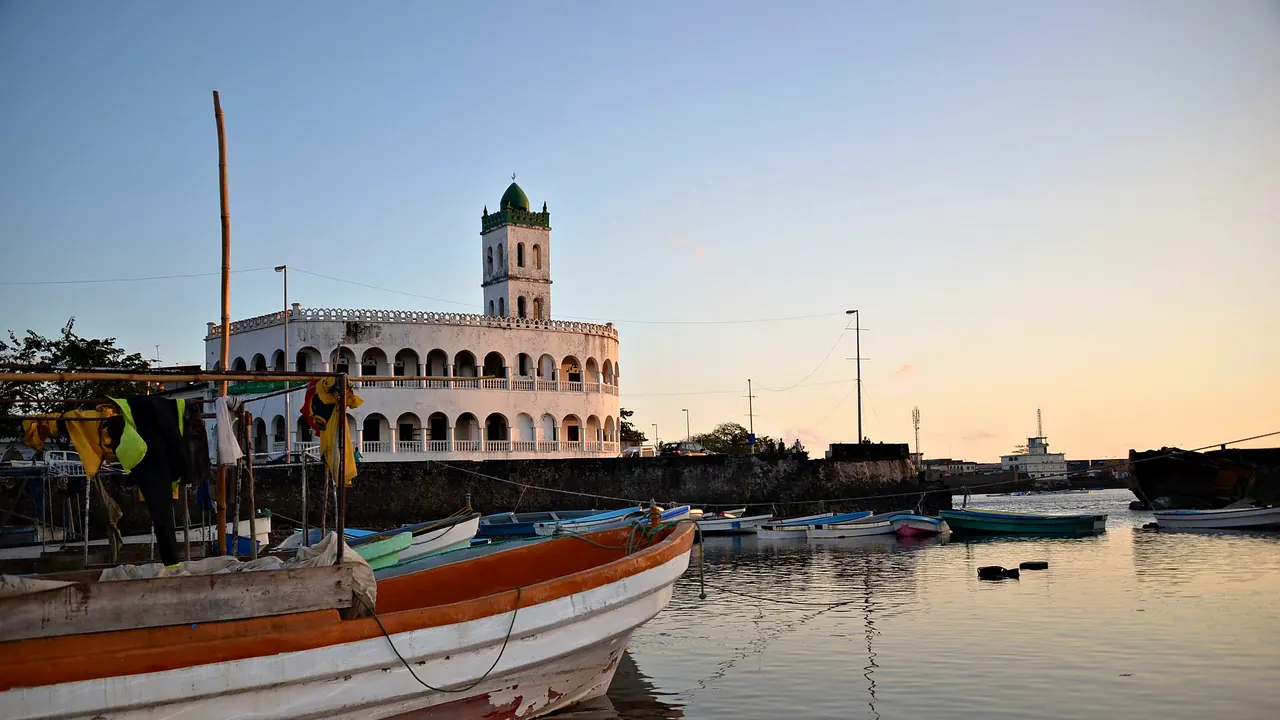
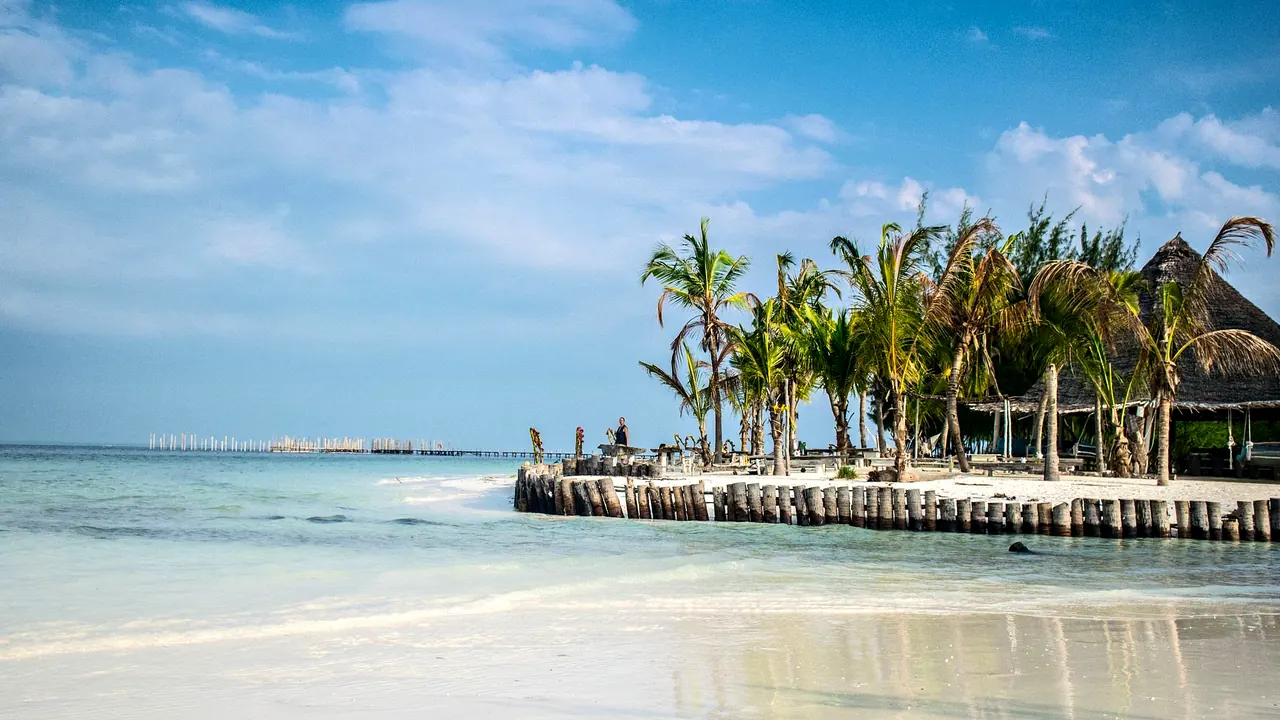
Photos: Moroni by GeGki, CC BY-SA 4.0, cropped; Zanzibar by Ákos Helgert, Pexels License.
Moroni or Zanzibar?
Our verdict in twelve categories, each scored against the same fixed benchmark cities, and the climate month by month, so you can choose for your trip.
Choose Moroni for
Moroni does not lead in any category we score.
Moroni suits the traveller who wants an island barely touched by tourism and is happy to make their own arrangements. Its draw is Mount Karthala, an active volcano you can climb over two days, along with the quiet white-sand coves up the west coast towards Mitsamiouli and the coral-stone medina behind the old harbour. Expect few comforts, early nights and simple food. In return you get places largely to yourself.
Choose Zanzibar for
- wellness
- culture and sights
- nightlife
For almost any beach vacation, Zanzibar is the easier and fuller choice. The northern beaches at Nungwi and Kendwa can be swum at any tide, and Stone Town is an old town with real depth. Spas, beach bars, a night food market and reef trips fill the days. Couples, families and first-timers on the Swahili coast will find far more ready-made here, though they will share it with many other visitors.
Scoreboard
Twelve categories on one fixed scale from 0 to 100. The shaded stretch is the gap between the two.
Your match
Pick a travel style or drag the sliders, and both match scores follow your weighting.
Has no clear advantage with the weighting you have chosen.
Wins on wellness and culture and sights with your weighting.
What matters to you?
Category by category
What the scores mean for a trip.
Beaches & swimming
Moroni's own shore is black lava, so swimming means driving out. Itsandra is close by, and the better white-sand coves at Maloudja and Bouni are under an hour north, with coral near the shore but little shade or service. Their main appeal is that they are quiet.
Zanzibar is built around its beaches. Kendwa and Nungwi in the north have deep water at every tide and full resort facilities. The east coast from Paje to Jambiani is lovely, though the sea pulls far out at low tide. For a trip built around the beach, Zanzibar gives far more choice and comfort.
Food & drink
Both kitchens are built on coconut, cloves and fish from the Indian Ocean. In Moroni, though, you are limited to hotel dining rooms, simple local places and fish grilled over charcoal on the seafront, and langouste in vanilla sauce is the dish to seek out.
Zanzibar gives you more to explore: the Forodhani Gardens night market, urojo from street stalls, and biryani and octopus curry in Stone Town. Its beach towns fall back on buffets, though. Alcohol is also easier to find on Zanzibar, even if it is still mostly in hotels and tourist places.
Culture & sights
Each has a coral-stone old town by its harbour, and both reward slow walking. Moroni's is small: the Old Friday Mosque above the dhow anchorage, the medina lanes behind it and a modest national museum, all covered in a morning.
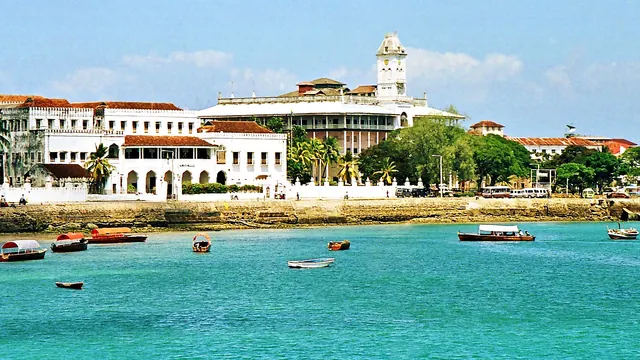
Stone Town is a larger, UNESCO-listed version with far more history in it, from the Old Fort and the sultans' Palace Museum to the cathedral on the site of the last slave market. The ruined palaces at Maruhubi and Mtoni and the Persian baths at Kidichi add half-days outside town.
Nightlife
Neither is a place for clubbing, but the gap is still wide. In Moroni the evening ends with a stroll by the harbour and dinner, and a hotel bar is the only place to get a drink.
Zanzibar at least gives you a choice. There are beach bars, bonfires and full-moon parties at Nungwi and Kendwa, a laid-back kitesurfer bar scene in Paje and rooftop sundowners in Stone Town, though most of it is quiet by midnight.
Nature & outdoors
Here the choice is volcano against reef. Moroni's outdoors is rough and mostly on foot: the climb up Karthala to its caldera, black lava shores with blowholes and the crater lake of Lac Salé. Offshore there are reefs, and humpback whales pass from about July to October. Trails are unmarked, so you need to look after yourself.
Zanzibar's outdoors is mostly on the water: snorkelling with turtles at Mnemba, dolphin boats from Kizimkazi and kitesurfing on the Paje lagoon. On land there are the red colobus monkeys of Jozani Forest. Zanzibar is easier to organise, but Moroni has the wilder landscape.
Day trips
Outings from Moroni are to quiet villages on Grande Comore: Iconi with its old walls and its cliff, the ruined fort at Itsandra and the old mosques of Ntsaoueni. There is little explanation on site, so a guide helps.
Zanzibar's trips are short but more varied and easier to book: the giant tortoises on Changuu, sandbank swims, spice farm tours, and from the beach, Stone Town itself. Neither works for a day trip off the island, since Moheli and Anjouan, Dar es Salaam and Pemba are all better as overnight trips.
Good for families
Zanzibar is the more workable choice with children. North-coast resorts have pools, Kendwa's calm water can be swum at all tides, and the tortoises on Changuu and the monkeys in Jozani make easy outings.
Moroni has little beyond the northern beaches and the reef shallows. With rough pavements and nothing aimed at children, it suits only experienced families with older ones. Both need malaria precautions and have limited medical care.
Getting around
Both have a walkable old town and little public transport a visitor would rely on: shared taxis and taxi-brousse in Moroni, dala-dalas on Zanzibar. Zanzibar is somewhat easier, with paved main roads, routine hotel transfers to the beach towns and beach villages you can walk along the sand. In Moroni most visitors hire a car and driver to reach Karthala or the north on potholed roads, and some French goes a long way.
Shopping & style
Neither is a shopping destination, and both send you to a market for spices. Moroni's Volo Volo market mostly sells everyday goods, and the souvenirs worth carrying home are vanilla, cloves, ylang-ylang essence and the embroidered kofia caps.
Zanzibar adds Stone Town's craft shops, with kanga cloth, carved chests, Tingatinga paintings, silver and tanzanite. Much of it repeats from stall to stall, and haggling is expected.
Affordability
Both are cheap if you live as locals do and costly if you want comfort. Moroni's few reliable hotels charge more than their standard justifies, and seeing the island means paying for a car and driver. Zanzibar is a little easier on the purse because it has a more developed budget end, with Stone Town guesthouses and simple bungalows around Paje and Jambiani, although northern resorts and boat trips add up and the peak months cost the most.
Live music & performing arts
Both islands have a sung Swahili tradition, twarab in Moroni and taarab on Zanzibar. In Moroni you hear it only at grand mariage weddings, if you are invited or happen to pass in the street.
Zanzibar makes it easier to catch: the music school and cultural halls in Stone Town host rehearsals and small performances, and the dry season brings festivals of East African music and film. Neither island has a theatre or a concert season.
Wellness & relaxation
Rest in Moroni is unorganised: a quiet capital, a terrace above the sea and massage at a few hotels.
Zanzibar has more for anyone who wants to unwind. There are resort spas using coconut oil and local spices, yoga around Paje and Jambiani, and beach villages where the day follows the tide. Neither island has a bathing tradition still in use.
When should you go?
Pick your month. The climate figures are measured averages, not a forecast.
Moroni in July
Zanzibar in July
Daytime high, °C
Rainfall in the month, mm
Where the figures come from
Moroni has no rain gauge within 25 km of the centre, so its rainfall comes from a gridded climate dataset read at the destination rather than from a gauge further away.
Zanzibar's temperatures are measured 78 km from the centre, at Dar Es Salaam Airport.
Zanzibar has no rain gauge within 25 km of the centre, so its rainfall comes from a gridded climate dataset read at the destination rather than from a gauge further away.
Temperature and rainfall are climate normals, averaged over the years shown. Moroni: 2005-2025 (rainfall 1991-2020) normals, Hahaya International Airport (19 km from centre). Zanzibar: 1991-2020 normals, Dar Es Salaam Airport (77.9 km from centre).
Both places are hot all year, with daytime highs of about 29°C to 33°C, so neither ever turns cold, and walking at midday is tiring in any month. In both, the sea stays warm enough to swim in all year round. The real difference is the rain. Moroni is wet for most of the year, heaviest from January to May with over 300mm in January, and only dries out properly from August to October. September has about 59mm, and that late dry spell is the best time to visit and to climb Karthala.
Zanzibar has two clear dry spells, June to October and again January to February. Both are sunny on the island. Its one hard wet season is April and May, when April brings about 363mm and many grey days, and November and December are showery. So Zanzibar works for much more of the year, while Moroni narrows to a few months at the end of its dry season. August to October suits both.
Which traveller are you?
For walkers who want to climb a volcano, choose Moroni. Karthala rises right behind the town, and the guided two-day ascent, with a night camped near the rim, is the outing people remember. Zanzibar has no high ground to compare.
On a beach and sun trip, base yourself on Zanzibar. From Moroni every swim means a drive north to coves with little shade. On Zanzibar you wake beside the sand and can choose between lively Nungwi and quiet Matemwe.
For a relaxing and wellness trip, Zanzibar makes rest easier to arrange. Moroni is peaceful, but it has few comfortable hotels. On Zanzibar's east coast you can settle into a bungalow for a week, with yoga and massage a short stroll along the sand.
Before you go
| Measure | Moroni | Zanzibar |
|---|---|---|
| Official language | French, Arabic, Comorian | English, Swahili |
| Currency | Comorian Franc (KMF) | Tanzanian Shilling (TZS) |
| Sockets | CE220 V, 50 Hz | G230 V, 50 Hz |
| Driving side | Right | Left |
| Time zone | UTC+3 | UTC+3 |
| Emergency number | Police 17, ambulance 18 | Police 112, ambulance 115, fire 114 |
| Elevation | 29 m | - |
| Main airport | Prince Said Ibrahim International Airport (HAH)19 km from centre6 non-stop destinations | Abeid Amani Karume International Airport (ZNZ)40 non-stop destinations |
| Public holidays this year | - | 13 days |
By the numbers
| Measure | Moroni | Zanzibar |
|---|---|---|
| Population | 85,400 | 896,721 |
| People per km² | 2,847 | 569 |
| Museums within 10 km | 1 | - |
| UNESCO World Heritage sites within 50 km | 1 | - |
| Swim season, months above 21 °C | 12 months | 12 months |
Where else could you go?
Every comparison below shares a destination with this one, so you can follow Moroni or Zanzibar somewhere new.
- Dar es Salaamvs Zanzibar
- Dianivs Zanzibar
- Mombasavs Zanzibar
- Ngorongorovs Zanzibar
- Nosy Bevs Moroni
- Serengetivs Zanzibar