Photos: Serengeti by DipaliLath, CC BY-SA 4.0, cropped; Zanzibar by Ákos Helgert, Pexels License.
Serengeti or Zanzibar?
Our verdict in twelve categories, each scored against the same fixed benchmark cities, and the climate month by month, so you can choose for your trip.
Choose Serengeti for
- nature and the outdoors
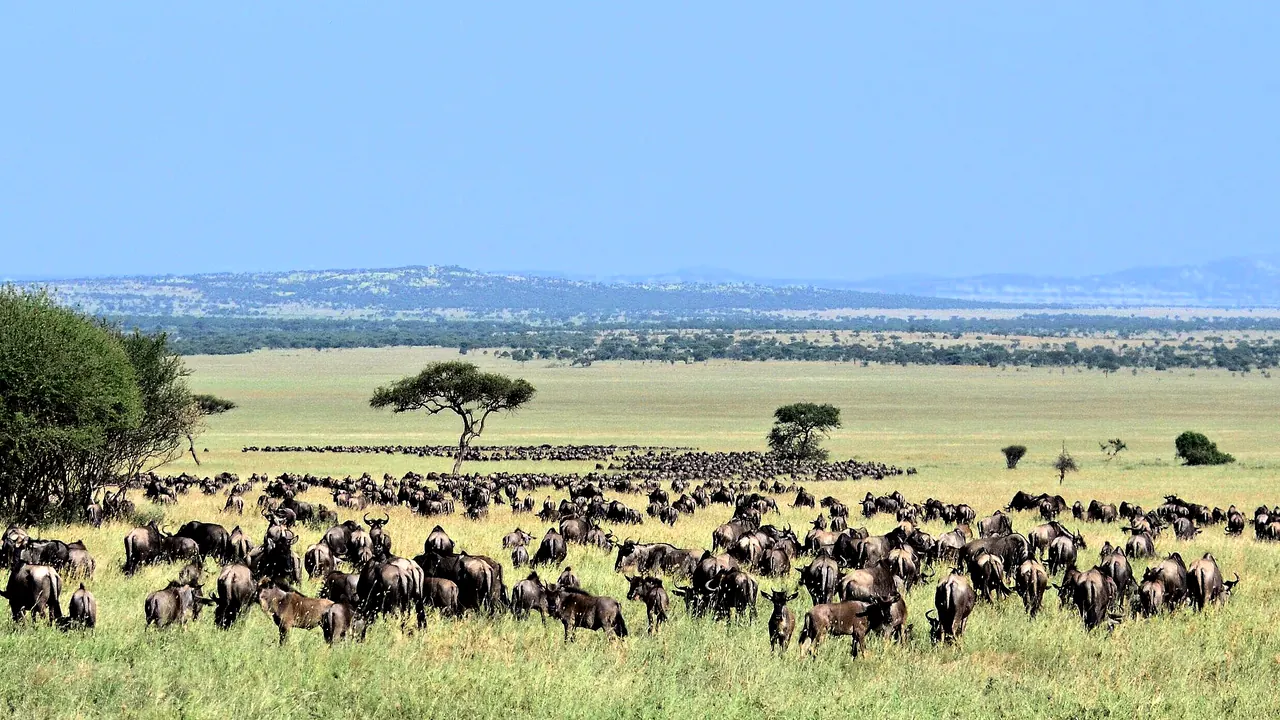
Choose the Serengeti if the trip is about animals. Its plains, kopjes and river crossings carry the wildebeest migration and some of the finest big-cat watching anywhere, and everything else, from meals to evenings to rest, fits around game drives at dawn and in the late afternoon. It is a remote and expensive trip with no towns, beaches or going out, so it suits travellers happy to give a few days entirely to wildlife.
Choose Zanzibar for
- beaches
- culture and sights
- prices
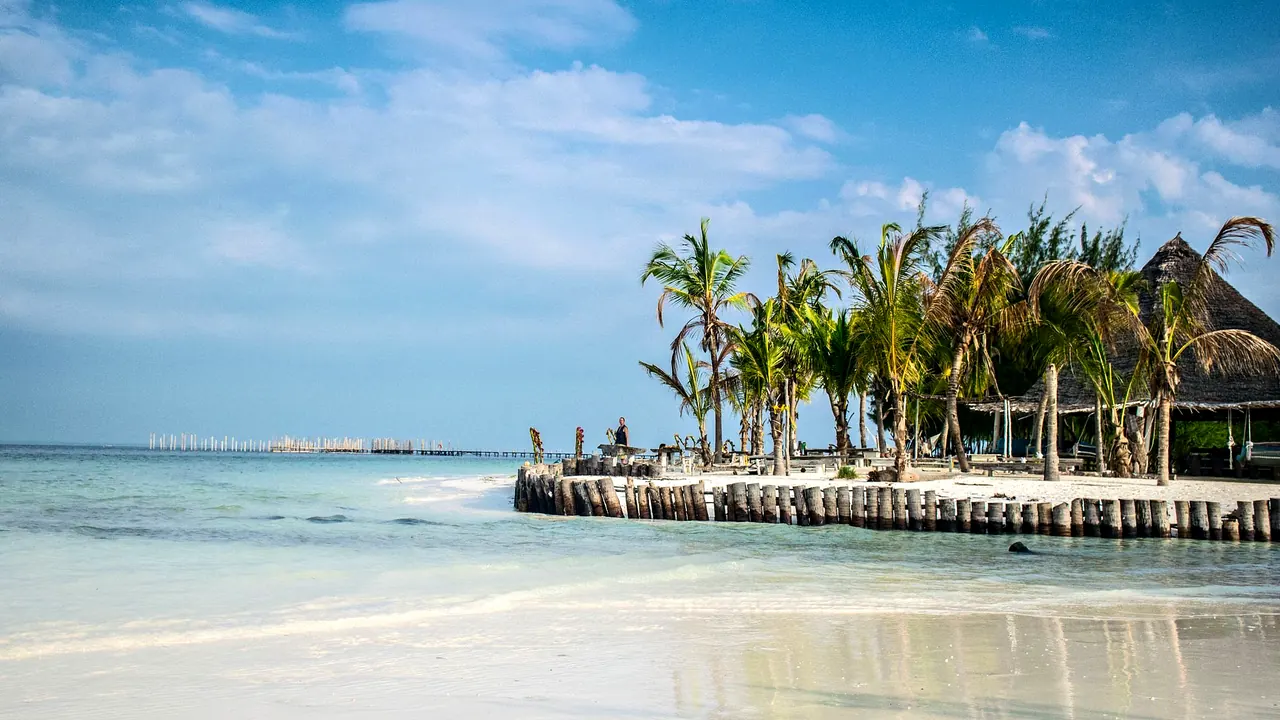
Zanzibar is the better pick for a warm-water beach stay with some history attached. White coral sand on the north coast, the Swahili lanes of Stone Town, clove-scented cooking and a slow island pace make it a place to unwind rather than rise before dawn, and a day there costs far less. Its wildlife is reef fish, turtles and colobus monkeys rather than lions, which is why so many travellers end a safari on its coast.
Scoreboard
Twelve categories on one fixed scale from 0 to 100. The shaded stretch is the gap between the two.
Your match
Pick a travel style or drag the sliders, and both match scores follow your weighting.
Wins on nature and the outdoors with your weighting.
Wins on beaches and culture and sights with your weighting.
What matters to you?
Category by category
What the scores mean for a trip.
Beaches & swimming
This is the sharpest contrast between the two. The Serengeti lies far inland, the freshwater of Lake Victoria carries a risk of parasites, and the only place to swim is a lodge or camp pool.
Zanzibar is built around its beaches: white coral sand, an ocean warm all year, deep-water swimming at Kendwa and Nungwi, and quieter stretches facing the reef at Matemwe. On the east coast around Paje the sea goes out a long way at low tide, so there you swim by the tide table.
Food & drink
In the Serengeti, food comes with the bed. You get set menus or buffets at the lodge, a packed breakfast on the game drive and perhaps a dinner in the bush by lantern light. Some camps cook well, but there is nothing to explore beyond them.
Zanzibar has a cuisine of its own: Swahili cooking scented with clove and cardamom from centuries of Indian Ocean trade. The evening market in Forodhani Gardens, urojo from street stalls, and fresh octopus and tuna give you plenty to try, although the beach towns offer little beyond grilled fish and resort menus.
Culture & sights
Sights hardly feature in the Serengeti. There are Maasai rock paintings and the gong rock at the Moru Kopjes, plus the visitor centre at Seronera. The deeper human story lies outside the park.
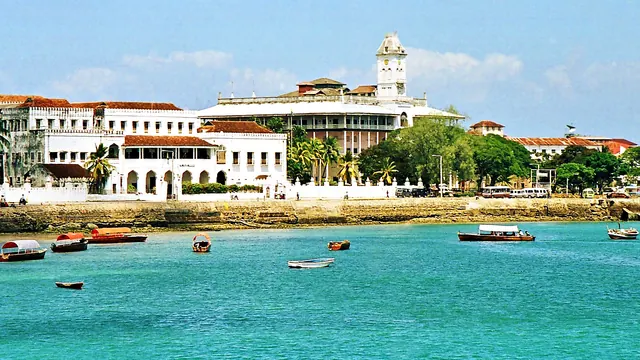
Zanzibar has a whole UNESCO-listed old town. Stone Town's carved doors, the Old Fort, the Palace Museum and the cathedral on the site of the last open slave market repay days of walking. Further out are the Omani palace ruins and the Persian baths at Kidichi.
Nightlife
The Serengeti has no going out at all. Evenings are a drink by the campfire, an early dinner and bed before a dawn start, with lions and hyenas calling in the dark.
Zanzibar gives you a gentle night out: beach bars and bonfires at Nungwi and Kendwa, a well-known full-moon party, kitesurfer bars in Paje and sundowners on Stone Town's rooftops. Clubs are scarce, though, and most places are quiet by midnight.
Nature & outdoors
The two differ in scale as much as in kind. The Serengeti is a savannah ecosystem big enough to carry a whole migration, while Zanzibar's wild side fits into a reef, a lagoon and one patch of forest. In the Serengeti the herds set the shape of the trip: calving on the short-grass plains around Ndutu early in the year, the Grumeti River in the western corridor from about May to July, and the Mara River crossings in the north from July to October. Leopards and lions are seen among the granite kopjes of the Seronera valley.
Zanzibar is a flat coral island, so most of its outdoors is on the water: snorkelling and diving around Mnemba atoll, dolphin trips from Kizimkazi and kitesurfing in the trade winds over the Paje lagoon. On land, the red colobus monkeys of Jozani Forest are the highlight. It fills a relaxed week well, but nothing on the island compares in scale with the plains.
Day trips
From the Serengeti, outings are few and long. Olduvai Gorge and its site museum lie off the south of the park, there are Maasai villages near the boundaries, and the fishing shores of Lake Victoria can be reached from the western corridor, all over rough tracks.
Zanzibar's outings are shorter and easier to fit in. You can see the giant tortoises on Changuu, tour a spice farm, swim from a sandbank or visit the old mosque at Kizimkazi, and from the beaches Stone Town itself is the main day out.
Good for families
Both need malaria precautions and neither has attractions built for children, but Zanzibar is the easier of the two. The Serengeti can be the more memorable trip for children of about eight and older who will sit through hours of bumpy game drives. Unfenced camps and minimum ages make it hard with toddlers.
On Zanzibar, the north-coast resorts have pools and calm water, and the tortoises on Changuu and the monkeys in Jozani make simple half-day outings for younger children.
Getting around
Every Serengeti visitor travels in a guided safari vehicle. Nothing is walkable and there is no public transport. The road from Arusha takes most of a day, and small planes between airstrips such as Seronera and Kogatende save hours but cost more.
Zanzibar gives you more freedom. You explore Stone Town on foot, and the beach villages are easy to walk along the sand. Taxis, hotel transfers and slow dala-dala minibuses link them over paved roads, with Nungwi and Paje each about an hour from town.
Shopping & style
Shopping in the Serengeti goes no further than lodge gift shops and the beadwork and blankets sold at Maasai villages on the way in. Zanzibar has much more: spices by the bag at Darajani market, plus kanga and kikoi cloth, Tingatinga paintings and tanzanite in Stone Town's lanes, though much of it repeats from stall to stall and you are expected to haggle.
Affordability
Day for day, Zanzibar costs much less. In the Serengeti you pay simply for being there: park fees are charged per person each day, a guided vehicle is all but required, and remote camps price in the cost of bringing everything in over long tracks. Small-plane hops between airstrips add more, and even a basic camping safari costs far more per day than travel elsewhere in Tanzania. The green season of November and the early months of the year brings lower lodge rates, but the fees and the vehicle cost the same.
Zanzibar has nothing like that fixed daily outlay, so the bill follows your choices. Eating in the old town and sleeping simply on the east coast keep it low, while north-coast resorts, imported drinks, dives and boat trips are priced for visitors and add up fast. Much of the island's accommodation is mid-range to upmarket, and Christmas and July to August are the dearest months.
Live music & performing arts
The only performances in the Serengeti are Maasai song and the jumping dance, put on at some lodges and during village visits. Zanzibar has its own music in taarab, an orchestral blend of Swahili poetry with Arabic and Indian melody, which you can hear at Stone Town's music school and cultural halls. It also has ngoma drumming and festivals of East African music and film in the dry season, though there is no theatre or concert season.
Wellness & relaxation
Rest in the Serengeti comes in the gaps: quiet midday hours by the pool or on a tent veranda between the morning and afternoon drives. Spas exist only at a few higher-end lodges, and the early starts keep it from being truly restful.
Zanzibar is the place to unwind. Life in the beach villages follows the tide and the call to prayer, resorts on the north and east coasts offer massages with coconut oil and local spices, and yoga is easy to find around Paje and Jambiani.
When should you go?
Pick your month. The climate figures are measured averages, not a forecast.
Serengeti in July
Zanzibar in July
Daytime high, °C
Rainfall in the month, mm
Where the figures come from
Serengeti has no weather station within reach, so its figures come from a gridded climate model rather than a measured record, and read a broad area rather than one spot.
Zanzibar's temperatures are measured 78 km from the centre, at Dar Es Salaam Airport.
Zanzibar has no rain gauge within 25 km of the centre, so its rainfall comes from a gridded climate dataset read at the destination rather than from a gauge further away.
Temperature and rainfall are climate normals, averaged over the years shown. Serengeti: 2001-2020 normals, NASA POWER reanalysis grid, no weather station within 90 km. Zanzibar: 1991-2020 normals, Dar Es Salaam Airport (77.9 km from centre).
In the Serengeti, daytime highs hardly change, staying between 25°C and 29°C all year, so rain rather than heat decides the season. June to September is the dry heart of the year, with dusty tracks and the herds in the west and north. The long rains peak in March and April and the short rains come back in November and December, and both turn the tracks muddy. The heat is never a problem for long hours in a vehicle.
Zanzibar is hotter, with highs in the low thirties, and the sea is warm enough to swim every month, never dropping below 26°C. Its rain is heavier and more concentrated. April brings around 363mm and long grey spells, May is still wet, and November and December bring a second, shorter wet season. June to October is the driest and sunniest stretch, with January and February also good, so the same dry months suit both a safari and the beach.
Which traveller are you?
On an outdoors trip built around wildlife, the Serengeti is the clear choice. You see lions, cheetahs and elephants every day, the migration crosses open plains, and dawn balloon flights show the herds from above. Zanzibar's reef and forest are pleasant, but much smaller in scale.
For a beach and sun trip, Zanzibar wins outright. Kendwa and Nungwi on the north coast have warm water you can swim in at any tide, with palms and sunsets over the sea. The Serengeti lies far inland, and its only water is the lodge pool.
On a trip on a tight budget, Zanzibar is far easier. Stone Town guesthouses, the Forodhani food stalls, dala-dalas and simple bungalows at Paje keep costs modest. In the Serengeti, per-person park fees, guided vehicles and remote camps make even basic camping safaris costly.
Before you go
| Measure | Serengeti | Zanzibar |
|---|---|---|
| Official language | English, Swahili | English, Swahili |
| Currency | Tanzanian Shilling (TZS) | Tanzanian Shilling (TZS) |
| Sockets | G230 V, 50 Hz | G230 V, 50 Hz |
| Driving side | Left | Left |
| Time zone | UTC+3 | UTC+3 |
| Emergency number | Police 112, ambulance 115, fire 114 | Police 112, ambulance 115, fire 114 |
| Main airport | Kilimanjaro International Airport (JRO)14 non-stop destinations | Abeid Amani Karume International Airport (ZNZ)40 non-stop destinations |
| Public holidays this year | 13 days | 13 days |
By the numbers
| Measure | Serengeti | Zanzibar |
|---|---|---|
| Population | - | 896,721 |
| People per km² | - | 569 |
| Swim season, months above 21 °C | - | 12 months |
Where else could you go?
Every comparison below shares a destination with this one, so you can follow Serengeti or Zanzibar somewhere new.