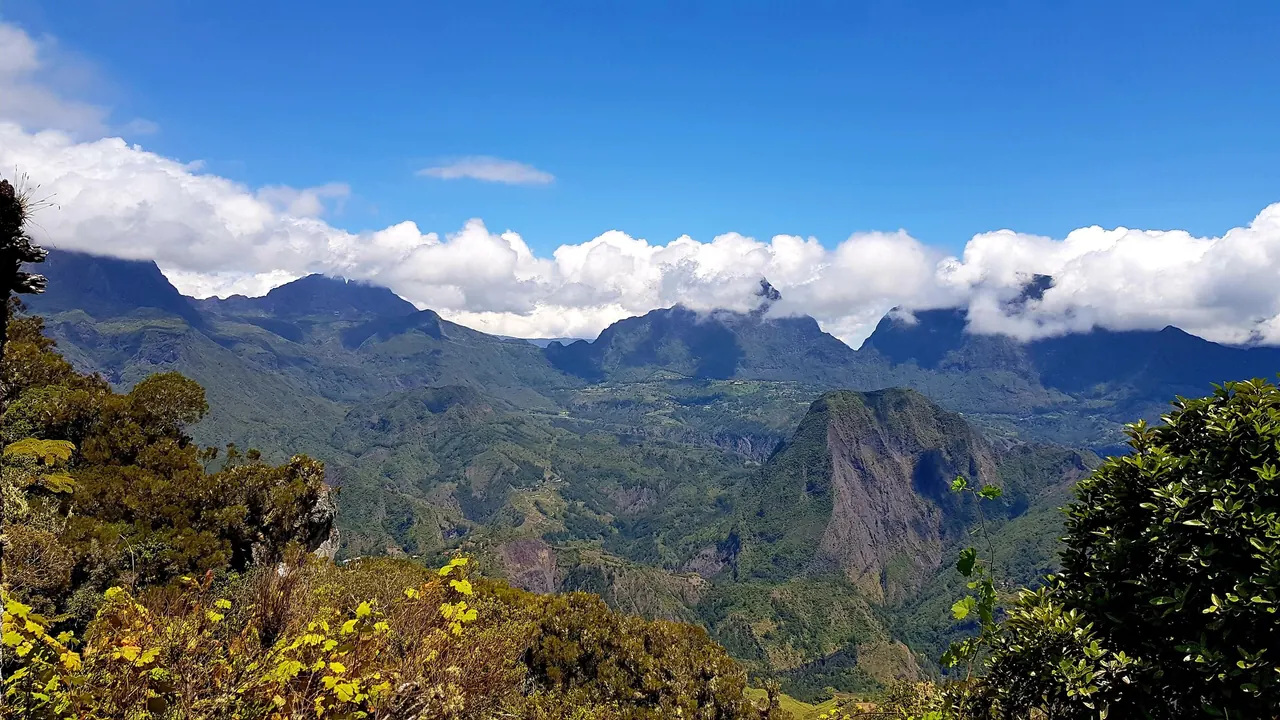
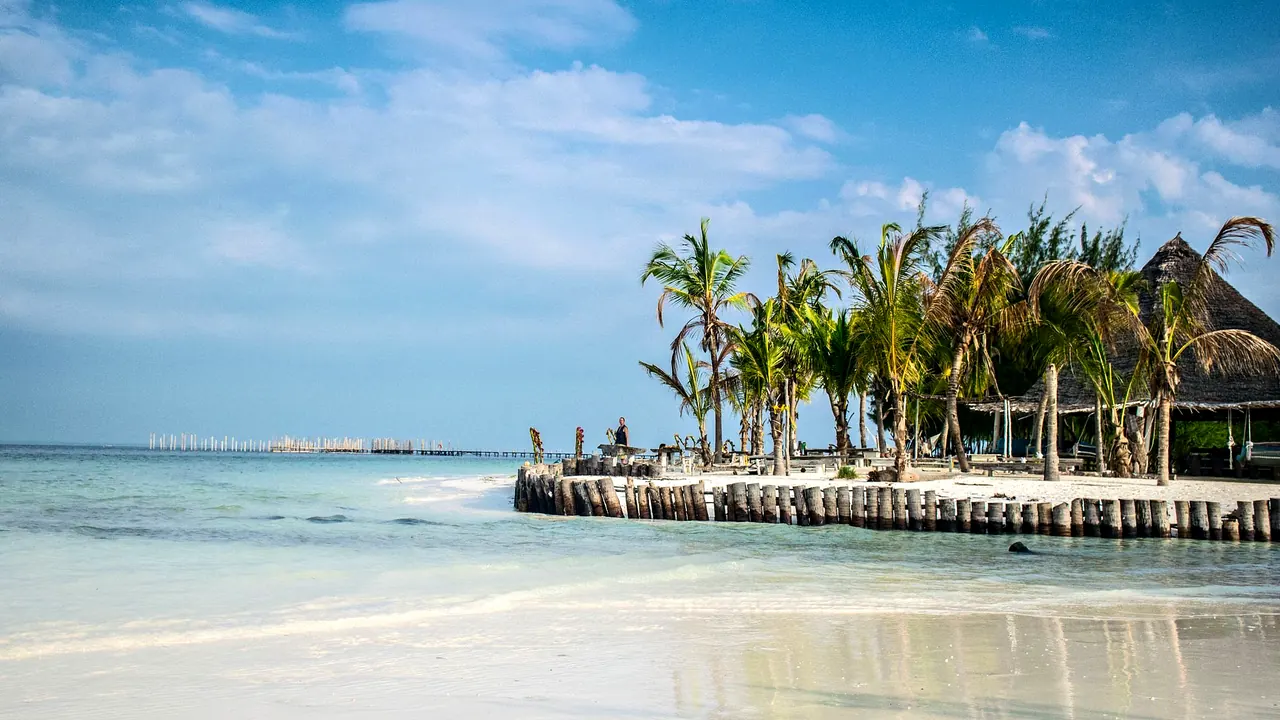
Photos: Réunion by Asile4ever, CC BY-SA 4.0, cropped; Zanzibar by Ákos Helgert, Pexels License.
Réunion or Zanzibar?
Our verdict in twelve categories, each scored against the same fixed benchmark cities, and the climate month by month, so you can choose for your trip.
Choose Réunion for
- nature and the outdoors
- families
- food and drink
Réunion is the island for walkers and anyone who wants landscape on a grand scale. It has the three cirques, the roadless hamlets of Mafate and an active volcano whose crater rim you can walk to. It suits travellers who are happy to drive hairpin roads, get up before dawn and treat the west-coast lagoons as a reward after a hike. It also works well for families who value French healthcare and supermarkets, though not for anyone after long swims or lively evenings.
Choose Zanzibar for
- beaches
- culture and sights
- prices
Choose Zanzibar for the beach itself. In the north, at Nungwi and Kendwa, there is white coral sand, warm sea at any tide and long, slow days with little to organise. Stone Town adds a historic old town that Réunion cannot match, and day-to-day costs can be kept lower. You give up mountains and hiking, and with malaria precautions and limited medical care, the island asks more of parents with small children.
Scoreboard
Twelve categories on one fixed scale from 0 to 100. The shaded stretch is the gap between the two.
Your match
Pick a travel style or drag the sliders, and both match scores follow your weighting.
Wins on nature and the outdoors and families with your weighting.
Wins on beaches and culture and sights with your weighting.
What matters to you?
Category by category
What the scores mean for a trip.
Beaches & swimming
Because of the shark risk, swimming on Réunion is limited to the reef-protected lagoons of the west coast, from L'Hermitage to Saint-Leu, and the black sand at Étang-Salé. The water is clear and good for snorkelling but often only waist-deep, so beach time fits between hikes.
On Zanzibar the beach is the point of the trip: powder-white sand, palms and warm sea, with Nungwi and Kendwa in the north swimmable at all tides. The east coast from Paje to Jambiani is lovely but tidal, so check the tide table before planning a swim there.
Food & drink
Both islands eat well thanks to their trading pasts, but in different ways. On Réunion, good food is spread across the whole island: Creole carris and rougails, samoussas from roadside vans and table d'hôte dinners in the cirques, with French bakeries and rum arrangé alongside.
Zanzibar's Swahili cooking is at its best in Stone Town, above all at the Forodhani Gardens evening market: spiced pilau, coconut fish curries and grilled octopus. In the beach towns the choice narrows to grilled fish and resort buffets, and alcohol is mostly found in hotels and tourist restaurants.
Culture & sights
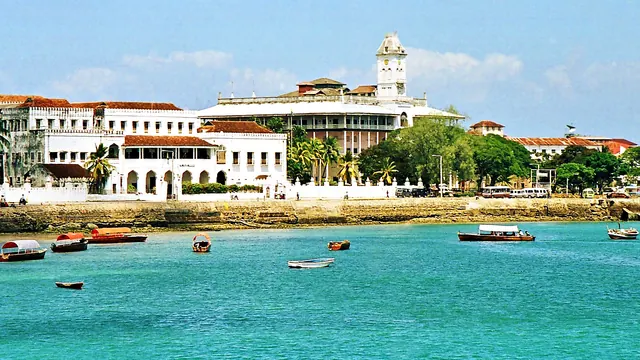
Here Zanzibar has the stronger hand. Stone Town is a UNESCO-listed Swahili trading town whose coral-stone lanes lead to the Old Fort, the Palace Museum and the cathedral built on the site of East Africa's last open slave market. Outside town are Omani palace ruins and Persian baths.
Réunion's heritage is its mixed Creole society: the verandaed villas of Rue de Paris in Saint-Denis, Hell-Bourg's painted cottages, and temples, mosques and pagodas side by side. Its best museums, among them the Cité du Volcan and the Villèle estate, fill a few good days rather than a whole trip.
Nightlife
Neither island is a nightlife destination, but Zanzibar has a little more going on. Nungwi and Kendwa have beach bars, bonfires and a well-known full-moon party, and Stone Town's rooftops are good for a sundowner. Drinking stays in tourist places, and Ramadan quietens everything.
Réunion's evenings end earlier still, since many visitors start hiking at dawn. Saint-Gilles-les-Bains has sunset bars and a few clubs at weekends, and Saint-Pierre has a local seafront strip. Up in the cirques, the night ends with dinner.
Nature & outdoors
This is Réunion's great advantage. Its UNESCO-listed interior of three collapsed calderas, walled by cliffs a thousand metres high, offers multi-day walks to Mafate's roadless hamlets, an overnight climb of Piton des Neiges and a walk to the crater rim of Piton de la Fournaise. There is also canyoning, paragliding, and humpback whales offshore from July to October.
Zanzibar is a flat coral island, so its outdoors is at sea level: snorkelling and diving at Mnemba atoll, red colobus monkeys in Jozani Forest, dolphins off Kizimkazi and kitesurfing on the Paje lagoon. It is pleasant, but the scenery is no match for Réunion's.
Day trips
Both islands offer small outings rather than major excursions, but of different kinds. Réunion's are road trips: the winding road up to Cilaos, the Creole houses of Hell-Bourg and Entre-Deux, the vanilla country around Saint-Philippe and the old sugar estates.
On Zanzibar, outings are often by boat, to the giant tortoises on Changuu or to a sandbank for a swim. There are also spice farm tours, and from the beach Stone Town makes a day out. Dar es Salaam is a ferry ride away, though it works better as an overnight stay.
Good for families
Réunion is the easier choice with children. It feels French and is safe, with good healthcare and supermarkets. At L'Hermitage, small children can see fish in shallow water, and the turtle centre, aquarium, crocodile park and Cité du Volcan cover rainy days. The catch is the winding roads and steep hikes into the cirques.
Zanzibar works for a simple resort stay on the north coast, with the tortoises and monkeys as outings. But malaria precautions, limited medical care and long transfers make it harder going with toddlers.
Getting around
On Réunion a rental car is close to essential, while on Zanzibar most visitors are driven by taxi or hotel transfer. Réunion's coastal expressway is quick outside rush hour around Saint-Denis and the west coast. The roads into the interior are another matter: hundreds of bends up to Cilaos, a full morning to reach the volcano or Salazie, and Mafate open only to walkers and helicopters. Island buses link the towns but rarely reach a trailhead.
Zanzibar's distances are short but slow, with Nungwi and Paje each an hour or more from Stone Town. Driving yourself needs a local permit and means police checkpoints, and dala-dala minibuses are cheap but crowded. Once you arrive, Stone Town's alleys and the beach villages are best explored on foot.
Shopping & style
Shopping is a minor part of a trip to either island, and on both it comes down to spices and local craft. Réunion adds French chain stores and shopping centres to the vanilla, rum arrangé and Cilaos embroidery sold in its markets. Zanzibar's Darajani market and Stone Town lanes have more character, with kanga cloth, carved chests, Tingatinga paintings and tanzanite, though much of the stock repeats and haggling is expected.
Affordability
Zanzibar can be done more cheaply. Stone Town guesthouses, street food at Forodhani, dala-dalas and simple bungalows around Paje and Jambiani keep costs down, though the northern resorts, diving and taxis add up.
Réunion is priced like France, imported goods cost even more, and a rental car is hard to avoid. Gîtes, snack vans and free hiking help, but a stay there generally costs more.
Live music & performing arts
Réunion's maloya is drums and chant, born among enslaved workers and recognised by UNESCO. Zanzibar's taarab is orchestral, setting Swahili poetry to Arabic and Indian melody. On Réunion you hear maloya at kabars, which are informal community gatherings, or at the Sakifo festival in Saint-Pierre. Sega, which is lighter and made for dancing, is played in bars and at village fêtes, and the theatres at Saint-Gilles and Saint-Denis host touring shows.
Taarab belongs to Stone Town, where you can listen in on rehearsals at the old town's music school or catch small performances in its cultural halls. The dry season also brings festivals of East African music and film. Beyond the old town, live music is mostly drumming at hotel evenings and beach bands. Opera and a classical season are missing on both islands.
Wellness & relaxation
Zanzibar is the easier place to unwind. Days in the beach villages run at the pace of the tide, resort spas use coconut oil and local spices, and yoga is easy to find around Paje and Jambiani.
On Réunion, rest is found in the mountains. Cilaos has been a thermal spa town since the nineteenth century, and a gîte in the cirques offers quiet nights after a day on the trails.
When should you go?
Pick your month. The climate figures are measured averages, not a forecast.
Réunion in July
Zanzibar in July
Daytime high, °C
Rainfall in the month, mm
Where the figures come from
Réunion's temperatures are measured 36 km from the centre, at Saint-Denis / Gillot.
Réunion has no rain gauge within 25 km of the centre, so its rainfall comes from a gridded climate dataset read at the destination rather than from a gauge further away.
Zanzibar's temperatures are measured 78 km from the centre, at Dar Es Salaam Airport.
Zanzibar has no rain gauge within 25 km of the centre, so its rainfall comes from a gridded climate dataset read at the destination rather than from a gauge further away.
Temperature and rainfall are climate normals, averaged over the years shown. Réunion: 1991-2020 normals, Saint-Denis / Gillot (36.1 km from centre). Zanzibar: 1991-2020 normals, Dar Es Salaam Airport (77.9 km from centre).
Both islands are warm enough for the sea all year, but their wet seasons fall at different times. On Réunion's coast the heavy rain comes from December to March, reaching about 249mm in March. This is also cyclone season, when trails in the interior can close. From May to November it is drier and a little cooler. The lagoon drops to about 24°C, which is still fine for a swim, and these are the months for hiking. Sunshine is fairly even through the year.
Zanzibar is hotter, with highs of 30°C to 33°C on the coast, and it has two rainy spells. The long rains fall in April and May, with about 363mm in April, and shorter rains come in November and December. June to October is the driest and sunniest stretch. January and February are also good, though middays are very hot for walking Stone Town. June to October is when both islands are at their best.
Which traveller are you?
On a beach and sun trip, Zanzibar is the clear choice. Nungwi and Kendwa have soft white sand and water deep enough to swim at any tide. Réunion's swimming is limited to shallow, reef-protected lagoons along a short stretch of the west coast.
For an outdoors trip, Réunion is in another league. Hikers cross the cirques on foot, climb Piton des Neiges for sunrise and walk the Fournaise caldera, with canyoning and paragliding as well. Zanzibar's outdoors is reef, kitesurfing and forest monkeys on a flat island.
On a culture and arts trip, Zanzibar has more to see. Stone Town's coral-stone lanes, carved doors, Omani palace museum and slave market memorial fill days of walking. Réunion's heritage is quieter: Creole villas in Saint-Denis and Hell-Bourg and a handful of good museums.
Before you go
| Measure | Réunion | Zanzibar |
|---|---|---|
| Official language | French | English, Swahili |
| Currency | Euro (EUR) | Tanzanian Shilling (TZS) |
| Sockets | E220 V, 50 Hz | G230 V, 50 Hz |
| Driving side | Right | Left |
| Time zone | UTC+4 | UTC+3 |
| Emergency number | 112 | Police 112, ambulance 115, fire 114 |
| Main airport | Roland Garros Airport (RUN)14 non-stop destinations | Abeid Amani Karume International Airport (ZNZ)40 non-stop destinations |
| Public holidays this year | - | 13 days |
By the numbers
| Measure | Réunion | Zanzibar |
|---|---|---|
| Population | 889,679 | 896,721 |
| People per km² | 354 | 569 |
| Swim season, months above 21 °C | 12 months | 12 months |
Where else could you go?
Every comparison below shares a destination with this one, so you can follow Réunion or Zanzibar somewhere new.