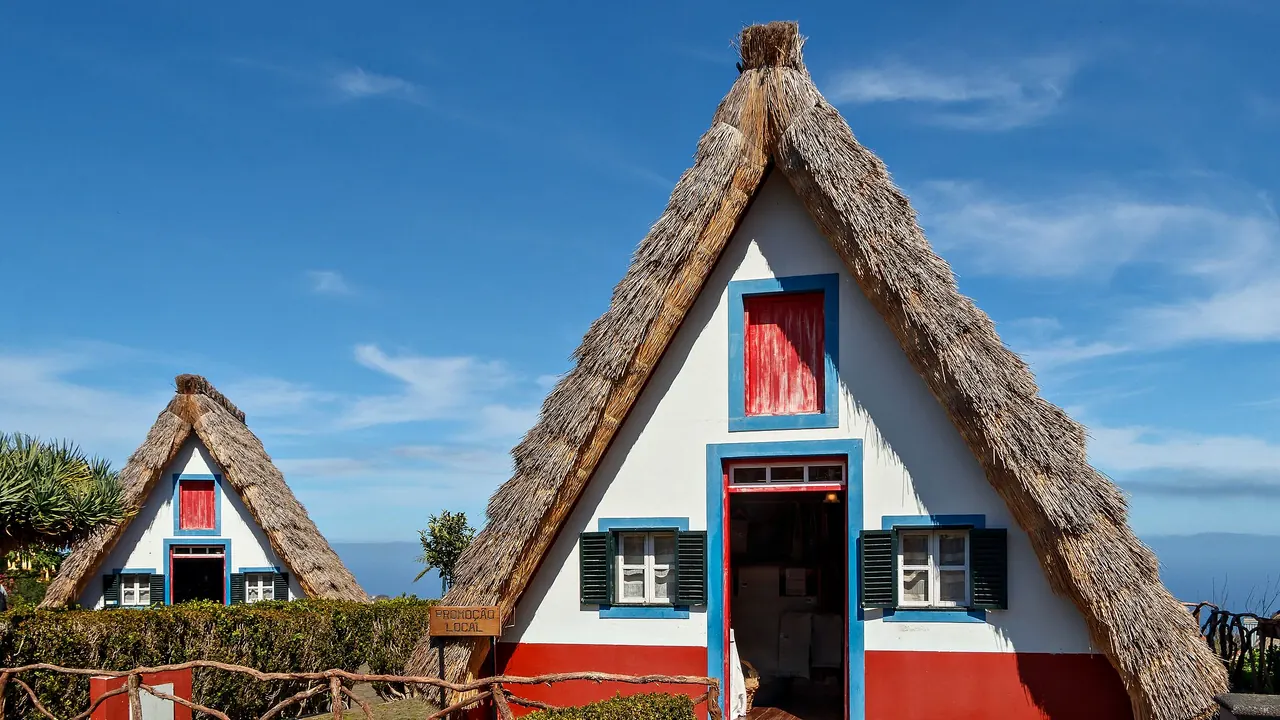
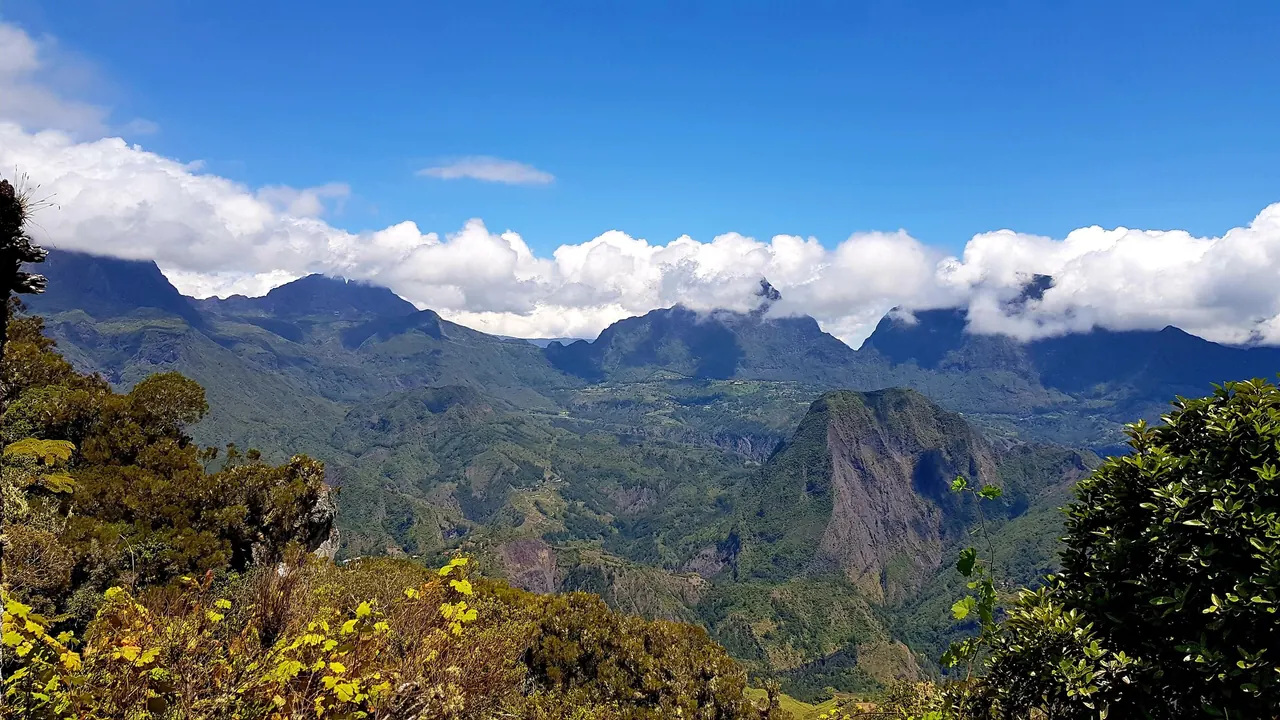
Photos: Madeira by H. Zell, CC BY-SA 3.0, cropped; Réunion by Asile4ever, CC BY-SA 4.0, cropped.
Madeira or Réunion?
Our verdict in twelve categories, each scored against the same fixed benchmark cities, and the climate month by month, so you can choose for your trip.
Choose Madeira for
- prices
- getting around
- culture and sights
Madeira suits walkers who want a compact, easy-going island. The level levada paths through the laurel forest, the ridge walk above the clouds and the cliff views give it superb outdoor days. Funchal adds a historic town with old wine lodges for the evenings. It costs less, the fast coastal road brings most of the island within an hour, and its mild weather makes it a trip for any month.
Choose Réunion for
- live music and the arts
- beaches
- families
Réunion is for travellers ready for something bigger and wilder: the cliff-walled cirques, roadless Mafate reached only on foot, and an active volcano you can walk across. It also has warmer water, with lagoons that make it the better choice for snorkelling and for families with small children, and a living Creole culture that you hear in maloya. In return, expect French prices, a car for every outing and slow mountain roads.
Scoreboard
Twelve categories on one fixed scale from 0 to 100. The shaded stretch is the gap between the two.
Your match
Pick a travel style or drag the sliders, and both match scores follow your weighting.
Too close to call, level with your weighting
Wins on prices and getting around with your weighting.
Wins on live music and the arts and beaches with your weighting.
What matters to you?
Category by category
What the scores mean for a trip.
Beaches & swimming
Neither island is a beach destination, but Madeira is the weaker of the two for swimming. Its sand at Calheta and Machico is imported, and most swimming is from lidos, sea ladders and the volcanic pools at Porto Moniz, in Atlantic water that is cool for much of the year. A proper stretch of sand means adding a few nights on Porto Santo.
Réunion gives a more dependable daily swim. The reef-protected lagoons between Saint-Gilles and Saint-Leu are warm, clear and full of fish over the coral, although they are shallow and busy at weekends. Because of the shark risk the open ocean is off limits, so you have to base yourself on the west coast.
Food & drink
The two islands eat equally well but very differently. Madeira's cooking centres on the grill and the wine cellar: espetada on bay-wood skewers, black scabbardfish with banana, bolo do caco, and old vintages tasted in Funchal's lodges, which also has the island's few smarter tables.
Réunion cooks spiced Creole pots, carri and rougail, with Tamil, Gujarati and Chinese snacks bought from roadside vans. Rum arrangé replaces Madeira wine as the local drink, and the meals people remember are table d'hôte dinners up in the cirques rather than anything formal on the coast.
Culture & sights
Madeira's heritage sits in one compact town. Funchal, a 15th-century sugar port, holds the carved cedar ceiling of the Sé, the merchant-family house museums and the wine lodges, so a day or two on foot in the old town covers most of it.
Réunion's culture is spread around the island and lived rather than displayed. Tamil temples, mosques and pagodas stand side by side in ordinary towns, and Creole villas line Rue de Paris in Saint-Denis. Its best museums tell the island's own story, from the volcano to sugar and slavery at the Villèle estate.
Nightlife
Both islands go to bed early, so neither is the place for a night-out trip. Madeira's evenings happen in Funchal's Zona Velha, with small bars and poncha counters spilling into old-town lanes. Réunion's scene sits by the sea at Saint-Gilles-les-Bains, with sunset beach bars and a handful of clubs that fill on Friday and Saturday nights.
Nature & outdoors
Both are first-rate walking islands, but the scale is different. Madeira is the gentler, more accessible of the two. Its levada paths run level through the laurel forest to waterfalls such as the 25 Fontes, and the ridge from Pico do Arieiro to Pico Ruivo makes a hard but single day, with walking possible in every season.
Réunion is wilder and asks more of you. The cirques of Cilaos, Salazie and Mafate are walled by cliffs a thousand metres high, Mafate can only be crossed on foot, Piton des Neiges is climbed overnight for sunrise, and Piton de la Fournaise is an active volcano. Its wet season closes trails, so plan for May to November.
Day trips
On both islands the best days out are into the landscape, and neither has a major town nearby to visit. Madeira's fast coastal road lets a single loop take in Câmara de Lobos, Santana and Porto Moniz, and Porto Santo offers a real change of island by ferry. Réunion's outings, such as the Creole houses of Hell-Bourg, the vanilla country around Saint-Philippe and the market at Saint-Pierre, are more varied but take longer on winding roads, and Mauritius is a flight away.
Good for families
Réunion is the easier island with young children, mostly because of its lagoon. At L'Hermitage and La Saline toddlers can paddle and older children snorkel in warm, shallow water. Kélonia's turtles, the crocodile park and the Cité du Volcan cover the rainy days, and French healthcare and supermarkets make the practical side simple.
Madeira has its own treats, including the cable car to Monte, the wicker toboggan ride down and the dolphin boats. Even so, there is little sand and Funchal's steep streets are tiring with a pushchair, so most families stay in a resort hotel with pools.
Getting around
Madeira is the simpler island to move around. Its fast tunnelled road brings the south coast and much of the north within an hour, Funchal's seafront and old town can be walked, and taxis or guided tours reach the trailheads for those who do not drive. Only the hairpin roads up to the peaks are hard going.
On Réunion a hire car is close to essential, and the island's size is misleading. Rush-hour traffic slows the coast, the road to Cilaos twists through hundreds of bends, the volcano or Salazie takes a full morning, and Mafate is reached only on foot or by helicopter.
Shopping & style
Madeira's souvenirs are mostly made by hand: embroidery on linen, a craft here since the 19th century, wickerwork from Camacha, and bottles bought in the old Funchal wine lodges. Réunion's are mostly grown and bottled, with vanilla from the south-east, spices and rum arrangé from the Saint-Paul and Saint-Pierre markets, and Cilaos embroidery as its needlework. Anyone after fashion or design will find little more than chain stores on either.
Affordability
Madeira is the cheaper of the two. Grill houses, market produce, poncha and local wine are good value, and rooms in Funchal stay reasonable outside New Year and Easter. Car hire and clifftop resort hotels are the main extra costs.
Réunion is priced like France, and imported goods cost more again. West-coast beach hotels are expensive in the southern winter and during French school vacations. Mountain gîtes, self-catering and lunch from the snack vans help, and on both islands the trails cost nothing.
Live music & performing arts
Réunion has the more distinctive sound. Maloya, the UNESCO-recognised drum-and-chant tradition, is still played at informal kabars and on festival stages, and sega fills the bars and village fêtes. The Sakifo festival in Saint-Pierre is worth timing a trip around.
Madeira's stage is smaller and more conventional. It has concerts and the regional orchestra at the 19th-century Teatro Baltazar Dias, fado evenings in the old town and the bailinho folk dance at festivals. It is pleasant to come across rather than a reason to go.
Wellness & relaxation
Both islands suit a slow, restful stay, though in different settings. Madeira has no springs and rests on its long history as a winter retreat. It offers cliff-top hotel spas with seawater pools, quiet quintas and afternoons in the botanical and Monte gardens. Réunion has a genuine thermal spa in the mountain town of Cilaos, and its most restful nights are spent in highland gîtes, where the cool air and silence after dark do the work.
When should you go?
Pick your month. The climate figures are measured averages, not a forecast.
Madeira in July
Réunion in July
Daytime high, °C
Rainfall in the month, mm
Where the figures come from
Réunion's temperatures are measured 36 km from the centre, at Saint-Denis / Gillot.
Réunion has no rain gauge within 25 km of the centre, so its rainfall comes from a gridded climate dataset read at the destination rather than from a gauge further away.
Temperature and rainfall are climate normals, averaged over the years shown. Madeira: 1991-2020 normals, Funchal (2 km from centre). Réunion: 1991-2020 normals, Saint-Denis / Gillot (36.1 km from centre).
Madeira is mild all year and never really hot. Where most visitors stay, days peak at about 27°C in August and September, and June to August is almost rainless and the sunniest part of the year. Late summer into early autumn is the time for swimming from the lidos, when the Atlantic is at its warmest. Rain returns in October and builds to its heaviest in December. Winter days are cooler and cloudier but still fine for walking at lower levels, though the high trails can turn wet and cold.
Réunion follows the southern seasons. January to March is hot, around 30°C, and very wet in the measured figures, with about 249mm in March and a risk of cyclones that can close the trails. The sheltered west coast usually gets less rain than this, but these are still the island's stormy months. May to November is drier and a little cooler, which makes it the hiking season, and sunshine stays steady through the year. The two islands' warmest sea comes at opposite times: Réunion's lagoon reaches 28°C in the wet southern summer, while Madeira's Atlantic is warmest in September. Their best walking seasons overlap from June to September, before October's rain arrives on Madeira.
Which traveller are you?
On a beach and sun trip, Réunion is the better pick. Its west-coast lagoons stay warm all year and are made for snorkelling over coral. Madeira offers lidos and rock pools in cooler Atlantic water and sends anyone who wants sand to Porto Santo.
On a family trip with young children, Réunion is easier. It has a waist-deep lagoon at L'Hermitage, sea turtles, a crocodile park and French healthcare. Madeira's steep streets are hard work with a pushchair, though older children love the toboggan ride and the dolphin boats.
On a tight budget, Madeira goes further. Grill houses, poncha and fairly priced rooms in Funchal keep costs moderate. Réunion carries French prices on hotels and imported goods, and only gîtes and roadside snack vans soften them.
Before you go
| Measure | Madeira | Réunion |
|---|---|---|
| Official language | Portuguese | French |
| Currency | Euro (EUR) | Euro (EUR) |
| Sockets | CF230 V, 50 Hz | E220 V, 50 Hz |
| Driving side | Right | Right |
| Time zone | UTC, UTC+1 in summer | UTC+4 |
| Emergency number | 112 | 112 |
| Main airport | Cristiano Ronaldo International Airport (FNC)46 non-stop destinations | Roland Garros Airport (RUN)14 non-stop destinations |
| Public holidays this year | 16 days | - |
By the numbers
| Measure | Madeira | Réunion |
|---|---|---|
| Population | 254,368 | 889,679 |
| People per km² | 343 | 354 |
| Swim season, months above 21 °C | 5 months | 12 months |
Where else could you go?
Every comparison below shares a destination with this one, so you can follow Madeira or Réunion somewhere new.
- La Palmavs Madeira
- Canary Islandsvs Madeira
- Tenerifevs Madeira
- Algarvevs Madeira
- Azoresvs Madeira
- Zanzibarvs Réunion