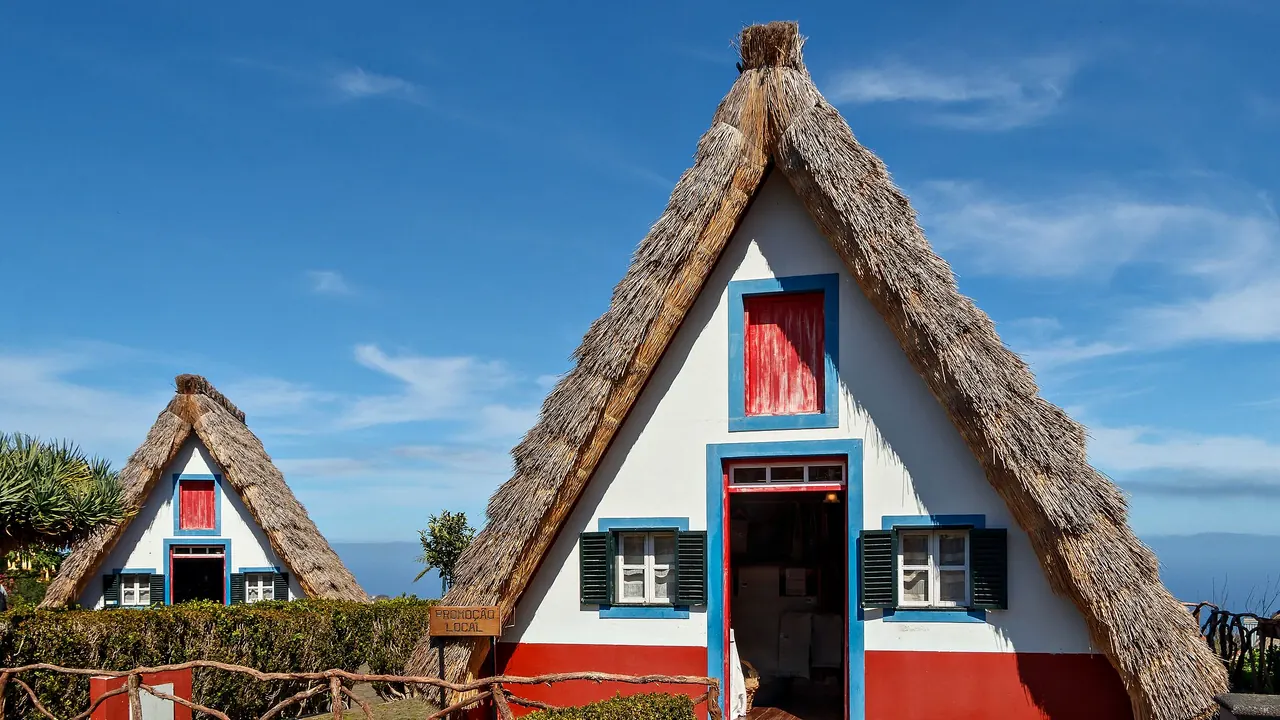
Photos: Madeira by H. Zell, CC BY-SA 3.0, cropped.
Algarve or Madeira?
Our verdict in twelve categories, each scored against the same fixed benchmark cities, and the climate month by month, so you can choose for your trip.
Choose Algarve for
- beaches
- families
- nightlife
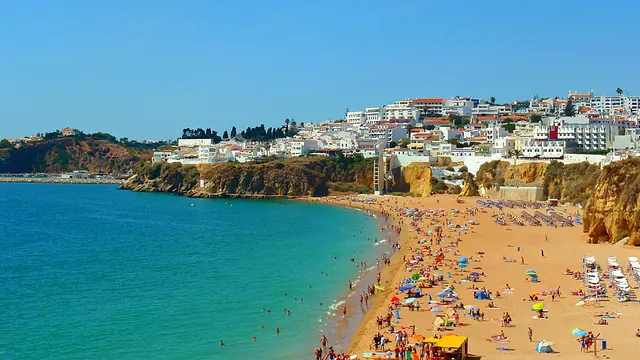
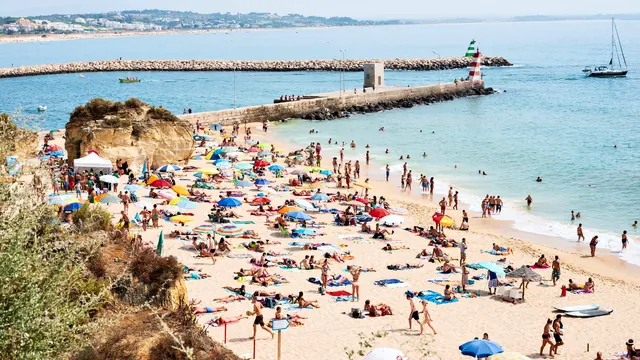
Choose the Algarve for a classic sun-and-sea trip. Its coast gives you sandy coves under ochre cliffs in the centre and long, quiet barrier-island beaches in the east. It is the easier of the two with children, has more going on at night in summer, and Seville is close enough for a day out. A week here centres on the beach, with a castle town or a fish lunch by a harbour on the other days.
Choose Madeira for
- nature and the outdoors
- live music and the arts
- prices
Madeira is the pick for walkers and anyone who would rather spend a week in mountains than on sand. The levada paths through the laurel forest and the ridge between the high peaks are a different kind of landscape from anything on the Algarve. The island stays mild in winter, and evenings are slow, with dinner and a glass of Madeira wine. Swimming is from lidos and rock pools rather than beaches, so beach lovers should plan a few nights on Porto Santo.
Scoreboard
Twelve categories on one fixed scale from 0 to 100. The shaded stretch is the gap between the two.
Your match
Pick a travel style or drag the sliders, and both match scores follow your weighting.
Wins on beaches and families with your weighting.
Wins on nature and the outdoors and live music and the arts with your weighting.
What matters to you?
Category by category
What the scores mean for a trip.
Beaches & swimming
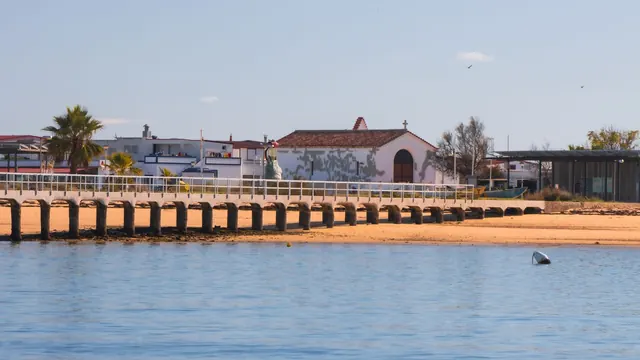
This is the clearest difference between the two. The Algarve is a beach destination first. It has golden coves below sea stacks around Praia da Marinha and Lagos, and long, gentle barrier-island beaches east of Faro at Tavira, Culatra and Barril. The famous coves fill up in high summer, but there is always more sand further along.
Madeira rises straight out of deep water, so most of its shore is black boulders and pebbles. Swimming means Funchal's lidos, sea ladders and the volcanic pools at Porto Moniz. Its few sandy beaches use imported sand. Its water is a little warmer in autumn, but if sand matters, Porto Santo is a separate few nights' stay.
Food & drink
The food is equally good in both places, and the menus overlap in grilled fish. The Algarve is the place for copper-pan cataplana, charcoal sardines and goose barnacles, and it is best in Olhão's market halls and the old quarters of Tavira and Portimão. Avoid the resort strips with their identical menus.
Madeira's cooking is more particular to the island: espetada on bay-wood skewers, scabbardfish with banana, bolo do caco and poncha drunk at village bars. It also has Madeira wine, tasted in the old Funchal lodges, which the Algarve has nothing to match.
Culture & sights
Neither is a trip for great monuments, and the heritage is spread differently. On the Algarve it is a string of small towns: the red castle at Silves, the walls of Lagos, Faro's old town with its chapel of bones, and the Sagres headland. You can visit them one at a time between beach days.
Madeira's culture is almost all in Funchal: the carved cedar ceiling of the Sé, house museums of the merchant families and the wine lodges. Add Monte, Santana's thatched houses and Câmara de Lobos, and a day or two covers it.
Nightlife
The Algarve has far more going on after dark, at least from June to September. Albufeira's Strip runs neon bars and clubs until dawn, Lagos has a young backpacker crowd, Praia da Rocha has beach clubs and Vilamoura's marina is dressier. Tavira stays calm.
On Madeira a night out means Funchal's Zona Velha, with small bars and poncha counters among the painted doors, busiest at weekends. Most evenings end over a long dinner.
Nature & outdoors
Madeira is one of Europe's great walking islands, and here it clearly comes out ahead. It has volcanic peaks above 1,800m, the moss-hung laurel forest with waterfalls at Caldeirão Verde and 25 Fontes, and level levada paths that let average walkers into wild country. Canyoning, paragliding and whale watching add variety.
The Algarve's nature is about the coast: the Seven Hanging Valleys trail, kayaking into the Benagil grottoes, surf and footpaths in the Costa Vicentina, and flamingos on the Ria Formosa. It is good, but the landscape is gentler and less varied, and summer is too hot for long walks.
Day trips
The Algarve has more places to reach, but which ones work depends on where you stay. From an eastern base around Tavira or Olhão, Seville is about two hours by car across the Guadiana. The walled town of Mértola is about an hour north, and boats go out to the car-free islands of Culatra and Armona. From Lagos and the west those are long drives, so days out there mean the region's own towns: Silves and its castle, Loulé's Saturday market and the headland at Sagres.
Madeira's days out are mostly a loop of the island by car or tour, taking in the fishing boats at Câmara de Lobos, Machico, the thatched houses of Santana and the wild north coast at Porto Moniz. Porto Santo is the only trip to somewhere else, and by ferry it makes a long day.
Good for families
The Algarve makes a family week much easier, as long as you choose the right stretch of coast. The barrier-island beaches of the Ria Formosa, a short boat ride out, have wide sand and gentle water. Many of the famous cliff coves in the centre need long stairways and lose their sand at high tide. Restaurants are happy to feed children late in the evening, which helps when the July and August heat rules out the beach at midday.
Madeira's strength is mild weather in every month, so a family trip in winter or spring is realistic. The toboggan ride down from Monte, whale-watching boats, the Porto Moniz aquarium and the seawater pools at Funchal's lidos keep younger children busy, and older ones can manage the gentler levada walks. The island is safe and unhurried, but there is less to fill a whole week with small children.
Getting around
On both, most visitors hire a car, but the driving is different. The Algarve's A22 runs flat along the coast, and Lagos to Tavira takes about an hour. There is a slow coastal railway, and car-free stays work in the old centres of Lagos, Tavira or Faro.
Madeira's fast tunnel road puts most of the island within an hour. The mountain roads to the trailheads are steep and full of hairpins, though, and the buses are too slow for early walks, so taxis and guided transfers fill the gap.
Shopping & style
Loulé's market hall and Madeira's hand embroidery sum up the difference: the Algarve sells produce and kitchenware, and Madeira sells needlework and wine. In Loulé, and at its Saturday market, look for cork, copper cataplanas, almonds and figs. Hand-painted ceramics are sold by the road near Porches, and flor de sal comes from Olhão and Castro Marim. For everything else there are malls and an outlet centre outside Faro and Portimão, and boutiques at Vilamoura's marina.
On Madeira the things to take home are linen embroidered by hand, as it has been since the 19th century, wickerwork from Camacha and bottles from the old Funchal wine lodges. Funchal's pedestrian streets cover everyday fashion, but neither destination has a luxury district.
Affordability
The two cost much the same for a trip. On both, the cost is mostly the room and the car, not the food, and they get expensive at different times. The Algarve is costliest in July and August and in the golf enclaves around Almancil, so staying in Tavira or Olhão keeps it moderate.
Madeira's peak periods are New Year and Easter. The walking costs nothing, but car hire, clifftop resorts and guided canyoning or boat trips add up.
Live music & performing arts
Neither is somewhere to plan evenings of music or theatre. Madeira has a little more year-round, with the Teatro Baltazar Dias and its regional orchestra, folk dancing and the spring Flower Festival. The Algarve's theatres in Faro and Loulé have modest programmes, and its best moments are summer open-air events such as Silves's medieval fair.
Wellness & relaxation
Both are restful in the right place and season, in different ways. The Algarve has resort spas between Albufeira and Quinta do Lago, the Roman-era warm springs at Caldas de Monchique, and yoga and surf retreats near Aljezur, though the central resorts in August are far from calm.
Madeira has no springs. It has a long history as a place to rest, quintas set in gardens, cliffside hotel spas and a slow pace all year.
When should you go?
Pick your month. The climate figures are measured averages, not a forecast.
Algarve in July
Madeira in July
Daytime high, °C
Rainfall in the month, mm
Where the figures come from
Algarve's temperatures are measured 26 km from the centre, at Faro / Aeroporto.
Algarve has no rain gauge within 25 km of the centre, so its rainfall comes from a gridded climate dataset read at the destination rather than from a gauge further away.
Temperature and rainfall are climate normals, averaged over the years shown. Algarve: 1991-2020 normals, Faro / Aeroporto (26.4 km from centre). Madeira: 1991-2020 normals, Funchal (2 km from centre).
The Algarve has a real summer and a real winter. From June to September it is hot, almost rainless and very sunny, with highs around 29°C in July and August. That is perfect for the beach but hard work on a cliff path at midday. Swimming is comfortable from June to October. The rain returns in October and peaks in December at about 95mm, and winter days are cool rather than warm, which suits walking and old towns more than sunbathing.
Madeira changes far less through the year. Funchal still reaches about 20°C in January, and summer stays a gentler 27°C, so you can walk the streets and the levadas in any month. The sea is warmest from August to October, when it reaches about 24°C, a little warmer than the Algarve's water. The island has fewer sunshine hours, and from October to December it is wetter than the Algarve. On the high trails that means cloud and cold, even when the coast is pleasant.
Which traveller are you?
On a beach and sun trip, the Algarve wins easily. It has sandy coves between Lagos and Albufeira, long empty strands on the Ria Formosa islands and a dry, very sunny summer. On Madeira you swim from lidos and rock pools, and proper sand means going to Porto Santo.
For an outdoors trip, Madeira is the better choice. You can walk the level levada paths through UNESCO-listed laurel forest or cross the high ridge from Pico do Arieiro to Pico Ruivo above the clouds. The Algarve's cliff walks, surf and lagoon birdlife are good, but they work as day outings rather than the reason for the trip.
On a family trip with young children, the Algarve is far easier. It has shallow, sheltered beaches near Alvor and Armação de Pêra, water parks, Zoomarine and resorts with kids' clubs everywhere. Madeira's steep streets, scarce sand and lack of theme parks suit older children who can manage a gentle walk.
Before you go
| Measure | Algarve | Madeira |
|---|---|---|
| Official language | Portuguese | Portuguese |
| Currency | Euro (EUR) | Euro (EUR) |
| Sockets | CF230 V, 50 Hz | CF230 V, 50 Hz |
| Driving side | Right | Right |
| Time zone | UTC, UTC+1 in summer | UTC, UTC+1 in summer |
| Emergency number | 112 | 112 |
| Main airport | Faro - Gago Coutinho International Airport (FAO)91 non-stop destinations | Cristiano Ronaldo International Airport (FNC)46 non-stop destinations |
| Public holidays this year | 14 days | 16 days |
By the numbers
| Measure | Algarve | Madeira |
|---|---|---|
| Population | 438,864 | 254,368 |
| People per km² | 88 | 343 |
| Swim season, months above 21 °C | None | 5 months |
Where else could you go?
Every comparison below shares a destination with this one, so you can follow Algarve or Madeira somewhere new.
- Lisbonvs Algarve
- Andalusiavs Algarve
- Costa del Solvs Algarve
- La Palmavs Madeira
- Canary Islandsvs Madeira
- Tenerifevs Madeira