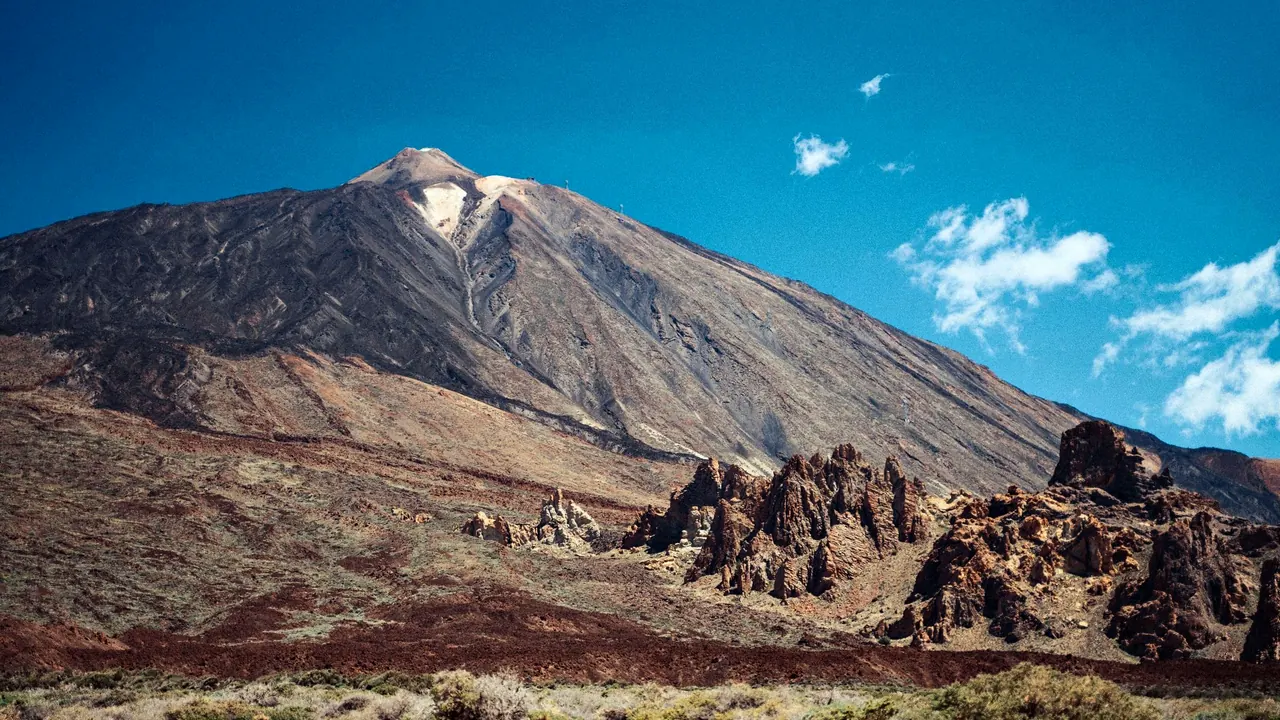
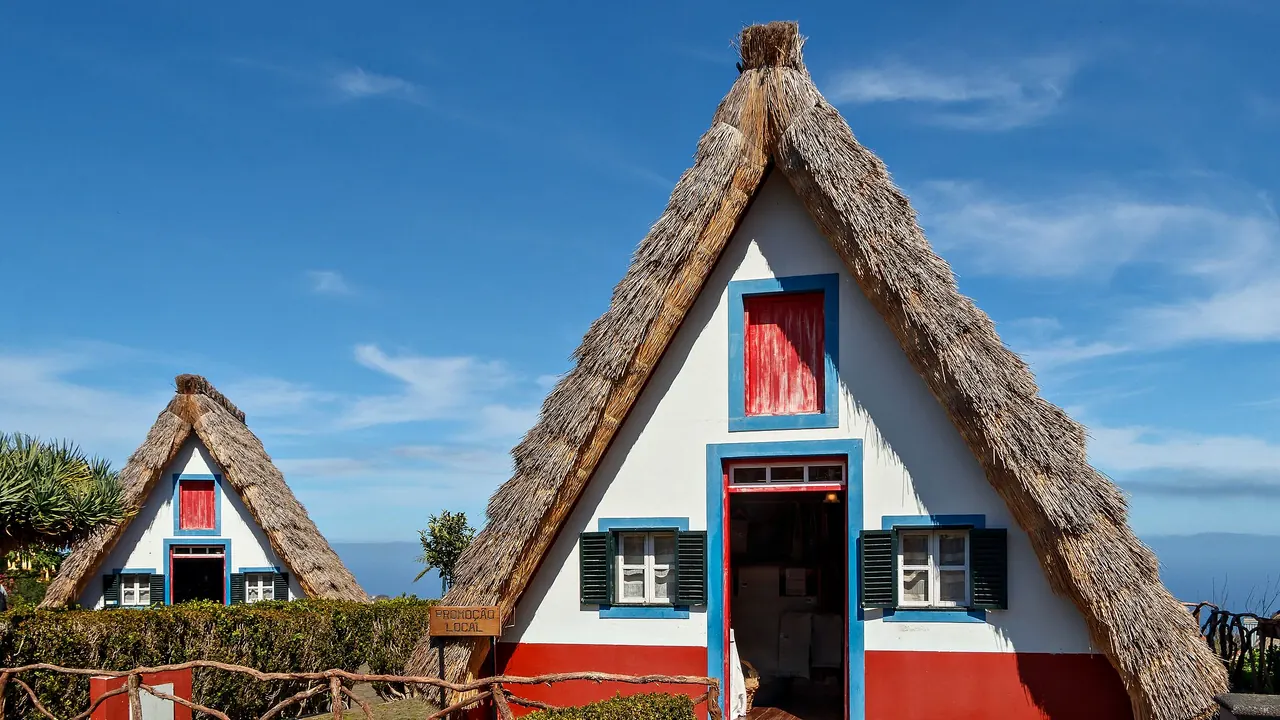
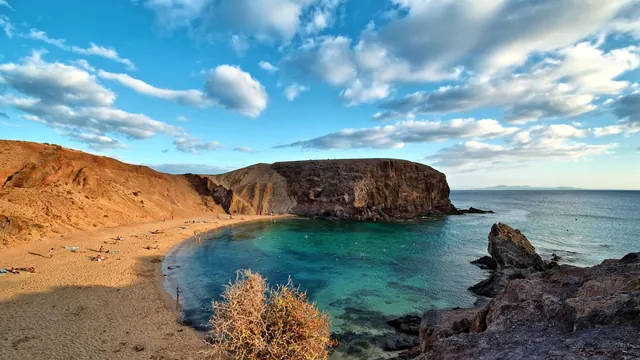
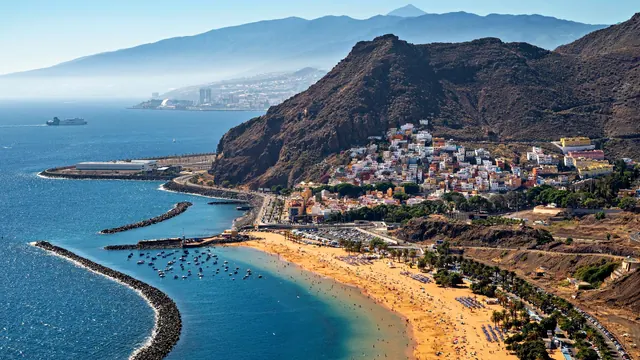
Photos: Canary Islands by Benni Fish, Pexels License; Madeira by H. Zell, CC BY-SA 3.0, cropped.
Canary Islands or Madeira?
Our verdict in twelve categories, each scored against the same fixed benchmark cities, and the climate month by month, so you can choose for your trip.
Choose Canary Islands for
- beaches
- families
- nightlife
The Canary Islands suit a sun-and-sand vacation, especially one with children or one that wants some life after dark. Fuerteventura's dunes, the Papagayo coves and Maspalomas give proper sandy beaches, the resorts are built around families, and Tenerife and Gran Canaria add late-night strips, carnival and a real classical scene in the two capitals. You also have a choice of islands, from busy southern resorts to quiet La Gomera.
Choose Madeira for
- food and drink
- nature and the outdoors
Madeira is the better pick for walkers and for anyone who wants a slower, greener stay on one compact island. The levada paths through laurel forest and the ridge walk between the high peaks are the reason to come, and evenings are a long dinner in Funchal with a glass of Madeira wine. Give up the idea of a sandy beach, or add a few nights on Porto Santo.
Scoreboard
Twelve categories on one fixed scale from 0 to 100. The shaded stretch is the gap between the two.
Your match
Pick a travel style or drag the sliders, and both match scores follow your weighting.
Wins on beaches and families with your weighting.
Wins on food and drink and nature and the outdoors with your weighting.
What matters to you?
Category by category
What the scores mean for a trip.
Beaches & swimming
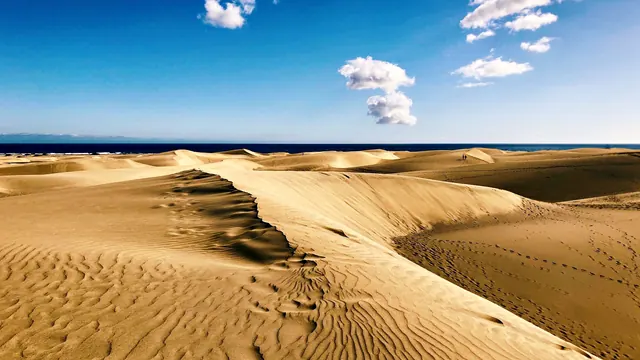
This is the widest gap between the two. The Canaries offer genuine sandy beaches: the white dunes of Corralejo, the lagoon at Sotavento, the sheltered Papagayo coves and the golden sweep below the Maspalomas dunes, plus Las Canteras as a reef-protected city beach in Las Palmas. Tenerife's south is more about small resort beaches of dark sand.
Madeira rises straight out of deep water, so swimming means Funchal's lidos, sea ladders and the volcanic rock pools at Porto Moniz, and its two sandy beaches use imported sand. The sea is no warmer there. For a proper beach you need Porto Santo's long golden strand, which works best as a separate stay of a few nights.
Food & drink
The two eat equally well, and both have simple island cooking with a good wine story. The Canaries offer wrinkled potatoes with mojo, goat stews, Majorero cheese and wines grown in black ash at La Geria. The good cooking is spread out, though, in villages, Las Palmas, La Laguna and the autumn guachinches of northern Tenerife, while the southern resorts serve generic menus.
Madeira's table is more concentrated. Funchal has the best range, from grill houses serving espetada on bay-wood skewers to a small fine-dining tier. It also has the Mercado dos Lavradores and the historic lodges where you can taste old Madeira wine. A glass of poncha at a village bar is a ritual the Canaries have no equivalent for.
Culture & sights
The Canaries have more to see, though it is spread over several islands. La Laguna's UNESCO-listed colonial grid, Vegueta and the Casa de Colón in Las Palmas, and the Cueva Pintada's pre-Hispanic paintings give real depth. César Manrique's lava-tube buildings on Lanzarote are unlike anything on Madeira.
Madeira's heritage sits almost entirely in Funchal: the Sé's cedar ceiling, the merchant collections at Quinta das Cruzes and the wine lodges. Add Santana's thatched houses and most visitors have covered it in a day or two.
Nightlife
If going out matters, the Canaries win easily. Playa de las Américas and Playa del Inglés keep bars and clubs open until dawn all year, Playa del Inglés has one of Europe's biggest gay scenes, and carnival in Santa Cruz and Las Palmas means weeks of all-night street parties. La Laguna's student bars add something more local.
Madeira's evenings are shorter and quieter. They centre on the Zona Velha in Funchal, with its painted doors and small poncha bars, which get lively at weekends. Beyond a few seafront lounges, most nights end over dinner.
Nature & outdoors
Both are outstanding, but in different ways. Madeira is a walker's island first. The levadas run level through the UNESCO-listed laurel forest to waterfalls like Caldeirão Verde, and the ridge path from Pico do Arieiro to Pico Ruivo often runs above the clouds, all within reach of one base.
The Canaries offer more variety across more islands. There is Teide's caldera, the forests of Anaga and Garajonay, Timanfaya's lava fields and some of Europe's clearest night skies, while Fuerteventura's wind and swell draw surfers and kitesurfers. Seeing more than one island takes ferries or flights.
Day trips
The Canaries give more scope because the islands themselves are the day trips. Short ferries go from southern Tenerife to La Gomera's terraced valleys and from Lanzarote to Corralejo or the sandy lanes of La Graciosa. A fast boat even makes Las Palmas possible in a day from Tenerife.
On Madeira, days out are mostly a loop of the island taking in small places like Câmara de Lobos, Santana and Porto Moniz. Porto Santo is the only real excursion elsewhere, and the ferry makes that a long day.
Good for families
The Canaries are much easier with children. Resorts come with pools, apartments and kids' clubs, there is calm sandy water at Sotavento, Playa Blanca and southern Gran Canaria, and Tenerife and Gran Canaria have large zoos, an aquarium and water parks.
Madeira suits a calmer family trip. Children love the toboggan ride down from Monte, the dolphin boats and the Porto Moniz aquarium. But there is little sand, there are no theme parks, and Funchal's hills are hard work with a pushchair.
Getting around
On both, most people hire a car, and on both the mountain roads are slow, steep and full of hairpins. The difference is scale. On Madeira, a fast tunnelled road brings most of the island within an hour of Funchal, though the town itself climbs steeply once you leave the harbour.
The Canaries have quicker coastal motorways, a tram between Santa Cruz and La Laguna, and easy driving on flat Lanzarote and Fuerteventura. Every move to another island, though, means a ferry or a flight.
Shopping & style
The Canaries have more to offer, mainly in Las Palmas, where Triana and Mesa y López have department stores. The lower sales tax makes perfume and spirits a common purchase, and Teguise's Sunday market is good for crafts.
Madeira's shopping is almost entirely what the island makes: hand embroidery on linen, Camacha wickerwork and bottles from the Funchal wine lodges, with little fashion beyond the everyday.
Affordability
Overall costs are about the same, but they come from different places. In the Canaries, the lower sales tax keeps drinks and fuel cheap and car hire costs little. The smaller islands and northern towns are cheaper still, while Costa Adeje and Meloneras are priced like the Mediterranean.
On Madeira, the trails are free and the grill houses and poncha are good value. The extra costs are car hire and guided activities such as canyoning or boat trips, along with clifftop resort hotels.
Live music & performing arts
The Canaries have far more for a music lover. The Auditorio de Tenerife is home to a symphony orchestra, and in Las Palmas the Alfredo Kraus Auditorium and the Pérez Galdós theatre stage the Philharmonic and a long-running opera season. A winter music festival brings visiting orchestras.
Madeira's offer is smaller and more local. There are concerts at the Teatro Baltazar Dias, fado evenings in the old town and bailinho dancers at village feasts and the spring Flower Festival.
Wellness & relaxation
Neither has hot springs, so relaxation comes from the climate and the hotels on both. The Canaries have big resort spas with seawater thalassotherapy in southern Tenerife and Gran Canaria. For real quiet, La Gomera and El Hierro host yoga and walking retreats.
Madeira has been a place to winter and recover since the 19th century, and it feels more unhurried throughout. You can stay in an old quinta set in gardens, wander the botanical gardens or spend an afternoon on a terrace above the Atlantic.
When should you go?
Pick your month. The climate figures are measured averages, not a forecast.
Canary Islands in July
Madeira in July
Daytime high, °C
Rainfall in the month, mm
Temperature and rainfall are climate normals, averaged over the years shown. Canary Islands: 1991-2020 normals, Tenerife Sur (16.1 km from centre). Madeira: 1991-2020 normals, Funchal (2 km from centre).
Both are mild all year, but the Canaries are the warmer, drier and sunnier of the two. Around the main resort areas, daytime highs run from about 22°C in January to 29°C in August, and rain is light even in winter and almost absent from May to September. That makes them a dependable winter-sun choice. The sea never gets truly warm in either place. It peaks at about 24°C in September and October, and in late winter it is cool enough to make swimming brisk.
Around Funchal, Madeira runs a couple of degrees cooler and is much wetter from October to March, with December the wettest month at about 104mm. It also gets fewer hours of sun. Summer there is dry and comfortable for walking, and spring brings the gardens out, though the high trails can be wet and cold in winter. In the hottest weeks of August the Canaries' southern resorts are better for lying on the beach than for walking the streets.
Which traveller are you?
For a beach and sun trip, choose the Canary Islands. Lying on sand is what most stays there are built around, and the drier, sunnier weather makes a winter week a safe bet. Madeira is an island for looking at the Atlantic from a cliff path, not lying beside it.
On a family trip with children, the Canaries are the easier choice, above all in winter, when the weather stays mild while the rest of Europe is cold. Older children get whale-watching boats and the cable car up Teide. Madeira works better once children are old enough to walk.
On an outdoors trip built around walking, Madeira is the one to pick. The whole island is set up for walking, with taxis and guided tours running people to the trailheads, and most visitors spend their days outside. Choose the Canaries if the outdoors means wind and water rather than paths.
Before you go
| Measure | Canary Islands | Madeira |
|---|---|---|
| Official language | Spanish | Portuguese |
| Currency | Euro (EUR) | Euro (EUR) |
| Sockets | CF230 V, 50 Hz | CF230 V, 50 Hz |
| Driving side | Right | Right |
| Time zone | UTC, UTC+1 in summer | UTC, UTC+1 in summer |
| Emergency number | 112 | 112 |
| Main airport | Tenerife Sur Airport (TFS)111 non-stop destinations | Cristiano Ronaldo International Airport (FNC)46 non-stop destinations |
| Public holidays this year | 12 days | 16 days |
By the numbers
| Measure | Canary Islands | Madeira |
|---|---|---|
| Population | 2,228,862 | 254,368 |
| People per km² | 299 | 343 |
| Swim season, months above 21 °C | 7 months | 5 months |
Where else could you go?
Every comparison below shares a destination with this one, so you can follow Canary Islands or Madeira somewhere new.
- La Palmavs Madeira
- Tenerifevs Madeira
- Algarvevs Madeira
- Azoresvs Madeira
- Azoresvs Canary Islands
- Mallorcavs Canary Islands