Spain
Gran Canaria
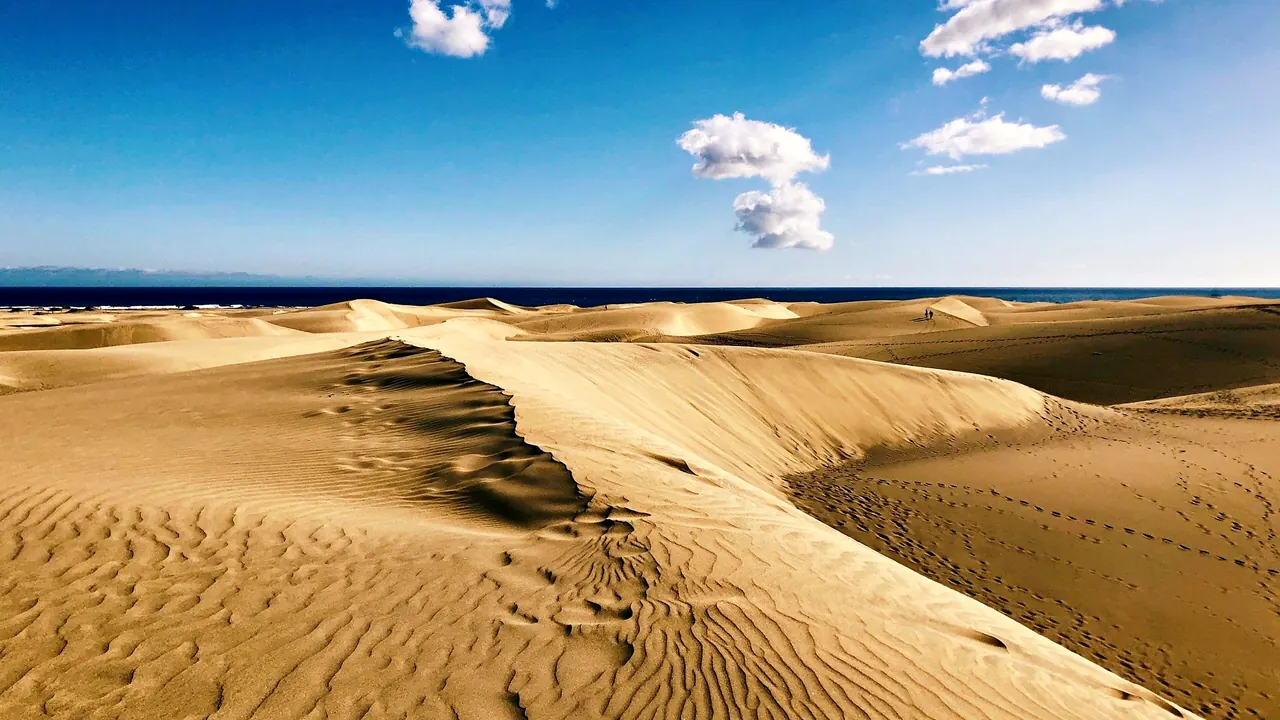
The dunes of Maspalomas
- Beaches80
- Nature & outdoors78
- Families72
Photo: Marcela Střelcová, CC BY-SA 4.0, cropped
Match
58
Every category weighted equally
- Beach & sun61
- Culture & arts54
- Food & nightlife54
- Family trip62
- Outdoors62
- Relax & unwind60
- Shopping & style54
- On a budget58
Gran Canaria in twelve categories
Our verdict on each, scored 0 to 100 against the same fixed benchmark cities, so a score means the same thing on every page.
Beaches & swimming. Scores 80 out of 100.
Food & drink. Scores 55 out of 100.
Culture & sights. Scores 50 out of 100.
Nightlife. Scores 55 out of 100.
Nature & outdoors. Scores 78 out of 100.
Day trips. Scores 55 out of 100.
Good for families. Scores 72 out of 100.
Getting around. Scores 58 out of 100.
Shopping & style. Scores 42 out of 100.
Affordability. Scores 55 out of 100.
Live music & performing arts. Scores 45 out of 100.
Wellness & relaxation. Scores 50 out of 100.
Gran Canaria category by category
Beaches & swimming
80The south coast is where most visitors stay, and it is built around the beach. Maspalomas runs for miles beside a field of golden dunes, Playa del Inglés joins it to the east, and further west the sheltered coves of Amadores, Puerto Rico and Mogán have calm water and pale sand. In the capital, Las Palmas, Playa de Las Canteras is a long city beach protected by a natural reef, with locals swimming on their way to work.
The sun is reliable in every month, which is the island's main pull, but the water is the Atlantic: around 19°C in winter and about 23°C in late summer and early autumn. Bracing swims rather than bathwater, though very swimmable. The north and west coasts are wilder, with black sand and strong surf better watched than swum in.
Food & drink
55Canarian cooking is simple and particular: small wrinkled potatoes with red and green mojo sauces, gofio made from toasted grain, grilled cheese with palm honey, goat stews and whatever fish came in that morning. The best of it is found in Las Palmas, in the tapas bars of Vegueta and Triana and around the Mercado de Vegueta, and in the fishing harbours of the north and west, such as Agaete and Arguineguín.
Inland, the villages serve hearty mountain cooking, and the island makes its own cheeses, rum around Arucas and wine on the volcanic slopes of the Monte Lentiscal area. The resort strips of the south lean on international menus of uneven quality, so a visitor who cares about eating well should plan meals away from the main beach promenades.
Culture & sights
50The island's heritage is concentrated in Vegueta, the old quarter of Las Palmas, founded in the fifteenth century. Its cobbled streets hold the Cathedral of Santa Ana, the Casa de Colón with its carved balconies and Columbus connections, and the Museo Canario, the best introduction to the island's pre-Hispanic people. Across the road, Triana has handsome modernist façades.
Beyond the capital, the Cueva Pintada in Gáldar preserves a painted cave and an excavated Canarian village, and the cave dwellings and sacred mountains of Risco Caído carry UNESCO status. Teror, with its basilica and wooden balconies, is the most complete colonial town. It adds up to a rewarding few days of sightseeing rather than a reason to come.
Nightlife
55Going out splits in two. In the south, Playa del Inglés has a large, long-established gay scene centred on the Yumbo shopping centre, where bars and clubs run late all year and swell for the Pride week in May. Around it are the karaoke bars and pubs of a classic package resort, cheerful but not distinctive.
Las Palmas offers a more Spanish night: late dinners, terrace bars in Vegueta and around Plaza de España, and clubs that fill after midnight at weekends. Carnival, one of the largest in Spain, turns the capital into a weeks-long street party each winter. Quieter resorts like Mogán and Meloneras wind down after dinner.
Nature & outdoors
78The interior is the surprise. From the coast the land climbs to the Pico de las Nieves at about 1,950m, past the basalt monolith of Roque Nublo and the Tejeda caldera, cut by deep ravines that fall to every shore. The west is wilder, with the pine forest of Tamadaba and cliffs dropping into the sea, while the Maspalomas dunes form a protected desert on the southern tip. Much of the island is a UNESCO biosphere reserve.
Hiking is best in the cooler months on old stone paths between mountain villages, and the long climbs draw road cyclists in winter. Pozo Izquierdo on the south-east coast is a renowned windsurfing spot, and diving, sailing and dolphin trips run from the southern harbours.
Day trips
55Day trips mostly mean the island's own towns. From the south, the drive inland reaches the mountain village of Tejeda and the balconied streets of Teror, while the north coast has Arucas with its dark stone church and rum distillery, Gáldar, and the white harbour of Agaete with its coffee-growing valley. Puerto de Mogán, with its canals and flowered lanes, is the prettiest stop on the south-west coast.
The capital, Las Palmas, is itself a full day out for anyone staying in the resorts. For a change of island, fast ferries from Agaete reach Santa Cruz de Tenerife in under an hour and a half, and Fuerteventura is about two hours by sea, which makes it a long day.
Good for families
72The south coast is set up for families. Sheltered beaches such as Amadores, Puerto Rico and Anfi have gentle water and soft sand, resort complexes have pools and children's clubs, and the weather is warm without being punishing in any month. Within short drives are Palmitos Park with its birds and dolphins, water parks, a Wild West theme town and camel rides in the dunes, while Las Palmas has a large aquarium near the port.
Spanish life welcomes children at the table late into the evening, and the island is easy and safe to manage. What it lacks is a single headline attraction, and the steep, winding mountain roads can be hard going for children prone to car sickness.
Getting around
58The essentials are easy. A motorway runs along the east coast from Las Palmas past the airport to the southern resorts, and the island's bus network covers that corridor well, with useful lines to the main towns. The resorts themselves are walkable along seafront promenades, and Vegueta and Triana in the capital are best seen on foot.
The interior is another matter. The mountain villages, viewpoints and west coast are reached on narrow, hairpin roads where short distances take a long time, and buses there are sparse. Most visitors who want to see more than the beach hire a car for a few days.
Shopping & style
42Serious shopping happens in Las Palmas, where the pedestrian Calle Mayor de Triana has independent shops in old buildings and Avenida Mesa y López carries the high-street chains and a large department store. The Canaries' lower sales tax makes perfume, tobacco and electronics a little cheaper than on the mainland.
Elsewhere the offer is modest: resort shopping centres, the weekly markets in Puerto de Mogán and the Sunday market around the basilica in Teror, where local cheese, sausage and crafts such as basketwork and embroidery are sold.
Affordability
55Gran Canaria sits in the middle range for a European sun destination. Winter is the high season, and the better southern resort hotels charge accordingly, but self-catering apartments and package stays keep a moderate option open. Food is good value away from the seafront strips, especially in local bars in Las Palmas and the inland villages, and the island's lower taxes make drinks, fuel and tobacco cheaper than on mainland Spain. Buses are reasonably priced, and car hire is usually inexpensive, which matters because it is the easiest way to see the interior.
Live music & performing arts
45Live culture belongs to Las Palmas. The Auditorio Alfredo Kraus, a stone hall facing the ocean at the end of Las Canteras, is home to the island's philharmonic orchestra, and the Teatro Pérez Galdós, the historic theatre in Triana, stages drama, dance and an opera season with a long tradition. The winter Canary Islands Music Festival brings visiting orchestras and soloists.
The carnival's music competitions and drag gala are a spectacle in their own right. Outside the capital, the southern resorts offer little beyond hotel shows and covers bands, so a visitor based there should plan an evening in town.
Wellness & relaxation
50The island has no thermal springs or historic bathing tradition, but rest is much of what visitors come for. The upmarket southern resorts around Meloneras and Maspalomas have large hotel spas, and seawater thalassotherapy centres with circuits of heated pools and jets are a local speciality. The pace is unhurried, the winter climate is mild and dry, and many visitors spend a week doing little beyond walking the promenade. For a quieter setting, rural houses in the inland villages and the north offer silence, cooler air and mountain views.
Where to stay in Gran Canaria
Most visitors stay on the south coast, and the choice there comes down to pace. Playa del Inglés and Maspalomas sit beside the dunes and suit beach days and late nights, with the island's large gay scene and plenty of pubs a short walk from the sand. Meloneras, at the western end, is calmer and more upmarket, with spa hotels and evenings that end after dinner. Further west, the sheltered coves of Amadores, Puerto Rico and Puerto de Mogán have gentle water that suits families with young children, and Mogán's canals and flowered lanes make it the quietest and prettiest of them.
Las Palmas is the base for food, culture and Spanish city life. Mornings can start with a swim at Las Canteras, evenings in the tapas bars of Vegueta and Triana or at a concert or play. It suits a winter city stay, Carnival, or anyone who wants the beach to be one part of the day rather than all of it.
For walking and a quiet stay, rural houses in the inland villages and the north offer cooler air and mountain views, though a car is essential. The island is compact enough for one base. On a first visit, stay in the south and hire a car for a few days inland. On a second, split the stay between Las Palmas and the mountains.
When should you go?
Pick a month to see what it is like. The climate figures are measured averages, not a forecast.
Gran Canaria in July
Daytime high, °C
Rainfall in the month, mm
The whole year
Shaded against this city’s own year: the deepest cell is its best month for that figure and the palest its weakest.
Where the figures come from
Gran Canaria's temperatures are measured 28 km from the centre, at Gran Canaria - Canary Islands.
Gran Canaria has no rain gauge within 25 km of the centre, so its rainfall comes from a gridded climate dataset read at the destination rather than from a gauge further away.
Temperature and rainfall are climate normals, averaged over the years shown. Gran Canaria: 1991-2020 normals, Gran Canaria - Canary Islands (27.7 km from centre).
Before you go
| Measure | Gran Canaria |
|---|---|
| Official language | Spanish |
| Currency | Euro (EUR) |
| Sockets | CF230 V, 50 Hz |
| Driving side | Right |
| Time zone | UTC, UTC+1 in summer |
| Emergency number | 112 |
| Main airport | Gran Canaria Airport (LPA)122 non-stop destinations |
| Public holidays this year | 12 days |
By the numbers
| Measure | Gran Canaria |
|---|---|
| Population | 863,943 |
| People per km² | 554 |
| Swim season, months above 21 °C | 6 months |
Compare Gran Canaria with
Every comparison with a written verdict behind it.