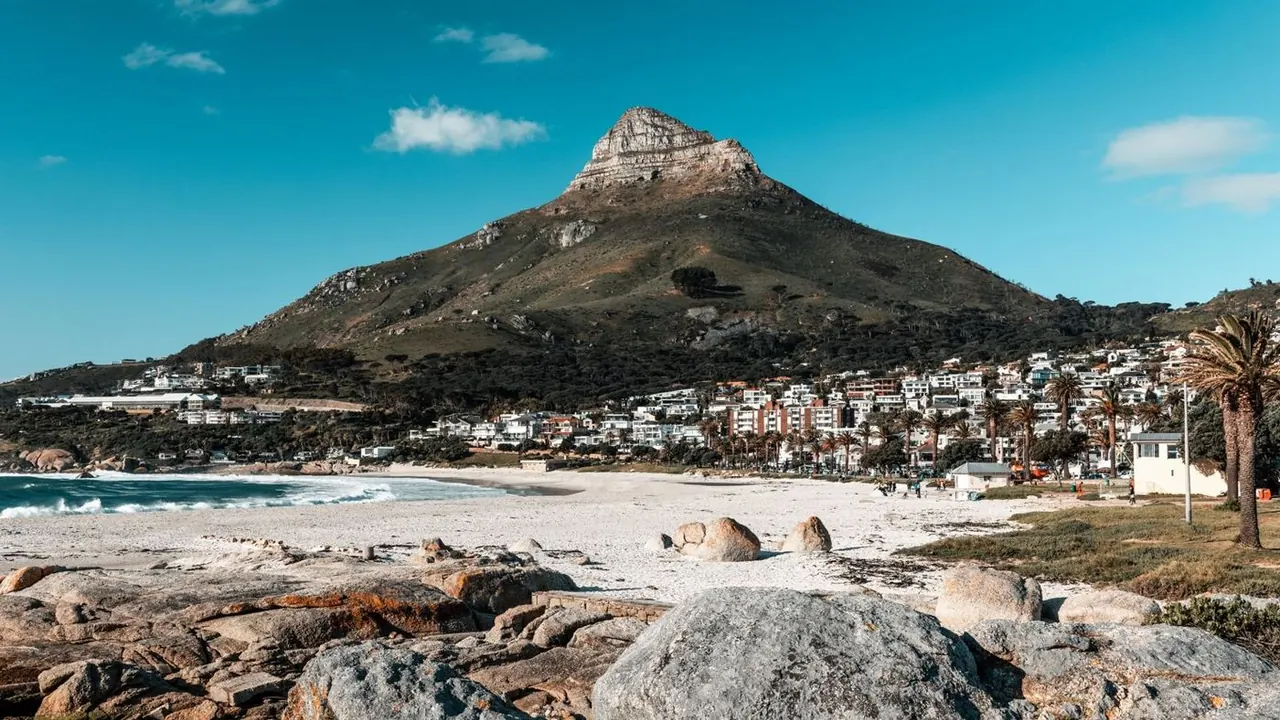
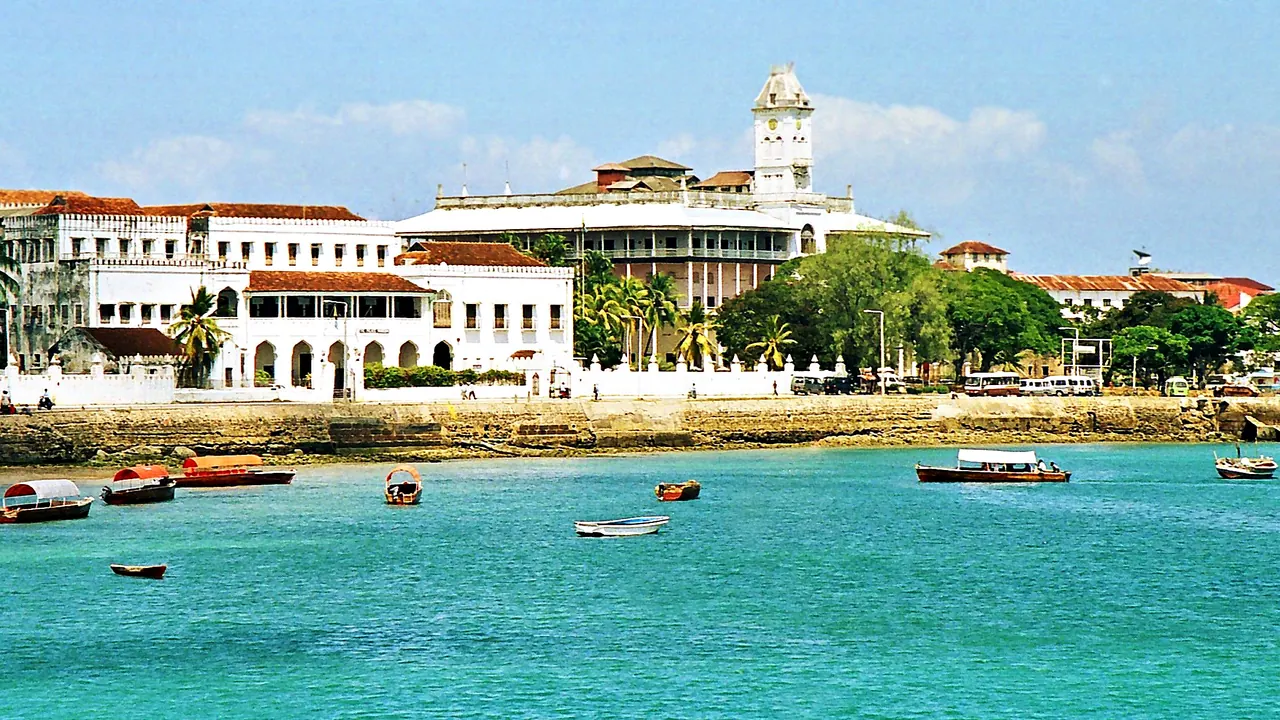
Photos: Cape Town by Stephan Louis, Pexels License; Stone Town by Dr. Ondřej Havelka (cestovatel), CC BY 4.0, cropped.
Cape Town or Stone Town?
Our verdict in twelve categories, each scored against the same fixed benchmark cities, and the climate month by month, so you can choose for your trip.
Choose Cape Town for
- nature and the outdoors
- nightlife
- day trips
Cape Town is the better choice for an active, varied trip of a week or more. Table Mountain, the peninsula's national park, penguins and whale-watching are all on the city's doorstep, the Winelands lie under an hour inland, and evenings bring good restaurants, wine and a real going-out scene. It suits travellers happy to drive or use ride-hailing, and families who want plenty to fill the days.
Choose Stone Town for
- culture and sights
- beaches
- getting around
Choose Stone Town for atmosphere over activity. Its coral-stone lanes, carved doors and layered Swahili, Omani and Indian history make two or three slow days of wandering, and the sea around it stays warm enough for swimming all year. It works best as the first stop on a Zanzibar beach trip rather than as a base for a busy itinerary, and it is quiet after dark.
Scoreboard
Twelve categories on one fixed scale from 0 to 100. The shaded stretch is the gap between the two.
Your match
Pick a travel style or drag the sliders, and both match scores follow your weighting.
Wins on nature and the outdoors and nightlife with your weighting.
Wins on culture and sights and beaches with your weighting.
What matters to you?
Category by category
What the scores mean for a trip.
Beaches & swimming
These two are broadly level, but in very different ways. Cape Town's Atlantic coves at Clifton and Camps Bay are spectacular, with white sand and granite boulders, but the water is cold, so real swimming means the half-hour trip to False Bay in summer.
Stone Town has no beach of its own worth a towel, yet the sea is warm all year. Nakupenda sandbank and the islets offshore are a short boat ride away, and Nungwi, Kendwa and Paje are an hour or more by road. In Cape Town you go to look at the beaches. In Stone Town you get in the water, though you have to travel to reach it.
Food & drink
Cape Town eats more widely and more ambitiously. Cape Malay curries and bobotie from the Bo-Kaap sit alongside tasting menus on Bree Street and in Woodstock, fish by the harbour at Kalk Bay, and wine from estates less than an hour away.
Stone Town's Swahili cooking, heavy with clove and cardamom, has real character, and the evening grill stalls at Forodhani Gardens are a highlight. Beyond that, menus tend to repeat the same dishes, and alcohol is mostly limited to hotels. Oddly, Stone Town is the better place for street-food grazing, which Cape Town largely lacks.
Culture & sights
Cape Town's sightseeing is spread out and shaped by a hard history. Robben Island is a ferry ride from the Waterfront, the District Six Museum tells of the removals under apartheid, and the Castle of Good Hope survives from the Dutch East India Company's first settlement. Zeitz MOCAA, in its converted grain silo, adds a serious museum of contemporary African art that Stone Town has nothing to match.
Stone Town still comes out ahead, because the town itself is the monument. Its UNESCO-listed maze of coral-stone houses, mosques and brass-studded carved doors rewards simple wandering. The Old Fort, the Palace Museum and the cathedral on the site of the last open slave market are all a few minutes' walk apart. The museums are modest and two days covers them, but here you are inside a whole historic town, while Cape Town's colonial past survives only in fragments.
Nightlife
There is little contest here. Cape Town has Long Street's rowdy bars and clubs, cocktail and wine bars on Bree and Kloof Streets, De Waterkant's gay quarter and the summer sundowner habit, all best reached by ride-hailing rather than on foot.
Stone Town's evenings end with a rooftop drink at sunset and dinner at the night market. It is a conservative Muslim town where the lanes go quiet early, and anyone who wants to party heads north to Nungwi.
Nature & outdoors
Cape Town is one of the great cities for the outdoors. Table Mountain rises over the centre, and the fynbos-covered national park runs to Cape Point. Add penguins, seals, whales in False Bay, surfing at Muizenberg and kitesurfing on the Atlantic side.
On flat Zanzibar, nature means the sea and the forest. There are red colobus monkeys in Jozani Forest, snorkelling around Mnemba and dolphin boats from Kizimkazi, but there is little for walkers, and the heat confines activity to the cooler hours.
Day trips
Cape Town has far more to offer beyond the city. The Winelands alone, with Stellenbosch's oak-lined streets, Franschhoek's valley and hundreds of estates, can fill several days, and whale-watching at Hermanus and Tulbagh's Cape Dutch street add more. You will need a car or a tour for nearly all of them.
From Stone Town the outings are short ones on the same island: a spice farm, the tortoises of Prison Island, the sultans' ruined palaces and the slave chambers at Mangapwani. They are good half days, but there is no second town to visit.
Good for families
Cape Town gives children much more to do: the Two Oceans Aquarium, the cableway, Boulders' penguins, Kirstenbosch's lawns and treetop walkway, and warm tidal pools at St James. The catch is that you will need a car.
Stone Town has a few lovely moments, such as giant tortoises, sandbanks and monkeys at Jozani. But its tight lanes defeat pushchairs, the heat is tiring and malaria needs care, so most families move quickly on to a beach hotel.
Getting around
Neither is easy, and they are hard in opposite ways. Cape Town's centre is walkable by day, but most of what visitors come for is spread across the peninsula and the Winelands. That means driving on good roads or using cheap ride-hailing, and going door to door after dark.
Stone Town's old town can be crossed on foot in twenty minutes, and most of its lanes are too narrow for cars, so walking is the only sensible way through. It is a genuine labyrinth, though, and the touts are persistent. To get beyond it you need taxis or hired drivers, because the shared dala-dalas are hard for a newcomer to read.
Shopping & style
Cape Town has the broader choice: the V&A Waterfront mall, local designers, ceramics and leather in Woodstock and on Kloof Street, and wine to carry home. Stone Town sells crafts in the lanes off Gizenga Street, such as kanga cloth, Zanzibar chests and Tingatinga paintings, much of it repeated from shop to shop. Its spices from the Darajani market are the more memorable souvenir.
Affordability
Cape Town is the better value for most visitors. Restaurant meals, wine, car hire and ride-hailing are cheap by northern standards, and only rooms in the beach suburbs at the December peak strain the budget.
Stone Town is cheap only at street level. Night-market food, dala-dalas and simple guesthouses cost little, but boutique hotels, alcohol and organised boat and spice tours are priced for foreigners, and you will be bargaining over most fares.
Live music & performing arts
Each city has a sound of its own, but only Cape Town has a regular stage life around it. Cape jazz, the style Abdullah Ibrahim carried abroad, survives in a few clubs. The summer Sunday concerts on Kirstenbosch's lawns are a picnic ritual, and the international jazz festival is a major event. Artscape, the Baxter and the Cape Philharmonic add opera, drama and a concert season.
Stone Town's taarab, Swahili poetry set to violin, qanun and oud, is the rarer thing to hear, but you will need to ask around to catch one of the old music clubs rehearsing. Sauti za Busara and the film festival fill the town for their weeks. Outside them there is no regular programme.
Wellness & relaxation
Neither city has a living bathing culture, but Cape Town is the more restful stay. It offers long Winelands lunches, morning dips in the False Bay tidal pools, Kalk Bay's slow pace and well-priced estate spas.
Stone Town's pole pole rhythm and shaded rooftops are appealing, and hotel spas use clove and coconut oil. The heat, motorbikes and touts in the lanes wear people out, though, which is why many save real rest for the coast.
When should you go?
Pick your month. The climate figures are measured averages, not a forecast.
Cape Town in July
Stone Town in July
Daytime high, °C
Rainfall in the month, mm
Where the figures come from
Stone Town's temperatures are measured 78 km from the centre, at Dar Es Salaam Airport.
Stone Town has no rain gauge within 25 km of the centre, so its rainfall comes from a gridded climate dataset read at the city rather than from a gauge further away.
Temperature and rainfall are climate normals, averaged over the years shown. Cape Town: 1991-2020 normals, Cape Town Airport (17.5 km from centre). Stone Town: 1991-2020 normals, Dar Es Salaam Airport (78 km from centre).
Cape Town is a summer destination. From December to March the days are dry, long and sunny, with highs around 26°C to 28°C, and this is the only time the beaches really come into their own, though even the warmer water stays cool. The winter months from June to August are cool and wet, with June bringing close to 97mm of rain. That time of year is fine for museums and whale-watching but poor for the beach.
Stone Town is hot all year, with highs never far below 30°C, so the best walking is in the mornings and late afternoons. The sea stays warm in every month, never dropping below 26°C. The two cities differ most in the rains: Stone Town's long rains peak in April at around 363mm and its short rains come in November and December. That leaves June to October as its driest and sunniest stretch, when Cape Town is at its greyest. The two calendars largely complement each other.
Which traveller are you?
For an outdoors trip, Cape Town is the clear pick. You can hike Table Mountain and Lion's Head, see penguins and seals, drive Chapman's Peak and learn to surf at Muizenberg. Stone Town's outdoors is mostly snorkelling, dhow sailing and the forest at Jozani.
On a beach and sun trip, Stone Town suits better. The water is warm in every month, sandbanks and islets are a short boat ride away, and Zanzibar's northern and eastern beaches are within reach. Cape Town's beaches look spectacular, but the water is cold.
On a family trip with children, Cape Town is much easier. It has the aquarium, the cableway, Boulders' penguins and calm tidal pools in False Bay. Stone Town's narrow lanes, motorbikes, midday heat and malaria precautions make it harder going with young children.
Before you go
| Measure | Cape Town | Stone Town |
|---|---|---|
| Official language | English, Zulu, Xhosa, Afrikaans, Venda, Northern Sotho, Swazi, Tswana, Tsonga, Sesotho, Southern Ndebele, South African Sign Language | English, Swahili |
| Currency | Rand (ZAR) | Tanzanian Shilling (TZS) |
| Sockets | CMN230 V, 50 Hz | G230 V, 50 Hz |
| Driving side | Left | Left |
| Time zone | UTC+2 | UTC+3 |
| Emergency number | 112 | Police 112, ambulance 115, fire 114 |
| Elevation | 5 m | 15 m |
| Main airport | Cape Town International Airport (CPT)18 km from centre45 non-stop destinations | Abeid Amani Karume International Airport (ZNZ)7 km from centre40 non-stop destinations |
| Public holidays this year | 13 days | 13 days |
By the numbers
| Measure | Cape Town | Stone Town |
|---|---|---|
| City population | 3,776,313 | - |
| People per km² | 1,538 | - |
| Museums within 10 km | 22 | 2 |
| UNESCO World Heritage sites within 50 km | 3 | 1 |
| Swim season, months above 21 °C | None | 12 months |
Where else could you go?
Every comparison below shares a destination with this one, so you can follow Cape Town or Stone Town somewhere new.
- Stellenboschvs Cape Town
- Mombasavs Stone Town
- Arushavs Stone Town
- Nairobivs Stone Town
- Johannesburgvs Cape Town
- Windhoekvs Cape Town