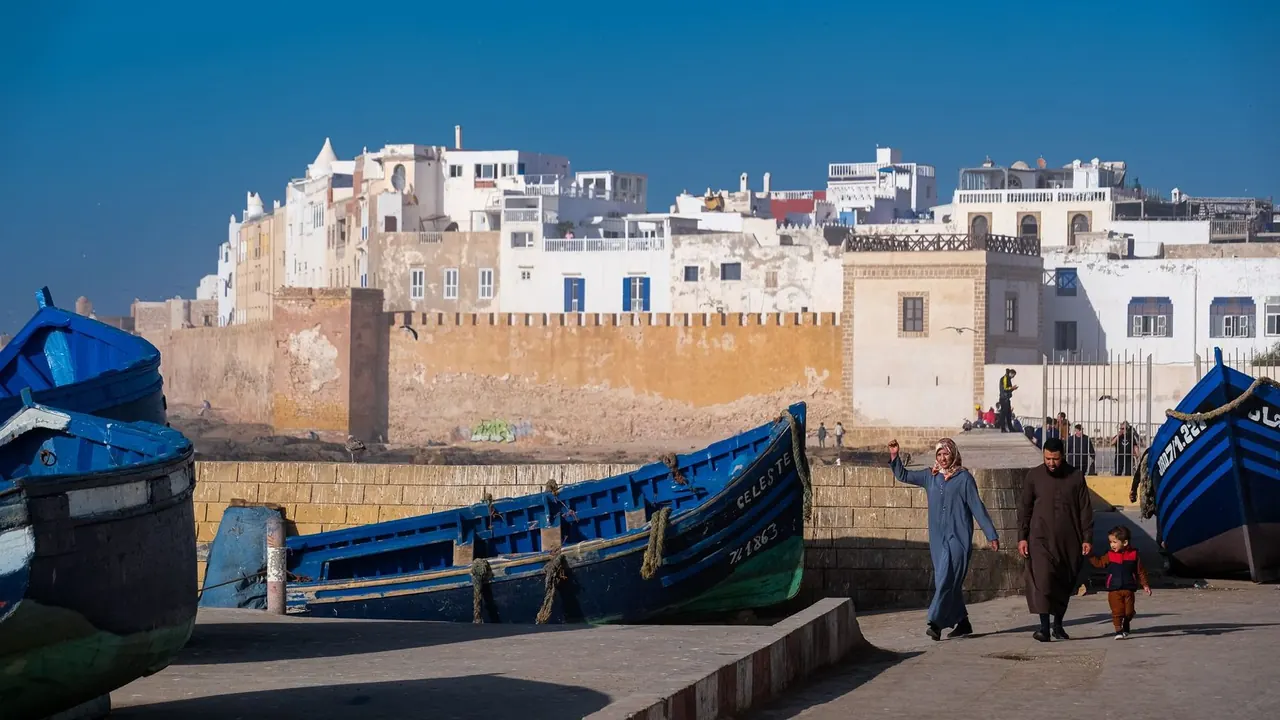
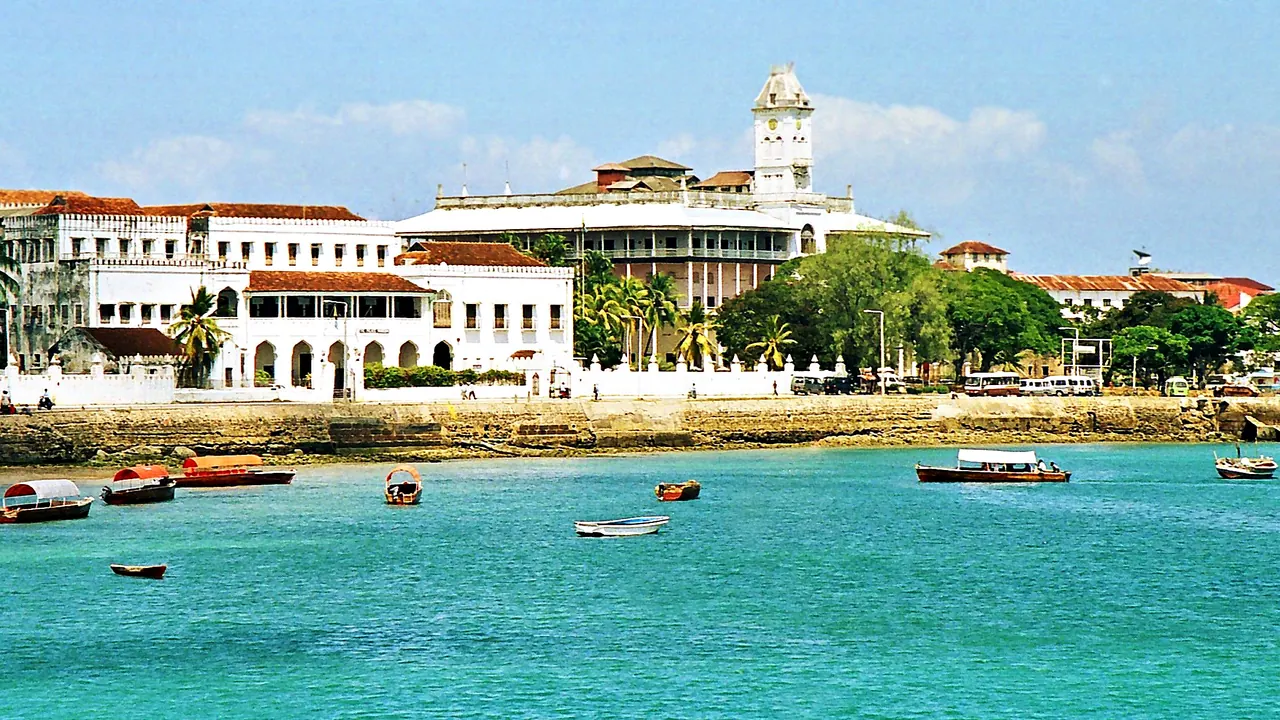
Photos: Essaouira by Manel Cusido, Pexels License; Stone Town by Dr. Ondřej Havelka (cestovatel), CC BY 4.0, cropped.
Essaouira or Stone Town?
Our verdict in twelve categories, each scored against the same fixed benchmark cities, and the climate month by month, so you can choose for your trip.
Choose Essaouira for
- wellness
- getting around
- families
Essaouira suits travellers who want to slow right down in a mild, breezy seaside town. Its flat, walkable medina, riad roof terraces, cheap grilled fish at the port and steady Atlantic wind for kitesurfing make it calmer, easier and cheaper than Stone Town. It is also the better choice for families and for anyone who values rest over sightseeing, as long as warm swimming is not the point of the trip.
Choose Stone Town for
- culture and sights
- beaches
- day trips
For warm sea, deeper history and a stronger sense of having gone somewhere far away, Stone Town is the better pick. Its coral-stone lanes, sultans' palaces and slave-trade memorials give you more to see, and the Forodhani grill market offers more variety. The white sandbanks and reefs a short boat ride out provide the tropical swimming Essaouira cannot. Most people pair it with a few nights on Zanzibar's beaches.
Scoreboard
Twelve categories on one fixed scale from 0 to 100. The shaded stretch is the gap between the two.
Your match
Pick a travel style or drag the sliders, and both match scores follow your weighting.
Too close to call, 1 point apart
Wins on wellness and getting around with your weighting.
Wins on culture and sights and beaches with your weighting.
What matters to you?
Category by category
What the scores mean for a trip.
Beaches & swimming
For swimming, Stone Town is clearly ahead, thanks to the warm sandbanks and islets a boat ride away and the island's famous beaches beyond. Essaouira's long pale crescent starts right at the medina walls, but it suits walking, riding and watching the kites more than swimming. The Atlantic stays cool, and from spring to late summer the wind blows sand across the bay, so swimming means calm mornings or the sheltered corner by the port.
Stone Town's own shoreline is a working waterfront of dhows and jetties, but Nakupenda sandbank and the islets of Changuu and Bawe have white sand and clear, warm water in every season. Nungwi, Kendwa and Paje are an hour or more by road, which is why most visitors move on to the coast after a few nights in town.
Food & drink
Both towns eat from the sea, and each has a grill where the catch is cooked in front of you: the harbour stalls in Essaouira and the Forodhani Gardens night market in Stone Town. Stone Town's cooking has more depth. Centuries of Omani, Indian and Persian trade shaped its Swahili curries, its pilau and biryani scented with clove, its urojo soup at breakfast and the coffee poured on street corners.
Essaouira's range is narrower: sardines and spider crab at the port, fish tagines, couscous on Fridays, and argan oil and amlou from the hills. In both towns alcohol is mostly limited to hotels and places aimed at visitors.
Culture & sights
Both old towns are UNESCO-listed, but Stone Town has more to see and more weight behind it. Its coral-stone maze holds the carved doors of merchant houses, the Omani Old Fort, the sultans' Palace Museum and the Hamamni baths. The Anglican cathedral stands on the site of East Africa's last open slave market, and a visit there stays with people.
Essaouira is lighter and more orderly. Its 18th-century planned grid of white houses with blue shutters, the Skala ramparts with their bronze cannons, the mellah and a small ethnographic museum are full of atmosphere, but most visitors have seen them in a day or two.
Nightlife
Neither is a place for a big night out, though Stone Town has a little more going on. Sundowners on a seafront terrace or rooftop bar followed by dinner at the night market make a proper evening ritual, and a couple of bars play music at weekends. The island's parties happen up the coast at Nungwi and Kendwa.
Essaouira's evenings are quieter still: a drink on a rooftop at sunset, perhaps one of the few licensed bars on the edge of the medina, then a walk on the ramparts. Only the kitesurfers linger late in the beach bars.
Nature & outdoors
Essaouira's outdoors is shaped by its wind, which makes it one of Africa's best-known spots for kitesurfing and windsurfing. There are schools on the bay and wilder waves at Sidi Kaouki and Moulay Bouzerktoun. Horse and camel rides towards the Diabat dunes, goats in the argan trees and Eleonora's falcons on the offshore islands add to it, and the mild climate lets you stay active all day.
Stone Town's nature is mostly about the sea: reef snorkelling and diving, dhow sailing, dolphin trips from Kizimkazi, plus the red colobus monkeys of Jozani Forest. The island is flat with little for walkers, and the heat pushes most outings into the mornings and late afternoons.
Day trips
Essaouira sits on its own at the end of the road, and the outings from it are small: the surf village of Sidi Kaouki, the thuya workshops at Ghazoua, the argan cooperatives and the sand-swallowed fort near Diabat. Marrakech and Agadir are around three hours away, better as stops on the way in or out than as day trips.
Stone Town has a longer and richer list, all on its own island. A spice farm walk among clove and vanilla, the giant tortoises on Prison Island, the ruined Maruhubi and Mtoni palaces and the Mangapwani slave chambers fill several half days, and the fast ferry to Dar es Salaam takes about two hours.
Good for families
Essaouira is the easier of the two with children. The medina is small, flat and mostly car-free, the beach is a few minutes' walk away, and the camels on the sand and the boats in the port keep younger children busy. The cool sea and summer wind do limit beach play, and riad stairs and open terraces need watching.
Stone Town has good moments: the tortoises on Changuu, boat trips to the sandbanks and the colobus monkeys. But its lanes are shared with motorbikes, the uneven paving defeats pushchairs, and the midday heat wears small children out. Malaria and food hygiene need care, and most families do better once they move to a beach hotel with a pool.
Getting around
Essaouira's medina is a flat, regular grid that you learn within an hour, with the port at one end and the beach promenade running on from the walls. Porters with hand carts take luggage from the gates to the riads. For Sidi Kaouki or the argan cooperatives you need a driver, but coaches to Marrakech and Agadir are straightforward.
Stone Town's lanes are a genuine labyrinth, shared with motorbikes and persistent touts, and the seafront is the easiest way to find your bearings again. Beyond the old town the crowded dala-dalas are hard for newcomers to work out, so most trips to beaches, spice farms and Jozani mean taxis, hired drivers or tour transfers.
Shopping & style
Both towns shop for crafts in souk lanes and have no fashion or luxury shopping, so the difference is in what you bring home. Essaouira's speciality is fragrant thuya wood, carved and inlaid in workshops under the ramparts. Argan cosmetics, silver and rugs fill the souk, small galleries sell naive and gnawa-inspired painting, and the sellers are unusually relaxed.
Stone Town's best buys are the island's own spices from Darajani market. Around Gizenga Street there are kanga and kikoi cloth, miniature Zanzibar chests and Tingatinga canvases, though much of it repeats from shop to shop and bargaining is expected.
Affordability
Essaouira is the more affordable of the two, because its main pleasures cost little or nothing. The medina and ramparts are free to wander, and lunch can be fish picked at the port grills. Since the beach and the port are both a short walk away, a full day there need not include anything organised or any transport. Spending only climbs at the smarter riads, the rooftop restaurants and the few places serving alcohol.
Stone Town is just as cheap at street level, with the night market, local cafés and simple guesthouses. Much of what people travel to Zanzibar for is priced for foreigners, though. The sandbank and spice tours, drivers to Jozani and the beaches, and boutique hotels in restored merchant houses add up quickly, so the same number of days usually costs more. You also have to bargain for shop prices and taxi fares, which makes every day more of an effort.
Live music & performing arts
Each town has its own music and one big moment in the year, and neither has theatre, opera or a regular concert programme. Essaouira is the home of gnawa, the trance music of iron castanets and the guembri. The Gnaoua World Music Festival fills its squares and ramparts with free concerts.
Stone Town's sound is taarab, Swahili poetry set to violins, qanun and oud. You can hear it at the long-established music clubs and the waterfront academy, and its peaks come with Sauti za Busara and the film festival. At other times of year, finding live music in either town means asking around.
Wellness & relaxation
Essaouira is made for slowing down. It has traffic-free lanes, sea air, long breakfasts on roof terraces and yoga retreats along the coast. Neighbourhood hammams are still in daily use, and riad spas offer argan oil massages. Only the wind spoils outdoor lounging on some days.
Stone Town shares the unhurried pace of pole pole and has its shaded rooftops, but its Persian baths are monuments rather than working hammams, so treatments mean boutique hotel spas. The heat, the motorbikes and the touts make the lanes tiring, and most visitors save their real rest for the resorts on the coast.
When should you go?
Pick your month. The climate figures are measured averages, not a forecast.
Essaouira in July
Stone Town in July
Daytime high, °C
Rainfall in the month, mm
Where the figures come from
Stone Town's temperatures are measured 78 km from the centre, at Dar Es Salaam Airport.
Stone Town has no rain gauge within 25 km of the centre, so its rainfall comes from a gridded climate dataset read at the city rather than from a gauge further away.
Temperature and rainfall are climate normals, averaged over the years shown. Essaouira: 1991-2020 normals, Essaouira (1.4 km from centre). Stone Town: 1991-2020 normals, Dar Es Salaam Airport (78 km from centre).
Essaouira hardly changes through the year. Daytime highs stay in the low twenties and peak around 24°C in September, so the medina is comfortable to walk in any month. From May to September it is almost completely dry and sunny. The catch is the sea, which never gets much past 20°C even in late summer. Most of the rain falls in winter, and December is the wettest month.
Stone Town is hot all year, peaking at 33°C, so walking the lanes is best kept to mornings and late afternoons. The rains set its calendar. The long rains peak in April at about 363mm, and a shorter wet spell comes in November and December. June to October is the driest and sunniest stretch, and the most comfortable, with the sea still warm enough for long swims. January and February are mostly dry but at their hottest.
Which traveller are you?
On a relaxing and wellness trip, Essaouira is the better choice. Its mild weather lets you idle outdoors in any month, and there is little you feel obliged to see. Stone Town is better treated as a place to explore, with rest saved for the coast.
For a culture and arts trip, Essaouira's ramparts and galleries make a pleasant day or two, but Stone Town gives far more to absorb. Omani, Indian and Swahili history, slave-trade memorials and the sultans' ruined palaces can fill several days.
On a beach and sun trip, Stone Town is the stronger base, especially with a few nights on the coast added. Essaouira's Atlantic stays cool and breezy even in August, while Zanzibar's reefs and sandbanks offer warm, clear water for snorkelling and long swims.
Before you go
| Measure | Essaouira | Stone Town |
|---|---|---|
| Official language | Arabic, Standard Moroccan Tamazight | English, Swahili |
| Currency | Moroccan Dirham (MAD) | Tanzanian Shilling (TZS) |
| Sockets | CE50 Hz | G230 V, 50 Hz |
| Driving side | Right | Left |
| Time zone | UTC+1 | UTC+3 |
| Emergency number | Police 19/112, ambulance 15, fire 15 | Police 112, ambulance 115, fire 114 |
| Elevation | 11 m | 15 m |
| Main airport | Essaouira-Mogador Airport (ESU)15 km from centre13 non-stop destinations | Abeid Amani Karume International Airport (ZNZ)7 km from centre40 non-stop destinations |
| Public holidays this year | 11 days | 13 days |
By the numbers
| Measure | Essaouira | Stone Town |
|---|---|---|
| City population | 82,962 | - |
| People per km² | 16,592 | - |
| Museums within 10 km | 2 | 2 |
| UNESCO World Heritage sites within 50 km | 1 | 1 |
| Swim season, months above 21 °C | None | 12 months |
Where else could you go?
Every comparison below shares a destination with this one, so you can follow Essaouira or Stone Town somewhere new.
- Agadirvs Essaouira
- Marrakechvs Essaouira
- Mombasavs Stone Town
- Casablancavs Essaouira
- Rabatvs Essaouira
- Arushavs Stone Town