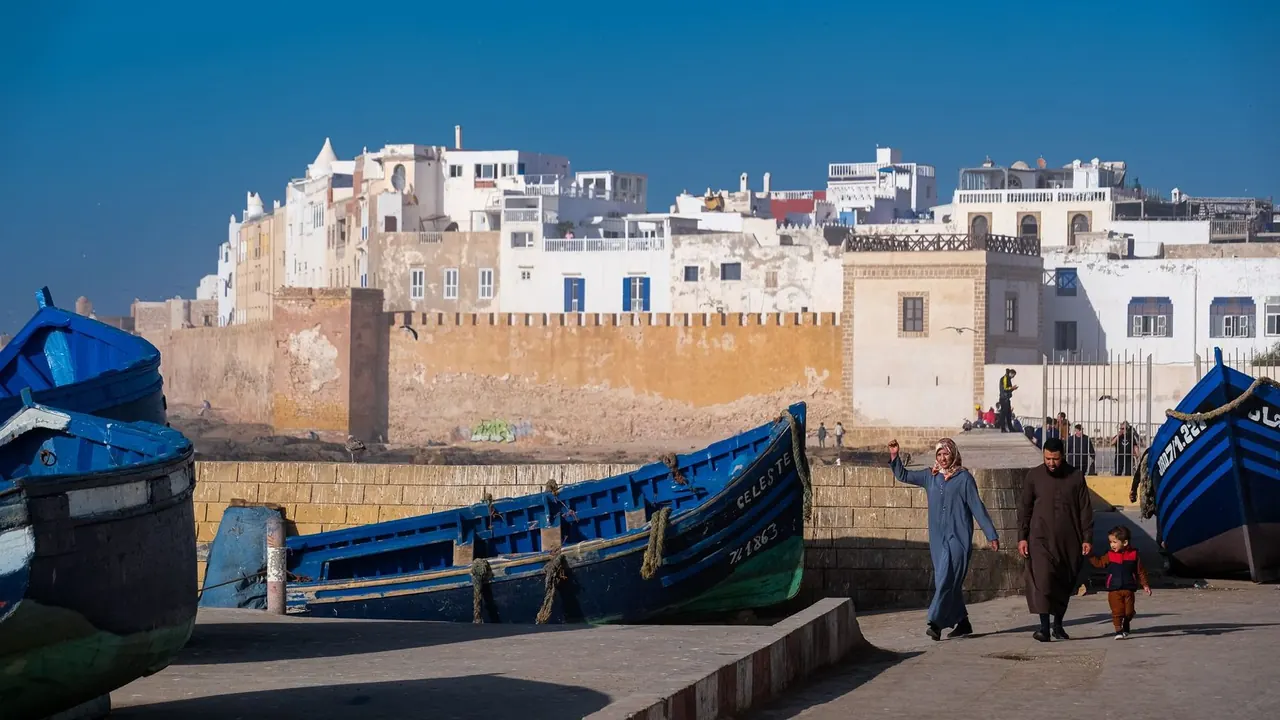
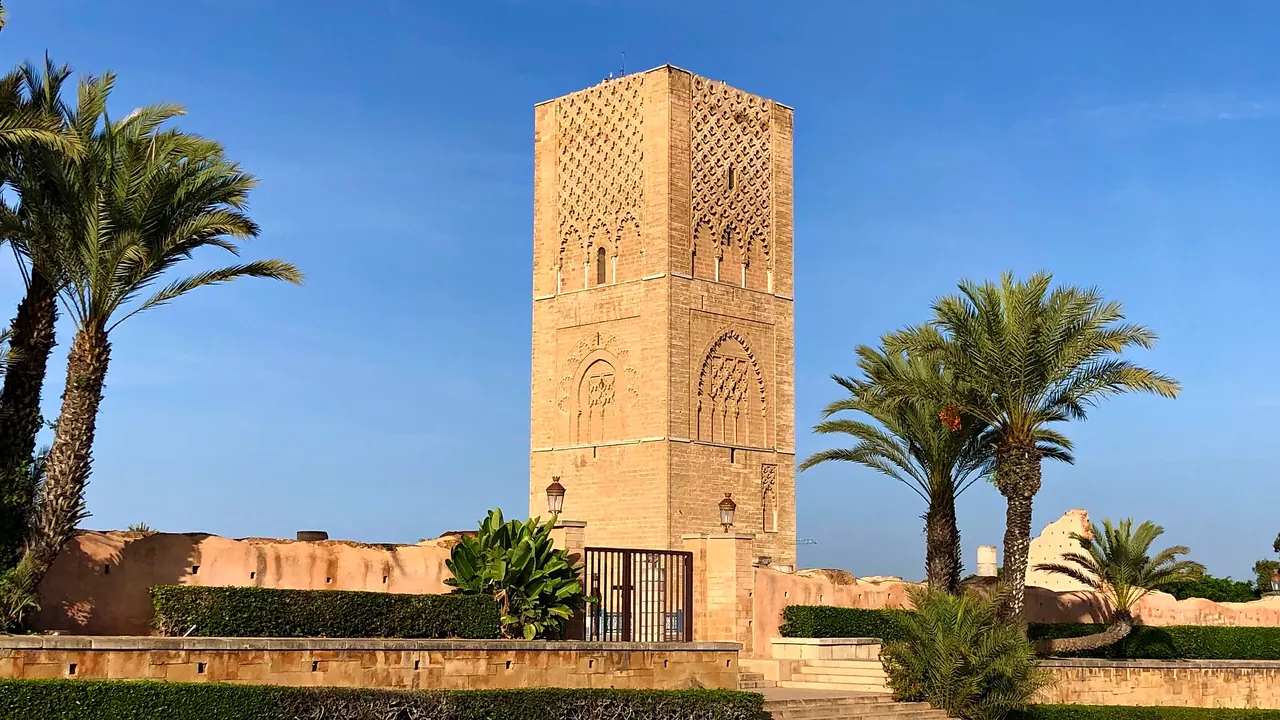
Photos: Essaouira by Manel Cusido, Pexels License; Rabat by Aemazy, CC BY-SA 4.0, cropped.
Essaouira or Rabat?
Our verdict in twelve categories, each scored against the same fixed benchmark cities, and the climate month by month, so you can choose for your trip.
Choose Essaouira for
- nature and the outdoors
- wellness
- beaches
Essaouira suits travellers who want to stop moving for a while. It is a small walled town by the sea, walkable end to end, where the days go on riad roof terraces, walks along the sand and evenings on the ramparts. The steady wind makes it a natural choice for kitesurfers and windsurfers, and it is the home of gnawa music. The trade-off is isolation: once you have seen the medina, there is not much within easy reach.
Choose Rabat for
- day trips
- culture and sights
- live music and the arts
Rabat is the better pick for a trip built around sightseeing. The capital has more to see, from the Kasbah of the Udayas to the Chellah ruins, more variety at the table and a main-line station in the centre that puts Casablanca, Meknes and Tangier within a day's return. It stays calm for a Moroccan city, so it works well as a first, gentle introduction to the country or as one stop on a rail tour.
Scoreboard
Twelve categories on one fixed scale from 0 to 100. The shaded stretch is the gap between the two.
Your match
Pick a travel style or drag the sliders, and both match scores follow your weighting.
Wins on nature and the outdoors and wellness with your weighting.
Wins on day trips and culture and sights with your weighting.
What matters to you?
Category by category
What the scores mean for a trip.
Beaches & swimming
Neither city is a sunbathing destination, but the two beaches feel different. Essaouira's long, pale crescent starts at the medina walls. It is a place for walking, riding and watching kites, the wind often blows sand across it, and calmer mornings by the port are the best time to swim.
Rabat's city beach sits under the kasbah at the river mouth. It is used by locals for football and surfing, and the currents keep swimmers close to shore. For quieter sand, people take a taxi south to Temara or Skhirat. The water off Rabat is a little warmer in late summer, while Essaouira has wilder sand at Sidi Kaouki.
Food & drink
Rabat gives a visitor who cares about eating more to work with. There is plain medina cooking, snail broth and msemen from evening street stalls, and a strong café and pastry culture on the Ville Nouvelle terraces. Agdal and the Hassan district add French and Lebanese restaurants, and a few places serve Moroccan wine.
Essaouira's best food moment is very specific: you pick fish and spider crab at the harbour grills and watch them cooked. Beyond the port, the choice soon narrows to tagines, riad dining rooms and a few European-style cafés, and alcohol is harder to find than in Rabat.
Culture & sights
Rabat has much more to see. Its UNESCO listing covers the Almohad gate and Andalusian garden of the Kasbah of the Udayas, the Hassan Tower beside the Mausoleum of Mohammed V, and the Chellah, where Roman and Marinid ruins sit among fig trees and storks. Art deco streets and two serious museums mean the city can fill two or three days.
In Essaouira, the medina itself is the sight. It is an 18th-century fortified port laid out on a grid, with the Skala ramparts and their cannons, the old mellah and a small ethnographic museum. It is charming but shallow, and a day or two covers it.
Nightlife
Both cities go to bed early, but Rabat gives you a little more to do after dinner. Its evenings centre on the riverside promenade and on medina streets that stay lively on summer nights. Lounges and hotel bars in Agdal draw diplomats and young professionals, and Casablanca is close enough by train for a proper night out.
Essaouira is quieter still. A sundowner on a rooftop terrace, a walk on the ramparts and a couple of beach bars full of kitesurfers are about all there is.
Nature & outdoors
Essaouira has the more memorable outdoors, and most of it comes from the wind. Kitesurfing and windsurfing schools work the bay, and Moulay Bouzerktoun and Sidi Kaouki have rougher waves for experienced riders. You can ride horses or camels towards the dunes at Diabat, walk among argan trees with goats in their branches, or watch Eleonora's falcons over the offshore islands in summer.
Rabat's outdoors are gentler: paddling on the estuary, surf lessons at the river mouth, and walking or cycling in the Maamora cork forest. Neither city has mountains within easy reach.
Day trips
Essaouira sits on its own at the end of the road, so the outings are small and local: the surf village of Sidi Kaouki, the thuya carvers at Ghazoua, the argan oil cooperatives inland and the half-buried fort near Diabat. Safi's pottery quarter is about two hours up the coast, and Marrakech is too far for a comfortable return in a day.
Rabat is far better placed, on the country's best rail line. Casablanca and its seafront mosque are about an hour away, the high-speed line reaches Tangier in about an hour and a half, and whitewashed Asilah is a regular train ride along the same route. Meknes is about two hours inland, and Salé's madrasa is just a tram ride across the river.
Good for families
Rabat has a slight edge for children because it has things built for them. The large national zoo keeps African animals in open enclosures, the botanical gardens give children room to run, and the tram makes getting about with a buggy simple. The city beaches have strong waves, though, so children need watching in the water.
Essaouira offers simpler pleasures: camels on the sand, fishing boats in the port and a car-free medina a few minutes from the beach. In return, the wind and cool sea can cut beach days short, and the steep riad stairs and open terraces need care with small children.
Getting around
Essaouira is easy to walk around but cut off from what lies beyond it. The flat medina, the port and the beach promenade are all a short stroll apart, and porters with handcarts carry your luggage from the gates to the riad. Leaving town, though, usually means hiring a driver or a car.
Rabat's riverside core is just as easy on foot, and the tram and cheap petit taxis reach the Chellah, Agdal and the coast. With Rabat Ville station in the centre, a car is unnecessary even for trips out of the city.
Shopping & style
Essaouira's signature buy is thuya wood: fragrant boxes and inlaid trays carved in workshops under the ramparts. The town also has small galleries of naive and gnawa-inspired painting that Rabat cannot match, and sellers in its souk lanes are relaxed by Moroccan standards.
Rabat's speciality is carpets, dense and deep-coloured, sold along the covered Rue des Consuls with gentle haggling, and Salé across the river is known for pottery. For everyday needs, Agdal's high streets and the riverside mall provide what Essaouira lacks.
Affordability
Day to day, both are cheap for European visitors: simple meals, taxis and wandering the main sights cost very little. The difference is where you sleep. Essaouira has plenty of good-value riads, especially outside summer.
Rabat, as the capital, leans towards business hotels, and its smarter districts cost more to stay and eat in. In both cities, drinking alcohol is the part that adds up.
Live music & performing arts
Rabat offers more to see on stage. It has the Mohammed V National Theatre and the Grand Theatre on the river, Andalusian and chaabi concerts at cultural centres, and the Mawazine festival, which brings international and African stars to open-air stages. Many productions are in Arabic or French, and you need to seek them out.
Essaouira has one thing and does it deeply: gnawa. The town comes alive for the annual Gnaoua festival, but for the rest of the year the music turns up only informally in a few restaurants and squares.
Wellness & relaxation
Essaouira is built for slowing down. There are long mornings on roof terraces, sunsets on the ramparts and yoga retreats in the coastal villages, and the main thing that disturbs the calm is the wind.
Rabat's version is more urban. The hammam is part of everyday life in the medina and in Salé, and hotel spas offer the same ritual in more comfort. The kasbah garden and evening walks by the river make it restful for a capital, but it is still a city with work going on around you.
When should you go?
Pick your month. The climate figures are measured averages, not a forecast.
Essaouira in July
Rabat in July
Daytime high, °C
Rainfall in the month, mm
Temperature and rainfall are climate normals, averaged over the years shown. Essaouira: 1991-2020 normals, Essaouira (1.4 km from centre). Rabat: 1991-2020 normals, Rabat-Sale (7.6 km from centre).
Essaouira hardly changes through the year. Afternoons stay mild in every month and only reach about 24°C in September, so the streets are never too hot for walking, but the sea barely passes 20°C and the beach is rarely warm enough for lazy days. May to September is almost completely dry and very sunny. The rain arrives in October and is heaviest around December, though even then it is moderate.
Rabat follows the same rhythm with more contrast. Summer is noticeably warmer, around 28°C in August, and the sea reaches about 23°C, so July to September is the better window for a swim on this stretch of coast. Winter is wetter, with close to 97mm in November and a similar amount in December. For sightseeing on foot, spring and autumn are the most comfortable months in Rabat, while Essaouira is pleasant for walking in any season.
Which traveller are you?
On a culture and arts trip, Rabat is the clear choice. It has more monuments, spread across many centuries, plus national theatres, a modern art museum and easy trains to Meknes and Casablanca. Essaouira's walled medina is lovely, but you will have seen it in a day or two.
For a relaxing and wellness trip, Essaouira fits better. The medina has no traffic, the roof terraces invite long, slow mornings, and the coast has yoga and surf-and-yoga retreats. Rabat is calm for a capital, but it is still a working city.
On an outdoors trip, Essaouira wins because of its wind. The bay and the beaches nearby are known for kitesurfing and windsurfing, and the town adds horse rides to Diabat and walks in the argan forest. Rabat offers gentler paddling and walks in a cork forest.
Before you go
| Measure | Essaouira | Rabat |
|---|---|---|
| Official language | Arabic, Standard Moroccan Tamazight | Arabic, Standard Moroccan Tamazight |
| Currency | Moroccan Dirham (MAD) | Moroccan Dirham (MAD) |
| Sockets | CE50 Hz | CE50 Hz |
| Driving side | Right | Right |
| Time zone | UTC+1 | UTC+1 |
| Emergency number | Police 19/112, ambulance 15, fire 15 | Police 19/112, ambulance 15, fire 15 |
| Elevation | 11 m | 87 m |
| Main airport | Essaouira-Mogador Airport (ESU)15 km from centre13 non-stop destinations | Rabat-Salé Airport (RBA)9 km from centre45 non-stop destinations |
| Public holidays this year | 11 days | 11 days |
By the numbers
| Measure | Essaouira | Rabat |
|---|---|---|
| City population | 82,962 | 515,619 |
| People per km² | 16,592 | 4,370 |
| Museums within 10 km | 2 | 7 |
| UNESCO World Heritage sites within 50 km | 1 | 1 |
| Swim season, months above 21 °C | None | 4 months |
Where else could you go?
Every comparison below shares a destination with this one, so you can follow Essaouira or Rabat somewhere new.
- Casablancavs Rabat
- Agadirvs Essaouira
- Fesvs Rabat
- Marrakechvs Essaouira
- Tangiervs Rabat
- Marrakechvs Rabat