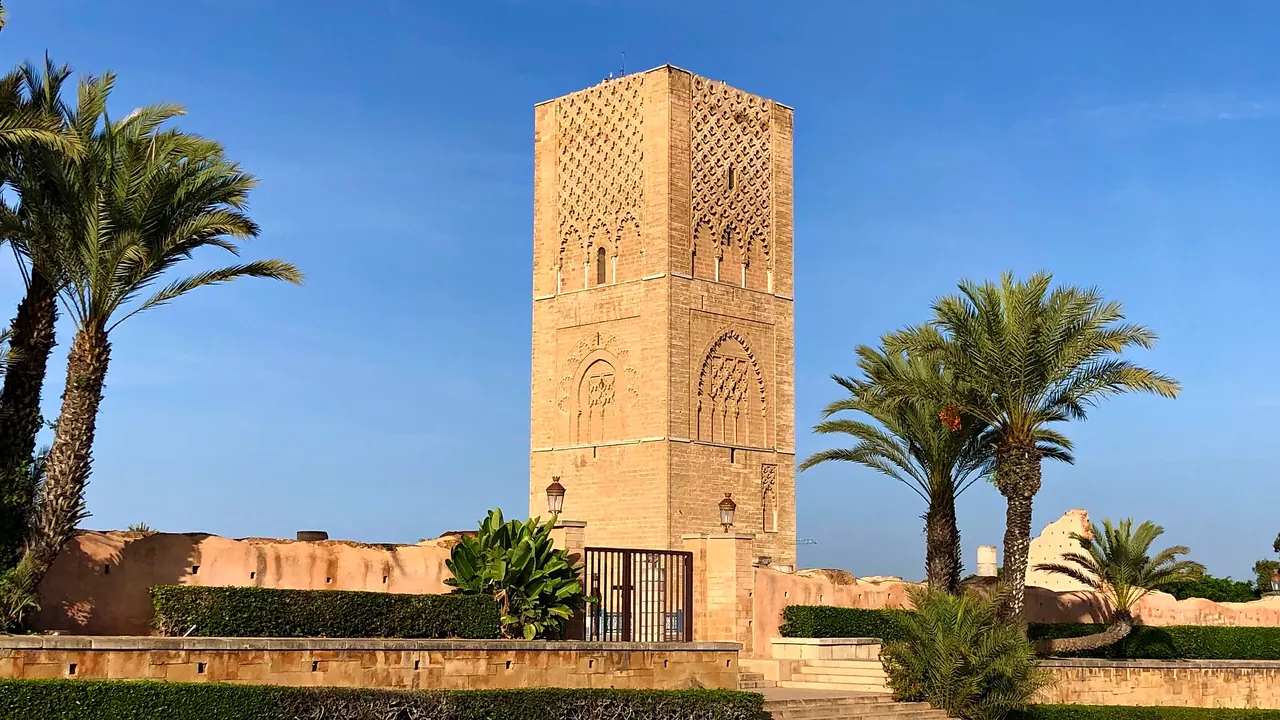
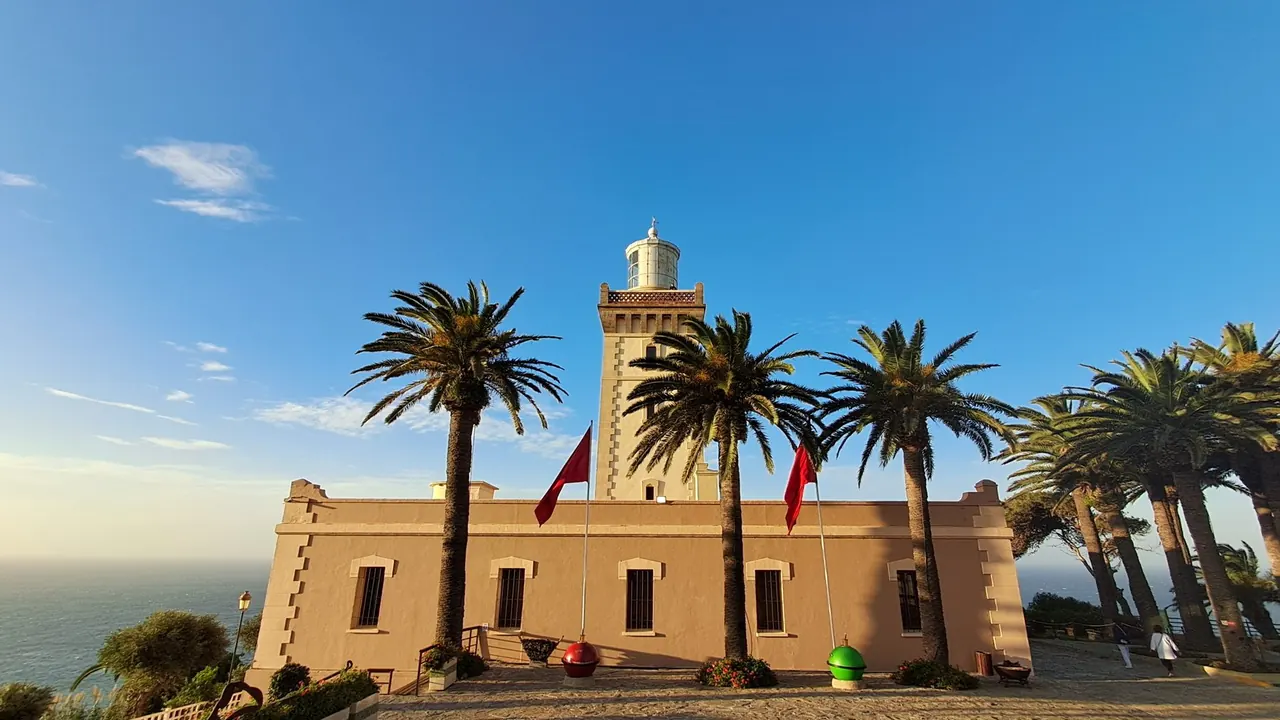
Photos: Rabat by Aemazy, CC BY-SA 4.0, cropped; Tangier by Ideophagous, CC BY-SA 4.0, cropped.
Rabat or Tangier?
Our verdict in twelve categories, each scored against the same fixed benchmark cities, and the climate month by month, so you can choose for your trip.
Choose Rabat for
- getting around
- families
- live music and the arts
Rabat suits travellers who want Morocco at an easy pace. The whole historic city is UNESCO-listed, with Almohad gates, the Hassan Tower and the storks nesting in the Chellah ruins. The streets are flat and there is a tram, and the calm medina puts families and first-timers at ease. It also has the country's national stages and the Mawazine festival.
Choose Tangier for
- nature and the outdoors
- day trips
- nightlife
Choose Tangier if what draws you is the setting and the places around it. The city sits on the Strait with Spain in view, and it is the better base for Asilah, Tetouan, Chefchaouen and the ferry to Tarifa. It also has wilder coast out at Cap Spartel and a literary atmosphere left over from its international era. In return, expect steep lanes, taxis instead of a tram and a pushier medina.
Scoreboard
Twelve categories on one fixed scale from 0 to 100. The shaded stretch is the gap between the two.
Your match
Pick a travel style or drag the sliders, and both match scores follow your weighting.
Too close to call, 2 points apart
Wins on getting around and families with your weighting.
Wins on nature and the outdoors and day trips with your weighting.
What matters to you?
Category by category
What the scores mean for a trip.
Beaches & swimming
Neither city is a beach destination, and they differ more in kind than in quality. Rabat's beach under the kasbah walls is a busy local stretch for football and surfing, with currents that keep swimmers close to shore. The calmer sand is a taxi ride south at Temara, Harhoura and Skhirat.
Tangier has a long sandy bay beach on its doorstep with a promenade behind it, but the water there is not its strong point. For swimming, go to the wide Atlantic beaches at Achakar and Cap Spartel, or south to Asilah. In both cities, Moroccan families fill the beaches in summer and beachwear is modest.
Food & drink
Both cook the same Moroccan staples: tagines, harira, couscous on Fridays and msemen from evening stalls. In both, the range is narrow. Rabat has more variety because it is the capital with the embassies, so Agdal and the Hassan district add French and Lebanese cooking and a little Moroccan wine.
Tangier relies more on the sea, with fish chosen at the port, bissara at breakfast and the markets around the Grand Socco. Its café terraces facing the Strait are the most memorable part of eating there.
Culture & sights
Rabat has the weightier set of sights, spanning almost two thousand years and listed by UNESCO as a whole. They include the Kasbah of the Udayas, the Hassan Tower beside the Mausoleum of Mohammed V and the Roman and Marinid ruins of the Chellah, with a modern art museum on top.
Tangier offers more atmosphere than monuments. The kasbah museum, the American Legation and St Andrew's church tell the story of the international city where Europe met Africa, and Paul Bowles and the Beat writers add a literary layer. Each city fills two or three days, but Rabat's sights are the more substantial.
Nightlife
Both are quiet after dark, but Tangier has a little more going on. A few long-standing bars from the international era, hotel lounges and summer beach clubs on the bay make a small but real drinking scene. Rabat's evenings mostly mean cafés and walks along the Bou Regreg, with drinks confined to hotels and a few lounges in Agdal. Neither has a club district, and people in Rabat who want a big night head to Casablanca.
Nature & outdoors
Tangier has the more dramatic setting. The Cap Spartel headland, where the Atlantic meets the Mediterranean, has cliffs, a lighthouse and wooded paths. The Perdicaris park looks out over the Strait, storks and raptors cross it in spring and autumn, and boats go out to watch dolphins.
Rabat's outdoors is gentler. There is surfing and paddling around the Bou Regreg estuary, easy walking and cycling in the Maamora cork oak forest, and birdwatching at Sidi Boughaba. Neither city has mountains close enough for an easy day out.
Day trips
Tangier is the better base. Asilah and Tetouan are each about an hour away and Chefchaouen makes a long day. The ferry to Tarifa takes about an hour, which adds a second continent that no other Moroccan base can offer.
Rabat's strength is the railway. Casablanca is an hour away by train and Meknes about two, and Salé across the river is a half day by tram. Because the fast train links the two cities, they also work well together on one trip.
Good for families
With children, Rabat is the more manageable of the two. Hassle is rare, and the tram and flat streets make moving around simple. The national zoo with its open enclosures, the Jardin d'Essais and the gardens at Bouknadel give children room to run.
Tangier has some pleasant outings: the promenade, the Perdicaris park, the Caves of Hercules and a ferry day to Spain. But it has no zoo or aquarium, the medina stairs are hard with a pushchair and the touts can be tiring.
Getting around
Rabat is much easier to get around. Broad, flat streets link the medina, the kasbah, the Hassan Tower and the Ville Nouvelle. The tram reaches the Chellah, Agdal and Salé, and the railway station is in the centre.
Tangier's core is walkable but steep, and the medina's stairways are confusing at first. There is no tram, so Cap Spartel and the Atlantic beaches mean a petit taxi or a driver. The one advantage Rabat cannot match is the ferry port in the city centre.
Shopping & style
Neither is one of Morocco's great souk cities, and in both the medina is the place to shop. Rabat's Rue des Consuls is a long covered street of carpets, leather and brass, with the city's own deep-coloured pile carpets and gentler haggling.
Tangier's lanes around the Petit Socco sell slippers, lanterns and the red-and-white striped cloth of the Rif, and the sales pitch is harder. Its Saturday market, where farm women from the hills sell around the Grand Socco, is the more colourful scene.
Affordability
Both are cheap day to day: medina meals, mint tea and petit taxis cost little, and in both alcohol is the expensive item. The real difference is where you sleep. Tangier has more good-value riads and guesthouses in its medina, while Rabat leans towards business hotels and its Agdal restaurants cost more.
Live music & performing arts
Rabat has more on stage. As the capital, it has the Mohammed V National Theatre and the large Grand Theatre on the Bou Regreg. Its Mawazine festival brings international, Arab, African and Gnawa performers to open-air stages across the city.
Tangier's musical reputation rests more on its past, from the Jajouka musicians of the Rif hills to the international era. Today it has a long-running jazz festival, occasional Andalusian and gnawa concerts and the historic art-house cinema on the Grand Socco.
Wellness & relaxation
In both cities the hammam, with its steam, black soap and scrub, is part of everyday life. Each has simple neighbourhood bathhouses and more comfortable spas in hotels and riads. The difference is how calm the city feels around you. Rabat is restful throughout, with tidy boulevards and the Andalusian garden in the kasbah. In Tangier the quiet is up on the terraces and riad rooftops, above a noisier port and traffic.
When should you go?
Pick your month. The climate figures are measured averages, not a forecast.
Rabat in July
Tangier in July
Daytime high, °C
Rainfall in the month, mm
Temperature and rainfall are climate normals, averaged over the years shown. Rabat: 1991-2020 normals, Rabat-Sale (7.6 km from centre). Tangier: 1991-2020 normals, Tanger Aerodrome (9.5 km from centre).
Both cities have the Atlantic pattern of dry, sunny summers and wet winters. Both are pleasant for walking all year, since winter days stay in the high teens. Rabat is a little milder in high summer, reaching about 28°C in August. Tangier runs slightly hotter and gets more sunshine in midsummer. In both, the sea is coldest in late winter and warms to about 22°C in July and August, which is the realistic window for swimming.
Rain is where they differ most. Rabat is almost completely dry from June to September and turns wet in November and December. Tangier's wet season is longer and heavier, building from October to about 117mm in December, and its winter days are duller. May, June and September suit sightseeing in both, but Tangier is best kept for the drier half of the year.
Which traveller are you?
On a family trip with children, Rabat is the easier bet. Days run smoothly, with little hassle and short hops between outings, so neither children nor parents wear out. Tangier asks more of small legs and patience, and suits older children better.
For an outdoors trip, Rabat's surroundings are flat and mild, fine for an easy ride or a paddle. Tangier is the better choice. Two seas meet on its doorstep, and a half-day outing brings real coastal scenery and wildlife.
On a culture and arts trip, Rabat gives you more to see and hear. Its monuments carry real historical weight, and as the capital it has the national stages and the big festival. Tangier rewards readers and wanderers more than sightseers.
Before you go
| Measure | Rabat | Tangier |
|---|---|---|
| Official language | Arabic, Standard Moroccan Tamazight | Arabic, Standard Moroccan Tamazight |
| Currency | Moroccan Dirham (MAD) | Moroccan Dirham (MAD) |
| Sockets | CE50 Hz | CE50 Hz |
| Driving side | Right | Right |
| Time zone | UTC+1 | UTC+1 |
| Emergency number | Police 19/112, ambulance 15, fire 15 | Police 19/112, ambulance 15, fire 15 |
| Elevation | 87 m | 56 m |
| Main airport | Rabat-Salé Airport (RBA)9 km from centre45 non-stop destinations | Tangier Ibn Battuta Airport (TNG)11 km from centre50 non-stop destinations |
| Public holidays this year | 11 days | 11 days |
By the numbers
| Measure | Rabat | Tangier |
|---|---|---|
| City population | 515,619 | 1,275,428 |
| People per km² | 4,370 | 6,393 |
| Museums within 10 km | 7 | 6 |
| UNESCO World Heritage sites within 50 km | 1 | 1 |
| Swim season, months above 21 °C | 4 months | 3 months |
Where else could you go?
Every comparison below shares a destination with this one, so you can follow Rabat or Tangier somewhere new.