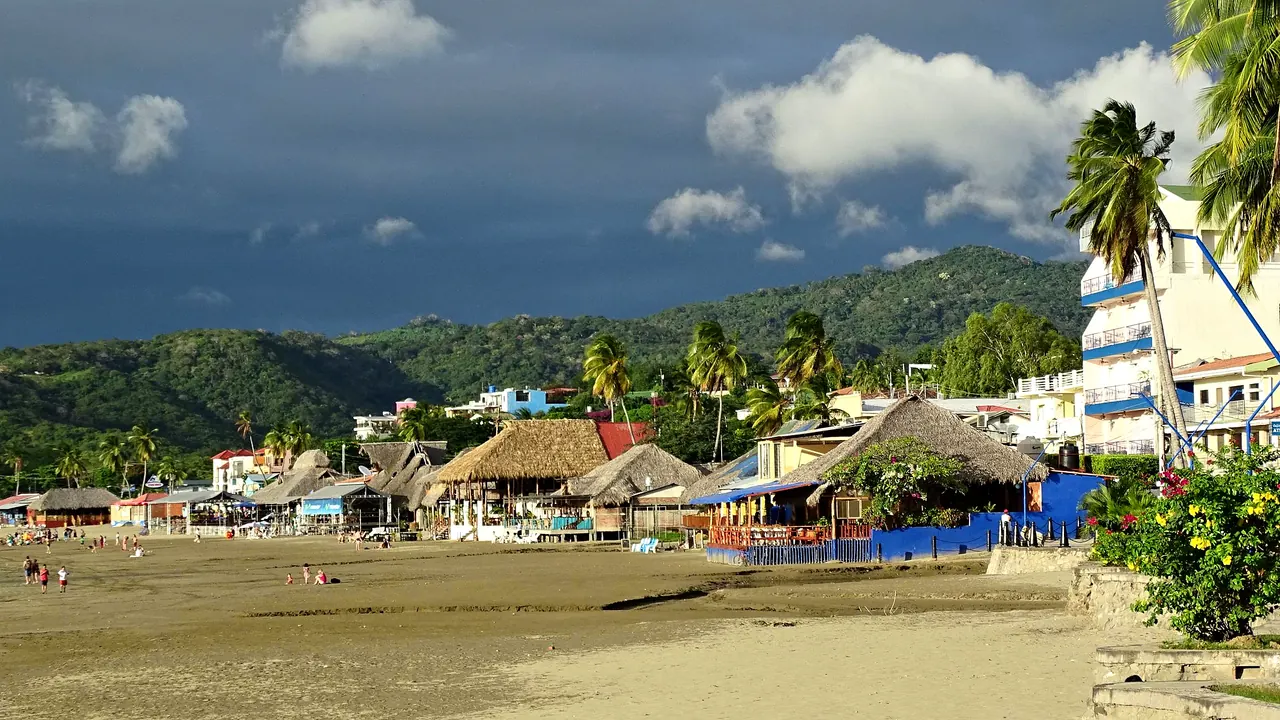
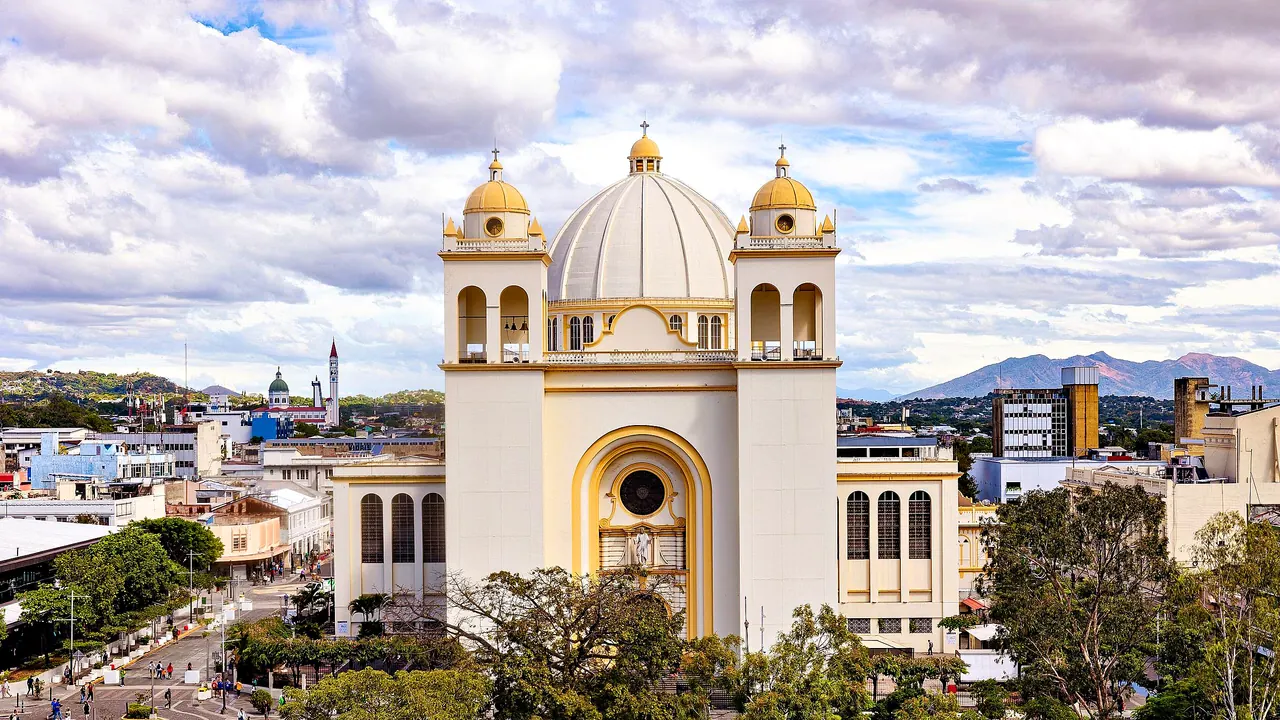
Photos: San Juan del Sur by Adam Jones from Kelowna, BC, Canada, CC BY-SA 2.0, cropped; San Salvador by Arne Müseler, CC BY-SA 3.0 DE, cropped.
San Juan del Sur or San Salvador?
Our verdict in twelve categories, each scored against the same fixed benchmark cities, and the climate month by month, so you can choose for your trip.
Choose San Juan del Sur for
- beaches
- wellness
- nightlife
San Juan del Sur suits travellers who want the beach to be the whole point. It has a horseshoe bay to swim in, surf breaks up and down the coast, turtle nights at La Flor and cheap massage in the hills. It fits a young, sociable crowd, or anyone happy to give up sights and shops for hammock time, as long as they accept rides on dirt tracks to reach the best sand.
Choose San Salvador for
- shopping
- culture and sights
- live music and the arts
Travellers curious about the country itself will get more from San Salvador. It has Romero's tomb, the MUNA and MARTE museums, pupuserías on every corner and a ring of volcanoes and crater lakes. Joya de Cerén, Suchitoto and the Ruta de las Flores are each within a day. The coast is an outing rather than a daily swim, so treat the city as a base for exploring rather than a place to lie in the sun.
Scoreboard
Twelve categories on one fixed scale from 0 to 100. The shaded stretch is the gap between the two.
Your match
Pick a travel style or drag the sliders, and both match scores follow your weighting.
Too close to call, 2 points apart
Wins on beaches and wellness with your weighting.
Wins on shopping and culture and sights with your weighting.
What matters to you?
Category by category
What the scores mean for a trip.
Beaches & swimming
San Juan del Sur is built around its beaches, and it has more of them to choose from. There is a calm town bay for a dip, quiet sandy coves like Marsella and Majagual to the north, and open surf beaches like Maderas, Remanso and Hermosa. Getting to the coves and surf beaches means driving dirt tracks, and facilities there are basic.
From San Salvador the sea is a trip of an hour or so to the dark volcanic sand of El Tunco and El Zonte. That coast is made for surfing rather than swimming. The calmer Costa del Sol is further east, so most people stay a night at the coast rather than going back and forth.
Food & drink
San Salvador eats better, mainly because of the pupusa. It is filled with cheese, beans or loroco and sold everywhere from roadside griddles to family dining rooms. The capital also has excellent highland coffee in the cafés of San Benito and Escalón.
San Juan del Sur offers less: fried snapper and ceviche facing the bay, gallo pinto in the back streets, and smoothie bowls and pizza for the surf crowd. Neither has much fine dining, but only the capital has a local dish worth travelling for.
Culture & sights
San Salvador is well ahead here. Earthquakes have destroyed most of its colonial buildings, but the centre still has Romero's tomb in the Metropolitan Cathedral, the National Palace and the stained-glass arch of El Rosario. The western districts add MUNA and the MARTE art museum.
San Juan del Sur has some old wooden houses with verandas, a modest parish church and the Christ of Mercy statue, which people visit for the view of the bay. For churches and museums, visitors there head inland to Granada.
Nightlife
San Juan del Sur has the livelier nights, but only one kind. Beachfront bars fill with surfers and backpackers, there is reggaeton and electronic music, and there is the Sunday hostel pool-party crawl. Outside the dry season it is much quieter.
In San Salvador, nights out are local and dressier. People go to the cocktail bars and lounges of Zona Rosa and San Benito, or the terraces of Paseo El Carmen in Santa Tecla. The busy nights are Thursday to Saturday, and you take taxis between districts.
Nature & outdoors
Both are strong for the outdoors, but in different ways. San Juan del Sur is about the ocean: year-round surf, sunset sailing and snorkelling in calm coves. Howler monkeys live above the northern beaches, and olive ridley turtles nest at La Flor in the second half of the year.
San Salvador's landscape is volcanic. El Boquerón's crater is on the edge of the city, Coatepeque and Ilopango fill old calderas, and the guided climb up Santa Ana to its turquoise crater lake is the country's classic hike. Surfers are catered for too, at the point breaks around El Tunco.
Day trips
San Salvador has more within a day's reach, because El Salvador is so small. Joya de Cerén, a Maya village buried in ash, is about 40 minutes away, and the pyramid at Tazumal is a little further. Colonial Suchitoto and the coffee villages of the Ruta de las Flores are both easy outings.
From San Juan del Sur, the one standout is Granada, about two hours away, with Masaya's craft market at a similar distance. Ometepe, the island formed by two volcanoes, is tempting, but it really needs an overnight stay.
Good for families
Neither is an easy choice for families, and the trade-offs differ. San Juan del Sur suits older children who love the water, with a calm town bay, surf schools and turtle nights. Against that, nothing is built for children, the tracks are rough and medical care is basic.
San Salvador has the Tin Marín children's museum, the zoo and playgrounds in its parks. Lake Coatepeque is calmer for swimming than the coast, but most outings need a taxi and the midday heat wears out small children.
Getting around
San Juan del Sur is simpler to get around, at least in town, where a few minutes' walk takes you from the beach to the market. The catch is the beaches, which mean shuttles, taxis or a rented quad bike on dirt roads.
San Salvador is spread out, and the walkable historic centre is a taxi ride from Escalón and San Benito, where most visitors stay. Ride-hailing is easy, but the city buses are confusing, rush-hour traffic is slow, and day trips usually mean hiring a driver or a car.
Shopping & style
San Salvador gives shoppers more to do, though rarely on the street. Air-conditioned malls in the western districts have the international chains. The national crafts market sells painted La Palma woodwork, Ilobasco ceramics, hammocks and indigo textiles, and highland coffee makes the best souvenir.
San Juan del Sur has little beyond surf shops, beachwear and hammock stalls. Serious craft buying is better left for Masaya or Granada.
Affordability
Both are cheap for everyday spending, and San Juan del Sur is a little easier on the budget, even though it is Nicaragua's most expensive resort. Hostel beds, market food and local beer cost little. The money goes on shuttles to the beaches, surf lessons and boat trips.
In San Salvador, pupusas, buses and ride-hailing are cheap too. However, comfortable hotels and restaurants in Escalón and San Benito charge business-city prices, and day trips need a paid driver or a hire car.
Live music & performing arts
San Salvador at least has proper stages. The National Theatre, with its painted ceiling, and the Teatro Presidente put on the symphony, ballet and touring shows, though programmes are irregular. At weekends, bars in San Benito and Santa Tecla add local rock and cumbia.
San Juan del Sur has no stage at all, only bar bands, DJs and the music and dancing of town festivals.
Wellness & relaxation
San Juan del Sur is the easier place to slow down, as long as you stay out on the coast. The jungle hills above the northern beaches have yoga retreats with ocean views, massage is cheap, and the days run from an early surf to an afternoon in a hammock.
San Salvador is a working capital, and wellness there means hotel spas and day spas in the western districts. For proper rest, people go to lodges on Lake Coatepeque or into the coffee highlands, and the hot springs near Ahuachapán are about two hours away.
When should you go?
Pick your month. The climate figures are measured averages, not a forecast.
San Juan del Sur in July
San Salvador in July
Daytime high, °C
Rainfall in the month, mm
Where the figures come from
San Juan del Sur's temperatures are measured 86 km from the centre, at Liberia.
San Juan del Sur has no rain gauge within 25 km of the centre, so its rainfall comes from a gridded climate dataset read at the destination rather than from a gauge further away.
Temperature and rainfall are climate normals, averaged over the years shown. San Juan del Sur: 1991-2020 normals, Liberia (85.6 km from centre). San Salvador: 1994-2020 (rainfall 1961-1990) normals, San Salvador / Ilopango (8.1 km from centre).
Both follow the same Pacific pattern, with a dry season from about November or December to April and heavy rain from May to October. San Juan del Sur is the hotter of the two and reaches 36°C in March and April. Its dry months also bring offshore winds that cool the sea to about 26°C and blow hard across the bays. The rains peak late there, and October is the wettest month at 389mm. December to April is the time for beach days. The wet season turns the hills green and brings warmer water, but fewer dry afternoons.
San Salvador's altitude takes the edge off the heat, and highs rarely go above 33°C, so walking the historic centre is more comfortable than a midday stroll in San Juan. Its rain comes earlier and heavier in midsummer, above 300mm a month from June to September. That makes November to April the best time for both city days and volcano hikes. The sea on its coast stays warm all year.
Which traveller are you?
On a beach and sun trip, San Juan del Sur is the clear pick. Sheltered coves like Marsella and Majagual give easy swimming, and the surf beaches are a short shuttle away. From San Salvador it is an hour's drive to rough volcanic sand with rip currents.
For a culture and arts trip, San Salvador offers far more: Romero's tomb in the cathedral, MUNA's Maya and Pipil collections and the National Theatre, with day trips to Joya de Cerén and colonial Suchitoto. San Juan del Sur has one statue and a small church.
On a relaxing and wellness trip, San Juan del Sur is the better choice if you stay out on the coast. Yoga retreats in the northern hills, cheap massage and long hammock afternoons set the pace. San Salvador has hotel spas and sends visitors to Coatepeque to unwind.
Before you go
| Measure | San Juan del Sur | San Salvador |
|---|---|---|
| Official language | Spanish | Spanish |
| Currency | Cordoba Oro (NIO) | US Dollar (USD) |
| Sockets | AB120 V, 60 Hz | AB115 V, 60 Hz |
| Driving side | Right | Right |
| Time zone | UTC-6 | UTC-6 |
| Emergency number | Police 118, ambulance 128, fire 115/120 | Police 911, ambulance 911, fire 911/913 |
| Elevation | 9 m | 670 m |
| Main airport | Augusto C. Sandino (Managua) International Airport (MGA)104 km from centre11 non-stop destinations | El Salvador International Airport Saint Óscar Arnulfo Romero y Galdámez (SAL)32 km from centre34 non-stop destinations |
| Public holidays this year | 18 days | 13 days |
By the numbers
| Measure | San Juan del Sur | San Salvador |
|---|---|---|
| Population | 16,123 | 330,543 |
| People per km² | 39 | 4,572 |
| Museums within 10 km | 0 | 9 |
| UNESCO World Heritage sites within 50 km | 0 | 1 |
| Swim season, months above 21 °C | 12 months | 12 months |
Where else could you go?
Every comparison below shares a destination with this one, so you can follow San Juan del Sur or San Salvador somewhere new.
- Granada, Nicaraguavs San Juan del Sur
- Tamarindovs San Juan del Sur
- Monteverdevs San Juan del Sur
- La Fortunavs San Juan del Sur
- Leon, Nicaraguavs San Juan del Sur
- Antigua Guatemalavs San Salvador