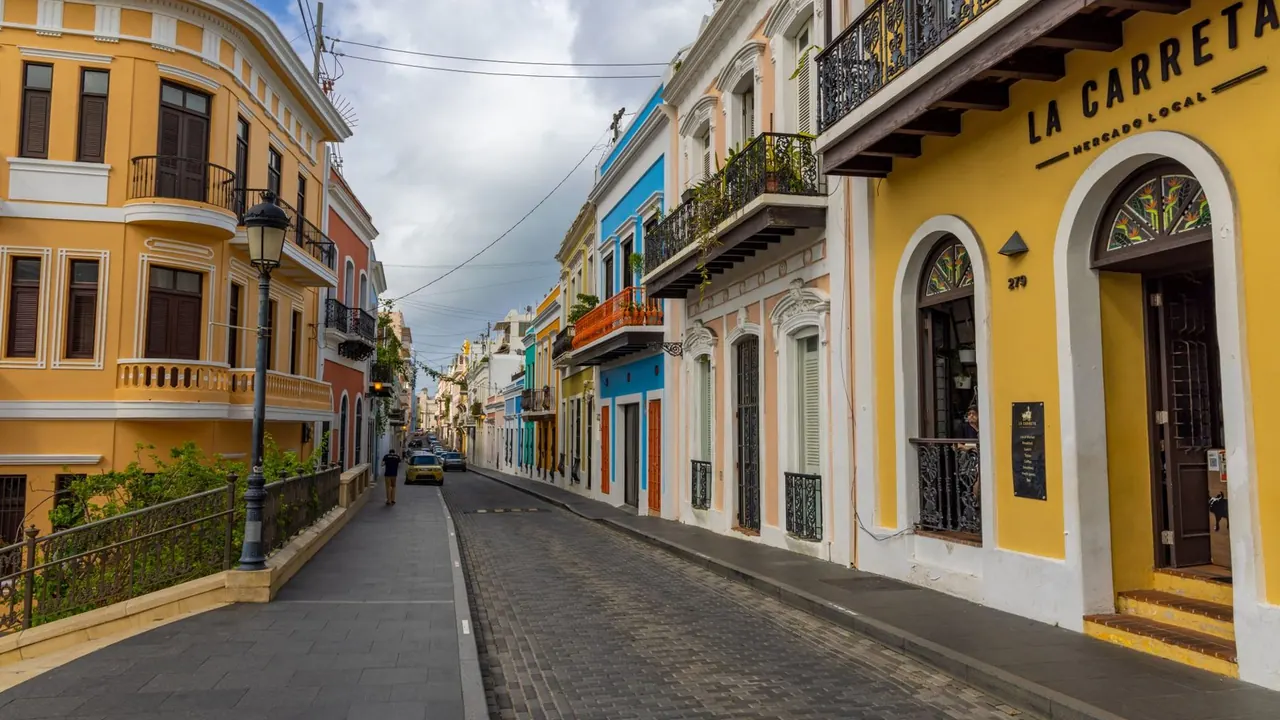
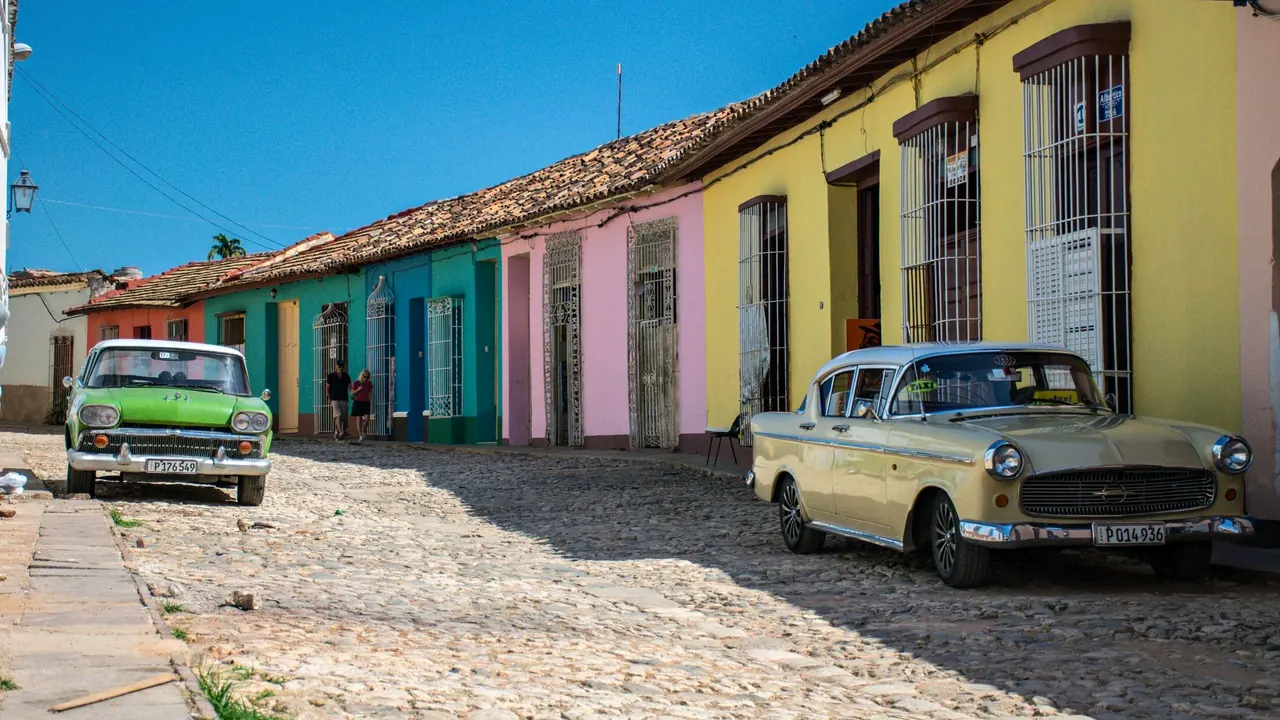
Photos: San Juan by Mohan Nannapaneni, Pexels License; Trinidad, Cuba by Ákos Helgert, Pexels License.
San Juan or Trinidad, Cuba?
Our verdict in twelve categories, each scored against the same fixed benchmark cities, and the climate month by month, so you can choose for your trip.
Choose San Juan for
- food and drink
- nightlife
- families
San Juan suits travellers who want the beach at the heart of the trip and plenty going on around it. There is city sand at Isla Verde and Escambrón, a real food scene that runs from Santurce's chef-led kitchens to the kiosks of Piñones, and late weekend nights at La Placita. It is also the easier choice with children, with US standards, English widely spoken and El Yunque less than an hour away.
Choose Trinidad, Cuba for
- prices
- day trips
- getting around
Choose Trinidad for a slower, cheaper trip built around a single preserved colonial town. Rooms in family homes keep costs low, music fills the steps by the Plaza Mayor every evening, and the sugar valley, Cienfuegos and the Escambray hills make richer days out than San Juan's island trips. Expect simple meals that repeat and some hard work: cash only, power cuts and very little transport.
Scoreboard
Twelve categories on one fixed scale from 0 to 100. The shaded stretch is the gap between the two.
Your match
Pick a travel style or drag the sliders, and both match scores follow your weighting.
Wins on food and drink and nightlife with your weighting.
Wins on prices and day trips with your weighting.
What matters to you?
Category by category
What the scores mean for a trip.
Beaches & swimming
San Juan has its beaches inside the city. Isla Verde has long sand sheltered by a reef, Condado and Ocean Park run in front of the hotels, and the calm bay at Escambrón is a short way from the old town. Luquillo is there for a classic day out. The catch is that some stretches have rough surf and strong currents, so swim at the balnearios with lifeguards.
Trinidad has one real beach, Playa Ancon, a taxi or bike ride from town, plus the smaller local shore at La Boca. The Caribbean there is calm and clear with snorkelling on the reef, but it is an afternoon away from the old town rather than a base for a beach trip.
Food & drink
Food is one of the clearest gaps between the two. San Juan has a full Puerto Rican cuisine to explore: mofongo and alcapurrias at the seaside kiosks of Piñones, the chef-led restaurants of Santurce and Condado, the market square of La Placita and the pork-roasting stalls of Guavate up in the hills.
In Trinidad the best meals are often at your own casa particular: rice and beans, roast pork or lobster, with a canchanchara in a clay cup. Menus repeat, supplies are uncertain and there is no street food, so eating is pleasant but not a reason to go.
Culture & sights
Both are UNESCO-listed colonial towns you can cover in two or three days, but they feel different. Old San Juan is a walled fortress city. It has El Morro and San Cristóbal and the cathedral with Ponce de León's tomb, and out in Santurce there is a proper art museum and streets of murals.
Trinidad is quieter and more fully preserved. It is a sugar-era town of single-storey houses and red-tiled roofs around the Plaza Mayor, with small house museums and a view from a bell tower. You go there to wander rather than to tick off sights, and the UNESCO listing extends out into the sugar valley.
Nightlife
San Juan has far more to go out for. Crowds drink in the street at La Placita, Calle San Sebastián mixes dive bars with dance floors playing salsa and reggaeton, and Condado and Isla Verde add hotel lounges, casinos and clubs. Weekends are much busier than weeknights.
Trinidad's nights are warm and sociable but small. They centre on the steps by the Plaza Mayor, a few courtyard bars and a club inside a cave above town, and after a few evenings you have seen the pattern.
Nature & outdoors
San Juan has the edge for a varied outdoor trip. El Yunque's rainforest is under an hour away, the glowing lagoon near Fajardo makes a good night kayak trip, the reefs of the offshore cays are good for a day of snorkelling, and the north coast has surf in winter.
Trinidad's mountains are closer and more rugged. Topes de Collantes has steep, humid trails down to waterfall pools, and horse rides cross the Valle de los Ingenios. With the reef off Ancon as well, it is a good base for hiking, best in the dry winter months.
Day trips
Trinidad is better placed for days out. The Valle de los Ingenios begins at the edge of town, with its ruined sugar mills and the Manaca Iznaga tower. Cienfuegos, Sancti Spiritus and Santa Clara each fill a day with colonial streets or history, though you can only reach them by taxi, hired car or tour.
From San Juan the main town to visit is Ponce, over the mountains, while Cataño's rum distillery and Loíza's Afro-Puerto Rican culture are nearer. Culebra and Vieques are the real prize, but they need an overnight stay.
Good for families
San Juan is the easier pick with children. The forts and the kite-flying lawn at El Morro, the calm water at Escambrón and Luquillo, and El Yunque's short paved trails fill several days. Resort pools, pharmacies and familiar US standards make the practical side easy.
Trinidad is friendly to children and the shallow water at Ancon makes a good day out. But pushchairs are useless on its cobbles, and power cuts and the shortage of familiar food and medicine make it hard work with small children.
Getting around
Neither city has transport a visitor can rely on, but the problems differ. San Juan is spread out. Old San Juan is walkable and the beach districts are a taxi or ride-hail away, but the one rail line reaches neither, and seeing the rest of the island means a hire car on busy highways.
Trinidad is compact. You can walk the whole old town, and many lanes are closed to cars. Getting out is the hard part, with shuttles or bikes to Ancon and slow, infrequent coaches to other cities.
Shopping & style
San Juan offers much more range. There is the huge Plaza Las Américas mall and the designer boutiques on Ashford Avenue, and Old San Juan sells santos, vejigante masks, guayaberas and local coffee to take home.
Trinidad's shopping is almost all handmade: embroidery and crochet along the craft market lanes, family pottery workshops and small galleries. It is worth an hour, but there is nothing else, and the same goods appear from stall to stall.
Affordability
Trinidad goes much further on a modest budget. A room in a casa particular with breakfast costs little, the music in the squares is nearly free and you need no transport in the old town. Taxis, tours and paladar meals priced for visitors are what add up, and you need cash.
San Juan costs about the same as a city on the US mainland, with expensive beachfront rooms in winter and tips and taxes added to restaurant bills. Kiosks and the cheaper summer months help, but a hire car soon adds to the total.
Live music & performing arts
Music matters in both cities, in different ways. San Juan has the broader scene. Salsa bands and open bomba sessions sit alongside the Centro de Bellas Artes, the Puerto Rico Symphony Orchestra, the Casals Festival and big reggaeton concerts in Hato Rey.
Trinidad has no formal stage. What it has is close at hand every evening: son, bolero and trova at the Casa de la Musica and the Casa de la Trova, and Afro-Cuban drumming at the Palenque de los Congos Reales.
Wellness & relaxation
Neither is a place for a wellness trip, but San Juan makes rest easier. There are resort spas in Condado and Isla Verde, yoga and massage near the beaches, and pools to lie beside, even if the streets beyond are loud.
Trinidad's calm comes from the slow pace of shaded courtyards and rocking chairs, broken by roosters, horse carts and late music, and the only massages are at a few hotels near Ancon. Power cuts that stop the fans make it harder to rest.
When should you go?
Pick your month. The climate figures are measured averages, not a forecast.
San Juan in July
Trinidad, Cuba in July
Daytime high, °C
Rainfall in the month, mm
Where the figures come from
Trinidad, Cuba's temperatures are measured 59 km from the centre, at Cienfuegos, Las Villas.
Trinidad, Cuba has no rain gauge within 25 km of the centre, so its rainfall comes from a gridded climate dataset read at the city rather than from a gauge further away.
Temperature and rainfall are climate normals, averaged over the years shown. San Juan: 1991-2020 normals, San Juan / Int., Puerto Rico (12.8 km from centre). Trinidad, Cuba: 2014-2025 (rainfall 1991-2020) normals, Cienfuegos, Las Villas (59.3 km from centre).
Both cities are hot all year, with daytime highs around 29°C in winter rising into the low 30s in summer, and the sea is warm enough to swim in every month. San Juan's rain is spread across the year, with showers in most months and no long dry spell. February and March are the driest months, and March is also the sunniest, so late winter and spring suit it best. November is its wettest month. In summer the hilly streets of the old town are hot and sticky to walk, but the beach is still fine, with the sea near 29°C.
Trinidad's year is split much more sharply. From November to April it is almost dry, with December down to 11mm, and this is clearly the best time both for Ancon and for hiking in the Escambray. So November, San Juan's wettest month, is one of Trinidad's best. From May to October heavy rain comes month after month, and July brings the hottest days at 34°C, too hot for long walks on the cobbles.
Which traveller are you?
For a food and nightlife trip, San Juan is the clear choice. Kiosks in Piñones, chef-led tables in Santurce and the crowds in the streets of La Placita give you somewhere new to eat and drink each night, while Trinidad's menus and evenings soon repeat.
On a family trip with children, San Juan is far easier. Calm reef-sheltered beaches, El Morro's tunnels and El Yunque's paved trails keep children busy. Pharmacies, pools and familiar food spare you what Trinidad's cobbles and power cuts make hard.
On a tight budget, Trinidad makes your money go further. A room in a family home with breakfast, free music on the Plaza Mayor steps and an old town you can walk keep costs low, while most things in San Juan cost what they would on the US mainland.
Before you go
| Measure | San Juan | Trinidad, Cuba |
|---|---|---|
| Official language | Spanish, English | Spanish |
| Currency | US Dollar (USD) | Cuban Peso (CUP) |
| Sockets | AB120 V, 60 Hz | AB110 V, 60 Hz |
| Driving side | Right | Right |
| Time zone | UTC-4 | UTC-5, UTC-4 in summer |
| Emergency number | 911 | Police 106, ambulance 104, fire 105 |
| Elevation | 3 m | 60 m |
| Main airport | Luis Munoz Marin International Airport (SJU)12 km from centre59 non-stop destinations | Abel Santamaria International Airport (SNU)77 km from centre1 non-stop destination |
| Public holidays this year | 21 days | 9 days |
By the numbers
| Measure | San Juan | Trinidad, Cuba |
|---|---|---|
| City population | 342,259 | 51,994 |
| People per km² | 2,847 | 45 |
| Museums within 10 km | 18 | 4 |
| UNESCO World Heritage sites within 50 km | 1 | 1 |
| Swim season, months above 21 °C | 12 months | 12 months |
Where else could you go?
Every comparison below shares a destination with this one, so you can follow San Juan or Trinidad, Cuba somewhere new.
- Varaderovs Trinidad, Cuba
- Punta Canavs San Juan
- Havanavs Trinidad, Cuba
- La Romanavs San Juan
- Santo Domingovs San Juan
- Negrilvs Trinidad, Cuba