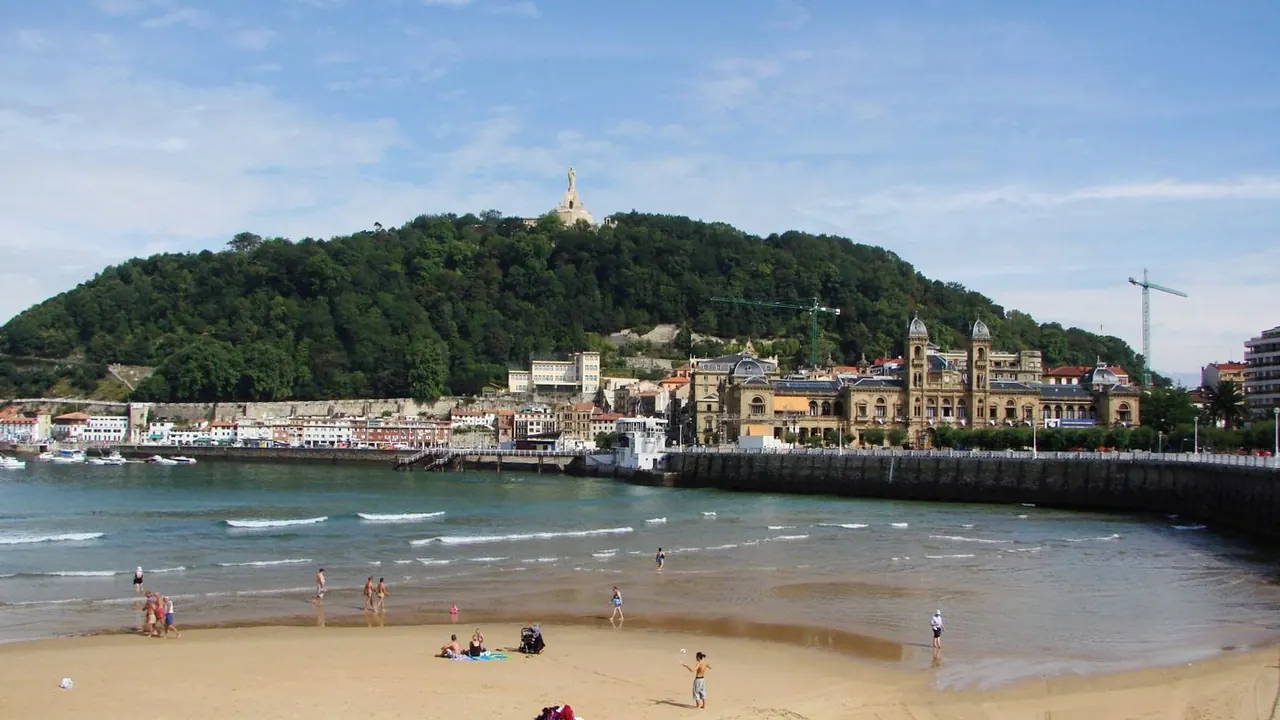
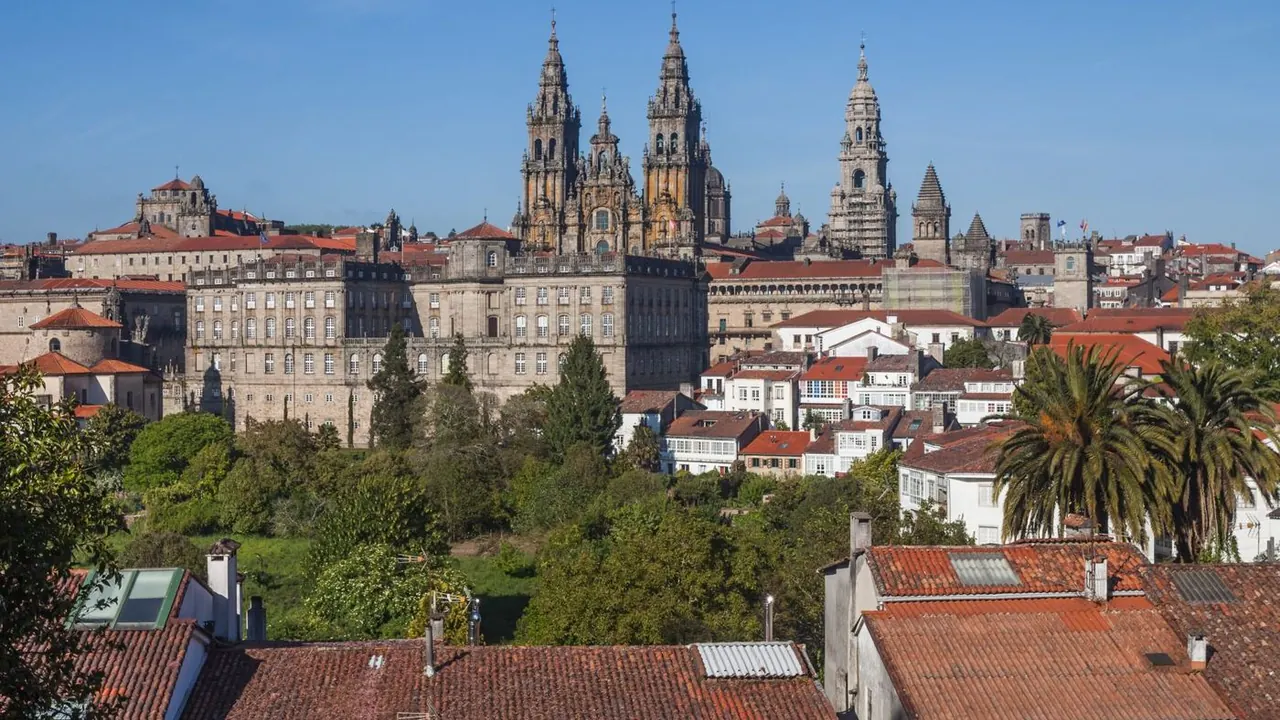
Photos: San Sebastian by Guérin Nicolas, CC BY-SA 3.0, cropped; Santiago de Compostela by Luis Miguel Bugallo Sánchez (Lmbuga), CC BY-SA 3.0, cropped.
San Sebastian or Santiago de Compostela?
Our verdict in twelve categories, each scored against the same fixed benchmark cities, and the climate month by month, so you can choose for your trip.
Choose San Sebastian for
- beaches
- families
- food and drink
San Sebastian is the pick for a seaside trip built around eating. It has a real city beach in La Concha, a pintxo culture that people cross Europe for, a flat promenade that suits children and cyclists, and the French Basque coast and Bilbao within easy reach. The catch is cost: rooms are expensive and scarce, and the restaurants that made its name are a serious splurge.
Choose Santiago de Compostela for
- prices
- culture and sights
- nightlife
Travellers drawn to history, stone and atmosphere will be happier in Santiago de Compostela. The cathedral, the Obradoiro and the granite old town give it far more to see, and it is much kinder on the wallet, with tapas often arriving free with a drink. It lies inland, its seafood cooking is honest rather than refined, and children have less to do, so it works best as a base for Galicia rather than a beach stay.
Scoreboard
Twelve categories on one fixed scale from 0 to 100. The shaded stretch is the gap between the two.
Your match
Pick a travel style or drag the sliders, and both match scores follow your weighting.
Wins on beaches and families with your weighting.
Wins on prices and culture and sights with your weighting.
What matters to you?
Category by category
What the scores mean for a trip.
Beaches & swimming
San Sebastian has the beach Santiago lacks. La Concha's sheltered shell of pale sand sits right in the centre, Ondarreta carries on quietly towards Monte Igueldo, and Zurriola gives surfers open Atlantic waves, all a short walk from your hotel.
Santiago is about 35km from the sea, so swimming means a day out to the white-sand inlets of the Ría de Muros e Noia or the Ría de Arousa. They are lovely and calm, but the water is colder than in the Bay of Biscay and the trip takes planning. Both seasons are short, really July and August.
Food & drink
Both are great regional food cities, but San Sebastian is on another level. The pintxo crawl through the Parte Vieja and Gros, with txakoli poured from height, is a reason to travel in itself, and the hills around town hold some of Spain's most celebrated fine dining, plus cider houses in Astigarraga in the first months of the year.
Santiago's strength is Galician seafood served without fuss: pulpo á feira, scallops in the shell and percebes, with the Mercado de Abastos at its centre and Albariño in the taverns of Rúa do Franco. It is generous and honest rather than inventive. Neither city offers much beyond its own region's cooking.
Culture & sights
Santiago has much more to see. The cathedral, with the Pórtico da Gloria, the shrine of Saint James and the botafumeiro on great occasions, anchors one of Spain's grandest squares, and the granite old town of monasteries and convent squares is a UNESCO site, with the Museo do Pobo Galego and the Cidade da Cultura adding depth.
San Sebastian is a place to enjoy as a whole rather than a list of monuments: belle époque streets around the Buen Pastor, the rebuilt grid of the Parte Vieja, the castle on Monte Urgull, the San Telmo Museum and the Peine del Viento at the end of the bay. It is attractive, but lighter on landmarks.
Nightlife
The two are fairly level, and neither has a big club scene, but they peak at opposite times of year. San Sebastian's evenings revolve around the pintxo bars, then narrow to a few late bars and clubs, and the city stays out latest in summer, above all during the Semana Grande fireworks in August.
Santiago runs on its university, so term time is liveliest, with Thursday the student night and pub-like bars around Rúa da Raíña, some with Galician folk sessions. In summer the students leave and the early-to-bed pilgrims take over, the reverse of San Sebastian's pattern.
Nature & outdoors
San Sebastian has the better outdoors on its doorstep. You can walk straight from Monte Ulia along cliffs to Pasaia and over Jaizkibel to Hondarribia, ride the funicular up Igueldo, surf at Zurriola or paddle in the bay, with Aiako Harria inland within an hour.
Santiago's countryside is gentler: oak woods and stone-walled fields crossed by the Camino paths. Its wilder scenery, the Costa da Morte cliffs, the Fragas do Eume woodland and the rías, is an hour or two away and needs a car or tour.
Day trips
Both make good bases, but San Sebastian's position on the French border gives it more variety. Bilbao and the Guggenheim, Hondarribia, Pamplona and the French Basque towns of Biarritz, Bayonne and Saint-Jean-de-Luz are all an hour or so away, with Rioja Alavesa's vineyards within two hours.
Santiago's outings stay within Galicia: A Coruña and the Tower of Hercules half an hour by train, Pontevedra, Vigo, Ourense and walled Lugo. The Albariño country and the Camino's end at Fisterra and Muxía are easier by car.
Good for families
San Sebastian is the easier city with children. Calm central beaches, a flat car-free promenade, the aquarium's walk-through tunnel, the hands-on Eureka museum and the old funfair at the top of the Igueldo funicular fill several days.
Santiago is safe and welcoming, but its sights are churches and museums, the cobbled hills are hard with a pushchair, and long rain can keep everyone indoors. Families usually see it in a day or two and then head for A Coruña's aquarium or the coast.
Getting around
San Sebastian is a touch easier to move around. It is flat, the bay and the river link the main districts on foot, wide waterfront bike lanes help, and Euskotren trains run to the French border and towards Bilbao.
Santiago's old town is just as compact, crossed in about twenty minutes, but its granite streets climb a little and turn slippery in the rain. Trains serve the Galician cities well, yet the beaches, wine villages and Costa da Morte really call for a car or a tour.
Shopping & style
Neither is a shopping destination, and the difference is one of kind. San Sebastian leans towards style, with independent boutiques in the Centro, espadrilles, berets and linen in the old town, and surf and design shops in Gros.
Santiago is about craft: black jet carvings near the cathedral, silver on the Praterías and blue-and-white Sargadelos ceramics, among plenty of pilgrim souvenirs. In both, the best things to take home come from the markets, preserved fish and Idiazabal in one, tetilla and tarta de Santiago in the other.
Affordability
Santiago is far kinder on the budget. Tapas often come free with a drink, set lunches are generous, seafood and wine cost less than in the big cities, and pensiones and pilgrim hostels keep a stay cheap, except around the feast of Saint James in July.
San Sebastian ranks among Spain's most expensive places to sleep, with rooms scarce and summer and festival weeks especially dear, and its famous restaurants are a real splurge. A careful pintxo crawl, free beaches and walks soften the bill, and coming outside summer helps most.
Live music & performing arts
Broadly level, but San Sebastian's music is concentrated in summer, with Jazzaldia in July bringing international names to the Kursaal and free concerts on Zurriola, and the Quincena Musical filling August with orchestras and opera. The rest of the year the Kursaal and the ornate Victoria Eugenia keep a modest programme.
Santiago is more about everyday tradition: bagpipe and folk sessions in old-town bars and student tunas singing in black capes, alongside the Real Filharmonía de Galicia's season at the Auditorio. It has no opera to speak of.
Wellness & relaxation
San Sebastian has the edge because its spa is right in town. The historic bathing pavilion on La Concha is a seawater thalassotherapy centre looking onto the bay, a legacy of its royal resort days, and the calm promenade evenings do the rest.
Santiago has only hotel spas in the city, but Galicia's hot springs are close: Caldas de Reis and Cuntis about half an hour away, and Ourense's riverside thermal pools, some free, forty minutes by train. It is a good outing for tired walking legs, though it takes a trip to get there.
When should you go?
Pick your month. The climate figures are measured averages, not a forecast.
San Sebastian in July
Santiago de Compostela in July
Daytime high, °C
Rainfall in the month, mm
Where the figures come from
San Sebastian's station stands 252 m above the city centre, so the centre is likely a little warmer than the figures say.
Temperature and rainfall are climate normals, averaged over the years shown. San Sebastian: 1991-2020 normals, San Sebastian / Igueldo (6.1 km from centre). Santiago de Compostela: 1991-2020 normals, Santiago / Labacolla (8.4 km from centre).
Both cities are green because they are wet, but the timing differs. San Sebastian is rainy in every month, wettest in late autumn at around 203mm in November, and even July and August bring grey days. Those two months are still its beach season, with warm but rarely hot afternoons and the bay reaching about 22°C in August, pleasant for a swim by Atlantic standards. Spring and September are good for walking the coast paths and the old town, if you pack a waterproof.
Santiago swings harder between seasons. Summer is noticeably drier and sunnier, with July down to about 41mm of rain and afternoons around 25°C, ideal for the streets and for outings to the rías, though the sea there stays near 17°C. From October to January the rain is heavy and persistent, more so than in San Sebastian, so a winter visit means granite shining under umbrellas. Neither city gets too hot to walk in at any point of the year.
Which traveller are you?
For a beach and sun trip, San Sebastian is the clear choice. La Concha and Ondarreta are calm sand in the middle of town and Zurriola has surf, while Santiago sits inland and needs a bus to cold rías.
On a culture and arts trip, Santiago de Compostela gives more. The cathedral with its Pórtico da Gloria, the grand Obradoiro square and the UNESCO-listed old town outweigh San Sebastian's handsome streets, San Telmo museum and Chillida's sculptures.
On a trip with a tight budget, Santiago stretches money much further. Free tapas, generous set lunches, pensiones and pilgrim hostels keep costs low, whereas San Sebastian is among Spain's dearest places to sleep and its famous dining is expensive.
Before you go
| Measure | San Sebastian | Santiago de Compostela |
|---|---|---|
| Official language | Spanish | Spanish |
| Currency | Euro (EUR) | Euro (EUR) |
| Sockets | CF230 V, 50 Hz | CF230 V, 50 Hz |
| Driving side | Right | Right |
| Time zone | UTC+1, UTC+2 in summer | UTC+1, UTC+2 in summer |
| Emergency number | 112 | 112 |
| Elevation | 6 m | 260 m |
| Main airport | San Sebastián Airport (EAS)16 km from centre11 non-stop destinations | Santiago-Rosalía de Castro Airport (SCQ)10 km from centre29 non-stop destinations |
| Public holidays this year | 13 days | 13 days |
By the numbers
| Measure | San Sebastian | Santiago de Compostela |
|---|---|---|
| City population | 189,866 | 100,965 |
| People per km² | 3,118 | 459 |
| Museums within 10 km | 14 | 6 |
| UNESCO World Heritage sites within 50 km | 3 | 2 |
| Swim season, months above 21 °C | 2 months | None |
Where else could you go?
Every comparison below shares a destination with this one, so you can follow San Sebastian or Santiago de Compostela somewhere new.