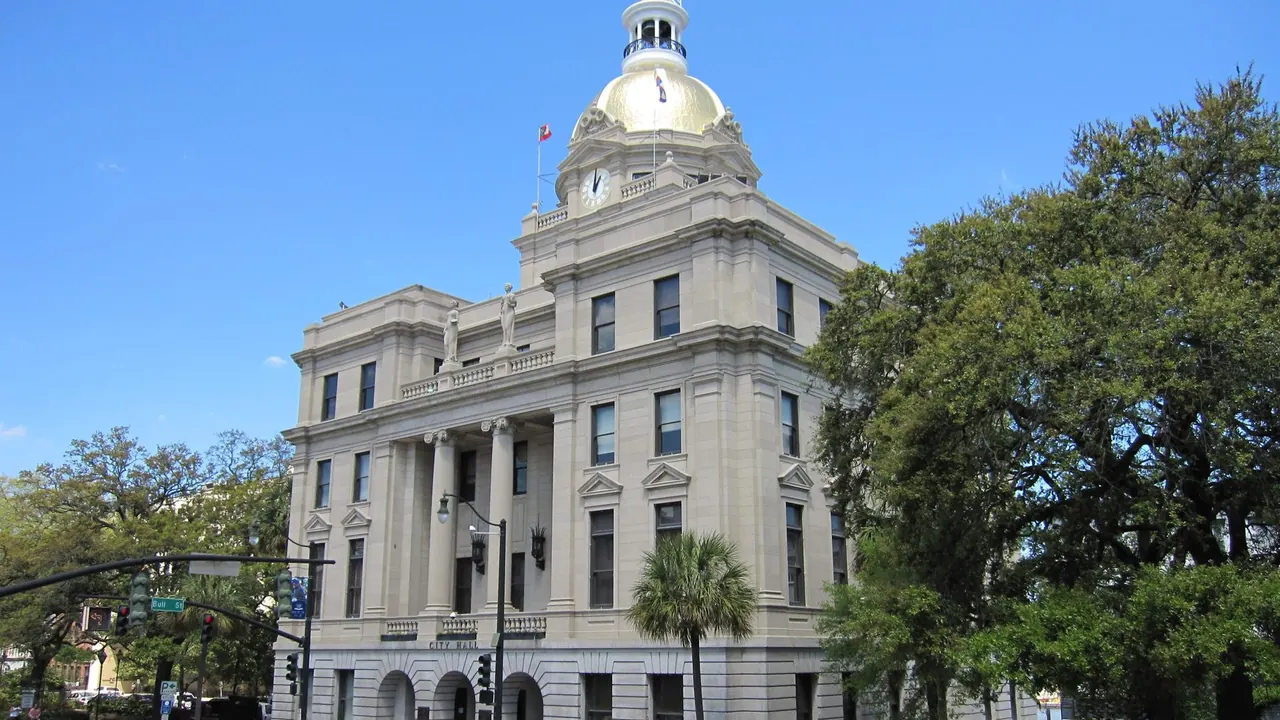
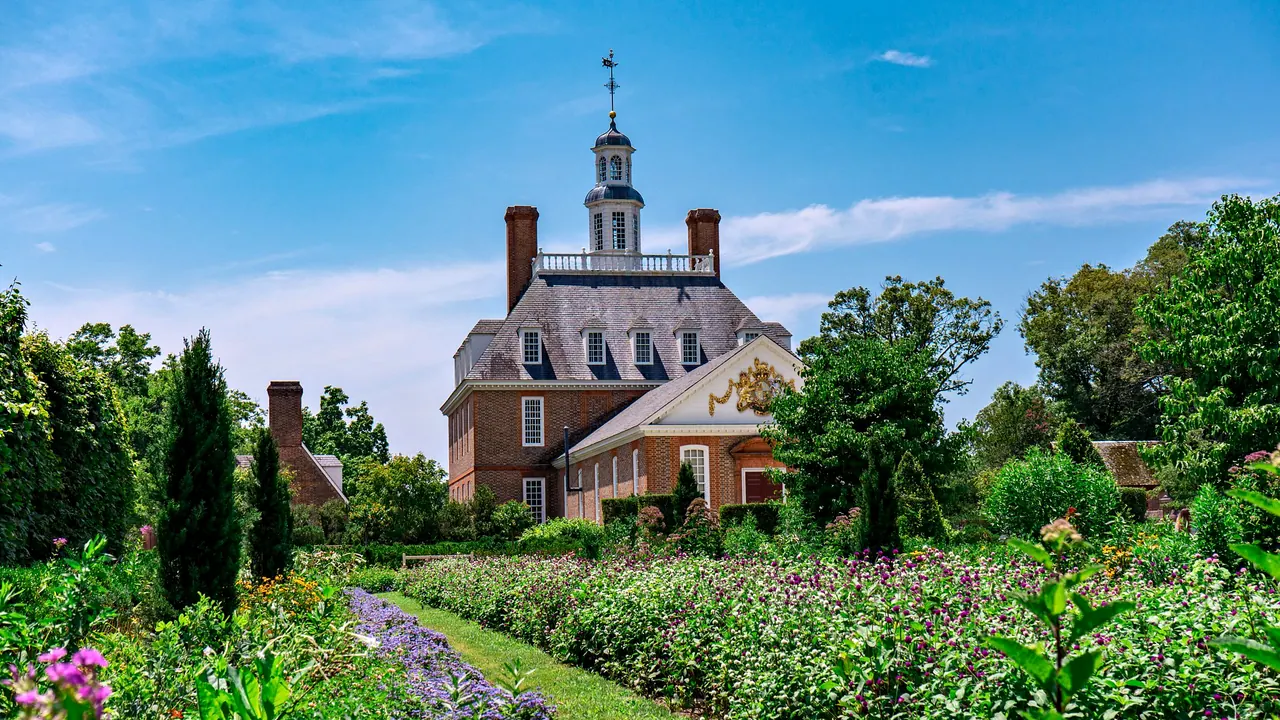
Photos: Savannah by Chris M Morris, CC BY 2.0, cropped; Williamsburg, Virginia by Brian Magill, Pexels License.
Savannah or Williamsburg, Virginia?
Our verdict in twelve categories, each scored against the same fixed benchmark cities, and the climate month by month, so you can choose for your trip.
Choose Savannah for
- nightlife
- food and drink
- getting around
Savannah suits adults who want a city to wander and linger in. Its oak-shaded squares, Lowcountry cooking, to-go-cup evenings and a real Atlantic beach half an hour away make it the richer choice for couples, friends and anyone who wants their days and nights to feel like a proper trip rather than a schedule of attractions.
Choose Williamsburg, Virginia for
- families
- prices
Williamsburg is the better pick for families. Busch Gardens, the water park, the costumed blacksmiths and the replica ships at Jamestown keep children busy for days, and the motels with pools along the main roads make the logistics easy. It is also the place for anyone who wants American colonial history acted out in front of them, and who won't mind quiet evenings and plain food.
Scoreboard
Twelve categories on one fixed scale from 0 to 100. The shaded stretch is the gap between the two.
Your match
Pick a travel style or drag the sliders, and both match scores follow your weighting.
Wins on nightlife and food and drink with your weighting.
Wins on families and prices with your weighting.
What matters to you?
Category by category
What the scores mean for a trip.
Beaches & swimming
Neither city is on the sand, but Savannah gets much closer to a real beach vacation. Tybee Island's broad, flat Atlantic beach is about half an hour east, and the water is properly warm through summer, even if the marshes give it a greenish-brown colour.
From Williamsburg, a swim usually means the hotel pool or Water Country USA. The small river beach at Yorktown is calm but modest, and the ocean resorts of Virginia Beach are an hour's drive. In high summer, sea nettles in the bay are one more reason to stay on land.
Food & drink
Savannah eats noticeably better. Lowcountry cooking gives it a real identity: shrimp and grits, she-crab soup, Lowcountry boil, oysters roasted over fire. On top of that it has a small group of serious chef-led restaurants in restored townhouses south of Forsyth Park.
Williamsburg has good Virginia staples in ham biscuits, peanut soup and Chesapeake crab, but its colonial taverns sell atmosphere more than cooking, and Richmond Road is mostly pancake houses and buffets. Its best meals are the simple ones, and a few bistros on Merchants Square are about as far as fine dining goes.
Culture & sights
The two are closely matched, but they offer different kinds of history. Savannah's appeal is an authentic eighteenth-century town plan you simply walk through, with garden squares, Victorian and Greek Revival houses, the Telfair Museums and the Owens-Thomas House's frank account of slavery. It is a city lived in rather than staged.
Williamsburg is a deliberate re-creation. Costumed interpreters play wigmakers and statesmen along Duke of Gloucester Street, many of the buildings have been rebuilt on their old foundations, and the Wren Building and the folk-art collections add real substance. Pick Savannah for atmosphere and architecture, or Williamsburg for history explained in front of you.
Nightlife
Savannah has an actual night out. Open-container rules let evenings roam from River Street's cobbled bars to the taverns of City Market and cocktail rooms in old townhouses, and art students keep a few dive bars and dance nights going. On St Patrick's Day the whole city turns into a street party.
Williamsburg goes to bed early. A tavern supper, a ghost walk or a pint near the college in term time is usually the whole evening, and anyone wanting more drives to Norfolk or Richmond.
Nature & outdoors
Both sit in flat, humid tidewater country, but Savannah's surroundings have a bit more character. You can kayak through salt marsh at high tide, take boat trips to watch dolphins and see the oak avenue at Wormsloe, all within easy reach.
Williamsburg's strengths are quieter and more about land. The traffic-free Colonial Parkway and the Capital Trail are excellent for cycling, and there are kayaking creeks with ospreys and bald eagles. In both places, spring and autumn are the seasons to go outdoors.
Day trips
Both are equally strong for day trips, but they point in different directions. From Savannah the trips are to other handsome old towns and islands: Charleston two hours north, Beaufort among the Sea Islands, Jekyll and St Simons down the Georgia coast.
Williamsburg's outings are short and steeped in history. Jamestown and Yorktown are each under half an hour away, with the James River plantations and Richmond beyond. Either way you need a car.
Good for families
Williamsburg is the stronger family choice by a distance. Busch Gardens and its water park sit alongside a Historic Area where children can join a fife-and-drum parade or quiz a blacksmith, and Jamestown's forts and ships add another day. Motels with pools and restaurants used to children make it easy.
Savannah works with children but wasn't designed for them. Trolley tours, the free ferry, ghost walks and Tybee's sea-turtle centre fill a few days, but there is no theme park, zoo or aquarium to anchor a longer stay.
Getting around
Savannah is the easier place to manage without a car. Its grid of squares packs hotels, restaurants and sights into one flat, walkable core, and a free shuttle and a river ferry cover the gaps. You only need wheels for Tybee, Bonaventure and Wormsloe.
Williamsburg's walkable district is small, a twenty-minute stroll from the Capitol to the college. Everything families come for, from the theme parks and outlets to most hotels, Jamestown and Yorktown, is spread along highways, so a car is close to essential.
Shopping & style
The two are broadly level here, and neither gives you a reason to make the trip for shopping: neither town has a luxury district or a department store worth the detour. The difference is in how you shop. Savannah suits the aimless browser, someone happy to drift down one restored street and through the squares, stepping into whatever looks interesting, from an art-school graduate's print to an old book. Skip River Street and City Market unless you want pralines and hot sauce to take home.
Williamsburg suits a shopper who knows what they want. The period workshops of the Historic Area are where you buy a lasting keepsake of the colonial visit, while the outlet centre on Richmond Road is a car trip for families stocking up on familiar American brands. You get less pleasure from the wandering itself, but more chance of going home with something specific.
Affordability
Williamsburg is somewhat easier on the budget, mainly because it has so many motels and chain hotels along its main roads. The catch is the admission fees: Colonial Williamsburg, Jamestown, Yorktown and the theme parks all charge separately, so combination passes are worth looking into.
Savannah's historic-district inns cost more, especially on spring weekends. In return, its best pleasures cost nothing: the squares, Forsyth Park, the riverfront and Bonaventure Cemetery are all free to wander.
Live music & performing arts
Savannah has more to offer, provided you time it right. The spring Savannah Music Festival fills historic theatres and churches with chamber music, jazz and blues, and the restored Lucas and Trustees theatres, a philharmonic orchestra and an autumn jazz festival in Forsyth Park add to that.
Williamsburg's performances are mostly part of the colonial show: candlelit recitals, period theatre and fife-and-drum corps, along with college concerts in term time. There is no professional company of note in town.
Wellness & relaxation
Neither has a bathing tradition, so in both, wellness mostly means hotel spas and a slower pace. Savannah has a slight edge for rest: a quiet inn on a southern square, a shaded bench or a garden courtyard all make idleness easy, as long as you avoid River Street at weekends.
Williamsburg's calm is found on the edges of the day and the town. Early mornings on the empty greens, golf-resort spas by the James River and slow drives on the Colonial Parkway all help, once you are away from the theme-park crowds.
When should you go?
Pick your month. The climate figures are measured averages, not a forecast.
Savannah in July
Williamsburg, Virginia in July
Daytime high, °C
Rainfall in the month, mm
Where the figures come from
Williamsburg, Virginia's sunshine is measured 60 km from the centre, at Richmond International Airport.
Temperature and rainfall are climate normals, averaged over the years shown. Savannah: 1991-2020 (sunshine 1981-2010) normals, Savannah Airport (9.9 km from centre). Williamsburg, Virginia: 2006-2020 (sunshine 1981-2010, rainfall 1991-2020) normals, Williamsburg / Kingspoint (3.6 km from centre).
Savannah has much milder winters, with January days around 16°C against about 10°C in Williamsburg, so its squares stay pleasant to walk through the off-season. Spring also comes earlier in Georgia. The sea off Tybee is warm enough to swim from about May into October and reaches 29°C in high summer. Williamsburg's swimming season is shorter, roughly June to September, and even at its warmest the bay and ocean stay a few degrees cooler.
Both are hot, humid and stormy from June to September, with highs in the low thirties that make midday sightseeing tiring. Savannah's rain peaks early, at around 169mm in June, while Williamsburg's comes later, about 151mm in August, and its wet spell lasts into October. Savannah is best for walking from March to May and again in October and November. Williamsburg's window is narrower, April, May and October, and although its autumn is no drier than Savannah's, it is cooler and gets a little more sun.
Which traveller are you?
On a family trip with children, Williamsburg is the clear winner. A big theme park, a water park, musket firings and replica ships to climb aboard give children far more to do than Savannah's squares, trolley rides and sea-turtle centre.
For a food and nightlife trip, choose Savannah. Shrimp and grits, oyster roasts and chef-led townhouse dining beat Williamsburg's tavern menus and highway chains, and evenings drifting between River Street bars outlast a candlelit ghost walk by hours.
On a beach and sun trip, Savannah again. Tybee Island's wide Atlantic sand is half an hour away and the sea stays swimmable for longer, while Williamsburg's nearest proper ocean beach means an hour's drive to Virginia Beach.
Before you go
| Measure | Savannah | Williamsburg, Virginia |
|---|---|---|
| Currency | US Dollar (USD) | US Dollar (USD) |
| Sockets | AB120 V, 60 Hz | AB120 V, 60 Hz |
| Driving side | Right | Right |
| Time zone | UTC-5, UTC-4 in summer | UTC-5, UTC-4 in summer |
| Emergency number | 911 | 911 |
| Elevation | 15 m | 15 m |
| Main airport | Savannah Hilton Head International Airport (SAV)12 km from centre39 non-stop destinations | Newport News Williamsburg International Airport (PHF)24 km from centre1 non-stop destination |
| Public holidays this year | 12 days | 13 days |
By the numbers
| Measure | Savannah | Williamsburg, Virginia |
|---|---|---|
| City population | 147,780 | 15,425 |
| People per km² | 524 | 656 |
| Museums within 10 km | 19 | 8 |
| UNESCO World Heritage sites within 50 km | 0 | 0 |
| Swim season, months above 21 °C | 6 months | 4 months |
Where else could you go?
Every comparison below shares a destination with this one, so you can follow Savannah or Williamsburg, Virginia somewhere new.
- Virginia Beachvs Williamsburg, Virginia
- Charlestonvs Savannah
- Washington DCvs Williamsburg, Virginia
- Ocean City, Marylandvs Williamsburg, Virginia
- Bethany Beachvs Williamsburg, Virginia
- Rehoboth Beachvs Williamsburg, Virginia