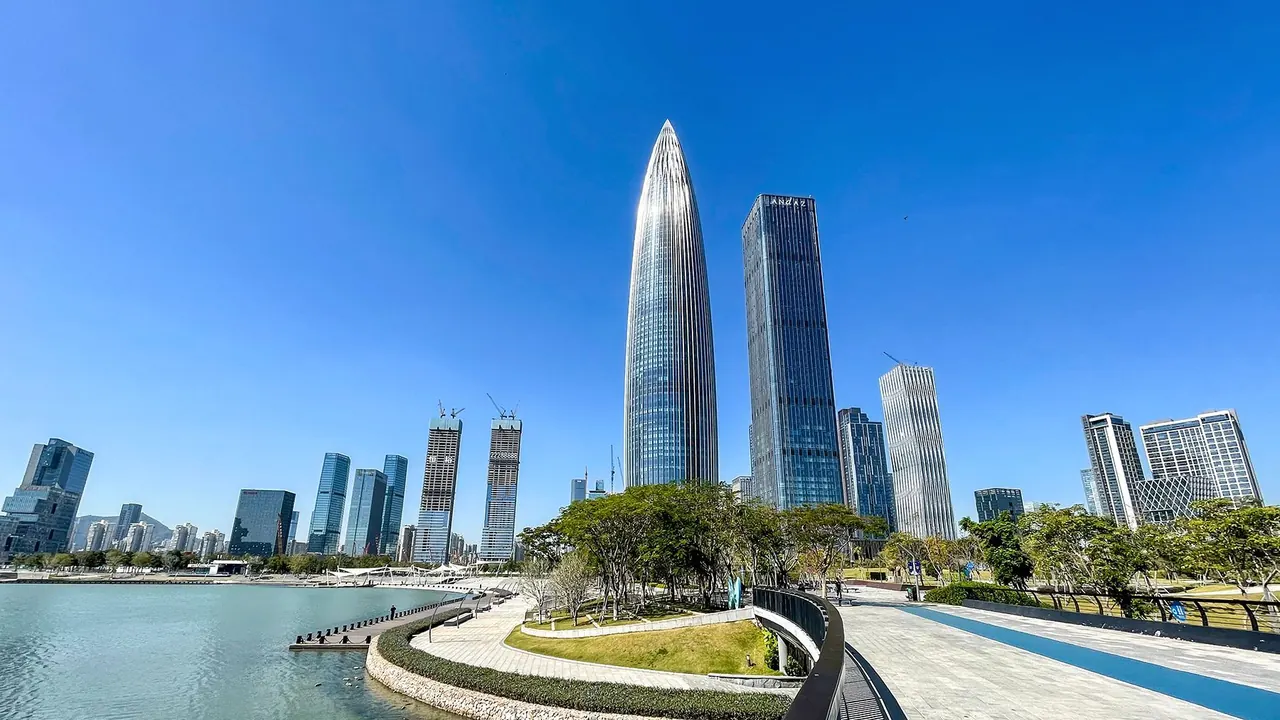
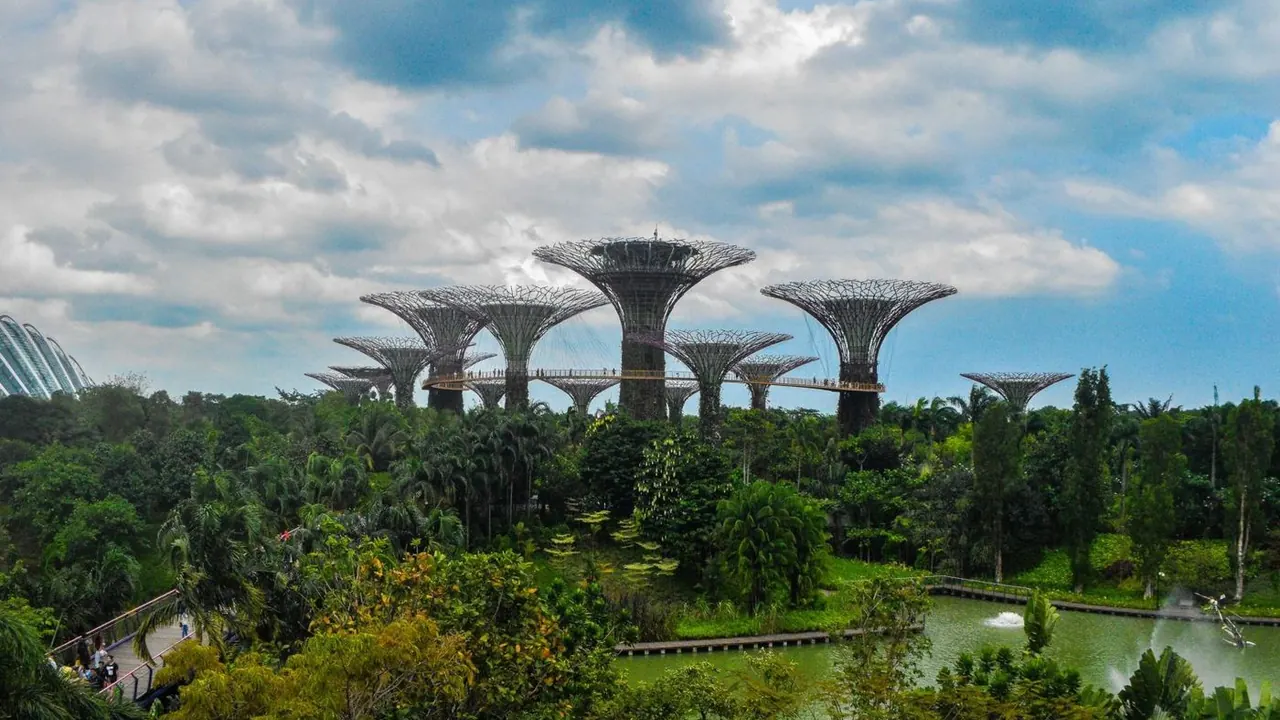
Photos: Shenzhen by Windmemories, CC BY-SA 4.0, cropped; Singapore by Kai Kai, Pexels License.
Shenzhen or Singapore?
Our verdict in twelve categories, each scored against the same fixed benchmark cities, and the climate month by month, so you can choose for your trip.
Choose Shenzhen for
- day trips
- prices
- wellness
Shenzhen suits the traveller who wants a cheap, comfortable base with a lot within reach. Hong Kong, Guangzhou and Macau are all close enough for a day out, and back in the city the bathhouses, the theme parks of OCT and the coastal trails of the Dapeng peninsula fill the rest of the time. Expect to spend much less than in Singapore. In return you will need payment and translation apps, patience with distances and an interest in a city that is mostly modern.
Choose Singapore for
- culture and sights
- food and drink
- families
Singapore is the easier and richer choice for a trip built around eating, museums and children. Its hawker centres give it a cuisine of its own, the Civic District and the ethnic quarters hold more to see, and the wildlife parks and Sentosa make family days simple, all in English and on a compact metro. The price is a high hotel bill and very little to do beyond the island itself.
Scoreboard
Twelve categories on one fixed scale from 0 to 100. The shaded stretch is the gap between the two.
Your match
Pick a travel style or drag the sliders, and both match scores follow your weighting.
Wins on day trips and prices with your weighting.
Wins on culture and sights and food and drink with your weighting.
What matters to you?
Category by category
What the scores mean for a trip.
Beaches & swimming
Neither city is somewhere to swim every day, but Shenzhen has the better beaches if you are willing to travel for them. Xichong, at the tip of the Dapeng peninsula, faces open sea with green hills behind, and Jiaochangwei adds a village of guesthouses and seafood. Both are an hour or more from the centre, and the nearer sands at Dameisha get packed on summer weekends.
Singapore's sea is warmer for longer, but its Sentosa beaches are made from imported sand, sit behind breakwaters and look out on lines of anchored tankers. The sheltered lagoons of St John's and Lazarus are quieter, and most visitors end up in the hotel pool.
Food & drink
Singapore is the better city for food, and many people visit mainly to eat. Its hawker centres, from Maxwell to Old Airport Road, serve chicken rice, laksa and chilli crab, dishes that bring together its Chinese, Malay, Indian and Peranakan roots. You can eat well at almost any hour.
Shenzhen eats well in a different way. It is a city of migrants, so you get Chaoshan beef hotpot, Hakka salt-baked chicken and fiery Hunan cooking, often made by people from those regions, and seafood picked from tanks at Nan'ao and Shekou. It has no cuisine of its own, though, the best meals are in malls and office districts, and menus behind QR codes call for a translation app.
Culture & sights
Singapore has much more to see. The colonial Civic District holds the National Gallery's Southeast Asian collection and three more major museums within walking distance, and the temples and shophouses of Chinatown, Little India and Kampong Glam sit close by. Add the Botanic Gardens and Gardens by the Bay, and two or three days are well filled.
Shenzhen's sights are mostly about its rapid modern growth: the Ping An tower, the Civic Centre roof, the galleries of OCT Loft and the painting workshops of Dafen. Nantou's Ming-era lanes, Dapeng Fortress and the Hakka walled villages show older layers but are far apart, and anyone after deep history goes to Guangzhou.
Nightlife
The two cities offer about as much after dark, but of different kinds. Shenzhen leans towards big clubs with bottle service around Coco Park, late nights of karaoke in private KTV rooms and relaxed pubs in Shekou, though the venues are spread out and often inside malls.
Singapore's strength is the cocktail bar, in the shophouses of Keong Saik and Telok Ayer or on rooftops above Marina Bay. It is the better city for a carefully made drink with a view, but alcohol taxes push up the bill and few places keep going until dawn.
Nature & outdoors
Shenzhen has more room to get outdoors. Wutong Mountain is a proper climb with views towards Hong Kong, and the Dapeng peninsula offers a coastal trail between headlands and coves, with kayaking and paddleboarding nearby. Closer in, the Shenzhen Bay path passes mangroves where waders feed in winter.
Singapore's green spaces are real rainforest, with macaques along the MacRitchie trails and Bukit Timah, and Pulau Ubin is a lovely island for cycling. The island is small and flat, though, and in the constant heat a day outdoors means an early start and a short list of places.
Day trips
This is where the two differ most. From Shenzhen, fast trains reach Hong Kong's West Kowloon in under half an hour and Guangzhou's temples and Shamian Island in about the same time, and Macau's Portuguese old town is a ferry ride away. That makes it an excellent base for the Pearl River Delta, as long as your visa allows you back into the mainland.
Singapore has little nearby. Johor Bahru is just across the causeway but the border queues can take hours, Bintan and Batam are mostly for resort stays, and Malacca really needs a night. Most visitors fly onwards instead.
Good for families
Both cities are safe and clean with children, but Singapore makes it easier. The Mandai wildlife parks, including the Night Safari, and Universal Studios and the aquarium on Sentosa are all easy to reach, everything is in English and air-conditioned, and children find familiar food at any hawker centre.
Shenzhen has plenty for children too, with Happy Valley's roller coasters and Window of the World in OCT, a safari park and the marine park at Xiaomeisha. The attractions are much further apart, though, and outside the main parks there is little English to help.
Getting around
Both have excellent metros, but Singapore's is easier to use. Its MRT reaches almost everywhere a visitor goes, you tap in with an ordinary contactless bank card, and the short distances mean that the heat, rather than the journey, is the main thing to plan around.
Shenzhen's metro is clean and bilingual, but the city stretches about 80km from end to end, so a trip from Shekou to the Dapeng beaches takes much of a morning. Wide multilane roads separate the districts, and most payments run through mobile apps that are worth setting up before you arrive.
Shopping & style
Singapore is better for most shoppers. Orchard Road and the shops under Marina Bay Sands have every luxury and high-street brand, and Haji Lane and Tiong Bahru's Art Deco blocks add independent boutiques and design stores. Peranakan beadwork and porcelain make distinctive things to take home.
Shenzhen's appeal is different. Huaqiangbei's towers of electronics stalls are fascinating to wander even if you buy nothing, Luohu Commercial City is full of tailors and fabric, and Dafen sells hand-painted canvases. Luxury fashion is limited to a few mall floors.
Affordability
Shenzhen is much cheaper. Comfortable modern hotels cost a fraction of what they do in Singapore, and everyday meals and transport cost very little. The bills mainly go up at the theme parks and in the foreign bars of Shekou and Coco Park.
In Singapore the room is the biggest cost, and the taxed drinks and the entry fees at Mandai and Sentosa add up quickly. Hawker meals, the MRT and the free gardens keep the rest of the day reasonable.
Live music & performing arts
Singapore is the better choice for an evening of performance. The Esplanade's concert hall and theatre run a full programme with free outdoor shows by the bay, the Singapore Symphony Orchestra plays a regular season, and Chinese opera and Indian dance appear at temple festivals.
Shenzhen has a good concert hall for its orchestra, plus the Poly Theatre and the Grand Theatre for touring productions, but most theatre is in Mandarin. Its distinctive offering is the Chinese indie and rock bands that play the live houses around OCT Loft.
Wellness & relaxation
Shenzhen is far stronger for relaxation. Its huge bathhouse complexes run through the night, with hot and cold pools, saunas, sleeping halls and floors of massage rooms, and people cross from Hong Kong just to visit them. Late-opening foot-massage parlours are everywhere, and hot-spring resorts sit in the hills towards Huizhou.
Singapore has no bathing tradition, so it comes down to polished hotel spas, reflexology in Chinatown and Ayurvedic treatments in Little India. Its calmest moments are early mornings in the Botanic Gardens.
When should you go?
Pick your month. The climate figures are measured averages, not a forecast.
Shenzhen in July
Singapore in July
Daytime high, °C
Rainfall in the month, mm
Where the figures come from
Shenzhen has no rain gauge within 25 km of the centre, so its rainfall comes from a gridded climate dataset read at the city rather than from a gauge further away.
Shenzhen's sunshine is measured 28 km from the centre, at King's Park.
Temperature and rainfall are climate normals, averaged over the years shown. Shenzhen: 1999-2020 (sunshine 1991-2020, rainfall 1991-2020) normals, Shenzhen (4.7 km from centre). Singapore: 1991-2020 (rainfall 1961-1990) normals, Singapore / Changi Airport (17 km from centre).
Shenzhen has real seasons. The sea is warm enough for swimming from May to October, at about 28°C in high summer, but these are also the wet months. June and August each bring more than 300mm of rain, July is barely drier, and typhoons can interrupt the beach season. October to December is the best time for the city itself. The rain falls away, the skies are mostly clear and the days cool from hot to pleasant, which suits the Dapeng trails and long walks. January to March is mild at around 20°C, but greyer and too cool for the beach.
Singapore hardly changes through the year. Daytime highs stay around 32°C in every month and the sea is always warm, so the midday heat never eases enough for comfortable walking. What changes is the rain. November to January is the wettest stretch, peaking at 333mm in December, when there is also the least sunshine. February to September is drier and brighter. If you want to visit both cities on one trip, October works best: Shenzhen has turned dry and sunny, and Singapore's heaviest rain has not yet arrived.
Which traveller are you?
On a trip on a tight budget, Shenzhen is the clear choice. Comfortable modern hotels cost far less than Singapore's, where even a plain room takes most of the budget, and cheap noodles, dim sum and a very cheap metro keep daily costs low.
For a culture and arts trip, Singapore offers far more. The National Gallery and the Asian Civilisations Museum are a short walk apart, Chinatown, Little India and Kampong Glam each have their own character, and the Esplanade has a full programme. Shenzhen's history is thin and scattered across the city.
On a relaxing and wellness trip, Shenzhen has something Singapore lacks: huge bathhouse complexes open through the night, with pools, saunas and massage floors, plus foot-massage parlours on almost every block and hot springs in the hills. Singapore mostly offers hotel spas.
Before you go
| Measure | Shenzhen | Singapore |
|---|---|---|
| Official language | Putonghua | English, Tamil, Malay, Standard Chinese |
| Currency | Yuan Renminbi (CNY) | Singapore Dollar (SGD) |
| Sockets | ACI220 V, 50 Hz | G230 V, 50 Hz |
| Driving side | Right | Left |
| Time zone | UTC+8 | UTC+8 |
| Emergency number | Police 110, ambulance 120, fire 119 | Police 999, ambulance 995, fire 995 |
| Elevation | 0 m | 21 m |
| Main airport | Shenzhen Bao'an International Airport (SZX)28 km from centre174 non-stop destinations | Singapore Changi Airport (SIN)17 km from centre167 non-stop destinations |
| Public holidays this year | 6 days | 11 days |
By the numbers
| Measure | Shenzhen | Singapore |
|---|---|---|
| City population | 17,494,398 | 5,866,139 |
| People per km² | 8,759 | 8,158 |
| Museums within 10 km | 7 | 40 |
| UNESCO World Heritage sites within 50 km | 0 | 1 |
| Swim season, months above 21 °C | 8 months | 12 months |
Where else could you go?
Every comparison below shares a destination with this one, so you can follow Shenzhen or Singapore somewhere new.
- Hong Kongvs Shenzhen
- Macauvs Shenzhen
- Malaccavs Singapore
- Kuala Lumpurvs Singapore
- Guilinvs Shenzhen
- Penangvs Singapore