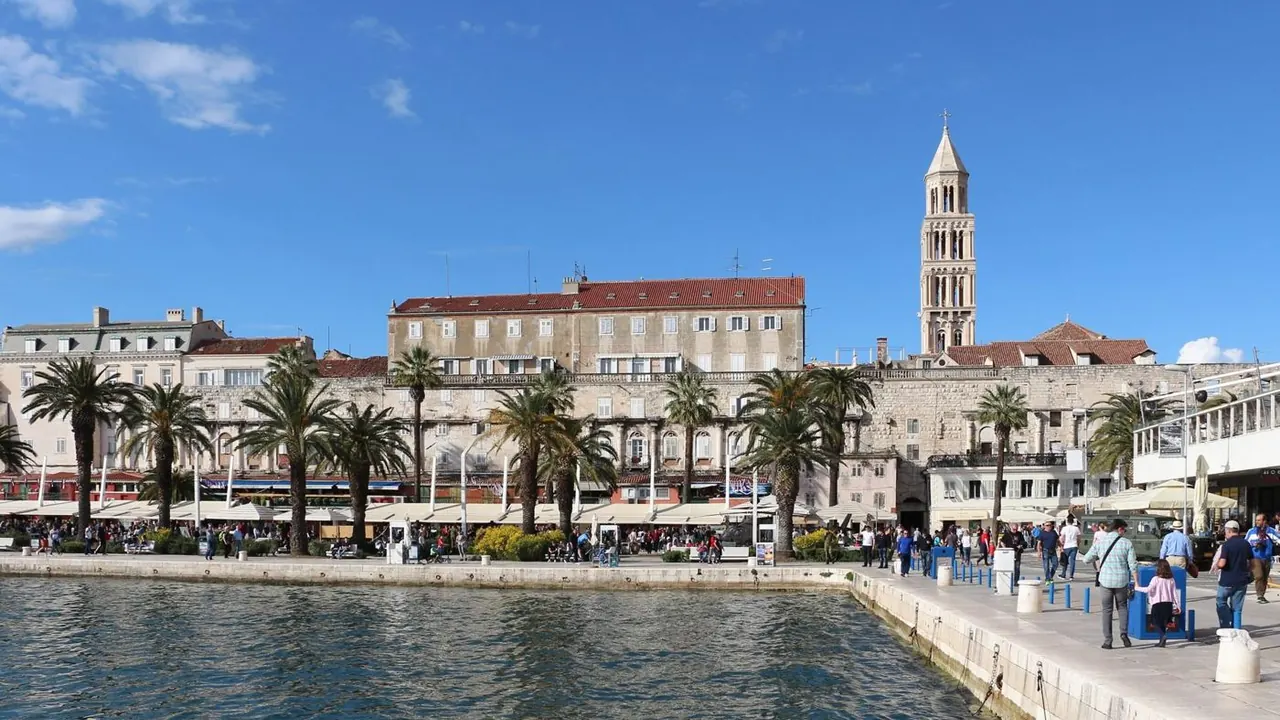
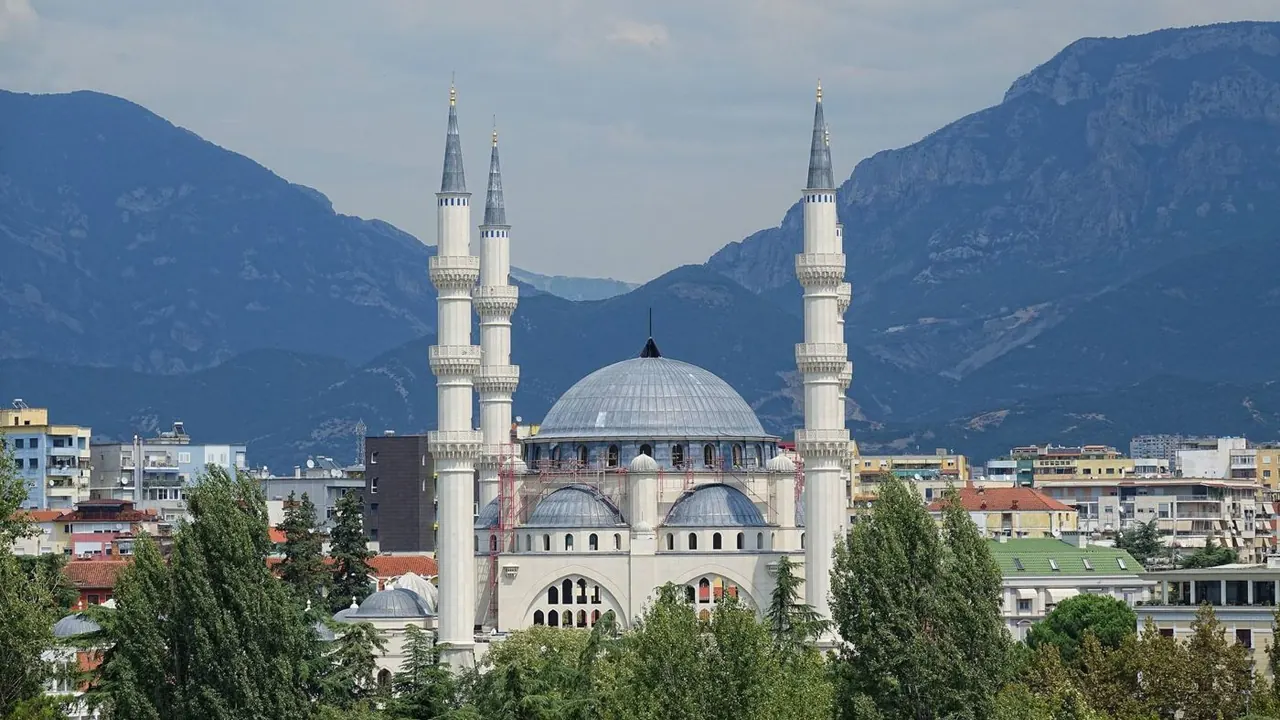
Photos: Split by Bernard Gagnon, CC BY-SA 4.0, cropped; Tirana by Bjørn Christian Tørrissen, CC BY-SA 4.0, cropped.
Split or Tirana?
Our verdict in twelve categories, each scored against the same fixed benchmark cities, and the climate month by month, so you can choose for your trip.
Choose Split for
- beaches
- culture and sights
- nature and the outdoors
Split suits a summer trip built around the sea. You can swim straight from the old town, the Roman palace is a neighbourhood you live in rather than a ruin you tour, and ferries put Hvar, Brač and Trogir within easy reach. Families and walkers also get more from it, with Marjan's pine woods a short walk from the centre and the islands a boat ride away.
Choose Tirana for
- prices
- nightlife
For a traveller watching costs, or one curious about Europe's recent past, Tirana is the better pick. Bunk'Art and the House of Leaves tell the communist story in a way nothing in Split does, Blloku stays lively late with a young local crowd, and your money goes much further. The sea is an hour away at Durrës, so treat Tirana as an inland capital with strong day trips to Berat and Kruja.
Scoreboard
Twelve categories on one fixed scale from 0 to 100. The shaded stretch is the gap between the two.
Your match
Pick a travel style or drag the sliders, and both match scores follow your weighting.
Wins on beaches and culture and sights with your weighting.
Wins on prices and nightlife with your weighting.
What matters to you?
Category by category
What the scores mean for a trip.
Beaches & swimming
In Split the sea is on your doorstep. Bačvice, a shallow sandy bay, is a few minutes from the palace, and the coves around Marjan are quieter, with pine shade and deeper water. Most of the shore is pebble or concrete, though, and the longer beaches are on Brač and Hvar.
Tirana has no sea of its own. Durrës, under an hour away, has a long sandy strip with warm, shallow water, but it is built up and crowded, and the water near the port is not always clear. Albania's famous southern coves need a separate trip.
Food & drink
The two cities eat equally well, but differently. Split's table comes from the sea: grilled fish, black risotto and octopus under the peka, with Plavac Mali or Pošip to drink and the fish market and Pazar by the palace walls to show the season. Menus inside the palace lean towards summer visitors, and the better konobas are in Varoš.
Tirana cooks from the farm: tavë kosi, fërgesë, morning byrek, and long lunches at the farm restaurants on the hills outside town. Blloku holds most of the restaurants, and raki ends almost every meal. Neither city offers much fine dining or international food.
Culture & sights
Split has the stronger sightseeing, concentrated in one remarkable place. Diocletian's Palace is a Roman complex that is still lived in, with the cathedral in the emperor's mausoleum and the vaulted substructures underneath. The Meštrović Gallery on Marjan adds a fine museum.
Tirana's sights are about the 20th century: Bunk'Art in its Cold War bunker, the House of Leaves and Skanderbeg Square with the painted Et'hem Bey Mosque. They are absorbing if you are curious about communist Albania, but there is little older fabric, and either city is covered in about two days.
Nightlife
Tirana has the livelier evenings, and they depend on locals rather than visitors. Blloku, the leadership's former closed quarter, is a dense grid of cocktail bars, terraces and small clubs. The young crowd dresses up and stays out well past midnight, and larger clubs near the Grand Park lake run later.
Split's night out is mostly a summer one: small bars in the palace alleys, plus beach bars and a few clubs at Bačvice. Much of the party crowd heads to Hvar instead, and from October to May the scene shrinks to a handful of bars.
Nature & outdoors
Split has more close at hand and more variety. Marjan's pine forest starts at the edge of the old town, and Mosor and Kozjak give proper ridge hikes. Within about an hour you reach Biokovo, the Cetina canyon at Omiš and the waterfalls of Krka, and you can kayak or sail among the islands.
Tirana's great asset is Mount Dajti, a short cable car ride from the city's eastern edge, with beech forest and views across the plain to the sea. Bovilla reservoir and Gamti are an hour or so away, but the Albanian Alps take several days.
Day trips
Split is the easier base. Trogir is about half an hour away and Šibenik about an hour, Salona and Klis are on the edge of town, and ferries to Hvar, Brač and Vis leave from the same harbour as the buses.
Day trips matter more from Tirana, because the country's heritage lies outside the capital. Kruja's castle and bazaar are under an hour away, and Berat, with its lived-in citadel, is about two hours south. But the roads are slower and most trips need a car, minibus or tour, so each one takes a full day.
Good for families
Split is the easier city with children. Bačvice is shallow enough for paddling, Marjan has shade and room to run, and a ferry to an island makes a ready-made outing. Nothing is built specifically for children, though, and July and August are hot and packed.
Children are warmly welcomed in Tirana, in cafés and on the evening stroll, and the Grand Park and the Dajti cable car make good outings. But heavy traffic, drivers who rarely yield and broken pavements make it tiring with a buggy, and the beach is an hour away.
Getting around
Both centres are walkable, but Split is easier for a visitor. In its car-free core the palace, the Riva, the markets and Bačvice are all within fifteen minutes' walk, and the ferry port and the bus and railway stations sit together at the harbour. The stone steps inside the palace are the main trouble with luggage.
Tirana's centre is flat and compact, but the buses are confusingly signed and the wide roads are full of assertive drivers. Cheap taxis are the usual way to Bunk'Art or the cable car, and day trips mostly mean minibuses or a hire car.
Shopping & style
Neither city is worth the trip for shopping, and in both the best browsing is at the market. Split's Pazar by the palace's east gate sells figs, honey and brandies, and Dalmatian wine and olive oil are the best things to take home.
Tirana's Pazari i Ri sells cheese, raki and dried herbs, and you can find felt hats, embroidery and filigree silver there and in Kruja's bazaar. For fashion, both cities offer only chain stores and malls on the edge of the centre.
Affordability
Split can be done cheaply if you live like a local. Bakery breakfasts, fruit from the Pazar, local buses to Solin and Trogir and entry to the palace sights all cost little, and konobas away from the Riva are fairly priced. The big expense is a room in high summer. In winter the whole city becomes modestly priced.
Tirana is cheaper all year round, not just out of season. Comfortable mid-range hotels and apartments in the centre are good value, so you can stay well without straining the budget. Local wine and raki cost very little, and a byrek from a corner bakery makes a breakfast that hardly counts.
Live music & performing arts
Neither city has a deep calendar, and each has one opera house worth an evening: Split's 19th-century Croatian National Theatre and Tirana's National Theatre of Opera and Ballet on Skanderbeg Square. In both, opera and ballet get past the language barrier where plays do not. Split's distinctive offering comes in summer, with the Split Summer Festival staging opera in the Peristyle and klapa singers in the palace vestibule.
In Tirana, tickets are easy to get and a few bars host jazz, but Albania's iso-polyphonic singing is heard mostly at festivals and in the south rather than in the capital.
Wellness & relaxation
Split is the more restful of the two, mainly because quiet places are so close. Marjan's pine woods begin at the edge of town, a swim is a short walk away, and a ferry to one of the islands takes you somewhere slower still. The Dalmatian idea of fjaka, doing very little and taking your time over it, suits a long morning by the water. The exception is high summer, when the old town stays crowded and noisy late into the night, so a restful trip works better either side of July and August.
Tirana's slow pace is a social one: lingering over coffee on a terrace and joining the evening xhiro along the boulevards. Traffic noise follows you through much of the centre, though, and getting away from it means the Grand Park or the cable car up Dajti. What Tirana has and Split lacks is thermal water. The sulphur springs at Llixha are about an hour away and plain rather than pampering, while in Split a spa day means a resort spa on the coast east of the centre, with the sea close by.
When should you go?
Pick your month. The climate figures are measured averages, not a forecast.
Split in July
Tirana in July
Daytime high, °C
Rainfall in the month, mm
Temperature and rainfall are climate normals, averaged over the years shown. Split: 1991-2020 normals, Split / Marjan (0.9 km from centre). Tirana: 1961-1990 normals, Tirana (3 km from centre).
The two cities heat up almost identically. July and August reach about 31°C in both, which makes midday sightseeing hard work, and May, June and September are the comfortable months for walking the streets. In Split the sea is warm enough for swimming from June into early October and peaks around 25°C in August. The water at Durrës follows much the same pattern, but from Tirana it is a day out rather than a daily swim.
The real difference is rain. Tirana is much wetter from October to April, with about 172mm in November against 117mm in Split, and its winter days are greyer too. The gap stays wide either side of summer. April in Split gets little more than half of Tirana's rain, and October is also clearly drier, so Split is the safer choice for a spring or autumn trip. Outside summer, expect damp spells in Tirana.
Which traveller are you?
On a beach and sun trip, Split wins easily. You can swim from the old town at Bačvice or in the pine-shaded coves of Marjan, and ferries reach longer beaches on Brač and Hvar. From Tirana, the sea means a crowded day out at Durrës.
For a culture and arts trip, Split has the richer centre: a Roman palace people still live in, a cathedral inside Diocletian's mausoleum and summer opera in the Peristyle. Tirana's communist-era bunkers are fascinating but fill less time, though Berat and Kruja are close.
On a trip on a tight budget, Tirana goes much further. Meals, coffee, taxis and museum tickets cost a fraction of Western European prices, and even Blloku's bars stay affordable. Split in high summer charges close to big-city rates for rooms and fish.
Before you go
| Measure | Split | Tirana |
|---|---|---|
| Official language | Croatian | Albanian |
| Currency | Euro (EUR) | Lek (ALL) |
| Sockets | CF230 V, 50 Hz | CF220 V, 50 Hz |
| Driving side | Right | Right |
| Time zone | UTC+1, UTC+2 in summer | UTC+1, UTC+2 in summer |
| Emergency number | 112 | 112 |
| Elevation | 0 m | 110 m |
| Main airport | Split Saint Jerome Airport (SPU)12 km from centre69 non-stop destinations | Tirana International Airport Mother Teresa (TIA)13 km from centre121 non-stop destinations |
| Public holidays this year | 14 days | 14 days |
By the numbers
| Measure | Split | Tirana |
|---|---|---|
| City population | 160,577 | 389,323 |
| People per km² | - | 9,314 |
| Museums within 10 km | 11 | 11 |
| UNESCO World Heritage sites within 50 km | 4 | 0 |
| Swim season, months above 21 °C | 4 months | 5 months |
Where else could you go?
Every comparison below shares a destination with this one, so you can follow Split or Tirana somewhere new.